
Vision AI Camera Accuracy: Which Test Conditions Matter Most
author
In renewable energy and smart infrastructure, Vision AI camera accuracy depends less on marketing claims than on measurable test conditions such as lighting variance, motion blur, edge processing latency, and Matter standard compatibility. At NexusHome Intelligence, our smart home hardware testing and IoT hardware benchmarking reveal which variables truly affect performance, helping procurement teams and engineers make data-backed decisions across the IoT supply chain.
Which test conditions actually determine Vision AI camera accuracy in renewable energy projects?
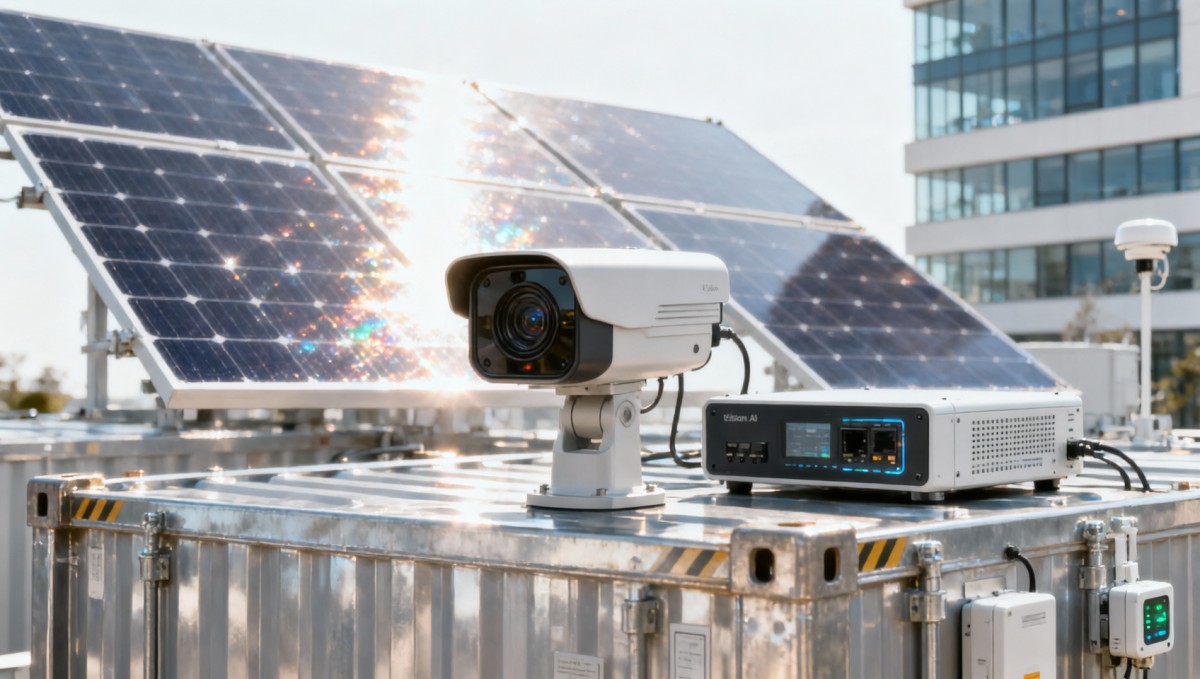
For solar farms, battery energy storage systems, wind substations, and hybrid commercial buildings, Vision AI camera accuracy is not a single specification. It is the result of how well a camera performs across 4 core test dimensions: lighting variability, target motion, edge processing delay, and protocol-level integration stability. In renewable energy environments, these factors shift hour by hour, which is why lab claims often fail during field deployment.
A camera that identifies personnel correctly at noon may miss the same target at dawn, during inverter glare, or under mixed LED and daylight conditions. Accuracy also changes when dust, rain residue, vibration, or rapid movement enter the scene. For operators and procurement teams, the practical question is not whether a model supports AI detection, but under which test conditions its performance remains usable for 24/7 site operations.
At NHI, we treat Vision AI camera accuracy as a system outcome rather than a marketing label. That means measuring input conditions, transmission conditions, and decision latency together. In a smart energy deployment, even a 150 ms to 300 ms delay can affect alarm reliability, access control timing, and event verification when cameras are connected to edge gateways, smart locks, or building automation nodes.
The table below summarizes the test conditions that matter most when a Vision AI camera is evaluated for renewable energy and smart infrastructure use rather than for a showroom demo.
The key lesson is simple: the most important test conditions are those that reproduce operational stress, not ideal indoor scenes. For information researchers, this improves comparison quality. For users and operators, it reduces nuisance alarms. For buyers and decision-makers, it lowers rework risk across the IoT supply chain.
Why marketing claims often fail in field deployment
Many product sheets describe high-resolution imaging, smart detection, or seamless integration, yet omit the boundary conditions behind these claims. Resolution alone does not guarantee Vision AI camera accuracy when image compression, backlight compensation, and network congestion alter what the AI model actually receives. A 4 MP stream under unstable bandwidth can perform worse than a lower-resolution stream with stable edge processing and better exposure control.
This problem becomes more serious in renewable energy projects because sites are often geographically distributed. A camera may operate at a rooftop microgrid, a charging hub, and a remote storage container under very different thermal and network conditions. If testing only covers indoor 20°C to 25°C scenes with controlled lighting, the reported accuracy is not a reliable procurement input.
NHI’s benchmarking approach focuses on measurable stressors, including interference, latency, environmental transitions, and protocol behavior. That matters when a Vision AI camera must do more than detect a person. It may need to trigger local edge logic, support compliance logging, and integrate with building energy controls without packet loss or unstable handoff between subsystems.
How do lighting, motion, and edge latency change performance in real operating scenes?
If one section of the buying team asks about image quality while another asks about AI reliability, both are partly right. In practice, Vision AI camera accuracy degrades when three operational variables interact: uneven lighting, moving targets, and delayed edge decisions. These variables are especially relevant in clean energy facilities where access points, control rooms, and equipment yards do not share the same environmental profile.
For example, at a solar-plus-storage site, sunrise and sunset create long-angle shadows that can confuse object boundaries. Reflective PV surfaces can increase glare, while battery container corridors may have low and uneven illumination. A camera tested only at static lux values will miss how abrupt lighting transitions affect face recognition, PPE detection, or intrusion classification during shift changes.
Motion introduces another layer of complexity. Operators walking at normal pace, technicians climbing ladders, and vehicles approaching gates generate different blur patterns. If shutter control, frame rate, and AI sampling are not validated together, the system may produce high false positives or missed detections. Over a 12-hour or 24-hour monitoring cycle, this can turn into alarm fatigue and delayed security response.
Edge latency matters because renewable energy sites increasingly depend on local decisions. When cloud connectivity is inconsistent, cameras often need to process events at the edge and send only metadata or compressed clips. In this case, a latency range of 80 ms to 120 ms may still be workable for event logging, but less suitable for fast gate release, local interlock actions, or synchronized alerts across multiple nodes.
Field conditions that procurement teams should insist on testing
- Test daytime, low-light, and mixed-light scenes over at least 3 operating windows: morning, midday, and evening.
- Validate stationary and moving targets, including walking staff, service carts, and vehicle approaches.
- Measure local inference delay, alarm trigger time, and network round-trip separately instead of treating them as one value.
- Check behavior under protocol coexistence, especially when Matter, BLE, Zigbee, or gateway middleware share the same deployment.
This structured testing helps buyers avoid a common mistake: selecting a camera with strong demo performance but weak orchestration performance. In modern smart infrastructure, a camera is not just a sensor. It is part of an automation graph that may include smart locks, edge controllers, relays, lighting, HVAC, and occupancy-based energy management.
What operators usually notice before buyers do
Operators usually detect problems earlier than executive teams because they live with the system every day. They notice whether the camera misses workers wearing helmets, whether glare at 4 p.m. changes event quality, and whether delayed event clips make incident review harder. These observations should be converted into test scripts before procurement approval.
For that reason, NHI emphasizes benchmarking that connects engineering data to operational usability. A camera with slightly lower headline resolution may outperform a higher-specced alternative if it maintains stable detection confidence across wider lighting and latency ranges. In renewable energy projects, operational stability usually matters more than brochure-level maximums.
What should buyers compare when selecting Vision AI cameras for smart energy sites?
Procurement decisions become difficult when vendors mix imaging specifications, AI claims, and integration promises into one narrative. A more useful method is to separate selection into 5 buying dimensions: scene suitability, AI task type, local processing capability, protocol interoperability, and lifecycle support. This makes Vision AI camera accuracy comparable across suppliers, not just describable.
For renewable energy and smart building portfolios, buyers often need one camera strategy across multiple facility types. That does not mean one model fits all. It means the evaluation framework must stay consistent while the acceptable thresholds vary by scene. A substation perimeter may prioritize low-light detection and event reliability, while an energy management lobby may care more about access workflow and visitor traceability.
The comparison table below is designed for purchasing managers, solution architects, and enterprise decision-makers who need to balance technical risk, deployment scale, and integration readiness across the IoT supply chain.
A useful procurement rule is to score each dimension separately rather than accepting a single total rating. Many buyers discover too late that a camera strong in image analytics is weak in protocol interoperability or edge-event timing. That mismatch creates hidden cost during commissioning, especially when 20, 50, or 100 devices must be deployed across distributed energy assets.
A practical 4-step selection workflow
- Define the AI task first: face match, intrusion detection, PPE monitoring, vehicle capture, or occupancy-linked automation.
- Map the operating scene next: indoor control room, outdoor gate, rooftop plant, storage container, or mixed-use building.
- Request benchmark data under at least 3 stress conditions, such as glare, motion, and low-bandwidth edge execution.
- Validate interoperability before large orders by running a pilot on 2 to 4 nodes with real protocol and alarm workflows.
This process gives enterprise decision-makers a more defensible basis for approval. It also aligns with NHI’s mission of replacing vague supply-chain claims with benchmark-driven decisions grounded in engineering reality.
Which standards, integration checks, and common misconceptions should not be ignored?
In smart energy environments, camera selection is not only about visual performance. It also involves interoperability, data handling, system resilience, and practical compliance. While exact regulatory obligations vary by region and project type, buyers should still verify whether the device can support local processing preferences, secure firmware management, and integration with broader smart infrastructure controls.
Matter compatibility deserves careful interpretation. A statement like “works with Matter” does not automatically confirm that all camera-triggered workflows will operate correctly in a multi-vendor deployment. Buyers should ask what functions are exposed, what latency appears during multi-node hops, and whether event handoff remains stable under interference. In other words, protocol support should be tested as behavior, not treated as a label.
Another misconception is that cloud AI always improves Vision AI camera accuracy. In remote renewable energy assets, cloud dependency can introduce inconsistent timing, bandwidth limits, and privacy concerns. A balanced architecture often works better: edge inference for fast decisions, plus centralized review for analytics and system tuning. The right mix depends on site criticality, network reliability, and event retention policy.
A third misconception is that higher sensitivity is always safer. In practice, too-sensitive detection can create frequent nuisance alerts from shadows, reflective surfaces, insects, or weather fluctuations. Over a weekly or monthly cycle, excessive false alarms can reduce operator trust and raise labor cost more than a slightly lower but better-calibrated detection threshold.
Key integration and compliance checks
- Confirm whether video events, metadata, and access-control triggers can be processed locally when WAN connectivity drops.
- Review firmware update procedures and rollback options for fleets that may span dozens of energy and building assets.
- Check whether privacy-related configurations, retention windows, and user access logs can be aligned with project governance requirements.
- Verify protocol coexistence when cameras share networks with Zigbee, Thread, BLE, Wi-Fi, or industrial gateways.
FAQ for researchers, operators, and buyers
How should Vision AI camera accuracy be tested for a solar or battery site? Use at least 3 scene types: bright outdoor, low-light enclosure, and transitional mixed-light access points. Include moving targets, local edge processing checks, and integration testing with real alarms or access workflows.
Is higher resolution always better? No. Resolution helps only when bandwidth, exposure, compression, and inference timing remain stable. In many projects, consistent usable detection matters more than headline pixel count.
What is a reasonable pilot scope before full procurement? For multi-site deployments, a pilot of 2 to 4 nodes across at least 2 scene types is often more informative than a single indoor demonstration. This reveals integration risk early.
What do enterprise decision-makers usually overlook? They often focus on device price and imaging claims, while underestimating commissioning time, protocol issues, false alarm burden, and lifecycle support over 24 to 60 months.
Why choose a benchmarking-led partner when planning camera deployment for renewable energy infrastructure?
In a fragmented IoT market, the costliest mistake is not buying a premium device. It is buying on incomplete evidence. Renewable energy operators need Vision AI camera accuracy that holds up under glare, motion, remote connectivity limits, and multi-protocol environments. Procurement teams need comparable test data. Decision-makers need a lower-risk path from pilot to scale.
That is where NexusHome Intelligence adds value. NHI does not rely on brochure language or generic compatibility claims. We evaluate hardware through measurable conditions, protocol behavior, and practical deployment logic. Our role is to help global buyers and engineers filter suppliers, compare technical trade-offs, and identify hidden strengths in the IoT supply chain before budget is committed.
If you are planning a project in solar energy, storage, smart buildings, or connected energy campuses, you can consult NHI on concrete issues such as parameter confirmation, product selection logic, edge latency expectations, Matter integration checks, sample evaluation strategy, expected delivery cycles, and certification-related questions that affect deployment planning.
For teams comparing multiple suppliers, we can also support a structured review of scene suitability, interoperability risk, pilot scope, and benchmark priorities. This shortens decision time, improves procurement clarity, and helps ensure that Vision AI camera accuracy is validated where it matters most: in real operating conditions, not in abstract claims.
Protocol_Architect
Dr. Thorne is a leading architect in IoT mesh protocols with 15+ years at NexusHome Intelligence. His research specializes in high-availability systems and sub-GHz propagation modeling.
Related Recommendations
- Lina Zhao(Security Analyst)Vision AI Camera Accuracy: Which Test Conditions Matter Most
- Lina Zhao(Security Analyst)IP Camera Hardware Benchmarks: What Buyers Often Miss
- Lina Zhao(Security Analyst)How to Read Vision AI Camera Accuracy Without Guesswork
- Lina Zhao(Security Analyst)UL 2900-2-2:2026 Launches with Adversarial Robustness for Vision AI Cameras
- Lina Zhao(Security Analyst)UL 2900-2-2:2026 Enforces Adversarial Robustness for Vision AI Cameras
- Lina Zhao(Security Analyst)Japan PSE Expansion: Vision AI Smart Locks & IPC Cameras Require Certification from Apr 2026
- Lina Zhao(Security Analyst)What Vision AI camera tests say about real use
- Lina Zhao(Security Analyst)IP camera hardware benchmarks that reveal weak spots
- Lina Zhao(Security Analyst)How to compare Vision AI camera accuracy fairly
- Lina Zhao(Security Analyst)Vision AI Edge Cameras: What to Look For
Analyst