
How to Read Vision AI Camera Accuracy Without Guesswork
author
Reading Vision AI camera accuracy should never rely on marketing claims alone. In today’s renewable energy and smart infrastructure landscape, NexusHome Intelligence applies IoT hardware benchmarking, protocol latency benchmark methods, and smart home hardware testing to reveal what performance data really means. This guide helps researchers, operators, buyers, and decision-makers interpret Vision AI camera accuracy with engineering clarity instead of guesswork.
Why Vision AI camera accuracy matters in renewable energy operations
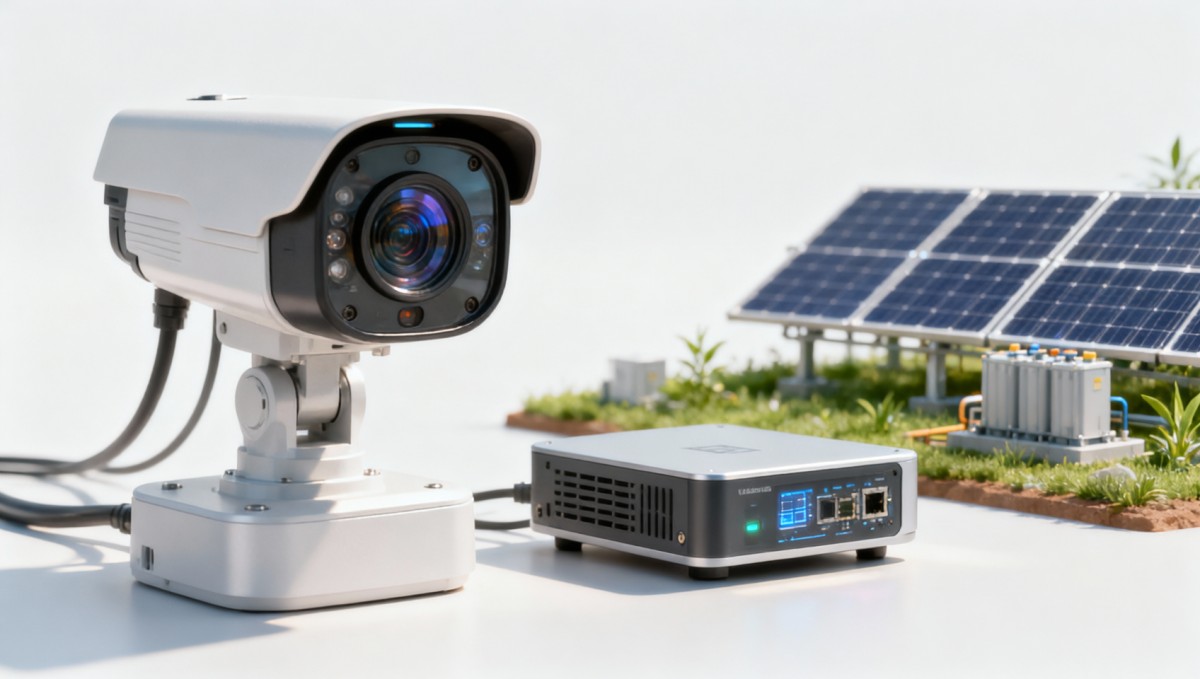
In renewable energy environments, a Vision AI camera is rarely a simple security device. It can support perimeter monitoring at solar farms, access control at battery energy storage sites, worker safety checks in wind turbine service areas, and remote asset verification in substations or hybrid microgrids. When teams misunderstand Vision AI camera accuracy, they often approve hardware that performs well in brochures but fails under dust, glare, heat, low light, and unstable network conditions.
That gap matters because renewable energy sites are operationally unforgiving. A camera that detects a person at 30 meters in a lab may drop critical classification reliability when the same scene includes backlit panels, reflective metal, rain, or moving shadows from turbine blades. For operators, this creates nuisance alarms. For procurement teams, it creates hidden lifecycle cost. For executives, it creates exposure in safety, compliance, and uptime.
NexusHome Intelligence approaches this problem from a data-first viewpoint. Instead of accepting claims such as “high AI accuracy” or “smart detection,” NHI evaluates measurable performance under protocol friction, edge processing limits, and real deployment stress. This is especially relevant where Zigbee, BLE, Thread, Wi-Fi, Ethernet, and edge gateways intersect across distributed renewable energy assets.
A practical reading of Vision AI camera accuracy begins with 4 questions: what is being detected, under which conditions, at what distance, and with what latency. If one of those 4 variables is missing, the accuracy statement is incomplete. In field projects, even a 200–500 ms delay in event classification can affect gate control logic, incident response sequencing, or local edge recording triggers.
What buyers often mistake for accuracy
Many teams confuse resolution with accuracy, AI labeling with reliable inference, and demo footage with operational repeatability. A 4 MP or 8 MP sensor may improve image detail, but it does not automatically guarantee stronger detection in fog, sunrise glare, or crowded scenes. Likewise, a model trained for indoor entrances can struggle in outdoor renewable energy installations where scene contrast changes every few minutes.
- Detection accuracy asks whether the camera notices a target at all.
- Classification accuracy asks whether it identifies the target correctly, such as person, vehicle, animal, or PPE event.
- Tracking stability asks whether it maintains the target consistently across 5–30 seconds of movement.
- System accuracy asks whether the full chain, including network, storage, edge computing, and alert logic, produces a usable result.
For renewable energy assets spread across remote terrain, the system view matters most. A technically good model can still underperform if bandwidth drops, packets are delayed, or edge hardware throttles during summer heat. That is why NHI’s benchmarking philosophy aligns so well with energy infrastructure buyers who need verifiable, deployment-ready evidence.
How to read Vision AI camera accuracy without being misled by vendor claims
When reading a data sheet or pilot report, start by separating marketing language from measurable indicators. Terms like “intelligent recognition,” “AI-enhanced monitoring,” or “ultra-accurate detection” are too broad to guide procurement. What matters is whether the vendor or lab provides test conditions, target size, scene complexity, lighting range, inference location, and event latency. Without those details, comparison across devices is unreliable.
A useful benchmark framework should cover at least 5 dimensions: target type, distance band, environmental stress, network conditions, and edge-to-alert delay. In renewable energy sites, these are not theoretical concerns. Solar plants may face strong noon reflection and dust accumulation. Wind farms may combine vibration, low temperatures, and difficult service access. Battery storage facilities often require strict zone monitoring with minimal false alarms.
The table below summarizes how to interpret common Vision AI camera accuracy claims in a way that supports engineering review, procurement comparison, and deployment planning.
The key lesson is simple: accuracy statements only become meaningful when tied to operating conditions. This is why NHI emphasizes protocol compliance, latency benchmarking, and stress testing rather than marketing phrasing alone.
The 3 accuracy layers that should appear in any serious evaluation
First, image-layer performance covers scene clarity, dynamic range, night handling, motion blur, and environmental resilience. Second, model-layer performance covers detection, classification, and tracking logic. Third, deployment-layer performance covers protocol transport, edge compute stability, storage continuity, and integration into alarms or dashboards. A camera may score well on layer one and two, yet fail at layer three when connected to congested site networks.
Red flags during comparison
- The vendor shows one “accuracy percentage” with no breakdown by daytime, nighttime, or weather.
- The test uses controlled indoor scenes that do not match outdoor renewable energy conditions.
- Inference latency is omitted even though the use case depends on quick access or response decisions.
- No mention is made of firmware updates, retraining cycles, or model drift over 6–12 months of operation.
For information researchers, these red flags help shortlist better candidates. For buyers, they reduce supplier comparison noise. For decision-makers, they improve budget approval quality because the conversation moves from vague AI promise to measurable operational value.
Which technical parameters matter most at solar, wind, storage, and smart grid sites
In renewable energy projects, accuracy cannot be isolated from site physics. A camera near photovoltaic arrays deals with intense reflected light and airborne dust. A wind project may require long-distance observation, irregular terrain, and low-temperature performance. Battery storage installations may focus more on access event verification, PPE monitoring, and restricted-zone intrusion analysis. Each environment changes how Vision AI camera accuracy should be interpreted.
The most relevant technical parameters usually fall into 6 groups: imaging, AI model behavior, processing location, network dependency, environmental protection, and integration method. Teams that only compare resolution and lens angle often miss the bigger risk drivers. A lower-resolution device with stronger edge inference and better dynamic range may outperform a higher-resolution device in real operations.
The following table helps map key evaluation dimensions to common renewable energy scenarios so technical teams and procurement teams can align faster during vendor review.
This scenario-based view makes selection more realistic. Instead of asking which camera has the “highest AI,” teams can ask which device maintains dependable Vision AI camera accuracy under the exact failure modes their energy site will face.
Parameter ranges worth discussing before pilot deployment
A pre-pilot review should define distance bands such as 5–15 meters, 15–30 meters, and over 30 meters, because performance may change sharply across those zones. It should also define environmental windows such as daytime high glare, night low illumination, and mixed weather periods over 2–4 weeks. Without a clear test window, vendor demonstrations can overrepresent best-case conditions.
NHI-style validation checkpoints
- Confirm the model task: intrusion, facial analysis, vehicle recognition, PPE, occupancy, or anomaly alert.
- Map protocol path: Ethernet, Wi-Fi, or gateway-linked path into the wider IoT environment.
- Measure edge or gateway latency under normal load and under interference or bandwidth reduction.
- Review thermal and uptime behavior during continuous operation over 24–72 hours.
- Compare alert usefulness, not only raw detection counts, because excessive false events erode operational trust.
This method reflects NHI’s broader philosophy: trust hardware only after standardized benchmarking translates technical claims into deployment evidence.
How procurement teams can compare vendors, pilots, and total deployment risk
Procurement rarely fails because one specification is missing. It fails because teams compare incompatible proposals. One supplier may quote cloud-based analytics, another on-device inference, and a third may rely on a separate gateway. If the comparison sheet does not normalize architecture, latency, maintenance burden, and integration effort, the lower upfront quote can become the higher operational cost within one or two maintenance cycles.
For renewable energy buyers, a good procurement framework should cover 5 categories: technical fit, field reliability, interoperability, compliance readiness, and support process. This is where NHI’s role as an engineering filter is valuable. Instead of merely cataloging products, the focus is on hard data that helps procurement leaders understand where hidden risk sits in the supply chain and deployment stack.
Before contract negotiation, buyers should ask for a pilot plan that runs at least 2–4 weeks, covers daytime and nighttime cycles, and reports both true positives and false positives. A one-day demo or showroom test is useful for familiarization, but not for purchase decisions on distributed energy infrastructure.
A practical vendor evaluation checklist
- Request the exact test scene definition, including target distance, camera height, and environmental conditions.
- Clarify whether Vision AI camera accuracy is measured on the device, at the gateway, or after cloud processing.
- Review firmware update policy, model tuning method, and rollback procedure if a new model degrades performance.
- Ask how the camera integrates with access systems, alarms, SCADA-adjacent dashboards, or building management layers.
- Confirm delivery scope: sample support, pilot support, commissioning inputs, and spare-part planning for remote sites.
These checks protect both budget and timeline. In many projects, the expensive mistake is not the camera itself but the rework caused by failed interoperability, excessive false alarms, or poor fit with site operations.
Common procurement misjudgments
One common error is assuming that a camera validated in commercial buildings will transfer cleanly to solar fields or substation edges. Another is choosing the model with the richest feature list even though only 2–3 analytics functions are operationally relevant. A third is overlooking local processing needs where uplink quality is inconsistent. In remote renewable energy deployments, edge performance often determines whether the solution remains useful after the pilot ends.
FAQ: what researchers, operators, and decision-makers ask most often
How should I compare two Vision AI camera accuracy claims if both look impressive?
Compare test conditions first, not the headline number. Check target type, range, lighting, weather exposure, and whether the result includes false positives. Then compare end-to-end latency and deployment architecture. If one camera processes locally within about 1–3 seconds and another depends on unstable uplink conditions, the field value may be very different even when their promotional accuracy looks similar.
Which renewable energy scenarios are most sensitive to false alarms?
Perimeter surveillance at solar farms, restricted-zone monitoring at battery storage facilities, and low-light service zones around wind assets are all sensitive. False alarms consume operator attention, reduce trust in the system, and may trigger unnecessary dispatches. In these scenarios, a balanced model with stable detection and manageable false positives often outperforms a “more aggressive” model that floods the control workflow.
What is a reasonable pilot duration before procurement?
A practical range is 2–4 weeks, long enough to cover day-night changes, weather variation, and network behavior. For higher-risk sites or multi-location programs, many teams benefit from a two-stage pilot: a short bench validation followed by a limited field deployment. The goal is not just to verify detection, but to see whether the camera fits operations, maintenance, and integration requirements.
Do standards and compliance issues affect how accuracy should be evaluated?
Yes. Accuracy is only one part of deployment suitability. Buyers should also examine cybersecurity handling, data retention logic, privacy constraints where applicable, environmental protection ratings, and protocol compatibility with the broader site architecture. In edge-heavy renewable energy environments, compliance-ready local processing and secure integration can be just as important as raw model performance.
Why is NexusHome Intelligence relevant if the project is outside a typical smart home setting?
Because the core problem is the same: fragmented protocols, uneven hardware quality, and marketing language that hides engineering limits. NHI’s value lies in standardized benchmarking, protocol-level scrutiny, and stress testing across connected hardware ecosystems. That methodology translates directly to renewable energy and smart infrastructure projects where trustworthy device behavior matters more than polished product claims.
Why work with NexusHome Intelligence when evaluating Vision AI camera accuracy
NexusHome Intelligence was built around one principle: engineering truth should sit between manufacturers and global buyers. For renewable energy stakeholders, that means less guesswork when reviewing Vision AI camera accuracy, protocol behavior, edge computing readiness, and hardware durability. Instead of relying on generalized claims, teams can move toward measurable selection criteria that support procurement, deployment, and long-term operation.
NHI’s approach is especially relevant when your project spans multiple ecosystems. A camera may need to interact with gateways, energy dashboards, access systems, or distributed monitoring nodes. In that context, accuracy is inseparable from interoperability. NHI’s benchmarking mindset helps expose the real behavior behind phrases such as “works with platform,” “low latency,” or “AI-ready integration.”
If you are planning a new deployment or comparing suppliers, you can consult NHI for practical inputs such as parameter confirmation, model selection logic, expected pilot scope, delivery-cycle discussion, protocol compatibility review, sample evaluation planning, and certification or compliance preparation. This is useful whether you are an information researcher building a shortlist, an operator validating field usability, a buyer comparing offers, or an executive reducing project risk.
A productive next step is to define 3 items before outreach: your site scenario, your required analytics tasks, and your preferred system architecture. With that information, discussions become more precise around sample support, benchmark criteria, edge versus cloud design, integration pathway, and quotation scope. In a market crowded with broad AI claims, the fastest route to a reliable decision is still the same: ask for data, compare under real conditions, and work with a partner focused on measurable performance rather than presentation language.
Protocol_Architect
Dr. Thorne is a leading architect in IoT mesh protocols with 15+ years at NexusHome Intelligence. His research specializes in high-availability systems and sub-GHz propagation modeling.
Related Recommendations
- Lina Zhao(Security Analyst)Vision AI Camera Accuracy: Which Test Conditions Matter Most
- Lina Zhao(Security Analyst)IP Camera Hardware Benchmarks: What Buyers Often Miss
- Lina Zhao(Security Analyst)How to Read Vision AI Camera Accuracy Without Guesswork
- Lina Zhao(Security Analyst)UL 2900-2-2:2026 Launches with Adversarial Robustness for Vision AI Cameras
- Lina Zhao(Security Analyst)UL 2900-2-2:2026 Enforces Adversarial Robustness for Vision AI Cameras
- Lina Zhao(Security Analyst)Japan PSE Expansion: Vision AI Smart Locks & IPC Cameras Require Certification from Apr 2026
- Lina Zhao(Security Analyst)What Vision AI camera tests say about real use
- Lina Zhao(Security Analyst)IP camera hardware benchmarks that reveal weak spots
- Lina Zhao(Security Analyst)How to compare Vision AI camera accuracy fairly
- Lina Zhao(Security Analyst)Vision AI Edge Cameras: What to Look For
Analyst