
Vision AI Edge Cameras: What to Look For
author
Choosing the right vision ai edge computing camera means looking beyond headline specs to what actually performs in renewable-energy sites and smart infrastructure. From starlight night vision lux rating and 4k ptz security camera bit rate to access control system integration and biometric spoofing resistance, buyers need verifiable data. This guide outlines the practical benchmarks that matter for operators, evaluators, and decision-makers seeking reliable, low-latency, field-ready edge vision systems.
Why renewable-energy projects need a different standard for Vision AI edge cameras
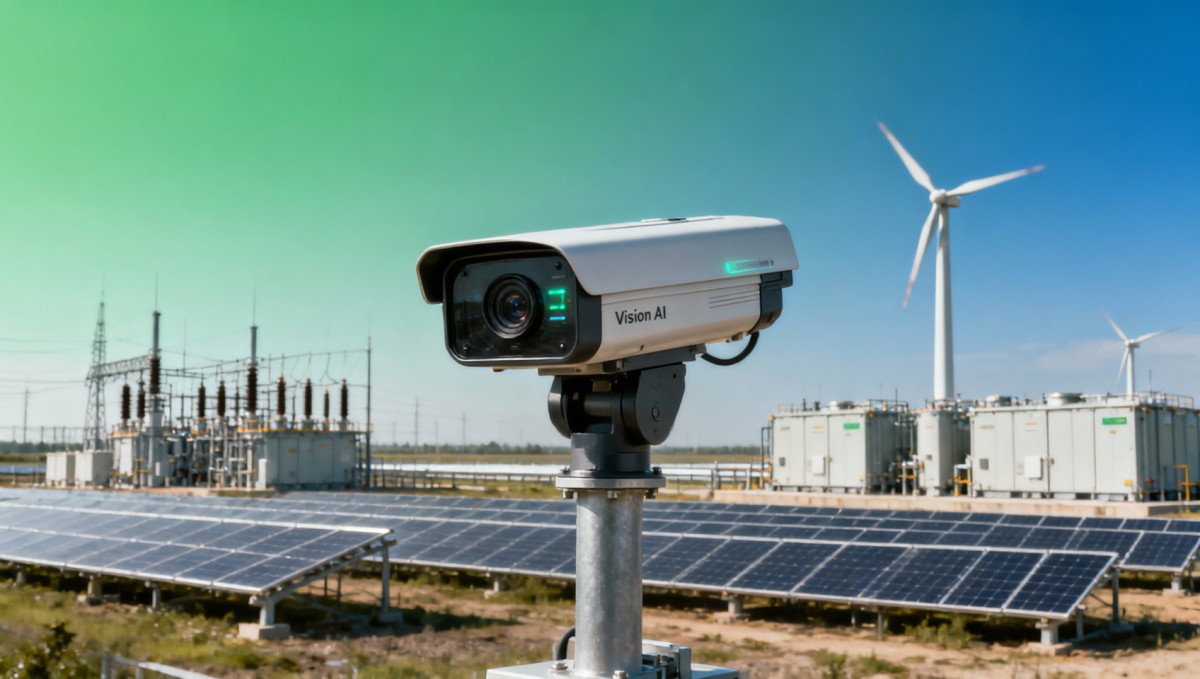
A Vision AI edge camera deployed at a solar farm, battery energy storage site, wind substation, or hybrid microgrid is not just another security endpoint. It becomes part of an operational technology environment where video analytics can support perimeter control, safety compliance, remote inspection, and event verification. In these settings, low latency, stable local inference, and protocol compatibility often matter more than glossy feature lists.
Renewable-energy sites also expose cameras to harsher conditions than typical commercial buildings. Equipment may run continuously for 24/7 monitoring, face dust, vibration, glare, rain, coastal corrosion, and large temperature swings, and still need to deliver usable analytics during low-light periods. A camera that works well in a showroom may fail when installed across a 5 km fenced perimeter or near reflective PV arrays.
This is where a data-driven evaluation approach becomes critical. NexusHome Intelligence focuses on measurable engineering truth rather than vendor slogans. For buyers dealing with fragmented ecosystems, the real question is not whether a device claims AI, edge, or integration support. The real question is whether it can process locally within an acceptable response window, maintain event accuracy under interference, and integrate with access control, alarms, and site management platforms without hidden bottlenecks.
For information researchers, the challenge is separating marketing language from field readiness. For operators, it is reducing false alarms and maintenance overhead. For business evaluators, it is understanding lifecycle cost, not only unit price. For enterprise decision-makers, it is choosing a platform that can scale from 10 cameras at a pilot site to 100 or more endpoints across distributed assets without creating a protocol or data-management burden.
What changes when the deployment site is a solar, wind, or storage facility?
Unlike indoor retail or office surveillance, renewable-energy deployments often combine remote geography with limited on-site staff. That means the camera must do more work locally. Edge inference can reduce upstream bandwidth consumption, shorten alert time, and maintain useful detection even when backhaul links fluctuate. In practical terms, many buyers should examine whether key events can be classified at the edge within milliseconds to low single-digit seconds, depending on the rule set and stream configuration.
The visual environment is also more difficult. Solar facilities create harsh contrast between bright panel reflection and shadowed walkways. Wind sites may require long-range monitoring under fog, rain, or low-light dawn conditions. Battery sites may demand smoke, thermal anomaly, or unauthorized-entry correlation with safety systems. These realities make image tuning, dynamic range behavior, bit rate control, and analytic robustness much more relevant than headline megapixel count alone.
Integration expectations are broader as well. A camera may need to interoperate with VMS platforms, intrusion alarms, access control, industrial gateways, and sometimes building or energy management layers. In fragmented IoT environments, protocol claims need verification. NHI’s benchmarking philosophy is especially relevant here: trust should be built on measured latency, confirmed interface behavior, and stress-tested performance under real workloads.
- Remote renewable sites usually need 3 layers of validation: image quality, edge analytics reliability, and systems integration stability.
- Typical evaluation periods run 2–4 weeks, because daylight, night conditions, and weather variability all affect actual performance.
- A pilot should include at least 3 event categories such as perimeter intrusion, operator access, and equipment-area exception detection.
Which technical benchmarks actually matter in procurement?
Procurement teams often receive spec sheets full of overlapping claims: starlight vision, AI detection, smart encoding, edge intelligence, and seamless integration. These terms are not useless, but they are incomplete. To compare a Vision AI edge camera meaningfully, buyers should normalize the evaluation around a short list of measurable benchmarks. This helps technical teams, sourcing teams, and management speak the same language during review.
For renewable-energy applications, five dimensions usually drive the outcome: low-light performance, stream and bit rate behavior, local inference latency, environmental durability, and integration capability. If one of these fails, the camera may still record video, but it may not support operational use. A camera that generates excessive false alarms at night or overwhelms limited network links can quietly erode ROI over 12–36 months.
The table below summarizes practical checkpoints that buyers can use during technical review, tender scoring, or pilot acceptance. The ranges are not brand claims. They are procurement-oriented evaluation references designed to keep teams focused on field performance rather than brochure language.
A useful procurement review should also document test conditions. For example, teams should note whether bit rate was measured with one stream or dual stream enabled, whether AI rules were active, and whether lighting was fixed or variable. Without these details, two cameras may appear similar on paper while behaving very differently in operation. That is exactly the type of gap NHI’s engineering-filter approach is designed to expose.
Five checkpoints that reveal real-world camera quality
1. Low-light image usability, not just a lux number
A low lux rating can be misleading if it produces blurred faces, lost edge detail, or noisy footage. Buyers should review sample footage at 3 points: early evening, deep night, and backlit dawn. For renewable assets, the question is whether an operator can still verify a person, vehicle, or boundary event quickly enough to act.
2. Bit rate efficiency under movement and zoom
A 4K PTZ security camera may look excellent during a static scene but spike bandwidth during pan, tilt, zoom, or vegetation movement. In a site with 20–50 cameras, such spikes can affect recording continuity. Test at multiple presets and across at least 2 compression profiles to understand the real network burden.
3. Edge inference when the network is imperfect
The value of an edge camera is not simply that AI runs on-device. It is that useful detection continues when uplinks are delayed or congested. For remote energy sites, a camera should maintain local rule execution, event buffering, and basic evidence retention even if cloud or central VMS connectivity degrades for minutes or longer.
4. Environmental tolerance over seasons
A successful pilot should account for thermal cycling, dust buildup, water exposure, and housing stability. In many regions, renewable assets experience broad operating envelopes across the year. The right product is one that remains predictable through those cycles, not one that looks best in a brief indoor demo.
How should buyers compare deployment options across solar, wind, and storage sites?
Not every site needs the same camera mix. A distributed rooftop solar network may prioritize compact fixed cameras and efficient remote management. A utility-scale solar farm may need a combination of fixed perimeter units and 4K PTZ security cameras for long-range verification. A battery energy storage system may place greater emphasis on gate control linkage, thermal awareness, and incident audit trails.
This means a good selection process is not only about choosing a camera model. It is about matching the analytic profile, enclosure robustness, mounting strategy, and integration path to the operating environment. Teams that skip this step often overspend on unnecessary hardware in one zone and under-specify critical zones in another.
The comparison below can help business evaluators and project leads align use case, feature priority, and likely deployment logic before asking for samples or quotations.
In practice, many portfolios benefit from a tiered design. For example, decision-makers may use 1 camera class for general coverage, a second for critical gates, and a third for PTZ verification points. This 3-tier strategy often simplifies spare parts planning, operator training, and future scaling more effectively than mixing too many camera families from different ecosystems.
A practical 4-step selection process
- Define the top 3 operational outcomes first: intrusion reduction, access-event verification, or remote inspection efficiency.
- Map each zone by distance, lighting condition, network quality, and environmental severity before requesting quotations.
- Run a 2–4 week pilot with day, night, and adverse weather checkpoints rather than a one-day demo.
- Score candidates using lifecycle factors such as analytics accuracy, firmware management, support responsiveness, and interoperability.
This process is especially valuable in fragmented protocol environments. A camera may stream video successfully yet still create hidden integration issues with alarms, access logs, or local edge gateways. NHI’s benchmarking mindset helps procurement teams ask the harder questions early, before large-scale rollout locks in avoidable complexity.
What are the most common buying mistakes and compliance gaps?
One frequent mistake is buying by resolution alone. More pixels do not guarantee better evidence or better AI. If a 4K stream forces aggressive compression, raises storage burden, or underperforms in low light, the practical result may be worse than a well-tuned lower-resolution stream. Buyers should judge resolution together with lensing, bit rate control, scene type, and analytics requirements.
Another mistake is assuming integration is simple because a product supports common interfaces such as ONVIF or standard APIs. In reality, event mapping, user roles, metadata formats, and access-control triggers may vary widely. For renewable-energy projects that combine OT security, contractor access, and remote monitoring, interface testing should be part of acceptance criteria, not an afterthought.
A third problem is ignoring governance around local processing and retention. Edge AI can reduce latency and bandwidth, but organizations still need clear rules for access, storage duration, evidence export, and system updates. Where facial or identity-linked workflows are involved, teams should review privacy, legal, and policy alignment before deployment. That is especially important when cameras are connected to biometric or access control system integration scenarios.
Finally, buyers sometimes treat environmental ratings as box-ticking items. Outdoor energy sites require more than a generic outdoor claim. Teams should review sealing, housing durability, maintenance intervals, mounting stability, and thermal behavior over time. A product that needs frequent cleaning, reset cycles, or manual tuning can create a hidden operating cost far beyond the purchase price in the first 12 months.
Checklist before issuing a purchase order
- Confirm 5 core items in writing: stream settings, local AI functions, supported integration methods, environmental rating scope, and firmware update process.
- Ask for pilot acceptance criteria with measurable thresholds such as alert delay, false alarm review process, and retention behavior during link interruption.
- If biometric workflows are planned, verify liveness or anti-spoofing logic, fallback credentials, and operational procedures for failure cases.
- Review ongoing support items: spare policy, replacement lead time, software maintenance cadence, and remote diagnostic capability.
FAQ for project teams and procurement reviewers
How do I know whether a Vision AI edge camera is truly suitable for renewable-energy sites?
Use a field pilot, not only a desktop review. The test should cover at least 3 conditions: daytime high contrast, nighttime low light, and network fluctuation. If the camera maintains usable evidence, stable event reporting, and manageable bit rate behavior across those conditions for 2–4 weeks, it is a stronger candidate than one with a richer brochure but no field data.
What should I prioritize first: low-light performance or AI features?
For most perimeter and access workflows, start with usable image quality under real site lighting. AI depends on the image pipeline. If the scene is noisy, blurred, or overexposed, analytics quality usually drops. In practical terms, low-light image usability and edge inference reliability should be evaluated together rather than treated as separate purchase items.
Does access control system integration really matter if I only need monitoring today?
Often yes. Many renewable-energy projects begin with monitoring and later add contractor management, restricted-zone logging, or remote gate workflows. Choosing a camera platform that can exchange events with access and alarm systems reduces future retrofit cost. This matters even more in portfolios expected to scale across multiple sites within 12–24 months.
When is biometric spoofing resistance relevant?
It becomes relevant whenever facial or identity-assisted entry is part of a security workflow. For unmanned or lightly staffed sites, convenience should never replace risk control. Buyers should ask how liveness is handled, how failure is escalated, and what backup method is used if conditions such as helmets, glare, rain, or low light reduce match confidence.
Why work with a data-driven evaluation partner before rollout?
In a market crowded with protocol silos and generic performance claims, a neutral technical filter can save both time and capital. NexusHome Intelligence approaches Vision AI edge cameras the same way it approaches broader connected infrastructure: by translating vendor claims into measurable benchmarks. That means looking at latency, interoperability, environmental consistency, and field stress behavior instead of stopping at specification headlines.
For renewable-energy stakeholders, this approach supports better decisions at different levels. Operators gain systems that are easier to trust in daily use. Business evaluators gain clearer total-cost and risk visibility. Enterprise decision-makers gain a more defensible basis for standardizing equipment across future projects. In many cases, the value of proper selection appears not in the first week, but over 12–36 months of uptime, reduced false dispatch, and lower integration friction.
If you are comparing Vision AI edge camera options for solar, wind, storage, or smart infrastructure projects, the next step should be a structured review rather than a generic price inquiry. A useful discussion can cover 6 practical topics: parameter confirmation, site-specific product selection, expected delivery window, customization scope, certification or compliance expectations, and sample support for pilot testing.
You can also use that conversation to clarify 4 decision points early: whether 4K PTZ security camera coverage is truly necessary in each zone, how much local inference is needed at the edge, whether access control system integration is part of the near-term roadmap, and how biometric spoofing resistance should be handled if identity-linked entry is planned. These details help avoid mismatched specifications and unnecessary cost.
For teams that want a more reliable shortlist, NHI can help frame the evaluation around testable criteria instead of marketing language. That includes defining pilot scenarios, comparing option tiers, identifying integration risks, and aligning the final selection with operational goals in renewable-energy environments. The result is a camera strategy built on engineering truth, not brochure assumptions.
Protocol_Architect
Dr. Thorne is a leading architect in IoT mesh protocols with 15+ years at NexusHome Intelligence. His research specializes in high-availability systems and sub-GHz propagation modeling.
Related Recommendations
- Lina Zhao(Security Analyst)Vision AI Edge Cameras: What to Look For
- Lina Zhao(Security Analyst)Starlight Night Vision Lux Rating: How Low Is Good
- Lina Zhao(Security Analyst)4K PTZ Camera Bit Rate: How Much Is Enough
- Lina Zhao(Security Analyst)Can 5-axis CNC for aerospace impellers handle Inconel 718 without premature tool wear?
- Lina Zhao(Security Analyst)Verified IoT manufacturers: What happens when ‘verified’ doesn’t mean ‘tested’?
- Lina Zhao(Security Analyst)IP camera hardware benchmarks: Why Vision AI accuracy drops sharply below 10 lux—even with ‘low-light’ labels
- Lina Zhao(Security Analyst)Vision AI camera accuracy: Why resolution alone fails to predict face recognition reliability in outdoor lighting
- Lina Zhao(Security Analyst)IoT Hardware Benchmarking: Why Vision AI Sensors Score High in Labs But Struggle With Edge Lighting
- Lina Zhao(Security Analyst)Vision AI in fall-detection systems introduces new false-positive risks
- Lina Zhao(Security Analyst)Machine vision lens specifications: How chromatic aberration skews measurement accuracy in multi-spectral sorting
Analyst