
IP camera hardware benchmarks that reveal weak spots
author
In renewable energy sites and smart infrastructure, IP camera hardware benchmarks expose where weak spots hide behind glossy specs. For procurement teams, operators, and evaluators, NexusHome Intelligence delivers IoT hardware benchmarking, Matter protocol data, and smart home hardware testing that turn sourcing risk into measurable insight. This is IoT engineering truth for building a verified IoT manufacturers shortlist and a more resilient IoT supply chain.
Why do IP camera hardware benchmarks matter so much in renewable energy operations?
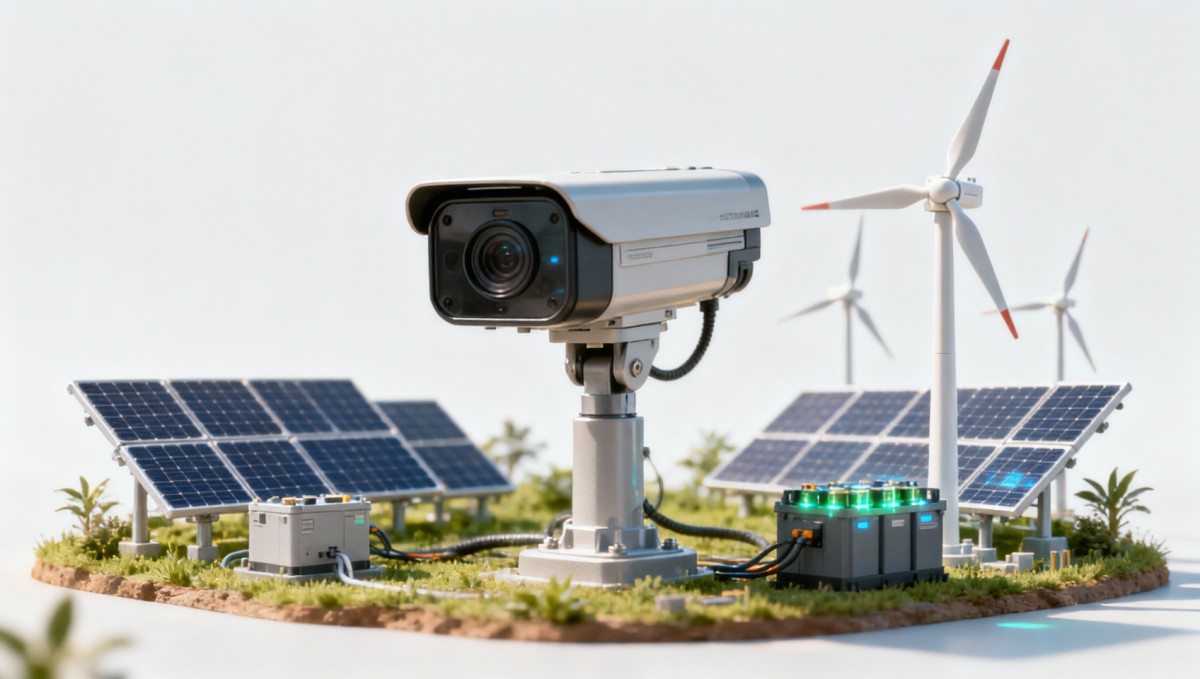
At a solar farm, wind substation, battery energy storage site, or hybrid microgrid, an IP camera is not just a surveillance device. It becomes part of the site’s operational visibility layer, often linked with alarms, access control, edge analytics, and remote maintenance workflows. When hardware quality is weak, the first warning signs rarely appear in a brochure. They show up after 30–90 days of field use through unstable night imaging, thermal drift, dropped packets, or rising power draw.
This matters even more in renewable energy because the environment is harder on electronics than a standard indoor building. Cameras may face dust, salt mist, glare, vibration, rapid temperature swings, and long cable runs. A unit that performs acceptably in a showroom can fail under continuous outdoor duty cycles of 24/7 operation. For operators, that means blind spots. For procurement teams, it means hidden replacement costs. For business evaluators, it means underestimated lifecycle risk.
NexusHome Intelligence approaches this problem as a data-driven benchmarking laboratory rather than a marketing directory. In a fragmented IoT ecosystem where Wi-Fi, BLE, Thread, Matter, and proprietary stacks often collide, hardware claims must be translated into measurable engineering evidence. Benchmarks help teams compare image sensors, storage endurance, network resilience, enclosure quality, standby power, and edge processing behavior under realistic site conditions instead of relying on vague claims such as “industrial grade” or “ultra-low power.”
For renewable energy buyers, three questions usually shape the decision. First, can the camera remain stable during long operating cycles of 12–24 months between major maintenance windows? Second, can it integrate with mixed infrastructure, including legacy VMS platforms, smart access systems, and emerging IoT protocols? Third, can the supplier provide hardware consistency across pilot, mid-volume, and large rollout phases? Benchmarks reveal weak spots before deployment scale makes them expensive.
- Operators need predictable uptime, clear imaging in changing light, and alert reliability during night shifts and severe weather events.
- Procurement teams need objective comparison points for total cost of ownership, not only unit price per camera.
- Business evaluators need supply-chain transparency, protocol compatibility, and realistic deployment risk indicators.
Which hardware weak spots do benchmarks usually uncover first?
Weak spots in IP camera hardware often begin at component level, not at feature level. A specification sheet may emphasize 4 MP, 8 MP, H.265, AI detection, or IP rating, but the real reliability story depends on the sensor, PCB assembly quality, thermal design, lens sealing, memory endurance, and power subsystem behavior. In renewable energy installations, small weaknesses tend to compound over 6–18 months because cameras remain exposed to heat, vibration, and irregular network conditions for longer periods than typical commercial deployments.
One common issue is thermal stress. Cameras mounted on metal poles, inverter rooms, perimeter fences, or containerized battery systems may experience wide surface temperature variation between day and night. When heat dissipation is poor, image noise rises, edge analytics accuracy falls, and reboot frequency may increase. Benchmarking should therefore include temperature cycling ranges that reflect outdoor energy infrastructure rather than only office conditions. Even a 5–10°C difference in enclosure heat retention can influence long-duration stability.
Another weak spot is network resilience under interference and congestion. Renewable energy sites often combine wireless bridges, industrial switches, remote routers, and segmented control networks. If the camera’s network interface or firmware buffer management is weak, video delay and packet loss become visible during alarm events or after power recovery. This is why NHI places strong emphasis on connectivity and protocols. Claims of “seamless integration” are less useful than benchmarked latency, reconnection behavior, and interoperability with mixed edge devices.
Storage and power are also frequent failure points. Low-end flash memory can wear faster under constant recording, while unstable PoE design may trigger brownout behavior during cable loss or peak load conditions. For off-grid and hybrid energy locations, every watt matters. A camera drawing a few extra watts continuously across 50–200 units changes thermal load, UPS sizing, and backup runtime. Hardware benchmarks reveal these hidden costs before procurement locks in the wrong platform.
Key weak spots that benchmarking should measure
The table below summarizes the most common IP camera hardware weaknesses seen in renewable energy projects and the benchmark indicators that help identify them early.
For procurement teams, this table supports a more disciplined shortlist process. Instead of comparing only resolution and AI labels, buyers can rank vendors against operational stress points that directly influence maintenance frequency, downtime exposure, and integration stability.
How should procurement teams compare IP cameras for solar, wind, and storage sites?
A useful procurement method begins with scenario segmentation. Solar farms typically need perimeter coverage, inverter pad observation, weather-related visibility, and remote fault verification. Wind sites often require tower base monitoring, substation security, and harsh-weather resilience. Battery energy storage systems require thermal event visibility, enclosure access control support, and dependable operation near electrically noisy equipment. Each use case changes the benchmark priority, so a single universal score rarely works.
For practical sourcing, NHI recommends using at least 5 core evaluation dimensions: hardware stability, imaging consistency, network behavior, energy profile, and integration compatibility. Procurement should then pair these with 3 commercial filters: delivery lead time, batch consistency, and post-sample engineering responsiveness. This prevents a common mistake in B2B buying, where a good sample unit masks weak mass-production consistency or slow firmware support after deployment.
Another important step is to define acceptance thresholds before requesting samples. For example, teams can set target ranges for startup recovery time, expected low-light performance, cable tolerance, and local recording retention. Thresholds do not need to be brand-specific. They need to be project-specific. A substation perimeter camera and a container-interior monitoring camera may share the same housing family but require different low-light, thermal, and networking priorities.
The comparison table below helps users, buyers, and commercial evaluators align technical and commercial judgment. It is designed for renewable energy projects where IP camera hardware benchmarking must support both engineering quality and supply-chain decision-making.
The most effective sourcing decisions combine this comparison model with sample-stage stress validation over 7–15 days, followed by limited pilot deployment over 2–4 weeks. That timeline is often long enough to expose thermal weakness, unstable reconnection behavior, or firmware inconsistency without delaying procurement excessively.
A practical 4-step shortlist process
- Define the site category: solar, wind, BESS, hybrid microgrid, or renewable-powered commercial facility.
- Set 5 benchmark priorities: thermal stability, image clarity, power draw, network recovery, and integration fit.
- Request sample documentation that covers hardware revision, firmware version, and common accessory compatibility.
- Run staged validation from bench test to field pilot before confirming medium or large batch procurement.
What technical and compliance checks should not be skipped?
In renewable energy infrastructure, missing a compliance or implementation detail can create more downstream cost than selecting a slightly more expensive camera. The core issue is not only legal compliance. It is operational fit. A camera that passes a basic indoor acceptance review may still be unsuitable for outdoor energy assets if enclosure sealing, surge tolerance, or firmware logging behavior are not checked properly during evaluation.
At the hardware level, teams should confirm the practical environmental rating, connector durability, and cable interface design. At the system level, they should review interoperability with VMS software, access systems, and edge analytics nodes. At the governance level, they should assess cybersecurity hygiene, local processing options, data retention settings, and update management. This aligns closely with the NHI view that trust should come from verifiable technical evidence, not polished claims.
Where data handling is involved, local regulations and customer policies may require defined retention periods, role-based access, and event log visibility. If cameras support AI features, buyers should ask whether inference runs locally, on an edge gateway, or in the cloud. In some energy projects, especially commercial renewable campuses and distributed assets, local processing within a few hundred milliseconds may be preferred to reduce bandwidth use and improve response time.
The checklist below is useful during sample review, vendor clarification, and commercial approval. It focuses on practical checks rather than promotional claims, helping procurement and business evaluation teams keep the process measurable.
Minimum review checklist before batch approval
- Environmental fit: confirm expected operating range, enclosure suitability for dust and moisture exposure, and cable sealing for outdoor use.
- Power behavior: measure active and standby consumption, startup stability, and tolerance across realistic cable lengths and switch loads.
- Protocol behavior: verify ONVIF or other required interface behavior, event delivery, time sync, and recovery after network interruption.
- Security controls: review credential management, firmware update process, logging visibility, and segmentation compatibility.
- Batch consistency: request revision control details and confirm whether pilot samples match production BOM planning.
These checks are especially important when sourcing from multiple manufacturing regions or when comparing OEM and ODM options. A supplier that communicates clearly on revision control, sample support, and engineering exceptions is often lower risk than one with a lower quoted price but vague technical responses.
Common standards and practical references
Depending on project scope, buyers often review common references such as ingress protection ratings, electromagnetic compatibility requirements, electrical safety, network security policies, and interoperability expectations around ONVIF or related video protocols. The right checklist depends on whether the camera is used for perimeter security, process observation, or integrated smart site analytics. What matters is not listing standards for appearance, but mapping them to the actual risk profile of the installation.
What are the most common buying mistakes, and how can NHI help reduce them?
A frequent mistake is overvaluing headline resolution while undervaluing the supporting hardware. In renewable energy projects, an 8 MP camera with unstable thermal performance can be less useful than a lower-resolution device with better sensor tuning, stronger power stability, and cleaner network recovery. Another mistake is approving a vendor after a short indoor demo without field validation. Weak spots in enclosures, storage endurance, or firmware only emerge after repeated cycles, often within the first 2–8 weeks.
Procurement teams also sometimes treat cameras as isolated SKUs rather than components in a broader IoT and smart infrastructure architecture. This creates later friction with access control, edge processing, and mixed protocol environments. NHI’s value is that benchmarking does not stop at the camera shell. It connects device behavior with broader ecosystem reality: protocol silos, interference, latency, hardware consistency, and field stress. That is particularly relevant where renewable energy assets are becoming more intelligent, distributed, and remotely managed.
For business evaluation teams, another hidden risk is supplier opacity. Two sample units may look identical while internal component quality, PCBA precision, or firmware discipline differ significantly across batches. Independent benchmarking helps expose these differences earlier. This supports stronger RFQ decisions, cleaner bid comparisons, and more reliable verified IoT manufacturers shortlists. In a market full of broad claims, comparative evidence becomes a purchasing asset.
NHI can support teams that need sharper visibility before scale decisions. That may include IoT hardware benchmarking, comparative sample review, protocol and latency assessment, smart home hardware testing adapted to smart energy environments, and structured guidance for building a lower-risk supplier shortlist. The goal is not to add paperwork. The goal is to reduce uncertainty where technical failure becomes operational cost.
FAQ for operators, buyers, and commercial evaluators
How long should an IP camera sample test run before procurement approval?
A practical approach is a 7–15 day bench and environmental review, followed by a 2–4 week limited field pilot if the project is medium or large scale. This duration usually exposes unstable startup behavior, image inconsistency, heat-related noise, and network reconnection weakness without slowing the buying process too much.
Which metric matters more in renewable energy sites: resolution or power draw?
Neither should be judged in isolation. Resolution matters for incident review and remote verification, but power draw affects PoE planning, enclosure temperature, and backup runtime. For remote solar, wind, or BESS locations, buyers should assess at least 3 linked metrics together: image usability, continuous power consumption, and stability after power or network interruption.
Are Matter or broader IoT protocol considerations relevant to IP cameras?
They are relevant when the camera is part of a wider smart infrastructure stack, especially where access events, sensors, edge controllers, or building-energy systems interact. Even if video transport itself uses established IP methods, broader IoT interoperability still affects alarms, automation workflows, and future integration choices. This is why NHI examines connectivity and protocol behavior, not only camera imaging.
What should be included in a supplier discussion before requesting a quote?
Ask for hardware revision details, expected lead time ranges, sample availability, firmware update policy, integration support scope, environmental use assumptions, and whether pilot samples reflect intended production BOM. For larger programs, also discuss batch consistency controls and how exceptions are handled during 3 stages: sample, pilot, and scaled delivery.
Why choose a data-driven benchmarking partner before final supplier selection?
Choosing IP cameras for renewable energy assets is no longer a simple catalog exercise. The decision affects security visibility, maintenance efficiency, integration cost, and long-term infrastructure resilience. When protocol fragmentation, supplier variability, and harsh operating conditions all intersect, benchmarking becomes a commercial control tool as much as a technical one.
NexusHome Intelligence is built for this gap. Our role is to serve as an engineering filter between complex global supply chains and the teams responsible for procurement, operation, and business evaluation. We focus on verifiable hardware behavior, protocol realism, and structured comparison logic that helps separate strong suppliers from attractive presentations.
If you are screening IP camera hardware for a solar project, wind installation, BESS facility, smart building tied to renewable power, or a broader energy IoT rollout, you can contact NHI for concrete support. We can help you confirm key parameters, compare sample units, review protocol fit, discuss delivery cycles, evaluate customization feasibility, clarify compliance considerations, and structure quotation discussions around measurable benchmark priorities.
A stronger shortlist starts with better evidence. If your team needs clearer guidance on product selection, supplier comparison, sample support, lead time planning, or renewable energy site benchmarking, NHI can help turn hardware uncertainty into a more defensible sourcing decision.
Protocol_Architect
Dr. Thorne is a leading architect in IoT mesh protocols with 15+ years at NexusHome Intelligence. His research specializes in high-availability systems and sub-GHz propagation modeling.
Related Recommendations
- Lina Zhao(Security Analyst)UL 2900-2-2:2026 Enforces Adversarial Robustness for Vision AI Cameras
- Lina Zhao(Security Analyst)Japan PSE Expansion: Vision AI Smart Locks & IPC Cameras Require Certification from Apr 2026
- Lina Zhao(Security Analyst)What Vision AI camera tests say about real use
- Lina Zhao(Security Analyst)IP camera hardware benchmarks that reveal weak spots
- Lina Zhao(Security Analyst)Vision AI Edge Cameras: What to Look For
- Lina Zhao(Security Analyst)Starlight Night Vision Lux Rating: How Low Is Good
- Lina Zhao(Security Analyst)4K PTZ Camera Bit Rate: How Much Is Enough
- Lina Zhao(Security Analyst)What Makes a Good IP67 Outdoor WiFi Camera OEM
- Lina Zhao(Security Analyst)How to Pick a Tuya Video Doorbell Manufacturer
- Lina Zhao(Security Analyst)Sensor fusion with lidar and camera in low-visibility conditions
Analyst