
How to compare Vision AI camera accuracy fairly
author
In renewable energy projects, comparing Vision AI camera accuracy fairly requires more than vendor claims—it demands repeatable tests, protocol-aware benchmarking, and trusted data. For procurement teams, operators, and evaluators navigating the IoT supply chain, NHI brings IoT engineering truth through smart home hardware testing, IP camera hardware benchmarks, and Matter protocol data that reveal real-world performance, compliance, and long-term reliability.
Why fair Vision AI camera accuracy testing matters in renewable energy operations
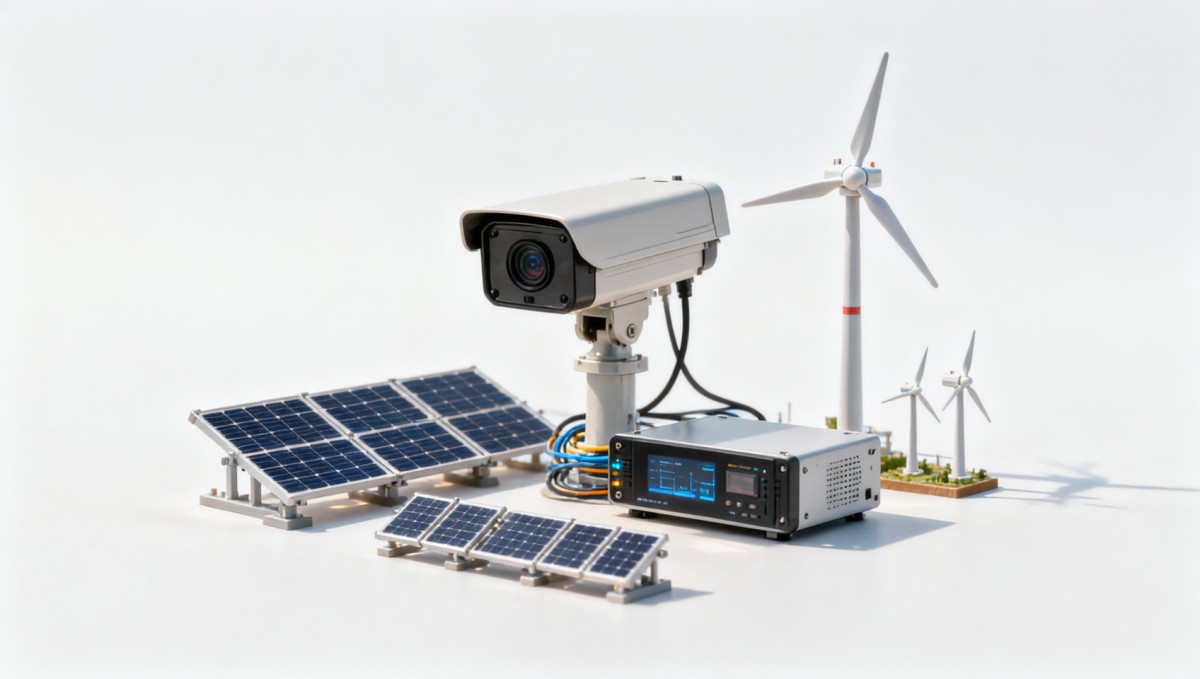
A Vision AI camera installed at a solar farm, wind substation, battery energy storage site, or distributed energy facility is not just a security device. It often supports perimeter monitoring, PPE compliance checks, vehicle detection, thermal event review workflows, and restricted-zone access control. If accuracy is measured unfairly, buyers may approve hardware that performs well in lab demos but fails under dust, glare, vibration, rain, or weak network conditions.
This is where many procurement decisions go wrong. One vendor reports high detection accuracy based on short indoor tests. Another highlights edge AI speed without disclosing image resolution, false alarm rate, or packet loss during remote transmission. In renewable energy environments, these missing details matter because operating conditions can shift across 3 daily light phases, 4 seasons, and temperature bands that commonly range from below freezing to above 40°C depending on geography.
NexusHome Intelligence approaches this problem as an engineering benchmarking task, not a brochure comparison exercise. Fair comparison means using the same scene categories, the same distance bands, the same target definitions, and the same network constraints. It also means separating computer vision model accuracy from camera sensor quality, edge processor latency, and protocol stability across Zigbee, Thread, BLE, Wi-Fi, Ethernet, or Matter-connected supervisory systems.
For operators, the goal is fewer missed events during continuous runtime. For procurement teams, the goal is lower lifecycle risk across 12–36 month deployment cycles. For business evaluators, the goal is evidence that the device can support compliance, uptime, and measurable site performance. A fair test framework creates a shared decision language between engineering, operations, and purchasing.
- Operational teams need stable performance during dawn, noon glare, dusk shadow, and night IR switching.
- Procurement teams need comparable metrics across at least 3 core dimensions: detection accuracy, false alert control, and integration reliability.
- Commercial evaluators need proof that camera accuracy translates into reduced manual review time, lower incident response delay, and predictable maintenance planning.
What does a fair comparison framework actually include?
A fair Vision AI camera benchmark starts by defining the use case before the metric. A camera used to detect unauthorized entry at a battery enclosure should not be scored the same way as a camera used to count service vehicles near an inverter station. Procurement teams should divide testing into 3 layers: image capture quality, AI inference performance, and system-level delivery performance including latency, storage, and protocol behavior.
The next step is to standardize the scene. This typically means fixed test distances such as near-field, mid-range, and far-field observation bands, fixed target sizes, and repeated runs across changing illumination. A useful procurement-grade benchmark usually covers at least 20–30 repeated events per scene condition so one-off outliers do not distort the result. Fairness improves when every camera is tested with the same mount height, angle tolerance, and compression settings.
Teams also need to measure error types separately. High raw detection may still hide weak operational value if false positives trigger too many alarms in windy turbine areas or reflective solar array corridors. In practice, buyers should distinguish between missed detection, false detection, delayed detection, and identification downgrade under low bandwidth. This gives a much clearer picture than a single headline “accuracy” percentage.
Because NHI focuses on hard data, protocol-aware benchmarking is essential. A camera that performs well on isolated local tests may degrade when connected to a mixed IoT environment with edge nodes, gateways, and building or microgrid controls. Fair comparison therefore includes network congestion simulation, edge storage fallback, and interoperability checks over common deployment windows such as 24-hour runs, 72-hour stability observation, and weekly log review.
Core benchmarking dimensions procurement teams should request
Before asking for pricing, request a normalized test matrix. This keeps the discussion grounded in measurable evidence and reduces the risk of selecting a camera based on feature lists alone.
This table shows why a fair Vision AI camera comparison is broader than image recognition alone. For renewable energy buyers, real value lies in stable event handling across difficult field conditions, not just in a polished dashboard demonstration.
How NHI-style testing reduces decision bias
An independent benchmark reduces bias in 4 ways. First, it removes self-selected vendor conditions. Second, it forces comparable protocol and edge-computing settings. Third, it links camera performance to actual deployment architecture. Fourth, it turns subjective claims such as “works with Matter” or “optimized for smart sites” into measurable outputs such as event delivery delay, multi-node behavior, and interoperability limits.
This matters especially in hybrid energy sites where security, access control, and energy monitoring overlap. A camera can be technically accurate yet commercially risky if local processing is too slow, storage endurance is weak, or integration with facility controls requires unexpected middleware. Fair testing reveals these hidden costs before purchase orders are signed.
Which metrics should operators, buyers, and evaluators compare side by side?
Many teams compare only resolution, frame rate, and AI model labels. That is not enough. A more useful framework looks at 5 decision layers: sensor capture, inference quality, event reliability, system interoperability, and maintainability. This is particularly relevant for renewable energy assets that may operate in remote or semi-remote conditions where every truck roll, reset visit, or firmware recovery adds cost.
For site operators, two practical metrics are false alarm frequency per review cycle and average event review burden per shift. For procurement managers, compare the expected commissioning effort over 2–4 weeks, the support model for firmware updates, and whether logs can be exported in usable formats. For business evaluators, compare the probability of hidden integration cost versus the initial hardware price difference.
It is also wise to compare performance under degraded conditions rather than ideal ones. If packet loss rises, if edge compute temperature increases, or if low-light switching occurs during a storm front, can the system still classify events reliably enough for site operations? A fair comparison should include at least one stressed scenario and one normal scenario for every shortlisted camera.
The table below summarizes a procurement-oriented comparison structure that can be used in RFQ, technical clarification, or pilot-stage evaluation. It helps teams score cameras beyond marketing language and keeps the conversation tied to real deployment outcomes.
When buyers compare these metric groups side by side, they can spot an important truth: a lower-cost unit may generate a higher operational burden, while a more expensive unit may still be poor value if interoperability is limited. Fair accuracy comparison is therefore inseparable from total system performance.
A practical scoring model for shortlisting
A simple shortlist model can help align technical and commercial teams. Use weighted scoring rather than a pass-fail checklist. For example, teams often allocate more weight to site-specific detection quality and lower weight to cosmetic software features. The final weighting should reflect whether the camera is intended for security, safety workflow, or operational analytics.
- Define 5–7 scoring criteria before vendor demos begin.
- Run a pilot over 7–14 days with both normal and stressed site conditions.
- Score each criterion using evidence from logs, event samples, and review workload.
- Separate initial hardware price from integration and maintenance burden.
This approach is consistent with NHI’s data-driven philosophy. It translates fragmented vendor claims into a structured benchmark that procurement teams can defend internally and operational teams can trust after deployment.
How to design a repeatable field test without favoring one vendor
A repeatable field test should mimic the real energy site while keeping variables controlled. Start by choosing 3 representative zones, such as a perimeter fence line, an equipment enclosure area, and a service road or loading point. Each zone should include a clear task definition: human intrusion detection, vehicle recognition, PPE observation, or restricted-access verification. This prevents vendors from optimizing for one easy scenario and presenting it as universal accuracy.
Next, align installation conditions. Camera height, field of view, recording mode, and compression settings should be matched as closely as practical. If edge AI is enabled, compute mode and event rule logic should also be documented. Teams should run each scenario over multiple time blocks, such as morning, midday, evening, and night, because solar glare and shadow movement can dramatically change visual behavior across a single day.
Procurement teams should insist on logging both the event and the context. For example, if an alert is missed, was the target partially occluded, was the network congested, or did the edge node throttle performance? This type of incident annotation is crucial because it separates model weakness from deployment weakness. Over a 7-day or 14-day pilot, this record becomes more useful than isolated accuracy claims.
One more issue often ignored is cleaning and maintenance state. Dust accumulation on outdoor lenses can change practical accuracy over time. In renewable energy sites exposed to airborne particles, pollen, moisture, or salt air, teams should evaluate performance at baseline and again after a realistic interval such as 2–4 weeks of field exposure, especially if the procurement plan expects low-touch maintenance.
Recommended field test checklist
- Use the same target classes, confidence settings, and event retention rules for every tested device.
- Cover at least 3 environmental states: normal light, challenging glare or shadow, and low-light or night mode.
- Record at least 1 stressed network period to observe event delay, buffering, or packet recovery behavior.
- Review not only event counts, but also operator handling time and the clarity of exported evidence.
Common mistakes that make a comparison unfair
The first mistake is using vendor-provided clips instead of live field conditions. The second is allowing one brand to use a wider lens or higher bandwidth profile. The third is ignoring system latency because the AI model appears accurate on-device. The fourth is treating a 1-day test as enough evidence for a site expected to operate continuously for months. Each mistake introduces decision bias and increases the chance of post-installation disappointment.
An engineering-led benchmark avoids those traps. That is why NHI emphasizes repeatable protocols, stress testing, and transparent measurement definitions. The goal is not to produce a flattering result. The goal is to reveal how the hardware behaves when deployed in the mixed, fragmented, protocol-heavy reality of modern infrastructure.
What procurement teams should verify before issuing an RFQ or pilot order
Before moving to quotation, teams should convert operational needs into procurement criteria. In many renewable energy projects, the camera is one node in a broader stack that may include gateways, access systems, alarm relays, edge analytics, and supervisory platforms. If the RFQ asks only for camera specifications, suppliers will answer with catalog language rather than deployment-ready evidence.
A stronger RFQ requests 6 practical items: scene-based accuracy evidence, false alarm handling, edge processing details, integration method, maintenance expectations, and delivery lead time. Typical sample evaluation cycles may run 2–6 weeks depending on site access, while commercial orders may require staged delivery if the project includes multiple substations, rooftops, or solar blocks. Procurement language should reflect that reality.
Commercial evaluators should also check replacement and scaling logic. Can the same platform support small pilot volumes, medium deployment batches, and larger rollouts without changing data formats or event logic? Can the vendor explain firmware management and compatibility with adjacent smart infrastructure? In fragmented IoT environments, future interoperability often determines the true commercial value of a current purchase.
This is where NHI’s role becomes valuable. By turning vendor promises into benchmark-ready questions, NHI helps buyers compare Vision AI cameras with technical discipline. That includes protocol awareness, stress-test thinking, and a supply-chain view that prioritizes engineering integrity over polished sales language.
RFQ and pilot questions worth asking
- Which accuracy metrics were measured in outdoor scenes, and how were missed detections separated from false alarms?
- What happens to event delivery during packet loss, gateway interruption, or edge storage failover?
- Which protocols, APIs, or platform interfaces are available for smart site integration?
- What maintenance interval is assumed for lens cleaning, firmware review, and field replacement?
- What is the expected sample lead time, pilot support window, and typical staged shipment approach?
Standards, compliance, and documentation context
Not every project requires the same regulatory depth, but buyers should still ask about data handling, local processing, access control logging, and cybersecurity posture. If the camera supports edge processing for privacy-sensitive tasks, teams should verify how data retention and export are configured. If the deployment is tied to critical infrastructure, documentation quality matters almost as much as raw camera performance.
At a minimum, commercial and technical teams should request installation manuals, firmware lifecycle information, interface documentation, and environmental operation guidance. These documents support internal review, external audit preparation, and smoother commissioning. In practical terms, clear documentation can shorten acceptance time and reduce integration rework during the first deployment phase.
FAQ and next step: how to turn benchmark data into a confident buying decision
Once a team has a fair benchmark, the next challenge is decision execution. The questions below reflect what operators, procurement managers, and business evaluators most often need to clarify before moving from comparison to implementation.
How many cameras should be included in a pilot?
A pilot should cover enough variation to expose real limitations. In many renewable energy sites, 3–5 cameras across different zones give a better picture than a single-device demo. This allows teams to test glare, distance, traffic pattern, and network variation without overcommitting budget. The ideal number depends on site layout and risk profile, but a multi-zone pilot is usually more reliable than a single-point evaluation.
What is the most overlooked metric in Vision AI camera accuracy comparison?
False alarm burden is often underestimated. A camera can show strong detection rates yet still overload staff with irrelevant alerts. For operators, the real cost appears as review time, fatigue, and slower incident handling. That is why fair comparison should include both event correctness and operational usability over repeated shifts, not just model confidence output.
How long should a fair test run?
For most projects, 7–14 days is a practical baseline for a pilot, while more complex or remote sites may justify longer observation. The aim is to capture different light states, weather changes, and network conditions. Extremely short tests may be useful for screening, but they should not be treated as procurement-grade evidence for long-cycle infrastructure deployment.
Why is protocol-aware benchmarking important if the camera already looks accurate?
Because a camera does not operate in isolation. Event transmission, edge coordination, gateway behavior, and platform interoperability all affect real-world value. In fragmented ecosystems, protocol and network behavior can reduce practical accuracy even when the computer vision model is strong. This is precisely why NHI tests hardware through connectivity, security, and stress conditions rather than trusting isolated claims.
Why choose us for benchmark-led camera selection?
NHI is built for buyers who need engineering truth, not generic product marketing. We help you compare Vision AI camera accuracy fairly by translating project needs into measurable test conditions, protocol-aware evaluation points, and procurement-ready decision criteria. That includes support for parameter confirmation, shortlist design, pilot test structure, integration risk review, delivery timeline discussion, and sample evaluation planning.
If your team is assessing IP camera hardware for solar farms, battery storage sites, wind infrastructure, or connected commercial energy assets, contact NHI to discuss the specific variables that matter: scene definitions, benchmark scope, protocol fit, expected lead times, compliance documentation, customization questions, and quotation alignment. We do not manufacture marketing; we engineer truth through data that helps you buy with confidence.
Protocol_Architect
Dr. Thorne is a leading architect in IoT mesh protocols with 15+ years at NexusHome Intelligence. His research specializes in high-availability systems and sub-GHz propagation modeling.
Related Recommendations
- Lina Zhao(Security Analyst)UL 2900-2-2:2026 Enforces Adversarial Robustness for Vision AI Cameras
- Lina Zhao(Security Analyst)Japan PSE Expansion: Vision AI Smart Locks & IPC Cameras Require Certification from Apr 2026
- Lina Zhao(Security Analyst)What Vision AI camera tests say about real use
- Lina Zhao(Security Analyst)IP camera hardware benchmarks that reveal weak spots
- Lina Zhao(Security Analyst)How to compare Vision AI camera accuracy fairly
- Lina Zhao(Security Analyst)Vision AI Edge Cameras: What to Look For
- Lina Zhao(Security Analyst)Starlight Night Vision Lux Rating: How Low Is Good
- Lina Zhao(Security Analyst)4K PTZ Camera Bit Rate: How Much Is Enough
- Lina Zhao(Security Analyst)What Makes a Good IP67 Outdoor WiFi Camera OEM
- Lina Zhao(Security Analyst)How to Pick a Tuya Video Doorbell Manufacturer
Analyst