
IP Camera Hardware Benchmarks: What Buyers Often Miss
author
When reviewing IP camera hardware benchmarks, many buyers focus on headline specs while overlooking protocol latency, power stability, and long-term compliance risks that shape real-world performance. For procurement teams and technical decision-makers in renewable energy and smart infrastructure, NHI connects IoT hardware benchmarking with Matter protocol data, smart home hardware testing, and IoT supply chain audit insights to reveal what manufacturers and brochures often miss.
Why IP camera benchmarks matter more in renewable energy sites
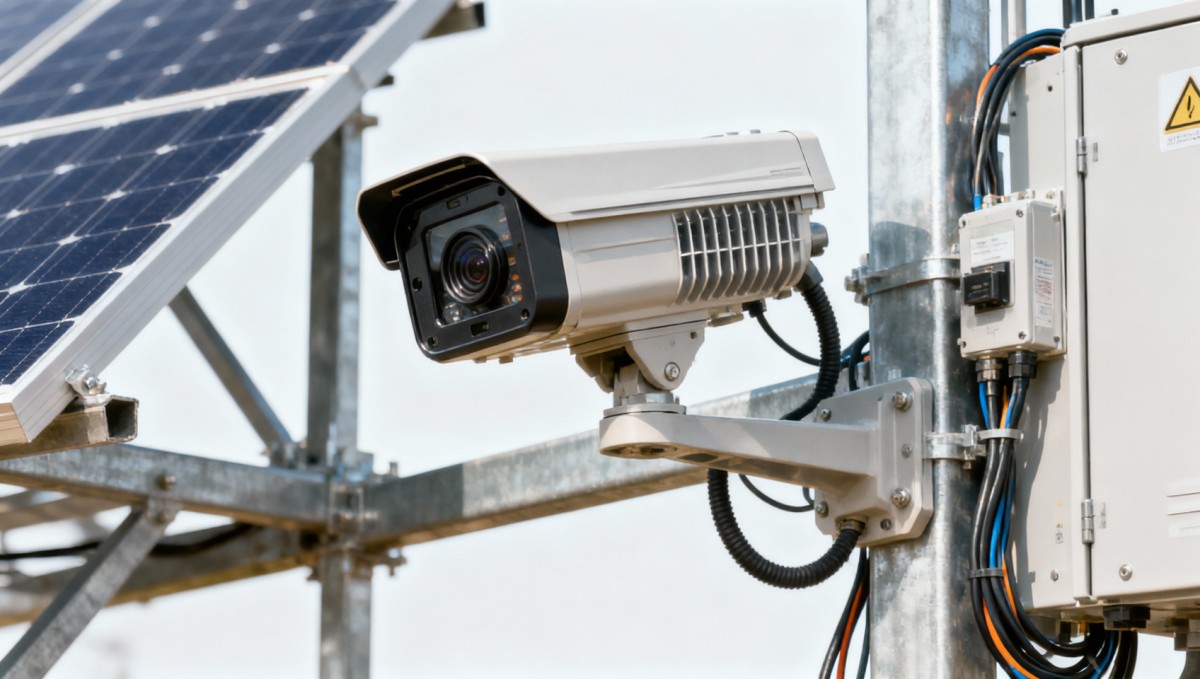
In renewable energy operations, an IP camera is not only a security device. It also supports remote inspection, perimeter monitoring, equipment verification, contractor oversight, and incident review across solar farms, wind sites, battery energy storage systems, and distributed microgrid assets. In these environments, camera hardware benchmarks affect uptime, maintenance cost, and operational trust more directly than in a standard office deployment.
A buyer comparing two cameras may see similar claims such as 4 MP imaging, low-light support, H.265 compression, and IP66 housing. Yet field performance often diverges after 6–12 months of exposure to voltage fluctuation, heat cycles, dust, unstable backhaul, and edge analytics loads. That gap is where benchmarking becomes useful. NHI’s approach is to test hardware behavior under stress, not just read brochure language.
For renewable energy operators, the wrong benchmark priorities create expensive blind spots. A camera that performs well in a short indoor demo may fail at a substation gateway, a solar inverter row, or an off-grid telemetry cabinet where packet loss, thermal spikes, and power instability are common. Procurement teams therefore need a benchmark framework built around site conditions, protocol compatibility, and long-term maintainability.
This is especially important in mixed IoT estates. A camera may need to coexist with gateways using Thread, BLE, Wi-Fi, Ethernet, PoE, or proprietary industrial links. While IP cameras do not usually run Matter as their primary transport layer, buyers still need to understand adjacent protocol latency, edge node integration, local processing constraints, and data handoff to broader smart infrastructure platforms.
What changes in renewable energy environments?
A corporate office camera often works within controlled temperature bands, stable LAN quality, and frequent human oversight. A renewable energy camera may instead operate in remote compounds, with maintenance visits every 30–90 days, temperature swings across day and night cycles, and limited bandwidth shared with SCADA or monitoring traffic. In that context, a single weak hardware component can trigger recurring truck rolls and higher site risk.
- Remote locations require stronger tolerance for intermittent connectivity, delayed firmware windows, and longer recovery times after outages.
- Energy sites often impose stricter electrical noise and grounding considerations than commercial buildings.
- Cameras may need to support 24/7 recording, event-based uploads, or AI triggers without exhausting local storage too quickly.
- Compliance reviews increasingly expect auditability, access control discipline, and documented update paths over a 3–5 year asset cycle.
This is why NHI emphasizes engineering verification over marketing shorthand. A procurement team does not need more vague claims around intelligent security. It needs benchmark evidence on latency, thermal behavior, power draw, component quality, and protocol reliability across actual operating conditions.
Which hardware benchmarks do buyers most often miss?
Most buyers start with image resolution, lens angle, night vision distance, and enclosure rating. Those are relevant, but they rarely explain whether the camera will remain dependable when integrated into renewable energy monitoring networks. The more decisive benchmarks are often buried deeper in the hardware stack and are not consistently disclosed in standard quotations.
The first missed area is protocol and network behavior. A camera may stream well in ideal conditions but struggle when multiple devices compete for uplink capacity. For edge-connected energy assets, buyers should examine startup time after power restoration, packet recovery behavior, bitrate stability, and integration responsiveness within 100–300 millisecond control or alert windows where practical.
The second missed area is power stability. Renewable sites can expose devices to fluctuating supply conditions, especially in hybrid systems, remote enclosures, or older balance-of-system installations. Hardware selection should account for PoE tolerance, surge resilience, restart consistency, and idle versus active consumption. A small standby difference across 50–200 cameras can materially affect enclosure heat load and backup power planning.
The third missed area is long-term component drift. Image sensors, onboard storage, connectors, thermal pads, and PCB assembly quality all influence degradation over time. An IP camera benchmark should therefore include not just day-one performance, but evidence of stability after repeated thermal cycles, vibration exposure, and extended operation under local analytics or encryption workloads.
Five benchmark dimensions that deserve more attention
The table below summarizes the hardware dimensions that procurement teams in renewable energy should review before approving an IP camera platform. These criteria are especially useful when comparing proposals that look similar on surface specifications.
Each of these benchmarks ties directly to operational risk. If a supplier cannot explain test conditions, not just output values, the quote may still be incomplete. This is where NHI’s independent lab perspective helps buyers separate engineering evidence from polished messaging.
Why headline specifications can mislead
A 4 MP camera with stronger PCB assembly quality, better thermal management, and more stable firmware support may outperform an 8 MP unit in a dusty inverter station or remote battery site. Higher resolution also increases storage load and network demand. Without proper benchmarking, teams may pay more upfront and still accept worse reliability.
Likewise, an IP66 or IP67 claim does not by itself confirm long-term connector integrity, gasket durability, or stable performance after repetitive thermal expansion. A benchmark-driven purchase asks how the device behaves after repeated cycles, not just which enclosure code appears in a PDF.
How should procurement teams compare IP cameras for solar, wind, and storage projects?
A practical comparison model should align the camera with site topology, maintenance frequency, and data strategy. A utility-scale solar plant, a wind turbine access route, and a battery energy storage enclosure do not demand identical hardware. Procurement teams should start by grouping sites into 3 categories: high-bandwidth fixed infrastructure, constrained remote assets, and mixed edge environments requiring both recording and local analytics.
Next, define the decision criteria by role. Operators care about image usability, alarm clarity, and recovery after faults. Procurement managers care about lifecycle cost, replacement rate, and delivery windows. Enterprise decision-makers care about integration risk, compliance exposure, and cross-site standardization. A single evaluation sheet should therefore combine technical, operational, and commercial checks.
For most projects, it is useful to compare at least 3 hardware classes rather than individual brochures only: basic fixed cameras for stable LAN zones, hardened outdoor units for exposed energy assets, and edge-AI capable cameras for sites where bandwidth is limited but event filtering is valuable. This approach reduces confusion during sourcing and pilot reviews.
The comparison table below can be used as a procurement template for early-stage evaluation. It does not replace lab testing, but it helps buyers ask sharper questions before sample approval or framework negotiations.
This comparison shows why there is no universal best camera. The right decision depends on whether the project prioritizes lower capex, lower truck-roll frequency, or smarter event processing. In many renewable energy portfolios, a mixed architecture is more effective than deploying one camera type across every location.
A 6-point procurement checklist before sample approval
- Confirm the power method and tolerance window, especially for PoE switches, surge environments, and backup runtime assumptions.
- Request boot and reconnection behavior after planned and unplanned outages, not just nominal uptime language.
- Check operating temperature guidance against the actual enclosure or outdoor mounting condition rather than ambient-only claims.
- Review firmware support cadence for at least 24–36 months and ask how urgent patches are distributed and documented.
- Validate interoperability with the video platform, gateway layer, and site network segmentation policy.
- Pilot 2–4 units in representative field conditions before committing to medium or large batch procurement.
NHI supports this process by translating technical benchmarks into sourcing questions that non-engineering stakeholders can still use confidently. That bridge is critical when R&D, procurement, and site operations do not use the same evaluation language.
What compliance, interoperability, and supply chain risks should buyers review?
Hardware selection is not only about device performance. It is also about whether the camera can remain deployable across internal IT policies, regional compliance expectations, and future integration roadmaps. Renewable energy portfolios often span multiple geographies, EPC partners, and network standards, which increases the cost of choosing hardware with weak lifecycle governance.
The first risk is unclear firmware governance. Buyers should ask how often updates are released, how vulnerabilities are triaged, whether rollback is supported, and how access credentials are managed during commissioning. For enterprise fleets, even a 1–2 hour unplanned maintenance event can cascade when dozens of remote cameras must be touched manually.
The second risk is protocol fragmentation. Many renewable energy sites contain a mix of video systems, industrial devices, building controls, and smart facility sensors. While IP cameras may primarily depend on Ethernet or Wi-Fi, adjacent systems may operate through Zigbee, BLE, Thread, or Matter-linked orchestration layers. Interoperability problems often emerge at the gateway, event routing, or edge compute layer rather than at the camera lens itself.
The third risk is supply chain opacity. If a vendor cannot provide clear information on PCBA consistency, component change control, or manufacturing traceability, long-term procurement becomes harder. Substituted memory, revised chipsets, or undocumented board changes can alter thermal performance and software stability across batches purchased 6–18 months apart.
Common standards and review areas
The table below outlines practical review areas often discussed during enterprise procurement. These are not brand-specific guarantees, but they help teams build a more robust screening process for IP camera hardware used in renewable energy infrastructure.
For multinational buyers, these checks reduce the risk of discovering incompatibility after shipment. NHI’s value is not simply listing standards by name. It is interpreting how standards, protocol behavior, and hardware test evidence interact in a real sourcing workflow.
Three misconceptions that lead to bad purchasing decisions
Misconception one: if the image looks good in a demo, the hardware is good enough. In reality, image quality is only one layer. Thermal resilience, recovery behavior, and firmware maintainability often decide total cost.
Misconception two: outdoor rating equals field readiness. It does not. Buyers still need to examine connector robustness, ingress points, mounting design, and tolerance for long service intervals.
Misconception three: lower unit cost means better procurement. Not necessarily. If a lower-cost camera increases failure handling, manual reboots, or replacement frequency over a 3-year period, total ownership cost can rise quickly.
FAQ: practical questions from operators, buyers, and decision-makers
How should I choose between a standard IP camera and an edge-AI camera?
Choose based on network conditions and alarm logic. If the site has stable bandwidth and central video analytics, a standard IP camera may be sufficient. If the site is remote, bandwidth-constrained, or needs faster local filtering, an edge-AI camera can be more suitable. However, you should benchmark heat, sustained inference load, and firmware maturity before rollout, especially for 24/7 operation.
What are the most important benchmarks for a solar farm deployment?
Focus on 5 areas: thermal stability, power restart behavior, network recovery time, enclosure durability, and storage endurance. In practice, solar projects also benefit from checking image clarity during high-glare periods and verifying whether the camera remains stable after repeated daytime heating and nighttime cooling cycles.
What delivery and validation timeline is typical for B2B sourcing?
For a structured procurement cycle, many teams plan 3 stages: requirement alignment, sample validation, and batch approval. Depending on project complexity, sample review may take 2–4 weeks, while broader technical and commercial alignment may extend further. The key is to test representative conditions early rather than compress all risk into final deployment.
Can protocol benchmarking still matter if the camera is mainly Ethernet-based?
Yes. Even if the camera itself uses Ethernet or Wi-Fi, it still interacts with gateways, access systems, smart building controllers, and edge nodes that may use Zigbee, BLE, Thread, or Matter-linked orchestration. Latency and event handoff across these layers can affect alarm timing, automation reliability, and system troubleshooting.
Why work with NHI for benchmark-driven camera sourcing?
NexusHome Intelligence was built for buyers who need more than catalog language. In fragmented IoT and smart infrastructure markets, the challenge is rarely a lack of products. The challenge is the absence of verified engineering context. NHI acts as a technical benchmarking and supply chain interpretation layer, helping renewable energy stakeholders understand what hardware claims mean under real deployment pressure.
This matters for information researchers comparing unfamiliar suppliers, operators dealing with recurring field issues, procurement teams negotiating risk, and enterprise leaders trying to standardize across regions. NHI connects protocol analysis, hardware stress testing, compliance awareness, and supply chain transparency into one decision framework rather than leaving each team to interpret isolated data points.
If you are evaluating IP camera hardware for solar, wind, storage, or smart energy facilities, you can consult NHI on specific topics such as benchmark dimensions, product selection logic, protocol compatibility, likely delivery windows, sample validation strategy, firmware lifecycle questions, and supply chain audit concerns. This is especially useful when multiple vendors appear similar on paper but differ significantly in engineering discipline.
Contact NHI to discuss parameter confirmation, camera selection for remote energy assets, interoperability with broader IoT architecture, sample support planning, certification review points, or quotation comparison based on lifecycle risk rather than unit price alone. In a market full of claims, NHI helps you buy with evidence.
Protocol_Architect
Dr. Thorne is a leading architect in IoT mesh protocols with 15+ years at NexusHome Intelligence. His research specializes in high-availability systems and sub-GHz propagation modeling.
Related Recommendations
- Lina Zhao(Security Analyst)Vision AI Camera Accuracy: Which Test Conditions Matter Most
- Lina Zhao(Security Analyst)IP Camera Hardware Benchmarks: What Buyers Often Miss
- Lina Zhao(Security Analyst)How to Read Vision AI Camera Accuracy Without Guesswork
- Lina Zhao(Security Analyst)UL 2900-2-2:2026 Launches with Adversarial Robustness for Vision AI Cameras
- Lina Zhao(Security Analyst)UL 2900-2-2:2026 Enforces Adversarial Robustness for Vision AI Cameras
- Lina Zhao(Security Analyst)Japan PSE Expansion: Vision AI Smart Locks & IPC Cameras Require Certification from Apr 2026
- Lina Zhao(Security Analyst)What Vision AI camera tests say about real use
- Lina Zhao(Security Analyst)IP camera hardware benchmarks that reveal weak spots
- Lina Zhao(Security Analyst)How to compare Vision AI camera accuracy fairly
- Lina Zhao(Security Analyst)Vision AI Edge Cameras: What to Look For
Analyst