
What Vision AI camera tests say about real use
author
What do Vision AI camera accuracy tests reveal when systems leave the lab and enter real energy-aware buildings? For buyers, operators, and evaluators in renewable energy and smart infrastructure, this article connects IP camera hardware benchmarks with IoT hardware benchmarking, Matter protocol data, and smart home hardware testing to show how real-world performance shapes procurement decisions, compliance confidence, and long-term system value.
In renewable energy environments, cameras are no longer isolated security devices. They are part of a wider operational layer that touches access control, asset protection, occupancy analytics, substation monitoring, EV charging supervision, and energy-efficient building automation. A camera that performs well in a controlled demo can behave very differently once exposed to glare from solar arrays, low-light battery rooms, variable network conditions, and edge-processing limits inside commercial energy sites.
For procurement teams, that difference directly affects total cost of ownership over 3 to 7 years. For operators, it changes alarm fatigue, maintenance frequency, and incident response speed. For business evaluators, it determines whether a deployment supports compliance, interoperability, and measurable return. That is why NexusHome Intelligence approaches Vision AI camera testing as engineering verification rather than marketing validation.
Why Vision AI camera tests matter in renewable energy buildings
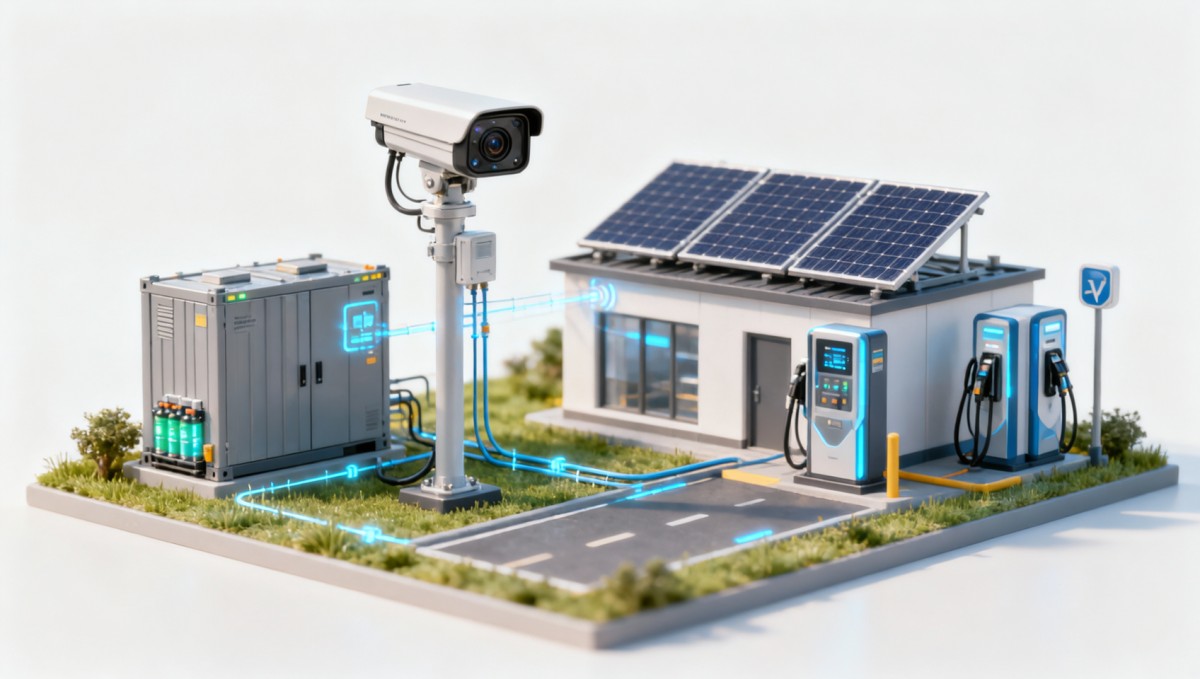
Renewable energy facilities and energy-aware buildings create tougher camera conditions than many suppliers admit. Rooftop solar sites generate high contrast scenes at midday. Battery energy storage rooms may operate under low, uneven lighting. Wind and microgrid control areas often require continuous monitoring despite vibration, dust, and network segmentation. In these settings, AI detection accuracy can shift by 5% to 20% depending on sensor quality, image pipeline tuning, and edge compute capacity.
That is why NHI focuses on measurable outcomes such as false positives per 24-hour period, detection latency in milliseconds, night recognition stability, and packet behavior under multi-protocol interference. A spec sheet may promise 4K imaging and smart recognition, but if event tagging slows from 300 ms to 1,500 ms during peak traffic, the operational value changes significantly for live facility management.
In renewable energy operations, camera performance also affects power efficiency. Edge AI is often deployed to reduce upstream bandwidth and cloud dependency, but poorly optimized devices can draw 2 W to 8 W more than expected when analytics are enabled. Across 100 cameras in a distributed site portfolio, that gap becomes a material energy overhead, especially in facilities designed around strict standby and operating load targets.
For operators, the practical question is simple: does the camera remain accurate, stable, and interoperable when connected to real building systems? For procurement, the question becomes broader: does it fit energy strategy, protocol architecture, and lifecycle maintenance requirements without hidden integration cost?
Core real-world variables that affect test outcomes
- Lighting volatility, including backlight from glass façades, inverter room shadows, and sunrise-to-sunset lux swings.
- Protocol congestion across Thread, Wi-Fi, BLE, and Ethernet segments in mixed smart building deployments.
- Edge processing load when cameras run facial recognition, object classification, and privacy masking at the same time.
- Thermal stress in enclosures exposed to outdoor temperatures from -10°C to 45°C.
What buyers should demand beyond headline specifications
A procurement checklist should move beyond resolution and lens size. It should include test conditions, retention of accuracy after compression, local storage recovery time, and protocol-level behavior when integrated with smart relays, access nodes, and building energy management systems. For B2B evaluation, benchmark context matters as much as benchmark numbers.
What real-use testing actually measures
A meaningful Vision AI camera test in renewable energy infrastructure should mirror operational conditions rather than showroom conditions. That means measuring identification quality across changing light, motion speed, occlusion, and network load. It also means evaluating how the camera behaves as a node inside a wider IoT hardware benchmarking framework, not as a stand-alone appliance.
NHI typically interprets camera results through four practical layers: image acquisition, on-device inference, transmission reliability, and systems integration. A device can excel in the first two and still fail in deployment if event packets drop under congestion or if metadata does not map cleanly into access or energy dashboards. In real estates, campuses, and energy hubs, that integration gap is where procurement mistakes often happen.
The table below shows how test dimensions should be translated into operational meaning for renewable energy and smart infrastructure teams.
The key takeaway is that accuracy must be interpreted as a system variable, not only an image variable. A camera that achieves strong lab recognition but struggles with event transmission or thermal throttling may create more downstream cost than a device with slightly lower raw recognition scores but better stability over 12 to 18 months.
H4: Lab metrics vs field metrics
Where lab success often breaks down
The most common failure points are glare handling, night color retention, event buffering during bandwidth spikes, and misclassification under partial obstruction. In mixed-use buildings with solar generation and automated HVAC, these failures often coincide with periods of peak operational importance, such as early morning access, shift changes, or high-temperature demand events.
How Matter, IP camera benchmarks, and IoT hardware testing connect
Many buyers still evaluate cameras as isolated security hardware, but real deployment value increasingly depends on interoperability. In modern renewable energy buildings, cameras share infrastructure with occupancy sensors, smart locks, relays, HVAC controllers, and energy monitoring nodes. This is where Matter protocol data, IP camera hardware benchmarks, and broader smart home hardware testing start to intersect.
While not every camera function runs directly through Matter, the surrounding control environment often does. For example, a camera event may trigger corridor lighting, restricted door lock states, or ventilation mode changes in battery service rooms. If the camera metadata and event timing do not align with protocol timing across Thread bridges, gateways, or local automation engines, the result is delayed action, duplicated triggers, or lost context.
NHI therefore treats camera evaluation as part of connectivity and protocol validation. In a congested building environment, even a 120 ms to 300 ms increase in multi-node event propagation can weaken automation reliability. This matters when the site depends on coordinated energy-saving logic, such as lighting shutdown after occupancy clearance or access-linked climate control in technical zones.
The next table outlines the relationship between common benchmark areas and procurement implications for smart infrastructure projects tied to energy efficiency and renewable operations.
The practical conclusion is that interoperability testing should be part of camera testing. A camera that “works” in isolation may still fail to support building-level renewable energy objectives if it introduces network friction, event delay, or excess power draw within the wider IoT stack.
Selection criteria for mixed-protocol smart infrastructure
- Confirm whether analytics run fully on-device, partially at the gateway, or in the cloud, because architecture changes energy use and latency.
- Test event flow across at least 3 operational scenarios: normal load, peak traffic, and partial network interruption.
- Validate how camera alerts interact with smart locks, lighting relays, and HVAC logic in real building sequences.
- Estimate maintenance intervals, firmware update impact, and rollback options over a 12-month operating window.
Procurement risks, scoring logic, and implementation guidance
For procurement personnel and business evaluators, the biggest mistake is overvaluing brochure claims and undervaluing benchmark context. The right purchasing decision should balance 4 dimensions: detection reliability, integration readiness, energy efficiency, and serviceability. If one dimension is weak, the lowest initial unit price can become the highest lifecycle cost within 24 to 36 months.
A useful scoring model is to assign weighted importance based on site type. In a solar-integrated office building, interoperability and low false alerts may deserve 30% each, while image resolution and enclosure rating receive lower weight. In a battery storage site, thermal stability and local processing resilience may rank higher because environmental stress is more severe and upstream connectivity may be more constrained.
Implementation should also follow a staged process rather than a one-step rollout. A pilot of 5 to 15 cameras across at least 2 distinct lighting zones can reveal whether lab assumptions survive daily use. A second phase can validate integrations with access control, occupancy logic, and energy dashboards. Only after those tests should wider deployment begin.
NHI’s broader supply-chain view is especially relevant here. Hidden technical weaknesses often come from inconsistent PCBA quality, thermal design shortcuts, or unstable firmware support rather than from the AI model alone. That is why procurement teams should ask for engineering-oriented verification and not rely only on sales demonstrations.
Recommended procurement checklist
- Require benchmark results under low light, backlight, and heat stress, not just daytime indoor scenes.
- Ask for operating power data with analytics on and off, with a target review range such as 6 W, 10 W, and 14 W profiles.
- Confirm event latency thresholds suitable for your use case, for example under 500 ms for live response workflows.
- Review firmware support cadence, patch windows, and remote recovery methods over at least 12 months.
- Check whether local storage, edge masking, and metadata export align with building security and privacy policy.
FAQ for buyers and operators
How many cameras should be included in a realistic pilot?
For most renewable energy buildings, 5 to 15 units are enough to compare daylight, low-light, indoor technical space, and perimeter conditions. Fewer than 5 units often fail to expose network and workflow issues. More than 15 may be unnecessary before integration questions are answered.
Which metric is more important: accuracy rate or false alert rate?
Both matter, but operators often feel false alerts more immediately. A camera with slightly lower recognition accuracy but a stable alert profile can be more useful than one with headline accuracy that generates 20 irrelevant alarms a day. In energy facilities, operator attention is limited and must stay focused on true events.
How long does a proper evaluation cycle take?
A credible evaluation usually takes 2 to 4 weeks. That allows testing across workdays, weekends, lighting changes, and at least one firmware or network adjustment cycle. Shorter tests may miss intermittent latency or thermal throttling issues.
Vision AI camera tests say far more about real use than a simple pass-or-fail score. In renewable energy buildings, the true question is whether the camera remains accurate, power-aware, interoperable, and serviceable once it joins a live ecosystem of building controls and IoT devices. That is exactly why data-driven benchmarking matters: it exposes the gap between marketing language and operational truth.
For users, procurement teams, and business evaluators, the strongest decision framework combines IP camera hardware benchmarks, IoT hardware benchmarking, protocol behavior, and lifecycle energy impact. If you need a more reliable basis for supplier comparison, deployment planning, or smart infrastructure selection, contact NHI to discuss benchmark priorities, request a tailored evaluation framework, or explore data-led solutions for renewable energy environments.
Protocol_Architect
Dr. Thorne is a leading architect in IoT mesh protocols with 15+ years at NexusHome Intelligence. His research specializes in high-availability systems and sub-GHz propagation modeling.
Related Recommendations
- Lina Zhao(Security Analyst)UL 2900-2-2:2026 Enforces Adversarial Robustness for Vision AI Cameras
- Lina Zhao(Security Analyst)Japan PSE Expansion: Vision AI Smart Locks & IPC Cameras Require Certification from Apr 2026
- Lina Zhao(Security Analyst)What Vision AI camera tests say about real use
- Lina Zhao(Security Analyst)IP camera hardware benchmarks that reveal weak spots
- Lina Zhao(Security Analyst)Vision AI Edge Cameras: What to Look For
- Lina Zhao(Security Analyst)Starlight Night Vision Lux Rating: How Low Is Good
- Lina Zhao(Security Analyst)4K PTZ Camera Bit Rate: How Much Is Enough
- Lina Zhao(Security Analyst)What Makes a Good IP67 Outdoor WiFi Camera OEM
- Lina Zhao(Security Analyst)How to Pick a Tuya Video Doorbell Manufacturer
- Lina Zhao(Security Analyst)Sensor fusion with lidar and camera in low-visibility conditions
Analyst