
LiDAR for AGV obstacle avoidance in reflective warehouse aisles
author
In reflective warehouse aisles, lidar for agv obstacle avoidance can fail where glare, polished floors, and metal shelving distort returns. For engineers, operators, buyers, and decision-makers in renewable energy logistics, this makes sensor fusion lidar and camera a practical path to safer navigation, fewer false stops, and stronger industrial iot data collection architecture for measurable fleet performance.
That challenge is especially relevant in renewable energy supply chains, where AGVs move battery packs, inverters, PV modules, and precision electrical assemblies through high-throughput warehouses. In these environments, a single false stop can interrupt kitting, delay outbound staging, or create safety conflicts between forklifts, people, and automated vehicles across 2 to 3 shifts per day.
For companies building smarter logistics infrastructure, the issue is not simply whether a LiDAR unit can detect an object. The real question is how reliably the perception stack performs under reflective racking, shrink wrap glare, aluminum frames, polished epoxy floors, and changing light conditions while still producing traceable data for Industrial IoT optimization.
Aligned with NexusHome Intelligence’s data-first view of connected systems, this article examines how lidar for agv obstacle avoidance should be evaluated in renewable energy warehousing, why sensor fusion matters, what buyers should specify, and how operators can reduce commissioning risk through measurable test conditions rather than marketing claims.
Why reflective warehouse aisles create a special perception problem in renewable energy logistics
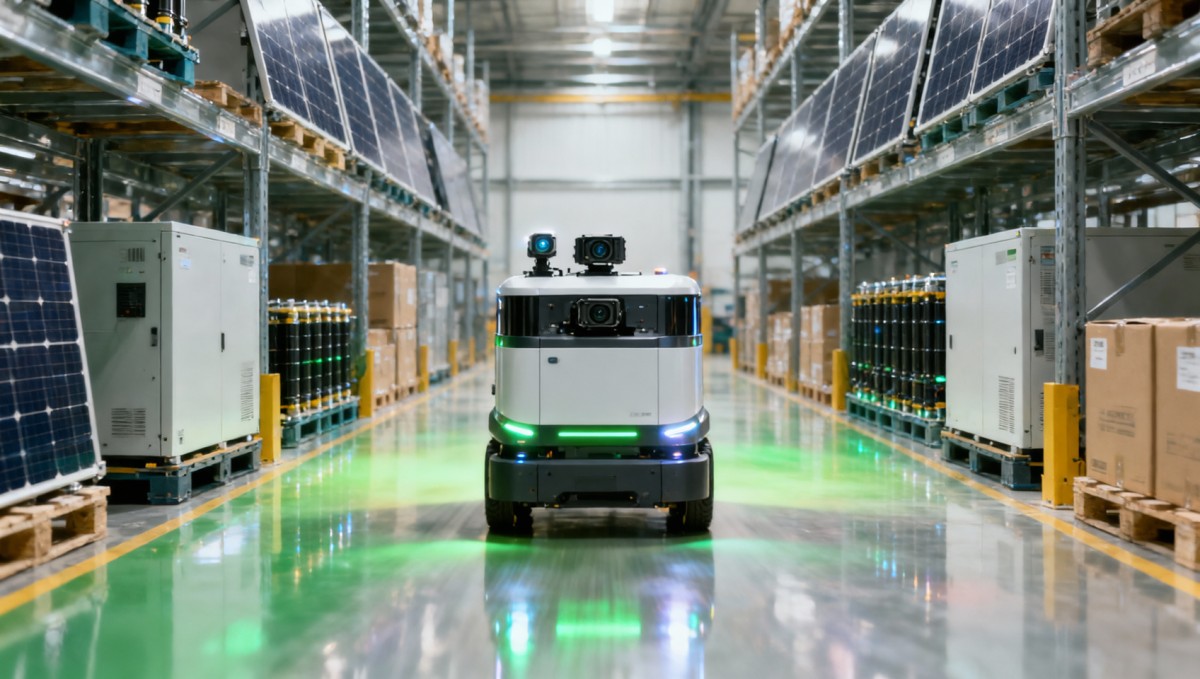
Renewable energy warehouses are unusually demanding for AGV navigation because they combine reflective materials with high-value cargo. Solar module frames, metallic battery enclosures, anti-static packaging, wrapped pallets, and polished concrete or epoxy floors can produce unstable returns. In aisle widths of 2.2 m to 3.5 m, even small perception errors can trigger emergency braking or path hesitation.
A standard 2D LiDAR may interpret specular reflection differently from diffuse reflection. In practical terms, a low-angle beam can bounce off a glossy floor or metal face and return incomplete shape data. That can lead to three common outcomes: a missed low-profile object, a phantom obstacle, or uncertainty that slows the AGV below the planned 1.2 m/s to 1.8 m/s operating window.
In battery and inverter logistics, these errors are not minor inconveniences. A stopped AGV in a replenishment lane may block component flow to assembly, while repeated false alarms can reduce fleet utilization by 8% to 15% in peak periods. For operators, that means lower throughput. For decision-makers, it means reduced ROI on warehouse automation investment.
The issue becomes more complex when warehouse lighting changes during the day. Renewable energy facilities often combine skylights, loading dock exposure, and mixed indoor luminance. While LiDAR is less dependent on ambient light than vision alone, reflective clutter still changes return quality. This is why engineers increasingly treat lidar for agv obstacle avoidance as part of a perception system, not as a standalone answer.
For NHI-style benchmarking, the correct approach is to define repeatable stress conditions. That includes floor gloss level, rack material, target color, obstacle height, aisle width, and AGV speed. Without those variables, performance claims remain too vague for procurement or deployment.
Typical failure points in reflective aisles
- Low-profile objects below 120 mm, such as pallet feet, cable guards, or dropped packaging, may be inconsistently detected when beam geometry is unfavorable.
- Metal shelving uprights and shiny packaging films can generate fragmented returns, causing contour instability at 3 m to 8 m range.
- Floor glare on polished surfaces can distort the difference between free path and occupied space, especially during turning or diagonal approach.
- Mixed traffic zones with human operators, forklifts, and AGVs require low-latency obstacle classification, often under 100 ms to 200 ms end-to-end.
Operational impact by cargo type
Different renewable energy products create different risk profiles. Lithium battery modules demand conservative stopping distances because of weight and hazard handling protocols. Solar panels require careful edge protection and stable motion control. Inverter warehouses often carry dense, high-value electrical hardware where collision tolerance is effectively zero.
The following comparison helps show why the same AGV sensor stack may behave differently across product flows.
The key takeaway is that obstacle avoidance should be specified by warehouse material conditions and cargo profile, not only by AGV model. In renewable energy logistics, the environment is part of the sensing problem.
Why sensor fusion LiDAR and camera is becoming the preferred architecture
A growing number of engineering teams now prefer sensor fusion lidar and camera because each sensor compensates for the other’s weak points. LiDAR provides distance and geometry. Cameras provide visual texture, edge cues, label recognition, and contextual classification. Together, they improve confidence scoring when aisle surfaces are reflective or when object shapes are irregular.
In a renewable energy warehouse, this combination is practical rather than theoretical. A LiDAR scan may confirm that an object is present at 2.6 m, while a camera can help distinguish a static rack edge from protruding packaging or a person stepping into the lane. That matters because the AGV should not react to every ambiguous return with a full stop if the goal is stable throughput.
Sensor fusion also supports better industrial iot data collection architecture. Instead of logging only stop events, the system can record obstacle class, confidence level, light condition, route segment, braking response, and recurrence frequency. Over 30 to 90 days, that data helps maintenance and process teams identify whether the root cause is sensor mounting, floor finish, aisle congestion, or packaging inconsistency.
For procurement teams, the value of fusion lies in measurable resilience. A warehouse with 500 to 2,000 pallet movements per day does not need a sensor stack that looks impressive in a brochure. It needs one that reduces nuisance stops while still meeting safety requirements in dynamic industrial conditions.
Where fusion improves real operations
- It improves classification of reflective objects that LiDAR alone may interpret inconsistently.
- It reduces unnecessary braking in repetitive rack geometries where camera context can confirm expected structure.
- It supports event replay and traceable diagnostics for operators, which shortens troubleshooting cycles from days to hours.
- It enables richer fleet analytics, including hotspot mapping, stop cause distribution, and route-level exception trends.
Minimum data points worth capturing
If a facility wants real optimization rather than basic incident logging, at least 6 data fields should be captured per event: timestamp, vehicle ID, route segment, speed, obstacle confidence score, and stop duration. More advanced teams may add ambient light estimate, rack reflectivity zone, and image snapshot reference for post-event analysis.
The table below outlines how LiDAR-only and fusion-based systems differ in practical renewable energy warehouse use.
For most renewable energy facilities with reflective aisles, fusion is not about chasing complexity. It is about reducing uncertainty in the conditions that matter most to uptime, safety, and data integrity.
How buyers should evaluate lidar for AGV obstacle avoidance before procurement
Procurement often fails when teams compare sensor specifications without comparing deployment conditions. In reflective warehouses, range alone is not enough. Buyers should evaluate the complete sensing stack against actual aisle materials, cargo shapes, operating speed, and integration requirements with warehouse control systems or MES platforms used in battery, solar, and inverter operations.
A practical RFQ should ask for test evidence across at least 4 categories: detection reliability, false-stop frequency, latency, and diagnostics. Detection reliability should cover small, medium, and large obstacles. False-stop frequency should be measured in reflective aisles over a defined cycle count, such as 500 passes or 1,000 route completions. Latency should be stated from sensing to motion response. Diagnostics should include event logs and replay capability.
Decision-makers should also ask whether the supplier can support protocol integration. A perception system that improves navigation but isolates data in a closed interface weakens the value of warehouse automation. In an NHI-aligned framework, data interoperability matters because fleet events should feed broader industrial IoT analysis, maintenance planning, and energy-efficient route management.
For renewable energy sites, buyers should be especially cautious of generic claims such as “anti-glare” or “industrial-grade.” Useful procurement language is measurable: operating range band, minimum obstacle size, tested floor reflectivity scenario, calibration interval, firmware update process, and supported data export method.
Five procurement checkpoints
- Confirm the tested obstacle size range, for example from 70 mm low-profile items up to full pallets and human silhouettes.
- Request reflective-aisle validation under actual materials such as metal rack, glossy wrap, aluminum frame, or polished floor.
- Check integration outputs, including event logs, timestamped alarms, and compatibility with plant IoT gateways or middleware.
- Review maintenance burden, including lens cleaning frequency, recalibration interval, and replacement lead time.
- Verify support for mixed traffic safety zones where people, forklifts, and AGVs operate within the same 5 m to 10 m envelope.
Sample evaluation matrix for purchasing teams
The matrix below can help procurement and engineering teams score suppliers with more discipline.
This kind of evaluation shifts purchasing away from headline specs and toward measurable suitability. That is often the difference between a smooth rollout and a system that requires repeated tuning after commissioning.
Implementation, calibration, and Industrial IoT data architecture for measurable fleet performance
Even well-chosen hardware can underperform if commissioning is rushed. In reflective renewable energy warehouses, implementation should be treated as a 3-stage process: baseline survey, controlled pilot, and scaled optimization. This reduces the risk of confusing environmental issues with sensor defects and gives operations teams a clean path from trial results to fleet-wide standards.
During the baseline survey, engineers should map floor finish, rack materials, light exposure zones, and mixed traffic intersections. A simple route map is not enough. The site should identify at least 5 to 10 high-risk points where reflective returns or congestion are likely. These zones become the core of pilot testing and future KPI tracking.
In the pilot phase, it is useful to run 200 to 500 repeated aisle passes under different speeds and load states. Tests should include empty carrier, nominal load, and maximum safe load. For renewable energy goods, weight distribution matters because braking behavior can change with heavier battery or inverter payloads, even when sensing performance is stable.
The final step is data architecture. A strong industrial iot data collection architecture should not stop at alarm recording. It should connect AGV obstacle events with route history, energy consumption, maintenance tickets, and warehouse execution data. That allows teams to answer practical questions: Which aisle causes the most false stops? Do polished floor sections increase exceptions after cleaning? Does one packaging format create more visual confusion than others?
Recommended implementation workflow
- Survey the warehouse and classify reflective risk zones by material, light condition, and traffic density.
- Install and align LiDAR and camera positions based on load geometry, turning radius, and blind-spot analysis.
- Run controlled tests at multiple speeds, such as 0.8 m/s, 1.2 m/s, and 1.6 m/s, with at least 3 obstacle categories.
- Tune thresholds for obstacle confidence, braking profile, and route recovery behavior.
- Connect event data to the plant’s IIoT layer for dashboarding, root-cause review, and continuous improvement.
What should be monitored after go-live
Post-deployment monitoring should focus on a short list of operational metrics: obstacle detection events per 100 routes, false stops per shift, average stop duration, route recovery time, and sensor maintenance interval. A 4-week review window is usually enough to detect whether problems are random or aisle-specific.
For decision-makers, these metrics help determine whether sensor fusion is improving both safety and efficiency. For operators, they support practical action, such as adjusting cleaning schedules, changing reflective labels, or redesigning pallet presentation to reduce avoidable alarms.
Common mistakes, maintenance priorities, and FAQ for long-term AGV reliability
One common mistake is assuming that reflective-floor issues can be solved only in software. In many renewable energy warehouses, the root cause is mixed: sensor angle, floor finish, pallet overhang, rack geometry, and lighting all interact. If teams skip structured diagnosis, they may spend weeks changing thresholds without addressing the actual physical trigger.
Another mistake is treating maintenance as reactive. LiDAR windows and camera lenses can accumulate dust, film residue, or warehouse particulate, especially around packaging and battery handling zones. A weekly visual check may be adequate in low-dust sites, but busier facilities may need inspection every 2 to 3 days. Small contamination can materially affect edge detection and confidence scoring.
A third mistake is neglecting cross-functional ownership. AGV perception quality is not just an automation issue. Warehouse operations, packaging, EHS, IT, and maintenance should all be involved, because route behavior and event data often reveal process problems beyond the sensor itself.
FAQ: How should operators respond to repeated false stops in one aisle?
Start by checking whether the stops happen at the same position within a tolerance of 0.5 m to 1 m. If yes, inspect floor glare, rack reflectivity, and pallet overhang at that exact segment. Then compare event logs for speed, load state, and time of day. Repeated clustering usually indicates an environmental pattern, not random sensor failure.
FAQ: What deployment timeline is realistic for a reflective warehouse pilot?
For a single route or aisle group, a realistic pilot often takes 2 to 4 weeks. That typically includes 3 to 5 days for site survey and setup, 1 to 2 weeks for controlled testing, and another week for threshold tuning and data review. Larger multi-zone renewable energy sites may need a phased rollout rather than a one-step conversion.
FAQ: Which indicators matter most for procurement teams?
Prioritize 4 indicators: detection reliability in reflective conditions, false-stop rate, response latency, and data interoperability. Purchase price matters, but lifecycle value depends more on how many avoidable stoppages, service visits, and routing inefficiencies the system prevents over 12 to 36 months.
FAQ: Is LiDAR still useful if camera fusion is added?
Yes. In most industrial settings, LiDAR remains the core ranging sensor. The value of fusion is that camera data improves contextual understanding and supports stronger diagnostics. In reflective renewable energy aisles, the combination is often more robust than relying on one sensing modality alone.
For renewable energy logistics leaders, the practical lesson is clear: lidar for agv obstacle avoidance should be judged by reflective-aisle performance, false-stop behavior, and data usability, not by isolated spec-sheet claims. Sensor fusion lidar and camera, combined with disciplined testing and a usable industrial iot data collection architecture, gives engineers and buyers a more reliable path to safe automation and measurable fleet improvement.
NexusHome Intelligence advocates this evidence-based approach because connected infrastructure only creates value when performance is transparent, benchmarked, and operationally useful. If you are planning an AGV upgrade, evaluating a new warehouse automation project, or comparing sensing options for battery, solar, or inverter logistics, now is the right time to request a data-driven review. Contact us to discuss your environment, compare deployment options, and get a tailored solution path for reflective warehouse navigation.
Protocol_Architect
Dr. Thorne is a leading architect in IoT mesh protocols with 15+ years at NexusHome Intelligence. His research specializes in high-availability systems and sub-GHz propagation modeling.
Related Recommendations
- Lina Zhao(Security Analyst)UL 2900-2-2:2026 Enforces Adversarial Robustness for Vision AI Cameras
- Lina Zhao(Security Analyst)Japan PSE Expansion: Vision AI Smart Locks & IPC Cameras Require Certification from Apr 2026
- Lina Zhao(Security Analyst)What Vision AI camera tests say about real use
- Lina Zhao(Security Analyst)IP camera hardware benchmarks that reveal weak spots
- Lina Zhao(Security Analyst)How to compare Vision AI camera accuracy fairly
- Lina Zhao(Security Analyst)Vision AI Edge Cameras: What to Look For
- Lina Zhao(Security Analyst)Starlight Night Vision Lux Rating: How Low Is Good
- Lina Zhao(Security Analyst)4K PTZ Camera Bit Rate: How Much Is Enough
- Lina Zhao(Security Analyst)What Makes a Good IP67 Outdoor WiFi Camera OEM
- Lina Zhao(Security Analyst)How to Pick a Tuya Video Doorbell Manufacturer
Analyst