
What Makes a Good IP67 Outdoor WiFi Camera OEM
author
In a market crowded with vague claims, choosing an IP67 outdoor WiFi camera OEM requires more than checking a spec sheet. Buyers in renewable energy and smart infrastructure need proven durability, stable wireless performance, and reliable vision AI edge computing camera capabilities under real outdoor conditions. This guide explains what separates a dependable manufacturer from a risky supplier, helping researchers, operators, and decision-makers evaluate long-term value with confidence.
The core search intent behind “What Makes a Good IP67 Outdoor WiFi Camera OEM” is practical supplier evaluation. Most readers are not looking for a generic definition of IP67 or a list of camera features. They want to know how to identify an OEM that can deliver consistent field performance, integration reliability, and low lifecycle risk. For renewable energy projects, remote sites, and smart infrastructure deployments, the real question is simple: which manufacturer can be trusted when weather, connectivity, power constraints, and maintenance costs all matter at once?
How to Tell if an IP67 Outdoor WiFi Camera OEM Is Actually Reliable
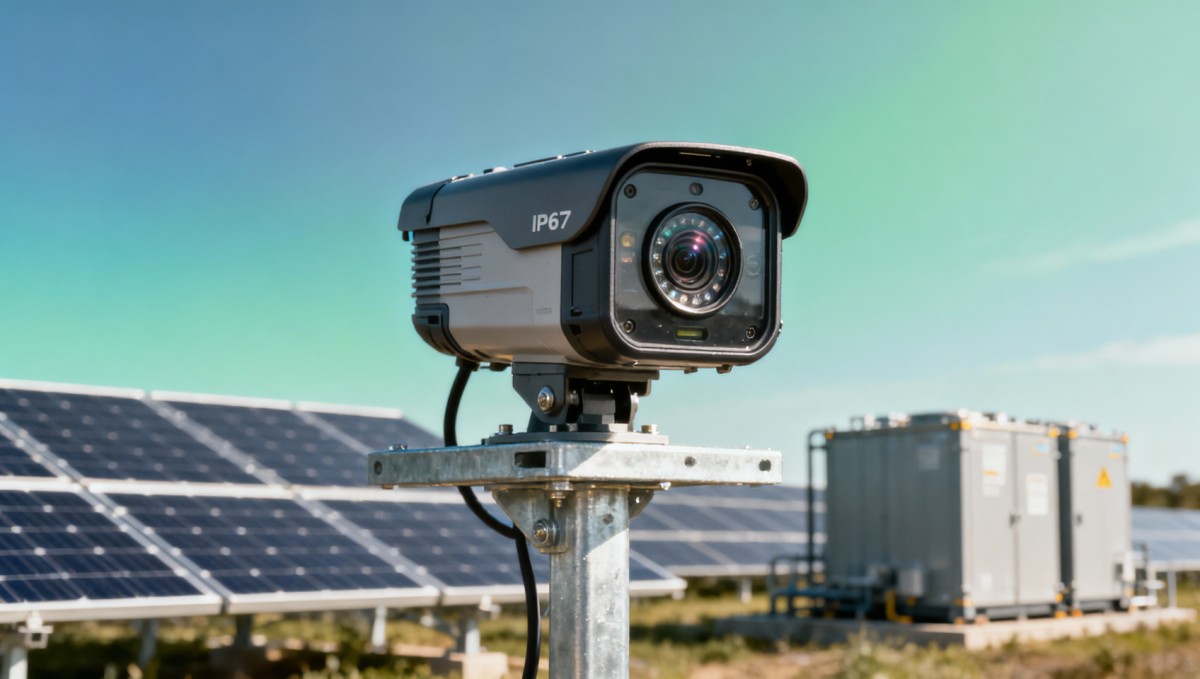
A good IP67 outdoor WiFi camera OEM is defined less by brochure language and more by repeatable engineering outcomes. The best suppliers can prove five things:
- Environmental durability: the camera enclosure, seals, lens window, connectors, and thermal design survive rain, dust, UV exposure, heat cycling, and condensation over time.
- Wireless stability: WiFi performance remains usable in interference-heavy outdoor environments, not only in ideal lab conditions.
- Image and AI usefulness: the device produces actionable video and edge analytics in variable light, glare, rain, and low-bandwidth conditions.
- Manufacturing consistency: one pilot unit and one mass-production batch perform the same way, with low defect rates and traceable quality control.
- Support for deployment at scale: firmware maintenance, integration documentation, compliance evidence, and post-sale responsiveness are in place.
If an OEM cannot provide test data, process transparency, and evidence from outdoor deployments, it is likely a packaging vendor rather than a reliable manufacturing partner.
Why IP67 Alone Is Not Enough for Outdoor Renewable Energy and Smart Infrastructure Use
Many buyers overvalue the IP67 label. IP67 matters, but it only confirms a narrow level of dust and water ingress protection under specific test conditions. It does not automatically prove that a camera is suitable for solar farms, wind sites, EV infrastructure, energy storage facilities, or exposed building perimeters.
In real projects, camera performance depends on a wider set of stress factors:
- Long-term UV degradation of plastics and gaskets
- Temperature swings that create internal condensation risk
- Corrosion near coastal or industrial environments
- WiFi instability caused by metal structures, inverters, or electrical noise
- Night performance under uneven lighting or reflective surfaces
- Power fluctuations in off-grid or hybrid energy systems
A strong OEM understands that ingress rating is only one checkpoint. The more important question is whether the product keeps working after months or years in operational conditions.
What Technical Evidence a Good OEM Should Be Able to Provide
For information researchers and business evaluators, the fastest way to separate serious suppliers from risky ones is to ask for evidence, not promises. A dependable IP67 outdoor WiFi camera OEM should be able to share clear validation materials such as:
- Ingress and environmental test reports: IP67 verification, temperature cycling, salt spray if relevant, UV resistance, and humidity testing
- Wireless performance data: throughput, reconnection time, latency, signal sensitivity, and behavior under interference
- Image quality benchmarks: daytime and nighttime comparison samples, WDR performance, low-light tuning, glare handling, and motion clarity
- AI edge computing metrics: detection accuracy, false alarm rates, local processing latency, and compute limits under multiple event types
- Reliability and production data: burn-in procedures, failure analysis workflow, RMA trends, and component traceability
- Firmware and cybersecurity practices: OTA update support, vulnerability response, credential handling, encryption, and secure provisioning
If the supplier only sends a generic catalog, a few renderings, and a copy-pasted specification table, that is a warning sign. Good OEMs are comfortable discussing how products fail, how they test, and how they improve.
Which Performance Factors Matter Most in Outdoor WiFi Cameras
For operators and technical teams, several performance factors deserve more attention than headline megapixel counts.
1. Wireless resilience in the field
Outdoor WiFi cameras often fail not because of optics, but because of unstable connectivity. In renewable energy and smart infrastructure settings, cameras may operate near steel enclosures, electrical equipment, long open distances, or congested access points. A good OEM should explain antenna design, roaming behavior, packet recovery, and how the device performs under weak or noisy signals.
2. Thermal design and enclosure integrity
An outdoor housing must do more than block water. Poor thermal management can shorten sensor life, degrade image quality, and reduce board reliability. Ask how heat is dissipated, how the lens avoids fogging, and whether the design has been tested across seasonal cycles.
3. Night vision and high-contrast image performance
In energy and infrastructure applications, useful footage often comes from difficult scenes: backlit gates, reflective equipment, dark perimeters, or mixed lighting. A capable OEM should demonstrate real image output in these conditions, not only daytime samples.
4. Edge AI that reduces bandwidth and false alarms
Vision AI edge computing camera functions can be valuable when connectivity is limited or cloud dependence is undesirable. But the value depends on actual detection quality. False positives triggered by vegetation, shadows, rain, or insects can create operational fatigue. A good OEM focuses on usable analytics, not just claiming “smart detection.”
5. Power compatibility and recovery behavior
Some outdoor camera deployments in renewable energy environments face unstable power or backup switching events. A mature OEM should show boot recovery behavior, surge tolerance, and whether the system resumes correctly after interruptions.
How to Evaluate Manufacturing Quality Beyond the Sample Unit
One of the biggest procurement mistakes is approving an OEM based on a polished sample that does not reflect mass production quality. Enterprise decision-makers should assess whether the manufacturer can scale reliably.
Look for these indicators:
- PCBA process control: consistent SMT quality, inspection standards, and rework discipline
- Incoming material control: validation of sensors, image modules, seals, chipsets, and RF components
- Assembly consistency: torque control, waterproof sealing process, lens alignment, and final calibration
- End-of-line testing: WiFi connectivity, image output, IR function, reset behavior, and power draw testing on every unit or statistically valid batches
- Revision management: transparent control of BOM changes and firmware versioning
A trustworthy OEM can explain not only what it makes, but how it prevents process drift. That matters far more than a low opening quotation.
Questions Buyers Should Ask Before Selecting an OEM
Whether you are doing market research or preparing a supplier shortlist, these questions can quickly reveal supplier maturity:
- Can you provide full IP67 and environmental validation reports from recognized test conditions?
- How does the camera perform in weak signal and high-interference outdoor environments?
- What are the known failure modes in long-term outdoor deployment, and how have you addressed them?
- How do you validate waterproof sealing consistency in mass production?
- What local AI functions run on-device, and what are the measured false alarm rates?
- How are firmware updates delivered and secured?
- Can you support private labeling, protocol customization, or integration with broader smart infrastructure platforms?
- What is your policy on component substitutions and lifecycle management?
- What documentation is available for deployment, API integration, and maintenance?
- What response time do you commit to for technical support and field issues?
The quality of the answers is often more important than the answers themselves. Serious OEMs respond with specifics. Weak suppliers rely on vague reassurances.
How Business Decision-Makers Should Think About ROI and Risk
For enterprise buyers, a good IP67 outdoor WiFi camera OEM is ultimately a risk management choice. Unit price matters, but total cost of ownership matters more. A cheaper camera becomes expensive when it creates repeat truck rolls, downtime, false alarms, integration delays, or premature replacement.
When comparing suppliers, evaluate:
- Failure-related service costs
- Installation and commissioning time
- Bandwidth and storage efficiency
- Alarm quality and operator workload
- Firmware support horizon
- Compatibility with future platform upgrades
In renewable energy and distributed infrastructure, site access is often costly and operational continuity is important. The best OEM is not the one with the lowest quote, but the one that lowers long-term operational friction.
What a Strong OEM Partnership Looks Like in Practice
A high-quality OEM does more than manufacture hardware. It acts like an engineering partner. That usually includes:
- Transparent pre-sales technical discussion
- Clear test data and sample validation support
- Customization options grounded in realistic engineering constraints
- Stable production planning and delivery discipline
- Post-launch firmware maintenance and issue tracking
- Willingness to support compliance and documentation needs for international markets
This is especially important for buyers building connected ecosystems where cameras must work alongside gateways, analytics platforms, energy management systems, or broader site security infrastructure.
Conclusion: The Best IP67 Outdoor WiFi Camera OEM Proves Reliability, Not Just Features
What makes a good IP67 outdoor WiFi camera OEM is not a long feature list. It is the ability to demonstrate field durability, wireless reliability, useful image and AI performance, controlled manufacturing quality, and dependable long-term support. For researchers, operators, business evaluators, and enterprise leaders, the smartest buying decision comes from verifying evidence at the engineering level.
If a supplier can show real test data, discuss production controls, and explain how its cameras perform in difficult outdoor conditions, it is worth serious consideration. If it cannot, the risk is probably being transferred to you. In a market full of claims, the strongest OEMs stand out by making reliability measurable.
Protocol_Architect
Dr. Thorne is a leading architect in IoT mesh protocols with 15+ years at NexusHome Intelligence. His research specializes in high-availability systems and sub-GHz propagation modeling.
Related Recommendations
- Lina Zhao(Security Analyst)Vision AI Edge Cameras: What to Look For
- Lina Zhao(Security Analyst)Starlight Night Vision Lux Rating: How Low Is Good
- Lina Zhao(Security Analyst)4K PTZ Camera Bit Rate: How Much Is Enough
- Lina Zhao(Security Analyst)What Makes a Good IP67 Outdoor WiFi Camera OEM
- Lina Zhao(Security Analyst)How to Pick a Tuya Video Doorbell Manufacturer
- Lina Zhao(Security Analyst)Sensor fusion with lidar and camera in low-visibility conditions
- Lina Zhao(Security Analyst)How to choose a vision camera for PCB inspection defects
- Lina Zhao(Security Analyst)Lidar for AGV obstacle avoidance in tight warehouse aisles
- Lina Zhao(Security Analyst)3D vision for robotic bin picking when parts keep overlapping
- Lina Zhao(Security Analyst)Edge AI for smart manufacturing without sending data to the cloud
Analyst