
4K PTZ Camera Bit Rate: How Much Is Enough
author
For renewable energy sites, control rooms, and smart infrastructure projects, choosing the right 4K PTZ security camera bit rate is not just about image quality—it directly affects bandwidth, storage efficiency, and real-time monitoring reliability. This guide explains how much bit rate is enough, and why factors such as vision ai edge computing camera performance, starlight night vision lux rating, and energy-conscious system design matter for smarter deployment decisions.
How much 4K PTZ camera bit rate is enough in renewable energy environments?
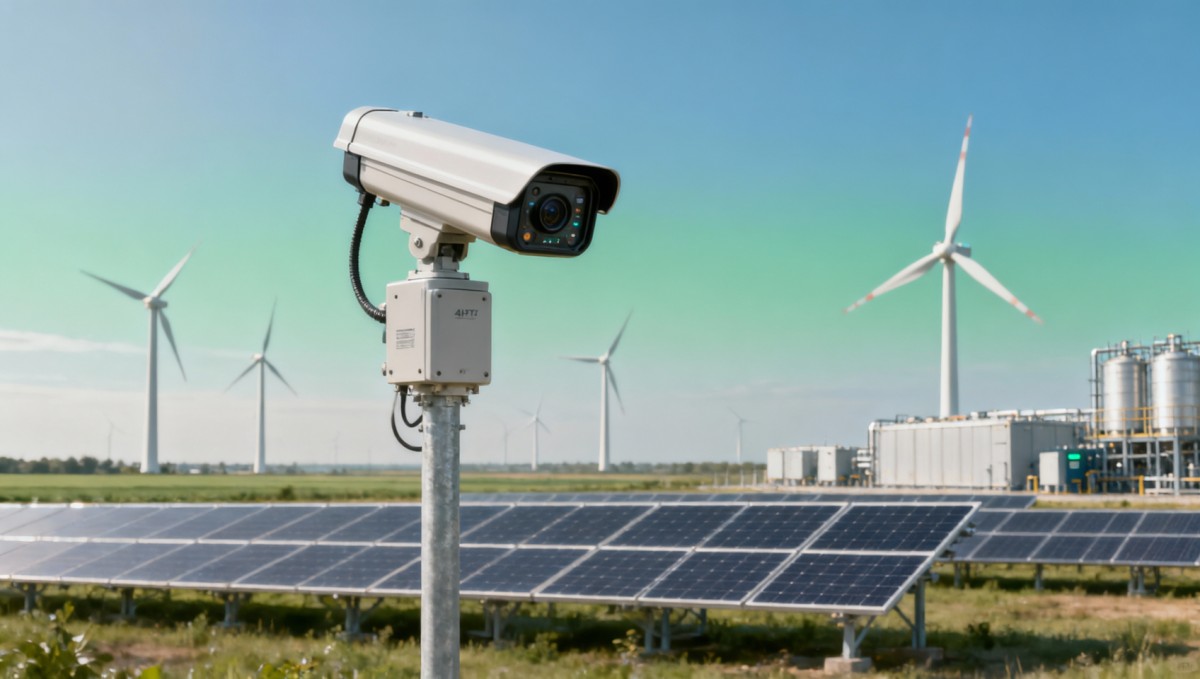
In solar farms, wind turbine corridors, battery energy storage stations, and hybrid microgrid facilities, the question is rarely whether 4K PTZ imaging is useful. The real question is how much bit rate is enough to preserve operational detail without overwhelming network links or inflating storage cost. A 4K PTZ camera bit rate that works in an office lobby may fail in a substation perimeter where moving blades, dust, glare, and long-distance monitoring all increase scene complexity.
For most B2B buyers, practical planning starts with a typical operating range rather than a single fixed number. In common H.265 deployments, a 4K PTZ security camera may run in the range of 8 Mbps to 20 Mbps depending on frame rate, scene motion, compression tuning, low-light noise, and whether analytics are enabled. In H.264 environments, the required bit rate is often materially higher for similar perceived quality, which can quickly strain remote renewable energy communications infrastructure.
This matters because many renewable energy assets rely on constrained uplinks, segmented OT networks, or mixed protocol environments. A camera installed 2 km to 15 km from a control room may share bandwidth with SCADA telemetry, access control events, and environmental sensor traffic. If the 4K PTZ camera bit rate is set too low, operators lose plate detail, equipment condition cues, and incident evidence. If it is set too high, latency, packet loss, and storage expansion become expensive operational problems.
At NexusHome Intelligence, the engineering view is straightforward: bit rate must be judged against scene behavior, protocol performance, and long-run deployment conditions. Marketing claims such as “ultra clear 4K” say very little unless they are tied to verifiable throughput, codec behavior, edge processing load, and night performance under actual site lighting. For renewable energy operators, enough bit rate means enough data to support action, not just enough to look sharp in a demo.
Why the “right” bit rate changes from one site to another
Two 4K PTZ cameras with the same resolution can require very different throughput. A camera covering a quiet inverter room with stable lighting may stay efficient at 8 Mbps to 12 Mbps. Another watching a wind farm perimeter with rotating blades, moving shadows, rain, and night lighting transitions may need 12 Mbps to 20 Mbps to maintain usable detail. Scene motion and low-light noise are usually bigger drivers than the 4K label itself.
Vision ai edge computing camera functions also affect the bit rate discussion. Some systems reduce backhaul demand by running object detection, line crossing, or intrusion filtering locally, sending metadata or event-driven streams rather than full continuous high-rate video to the central platform. However, AI processing adds another evaluation layer: the camera must sustain analytics and imaging together without introducing thermal throttling, unstable latency, or degraded nighttime output.
Operators and procurement teams should therefore avoid one-size-fits-all guidance. A proper benchmark should look at at least 4 variables together: codec, frame rate, lighting condition, and monitoring objective. In a renewable energy project, the purpose may be perimeter detection, remote inspection, safety compliance, or incident reconstruction. Each objective tolerates a different balance between bit rate, retention period, and response speed.
Which technical factors most strongly affect 4K PTZ camera bit rate?
When teams ask how much bit rate is enough, they often focus only on resolution. That is incomplete. In field deployments, at least 6 technical factors shape the final answer: compression codec, frames per second, scene motion, zoom ratio, low-light noise, and AI or edge analytics load. For renewable energy assets, where lighting and weather can shift within minutes, these variables change continuously rather than staying static.
A starlight night vision lux rating is especially important. Cameras with stronger low-light performance can often preserve more useful detail at lower gain levels, reducing image noise and helping compression remain efficient. By contrast, weak low-light imaging may flood the encoder with random noise at dusk or in poorly lit substations, pushing up the required bit rate while still producing smeared or unstable video.
PTZ behavior adds another layer. During fast pan, tilt, or zoom movement, the encoder must process more scene change per second. This often causes a temporary surge in bit demand compared with a fixed-camera view. In active security operations, especially when operators manually track vehicles, personnel, or fence line events, average throughput may not reflect the true peak network requirement.
The table below summarizes common factors and their practical impact on 4K PTZ camera bit rate decisions in renewable energy monitoring projects.
The main takeaway is that bit rate is a system-level setting, not a marketing number. Teams that compare only resolution and zoom often miss the bigger engineering risks. In mixed IoT and smart infrastructure projects, reliable planning should include protocol latency, storage retention targets, night imaging behavior, and whether analytics run on the edge or in the VMS.
A practical benchmark approach for B2B evaluation
A useful evaluation window is 3 stages: lab validation, pilot deployment, and live traffic observation. In the lab, compare 8 Mbps, 12 Mbps, 16 Mbps, and 20 Mbps under day and night conditions. In the pilot, test at least 7 to 14 days on the actual site. In live observation, verify whether peak PTZ tracking, simultaneous events, and network congestion produce delayed control response or dropped frames.
This method aligns with NHI’s data-driven philosophy. Claims such as “works with smart infrastructure” or “ideal for edge monitoring” are not enough. Renewable energy buyers need observable evidence: response time, stream stability, night detail retention, and encoder consistency under real environmental stress.
What bit rate settings make sense for solar farms, wind sites, and energy storage projects?
Different renewable energy scenarios require different 4K PTZ camera bit rate targets because the operational job is different. A perimeter camera at a battery storage site must support rapid incident review and nighttime intrusion detection. A PTZ camera on a solar farm may focus more on broad situational awareness, fence line patrol, and remote visual inspection. A wind site may need longer-distance tracking with fast motion transitions and more dramatic weather variation.
Instead of asking for the single best number, teams should define a preferred range for each use case. This helps business evaluators compare storage cost, operators maintain practical visibility, and enterprise decision-makers understand how network investment maps to security risk reduction. It also prevents overbuying bandwidth in low-complexity zones while under-provisioning mission-critical areas.
The following table can serve as an initial planning reference for renewable energy deployments. These are not universal mandates, but common starting ranges for discussion, testing, and vendor clarification.
These scenario ranges are useful because they tie video planning to operational purpose. A lower number may be workable in a quiet substation yard, while the same number may be insufficient for a wind site with active tracking and poor night illumination. That is why procurement teams should ask vendors to demonstrate video at target bit rates under real scene complexity, not in static indoor samples.
How storage and retention change the decision
Bit rate directly shapes storage cost. If a site retains continuous recording for 30 days, even a moderate difference between 10 Mbps and 16 Mbps becomes significant across multiple cameras. For operators balancing security and OPEX, this often leads to hybrid strategies: continuous lower-rate recording for baseline coverage, combined with event-based higher-detail capture during alarms, PTZ presets, or restricted-area movement.
This is where edge design becomes valuable. A vision ai edge computing camera can reduce unnecessary upstream traffic by classifying objects locally and sending higher-value clips instead of indiscriminate full-rate streams. Still, buyers should verify whether edge filtering misses relevant events such as slow fence climbing, maintenance route anomalies, or after-hours vehicle presence.
What should buyers, operators, and enterprise teams check before choosing a camera?
A renewable energy security project usually involves four stakeholder groups: researchers gathering technical information, site operators using the system daily, business evaluators comparing cost and risk, and enterprise decision-makers approving long-term architecture. Each group asks a different question, so the camera selection process should not stop at a spec sheet. It should translate imaging performance into operational value over 12 to 36 months of use.
From an engineering procurement perspective, there are 5 checks that matter most. First, validate codec efficiency and actual throughput under day and night scenes. Second, confirm whether PTZ control stays responsive during peak network load. Third, review starlight night vision lux rating and noise behavior rather than relying on generic low-light claims. Fourth, test interoperability with VMS, edge gateways, and site network policies. Fifth, estimate retention cost based on real recording modes, not brochure assumptions.
NHI’s role in this process is to reduce ambiguity. In fragmented IoT and smart infrastructure supply chains, the problem is often not the lack of products but the lack of trustworthy technical interpretation. A camera may advertise AI, 4K, and low power at the same time, yet under real deployment it can show dropped packets, encoder instability, or weak night analytics. Independent benchmarking helps buyers separate useful capability from decorative marketing.
The checklist below is designed for practical B2B evaluation before sample approval or pilot rollout.
- Request bitrate behavior by scene type, not only nominal defaults. Ask for quiet-scene, high-motion, and low-light examples.
- Confirm whether the vision ai edge computing camera functions run locally, require cloud support, or depend on an external NVR or server.
- Check integration with common industrial and building ecosystems, including IP video platforms, access control, and network segmentation rules.
- Review environmental suitability for dust, heat, vibration, and exposed renewable energy installations that may operate continuously across 24/7 duty cycles.
- Evaluate service factors such as sample lead time, pilot support, firmware update process, and replacement workflow over a 2 to 4 week validation window.
Common buying mistakes that increase long-term cost
Mistake 1: Choosing the lowest bit rate that still “looks okay”
Visual acceptability during a short demo is not enough. In security and infrastructure operations, footage must support zoom review, incident reconstruction, and night verification. A stream that looks acceptable at 8 Mbps in daylight may become unusable during rain, glare, or fast PTZ tracking after sunset.
Mistake 2: Ignoring network peaks
Average throughput can be misleading. Sites should account for simultaneous camera movement, alarm bursts, and control-room viewing sessions. In practical design, a headroom buffer of 20% to 30% is often safer than sizing links to average traffic alone.
Mistake 3: Treating AI as a substitute for image quality
AI cannot fully recover details that were never captured clearly. Analytics may reduce manual workload, but image quality, bit rate, and night sensitivity still determine whether an operator can verify an event with confidence.
FAQ and next-step guidance for smarter deployment decisions
For teams comparing suppliers, pilot plans, and system budgets, the most useful questions usually focus on deployment fit rather than abstract specs. The answers below address common concerns from renewable energy buyers and operators evaluating 4K PTZ security camera bit rate, edge analytics, and long-term reliability.
Is 8 Mbps enough for a 4K PTZ security camera?
Sometimes, yes. In a controlled scene with H.265, moderate motion, and stable lighting, 8 Mbps may be a workable starting point. However, for wind sites, large perimeters, nighttime monitoring, or active PTZ tracking, 8 Mbps can be too low. A safer approach is to test 8 Mbps, 12 Mbps, and 16 Mbps side by side over several day and night cycles before locking the profile.
Does a better starlight night vision lux rating reduce bandwidth demand?
Indirectly, it often helps. Better low-light imaging can reduce noise and preserve cleaner frames, allowing the encoder to work more efficiently. That does not guarantee a lower configured bit rate, but it usually improves the quality delivered within the same bandwidth budget. In renewable energy sites with limited lighting, this can make a meaningful difference.
Should renewable energy projects prioritize edge AI or central video management?
It depends on network design and operational priorities. Edge AI is attractive for remote sites because it can reduce backhaul traffic and improve event filtering. Central video management offers broader visibility and easier policy control. Many projects benefit from a hybrid model in which basic analytics run locally while archived review and multi-site coordination stay centralized.
How long should a realistic pilot test last?
A practical pilot usually lasts 7 to 14 days at minimum, and 2 to 4 weeks is better when weather shifts, night scenes, or network congestion need observation. The test should include daytime sun glare, night operation, active PTZ movement, alarm events, and storage verification. Short indoor demonstrations rarely reflect real field performance.
Why work with a data-driven benchmarking partner?
Because renewable energy security systems sit at the intersection of video, networking, edge intelligence, and infrastructure risk. A data-driven partner helps verify whether claimed compatibility, low-power behavior, and smart analytics actually hold up under live conditions. That saves time during sourcing and lowers the chance of buying hardware that performs well in brochures but poorly on site.
Why choose NHI for 4K PTZ camera evaluation and procurement support?
NexusHome Intelligence approaches smart security and connected infrastructure from an engineering-first perspective. In a market crowded with broad claims, we focus on measurable protocol behavior, device performance under stress, and deployment suitability for complex environments such as renewable energy facilities. That means helping teams judge not just whether a 4K PTZ camera bit rate looks acceptable on paper, but whether the full system remains stable, efficient, and actionable in live operation.
If your team is comparing cameras, validating a vision ai edge computing camera, or reviewing starlight night vision lux rating against actual site requirements, we can support structured technical discussion. Consultation topics can include parameter confirmation, bitrate planning, sample evaluation priorities, storage and bandwidth estimation, integration checkpoints, pilot test design, and risk review for remote renewable energy deployments.
For business evaluators and decision-makers, we can also help frame supplier conversations around clearer evidence: what to request in a sample, which 3 to 5 performance indicators matter most, how to compare alternative configurations, and what questions expose hidden integration or maintenance cost. This is especially useful when project timelines are tight and product claims are difficult to verify across fragmented ecosystems.
If you are planning a new project or optimizing an existing one, contact NHI to discuss your required bit rate range, target retention period, expected delivery cycle, compatibility needs, customization scope, sample support, and quotation workflow. A clear technical baseline at the beginning usually prevents costly rework later.
Protocol_Architect
Dr. Thorne is a leading architect in IoT mesh protocols with 15+ years at NexusHome Intelligence. His research specializes in high-availability systems and sub-GHz propagation modeling.
Related Recommendations
- Lina Zhao(Security Analyst)Vision AI Edge Cameras: What to Look For
- Lina Zhao(Security Analyst)Starlight Night Vision Lux Rating: How Low Is Good
- Lina Zhao(Security Analyst)4K PTZ Camera Bit Rate: How Much Is Enough
- Lina Zhao(Security Analyst)Can 5-axis CNC for aerospace impellers handle Inconel 718 without premature tool wear?
- Lina Zhao(Security Analyst)Verified IoT manufacturers: What happens when ‘verified’ doesn’t mean ‘tested’?
- Lina Zhao(Security Analyst)IP camera hardware benchmarks: Why Vision AI accuracy drops sharply below 10 lux—even with ‘low-light’ labels
- Lina Zhao(Security Analyst)Vision AI camera accuracy: Why resolution alone fails to predict face recognition reliability in outdoor lighting
- Lina Zhao(Security Analyst)IoT Hardware Benchmarking: Why Vision AI Sensors Score High in Labs But Struggle With Edge Lighting
- Lina Zhao(Security Analyst)Vision AI in fall-detection systems introduces new false-positive risks
- Lina Zhao(Security Analyst)Machine vision lens specifications: How chromatic aberration skews measurement accuracy in multi-spectral sorting
Analyst