
What to Ask a Smart Lock OEM Before Sampling
author
Before requesting samples from a smart lock OEM China partner, buyers need more than a brochure—they need IoT engineering truth. At NexusHome Intelligence, we help procurement teams and evaluators use smart home hardware testing, hardware compliance inquiry, and Matter standard compatibility checks to identify verified IoT manufacturers. This guide shows what to ask before sampling, so you can reduce sourcing risk and make smarter decisions across the IoT supply chain.
If you are sourcing a smart lock for residential, rental, hospitality, or energy-aware smart building projects, the right questions before sampling can save months of rework. A sample that looks polished in a demo may still fail in battery life, protocol compatibility, environmental durability, firmware support, or compliance readiness. The core goal is simple: use the sampling stage to verify whether the OEM can support your real deployment conditions, not just ship an attractive device.
Why the sampling stage is where most smart lock sourcing mistakes begin
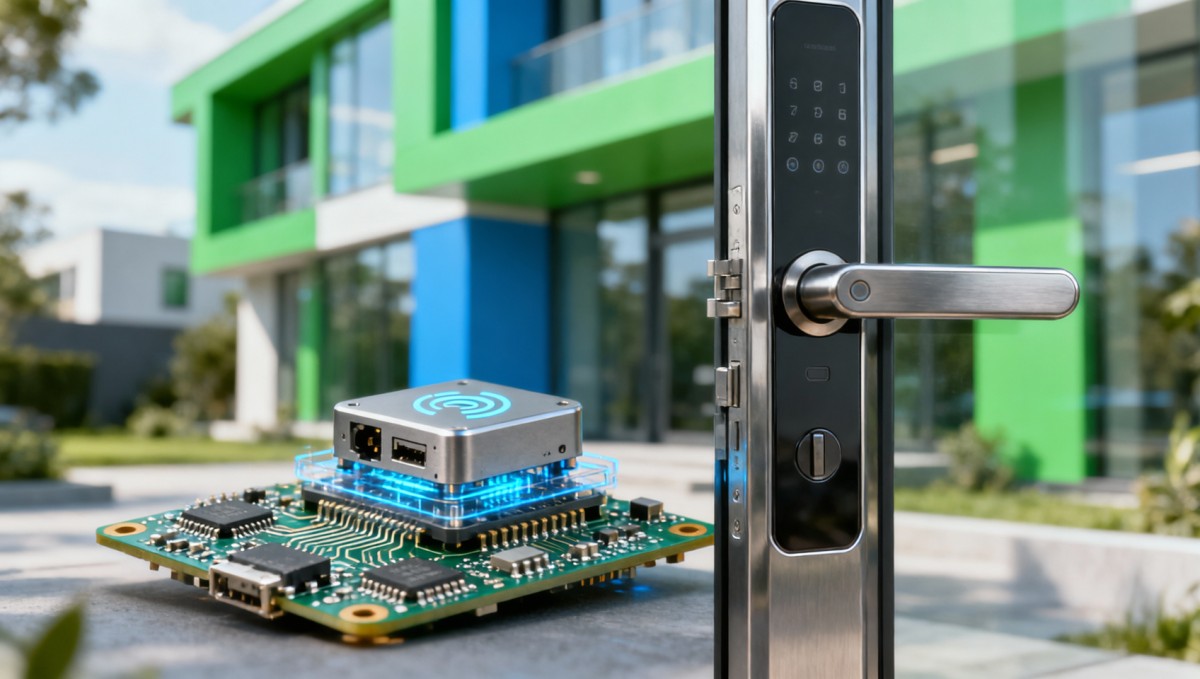
For information researchers, operators, procurement teams, and commercial evaluators, the biggest mistake is treating sampling as a basic product check. In reality, sampling is your first technical and operational audit of the OEM.
At this stage, your job is not only to ask, “Does the lock work?” but also:
- Will it work with our ecosystem, gateway, app, and access workflow?
- Can the OEM prove hardware consistency and firmware stability?
- Are the compliance claims real, documented, and market-ready?
- Will battery performance, connectivity, and field maintenance meet operational expectations?
- Can this supplier scale from sample to mass production without quality drift?
That is especially important in smart home and IoT procurement, where protocol silos, inconsistent integrations, and weak test documentation often create hidden risk. A smart lock OEM may claim support for BLE, Zigbee, Wi-Fi, Thread, or Matter standard compatibility, but unless those claims are validated under realistic conditions, the sample tells you very little.
What should you ask about protocol compatibility and ecosystem integration?
For connected access products, integration risk is usually higher than industrial design risk. A lock may perform well on its own but fail inside a broader ecosystem. Before sampling, ask the OEM:
- Which protocols are supported today: BLE, Wi-Fi, Zigbee, Z-Wave, Thread, Matter, or hybrid combinations?
- Is Matter support native, in development, or dependent on a bridge or gateway?
- Which certification stage has been completed for each protocol?
- Which smart home platforms or property management systems have already been integrated?
- Can they provide interoperability test reports, not just a feature list?
This matters because “works with Matter” can mean very different things. Buyers should ask whether the lock supports the required device type, commissioning flow, secure pairing behavior, over-the-air updates, and multi-admin operation expected in real deployments. If your project involves apartments, offices, or energy-managed buildings, ask how the lock performs in dense wireless environments and whether network congestion affects command latency or lock responsiveness.
Good OEMs should be able to explain:
- their radio module choices,
- firmware architecture,
- gateway dependency,
- API or SDK availability,
- and known integration boundaries.
If answers stay at the marketing level, that is an early warning sign.
What hardware and reliability questions reveal real engineering quality?
A sample should help you assess whether the product is built for field use, not showroom testing. Ask the OEM for measurable hardware details:
- What lock body standard is used, and which door types does it support?
- What are the tested operating temperature and humidity ranges?
- How is weather resistance verified for outdoor or semi-outdoor use?
- What cycle-life testing has been completed for the motor, handle, clutch, and latch?
- What is the false rejection or failed unlock rate under low temperature, wet fingers, or poor alignment conditions?
- How does the lock behave during low battery, communication loss, or mechanical override events?
For operators and evaluators, reliability under edge conditions matters more than ideal-condition demonstrations. If biometric unlocking is involved, request data on fingerprint recognition consistency across age groups, dry skin, and repeated use. If keypad or app unlocking is involved, ask about response time, wake-up speed, and failure recovery logic.
A mature smart lock OEM should also be prepared to discuss:
- PCBA quality control,
- component sourcing stability,
- motor supplier consistency,
- battery compartment design,
- tamper detection logic,
- and long-term drift or calibration concerns.
This is where smart home hardware testing becomes highly valuable. Buyers should ask whether internal test data exists for vibration, drop, salt spray, ESD, aging, and repeated electronic lock/unlock cycles. A sample backed by test evidence is far more meaningful than a sample backed only by appearance.
What should buyers ask about battery life, power design, and energy performance?
Because your industry context includes renewable energy and energy-aware connected infrastructure, power efficiency should not be treated as a secondary issue. In smart locks, poor power design quickly becomes an operational cost issue.
Ask the OEM:
- What is the typical and worst-case battery life under defined usage conditions?
- What battery chemistry is supported?
- How much standby current does the lock draw?
- How does power consumption change when Wi-Fi is active versus BLE or Thread?
- What happens to battery life in cold climates or high-frequency usage scenarios?
- Can the OEM provide discharge curve data or battery life test methodology?
This is a key business issue for procurement and commercial evaluation teams. If battery replacement frequency is underestimated, the total cost of ownership rises sharply, especially in multi-unit properties, hospitality, or remote managed sites.
Also ask whether the lock supports emergency power input, low-battery alerts, predictive maintenance data, or cloud-side battery status reporting. In connected buildings, a lock that consumes too much power or reports inaccurately can undermine both service quality and maintenance planning.
Which compliance and security questions should never be skipped?
Many buyers ask about features before they ask about documentation. That is the wrong order. Before sampling, a hardware compliance inquiry should cover both market access and product security.
Ask for:
- CE, FCC, RoHS, REACH, UKCA, or other relevant certification status
- protocol certification status for Bluetooth, Zigbee, Z-Wave, or Matter
- electrical safety and EMC test reports
- cybersecurity architecture documentation
- data handling and privacy design details
- firmware signing and secure OTA update process
For smart security and access products, cybersecurity is not optional. Ask the OEM how credentials are stored, how communication is encrypted, how device identity is provisioned, and how vulnerabilities are patched. If cloud services are involved, ask where data is hosted, what logs are retained, and whether access events can be managed locally for privacy-sensitive projects.
Buyers serving residential developers, property operators, or enterprise projects should also ask about audit trails, user role control, temporary access management, and integration with third-party identity or building systems.
If an OEM cannot provide clear security answers before sampling, the risk is not just technical. It is contractual, reputational, and regulatory.
How do you evaluate firmware support, customization, and post-sample cooperation?
A strong sample is not just a device. It is evidence that the OEM can support your product lifecycle. That means you should ask what happens after the first test unit arrives.
Important questions include:
- Can firmware be customized for your application logic or branding needs?
- What is the typical turnaround time for bug fixes?
- How are firmware versions managed across sample, pilot, and production stages?
- Is there an SDK, API, or integration support package?
- Will the OEM provide field test support and engineering contact access?
- How are change notifications handled for chips, modules, or key components?
This matters because many sourcing problems appear only after the sample passes basic tests. For example, an OEM may send an optimized sample build that differs from volume production. Or the lock may require undocumented gateway logic to achieve stable performance. Procurement teams should therefore ask whether the sample bill of materials matches the intended production version and whether any components are likely to change.
If customization is needed, clarify what is standard ODM flexibility and what requires non-recurring engineering cost, certification retesting, or longer lead times.
What factory and supply chain questions help you judge whether the OEM is truly reliable?
The sample stage is also the right time to test the manufacturer, not only the product. Ask questions that reveal process maturity:
- What is the monthly production capacity for this smart lock model?
- Which key components are single-sourced, and which have approved alternates?
- What are the incoming quality control and outgoing quality assurance procedures?
- What traceability exists for PCBA, motors, fingerprint modules, and radio modules?
- What is the historical failure rate from pilot to mass production?
- How are warranty claims analyzed and corrected?
For procurement personnel and business evaluators, this is where supplier risk becomes visible. A polished OEM presentation does not guarantee process discipline. Ask whether the factory can support pilot runs, aging tests, pre-shipment inspection standards, and root-cause analysis documentation.
You should also assess communication quality. Do they answer precisely? Do they provide test data quickly? Do engineering and sales give the same answer? Strong OEMs usually show consistency across technical, quality, and commercial teams.
A practical pre-sampling checklist for smart lock OEM evaluation
Before you request a sample, make sure you can get usable answers in these six areas:
- Protocol and integration: actual support, certification stage, interoperability evidence
- Hardware reliability: durability data, environmental test results, failure behavior
- Power performance: standby current, battery methodology, low-power design logic
- Compliance and security: regulatory documents, encryption, OTA security, privacy approach
- Firmware and support: update process, customization ability, engineering responsiveness
- Factory capability: capacity, traceability, QA process, production consistency
If an OEM can answer these clearly and back claims with documents, test reports, and realistic limitations, the sample is worth your time. If they rely on broad claims, incomplete certifications, or vague integration language, sampling may only delay a sourcing problem rather than solve it.
Conclusion: the best smart lock sample starts with the right questions
When sourcing from a smart lock OEM China supplier, the real decision is not whether to request a sample. It is whether you know how to use the sampling stage to uncover engineering truth. For information researchers, users, procurement professionals, and business evaluators, the most valuable questions are the ones that expose compatibility limits, reliability risk, compliance gaps, battery realities, and support quality before purchase commitments are made.
In today’s fragmented IoT market, brochures are easy to produce, but verified performance is harder to prove. Ask for data, test conditions, certification status, and process transparency. That is how you identify verified IoT manufacturers, reduce sourcing risk, and choose a smart lock partner that can perform beyond the demo table.
Protocol_Architect
Dr. Thorne is a leading architect in IoT mesh protocols with 15+ years at NexusHome Intelligence. His research specializes in high-availability systems and sub-GHz propagation modeling.
Related Recommendations
- Lina Zhao (Security Analyst)Smart Lock OEM China: How to Avoid Bad Fits
- Lina Zhao (Security Analyst)What to Ask a Smart Lock OEM Before Sampling
- Lina Zhao (Security Analyst)Smart Security Access Control: Which Setup Works Best
- Lina Zhao (Security Analyst)Smart lock sourcing mistakes that cost more later
- Lina Zhao (Security Analyst)Which smart lock OEM is easier to scale with?
- Lina Zhao (Security Analyst)Smart lock OEM China: how to vet factory claims
- Lina Zhao (Security Analyst)Smart Lock Matter Compatibility: What Changes
- Lina Zhao (Security Analyst)Access Control System Integration Made Practical
- Lina Zhao (Security Analyst)ANSI Grade 1 Smart Lock Test: What It Means
- Lina Zhao (Security Analyst)What Is a Good FRR for Smart Locks
Analyst