
What Is a Good FRR for Smart Locks
author
In smart security systems, a good smart lock false rejection rate (FRR) is more than a usability metric—it directly affects trust, access efficiency, and long-term deployment value. For engineers, buyers, and operators evaluating smart lock Matter compatibility, biometric spoofing resistance, and access control system integration, understanding FRR helps separate marketing claims from measurable performance in real-world smart buildings and energy-conscious connected ecosystems.
A practical answer comes first: for fingerprint smart locks, a good FRR is generally low enough that legitimate users are rarely blocked in normal daily use. In commercial and multi-user environments, many buyers look for single-digit FRR performance under realistic conditions, not just lab claims. More importantly, FRR should be evaluated together with FAR (False Acceptance Rate), environmental stability, user enrollment quality, power behavior, and protocol integration. A lock with an impressive brochure number but poor real-world consistency is not a good lock.
What is considered a good FRR for smart locks in real use?
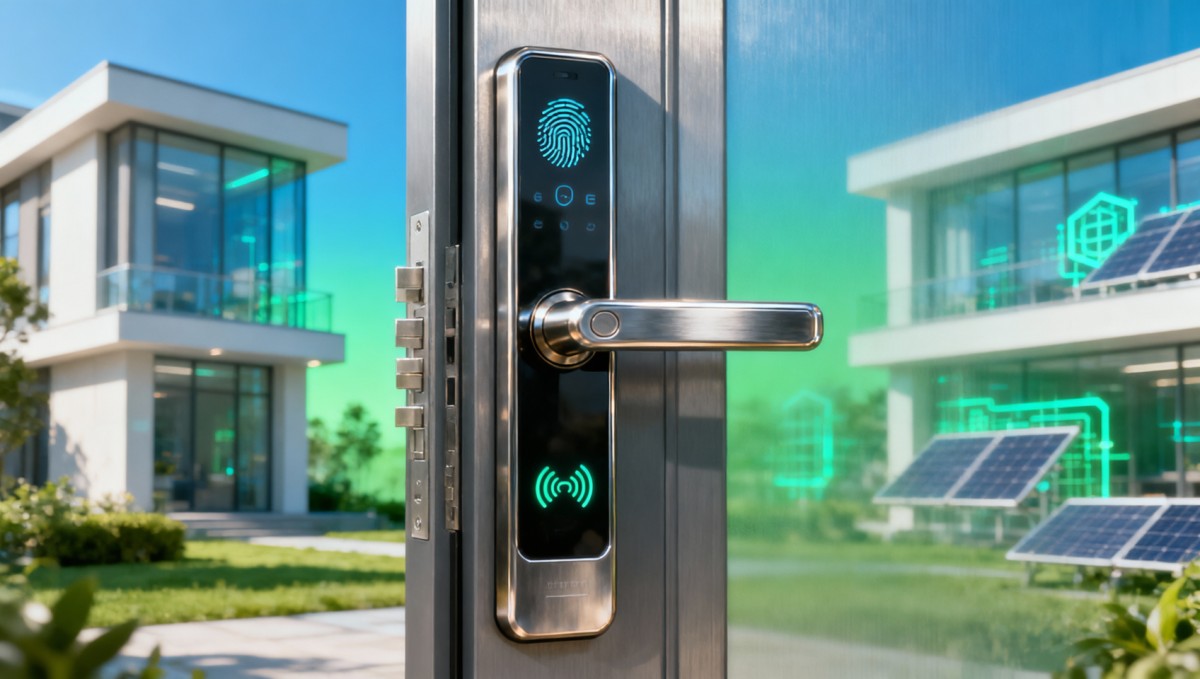
FRR, or False Rejection Rate, measures how often a smart lock rejects an authorized user. In simple terms, it answers this question: How often will the right person be denied access?
For most readers evaluating smart locks, the real issue is not the definition of FRR but the acceptable threshold. A “good” FRR depends on the use case:
- Residential smart locks: Users usually expect quick, frustration-free access. Even a modest rejection pattern can feel unacceptable if family members must retry often.
- Commercial buildings and offices: A lower FRR is more important because delays affect staff flow, visitor handling, and operational efficiency.
- High-security sites: Some systems tolerate slightly higher FRR if that tradeoff significantly reduces unauthorized access risk, but only if backup authentication is smooth.
- Outdoor or harsh environments: The acceptable FRR should account for wet fingers, dust, gloves, temperature swings, and sensor contamination.
In practice, a good FRR is one that remains consistently low after deployment, not only in factory tests. That is why procurement teams and operators should ask not only for headline FRR values, but also:
- Under what test conditions was FRR measured?
- How many users were enrolled?
- How did the lock perform with dry, wet, aged, or worn fingerprints?
- Was the result measured indoors only, or in outdoor installation scenarios?
- Did the smart lock maintain performance with low battery conditions?
Why FRR matters more than many buyers initially think
Many teams focus first on lock style, app features, connectivity, or whether the product claims Matter compatibility. But FRR often has a more direct impact on daily experience and long-term ROI.
If FRR is too high, the consequences show up quickly:
- User frustration: People lose confidence in biometric access and revert to codes, cards, or mechanical keys.
- Slower entry flow: In apartments, offices, and shared properties, repeated attempts create bottlenecks.
- Higher support burden: Operators and facility teams face more complaints, re-enrollment requests, and service calls.
- Reduced security discipline: Users may disable stronger authentication features if they find them unreliable.
- Deployment risk: A lock that underperforms in the field weakens confidence in the wider smart building or IoT rollout.
For enterprise decision-makers, this means FRR is not just a biometric statistic. It affects operational continuity, tenant satisfaction, maintenance cost, and perceived system quality.
FRR vs FAR: why one number never tells the whole story
A common mistake is evaluating FRR in isolation. Smart lock performance should always be judged alongside FAR, the False Acceptance Rate, which measures how often unauthorized users are incorrectly accepted.
There is usually a tradeoff:
- If a system is tuned to be very strict, FAR may improve, but FRR may rise.
- If a system is tuned to be more permissive, FRR may improve, but FAR may worsen.
That is why a “good FRR” is not automatically good if it comes at the expense of poor spoofing resistance or weak access control security. The best smart locks balance:
- Low false rejection for legitimate users
- Low false acceptance for unauthorized users
- Fast authentication speed
- Reliable fallback options such as PIN, NFC, mobile credential, or mechanical override
For buyers comparing vendors, ask for both FRR and FAR under the same test framework. If one metric is advertised and the other is missing, the performance picture is incomplete.
What causes smart lock FRR to increase in real-world deployments?
This is one of the most important questions for operators and evaluators. A lock may show acceptable biometric performance in demos yet behave very differently after installation.
Common causes of high FRR include:
- Poor fingerprint enrollment: If initial user enrollment is rushed or incomplete, matching quality suffers later.
- Environmental interference: Rain, condensation, dust, direct sunlight, low temperatures, and surface contamination can affect sensors.
- User behavior: Incorrect finger angle, partial touch, rushed interaction, or inconsistent placement leads to rejections.
- Sensor quality limitations: Lower-grade biometric modules may struggle with edge cases such as elderly users, dry skin, or worn fingerprints.
- Battery and power instability: In low-power smart locks, degraded battery conditions can affect responsiveness and sensor consistency.
- Firmware tuning issues: Overly aggressive anti-spoofing or poor matching thresholds can raise rejection rates.
In energy-conscious buildings and connected ecosystems, power efficiency matters—but not if energy-saving behavior degrades authentication reliability. A good smart lock should balance low standby power with stable biometric performance.
How should buyers evaluate a vendor’s FRR claim?
For business evaluators and procurement teams, the best approach is not to accept a single brochure figure at face value. Instead, use a structured checklist.
Ask vendors these questions:
- Was FRR tested in a lab, pilot site, or live deployment?
- How many users were involved, and what was the demographic range?
- Were different environmental conditions included?
- How many retry attempts were allowed?
- Was anti-spoofing enabled during testing?
- How does FRR change when the battery level drops?
- Can the lock export event logs for rejection analysis?
- Does FRR differ when integrated with Matter, BLE, Wi-Fi, Zigbee, or proprietary gateways?
Request evidence such as:
- Third-party test reports
- Pilot deployment data
- Failure logs by weather condition or user type
- Firmware version history tied to biometric improvements
- Comparative testing between standalone mode and integrated access control mode
This matters because integration can influence practical performance. A smart lock may authenticate locally, but the overall access experience can still degrade due to cloud latency, app delay, credential sync issues, or gateway instability.
What is a good FRR for different smart lock deployment scenarios?
The right benchmark depends on the site and risk profile.
- Single-family homes: Prioritize convenience and stability. A good FRR means family members can unlock quickly without repeated scans.
- Rental properties and apartments: Low FRR reduces tenant complaints and property management overhead. Easy credential fallback is also critical.
- Office access control: Good FRR should support smooth peak-hour entry, fast onboarding, and manageable exception handling.
- Industrial or outdoor access points: FRR must remain controlled under dust, moisture, glove transitions, and temperature variation.
- High-turnover commercial sites: Enrollment quality, audit trails, and rapid reconfiguration may be as important as the raw FRR figure.
In all these scenarios, the best-performing systems are rarely those with only strong biometric hardware. They are usually the ones with good enrollment workflow, strong firmware tuning, reliable fallback credentials, and clean system integration.
How FRR affects ROI, maintenance, and long-term deployment value
Enterprise readers often need to justify product selection beyond technical metrics. FRR has a direct business impact in several areas:
- Lower support costs: Fewer lockouts and fewer user complaints reduce service interventions.
- Higher adoption: Users are more likely to rely on biometric access if it works consistently.
- Better security behavior: Reliable biometrics reduce the temptation to share PINs or keep doors mechanically overridden.
- Stronger brand trust: For property developers and solution providers, dependable access performance improves perceived quality.
- Reduced replacement risk: Poor field performance can force costly retrofits or vendor changes.
For organizations investing in broader smart building infrastructure, a smart lock with good FRR supports not just door access, but confidence in the larger connected system. That matters when smart security, energy management, occupancy analytics, and ecosystem interoperability are part of the same deployment strategy.
How to make a better smart lock decision beyond marketing claims
If you are comparing products, a strong decision framework is simple:
- Start with the use case, not the datasheet. Residential, office, outdoor, and enterprise deployments need different FRR expectations.
- Evaluate FRR together with FAR. Convenience without security is not a win.
- Check real-world test conditions. Weather, battery status, and user diversity matter.
- Review fallback methods. PIN, card, app, and mechanical backup reduce operational risk.
- Examine integration quality. Matter compatibility, access control system support, local processing, and audit logs all affect deployment value.
- Run a pilot. A short field trial often reveals more than a polished demo.
A good smart lock FRR is not just “a low number.” It is consistent, verifiable, and sustainable in actual operating conditions.
Conclusion: a good FRR is one users rarely notice
When a smart lock has a good FRR, authorized users get in smoothly, operators receive fewer complaints, and decision-makers see stronger long-term value. That is the practical standard.
So, what is a good FRR for smart locks? In real terms, it is an FRR low enough to avoid frequent rejection in everyday use, balanced with strong FAR control, spoofing resistance, and dependable system integration. For serious buyers and evaluators, the right question is not “What number does the vendor claim?” but “How reliably does this lock perform in the exact environment where we will deploy it?”
That is the difference between marketing and measurable smart security performance.
Protocol_Architect
Dr. Thorne is a leading architect in IoT mesh protocols with 15+ years at NexusHome Intelligence. His research specializes in high-availability systems and sub-GHz propagation modeling.
Related Recommendations
- Lina Zhao (Security Analyst)Smart Lock Matter Compatibility: What Changes
- Lina Zhao (Security Analyst)Access Control System Integration Made Practical
- Lina Zhao (Security Analyst)ANSI Grade 1 Smart Lock Test: What It Means
- Lina Zhao (Security Analyst)What Is a Good FRR for Smart Locks
- Lina Zhao (Security Analyst)80 Residential Communities Face Property Management Withdrawal: IoT Hardware Gains New Overseas Opportunities
- Lina Zhao (Security Analyst)Trusted Smart Home Factories: How Many Actually Pass Third-Party Cybersecurity Validation?
- Lina Zhao (Security Analyst)Hardware Root of Trust: Which Smart Lock OEMs Actually Implement Secure Boot with Signed Firmware Updates?
- Lina Zhao (Security Analyst)Trusted smart home factories: How do audit results differ between Tier-1 and Tier-2 OEMs?
- Lina Zhao (Security Analyst)Hardware root of trust: Does your smart lock’s secure enclave support post-quantum key rotation?
- Lina Zhao (Security Analyst)Smart lock OEM China: How factory-level firmware signing practices affect Matter over-the-air update security
Analyst