
Smart Lock Matter Compatibility: What Changes
author
Smart lock Matter compatibility is changing how security, HVAC integration with Matter, and access control system integration work across fragmented ecosystems. For researchers, operators, buyers, and decision-makers, the real question is no longer whether a lock connects, but how reliably it performs under protocol stress, battery constraints, and certification demands. This guide explains what Matter actually changes, where interoperability still breaks, and how data-driven validation reduces risk in modern smart infrastructure.
Why Matter compatibility now matters in renewable energy facilities
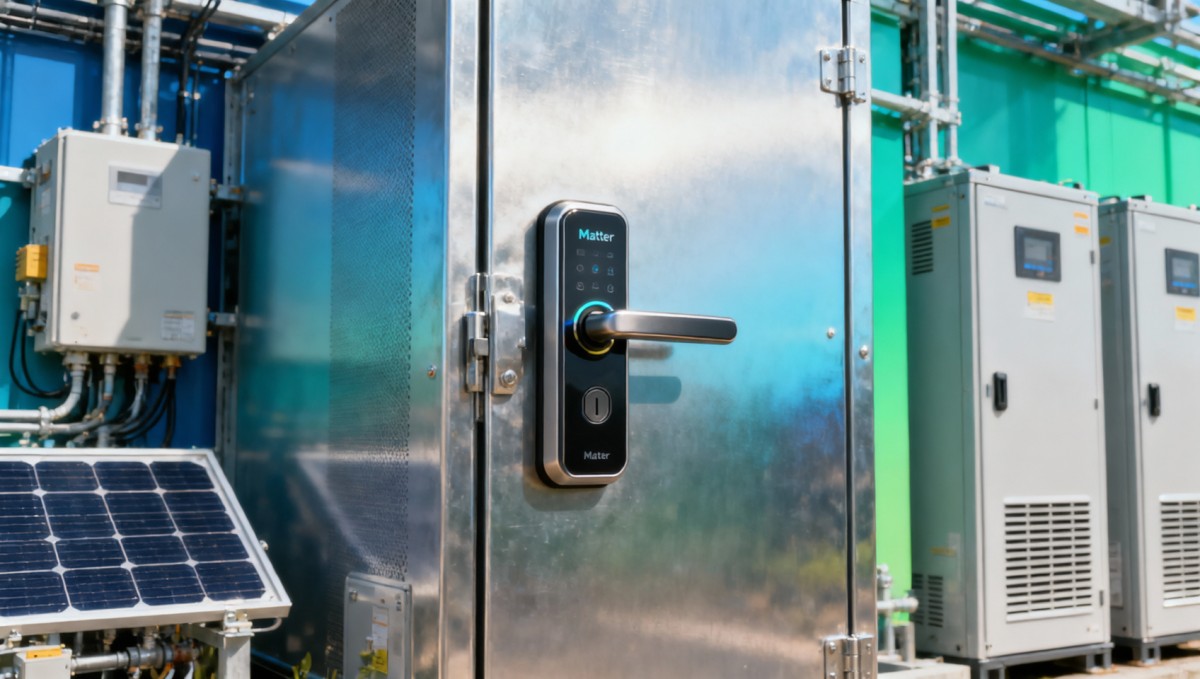
In renewable energy projects, a smart lock is rarely an isolated device. It often sits inside a larger control chain that includes energy monitoring, HVAC automation, local gateways, remote maintenance workflows, and site security policies. When operators manage solar farms, battery energy storage rooms, microgrid cabinets, or distributed energy assets, smart lock Matter compatibility affects not only convenience but also uptime, access traceability, and system coordination.
Matter changes the conversation because it promises a common application layer across previously fragmented ecosystems. That reduces integration friction between lock vendors, platform providers, and building control environments. However, the practical benefit depends on how the lock behaves over Thread, Wi-Fi, or bridge-based architectures during 24/7 operation, not on a packaging claim that says “works with Matter.” For energy sites with 2–4 network layers and mixed legacy protocols, that distinction is critical.
For renewable energy operators, three operational pressures drive demand for better interoperability. First, field teams need secure access to distributed assets without maintaining separate apps for every site. Second, facility managers want access events tied to HVAC, lighting, and occupancy logic to reduce standby consumption. Third, procurement teams need hardware that can survive long deployment cycles, often 5–10 years, with fewer protocol dead ends.
This is where NexusHome Intelligence approaches the problem differently. NHI treats Matter compatibility as a measurable engineering topic, not a marketing slogan. In environments shaped by protocol silos, we focus on latency under interference, battery behavior under frequent wake events, and protocol compliance under mixed-vendor conditions. That data-led method is especially relevant in renewable energy infrastructure, where access control errors can delay maintenance windows, disrupt safety procedures, or increase service costs.
- Distributed assets such as solar inverters, battery rooms, and energy cabins often require controlled access across multiple sites and teams.
- Typical deployments combine 3 core layers: lock hardware, local connectivity, and cloud or edge management.
- Maintenance cycles may run weekly, monthly, or quarterly, so credential reliability matters as much as initial pairing.
What actually changes when a smart lock supports Matter
Matter standardizes device descriptions, commissioning flows, and basic control semantics, which can simplify onboarding and cross-platform visibility. In theory, a Matter-enabled smart lock can integrate more smoothly with ecosystems that also include thermostats, sensors, and energy control devices. For renewable energy facilities with hybrid smart building functions, that opens the door to unified automation, such as unlocking service zones while enabling temporary ventilation or equipment-safe lighting profiles.
Still, Matter does not erase all integration limits. It does not automatically guarantee the same feature depth across every platform. Credential handling, event granularity, local fallback behavior, and battery optimization can vary. A buyer comparing two smart lock Matter compatibility claims should therefore ask what functions are native, what functions depend on a bridge, and what functions degrade when internet access is interrupted for 4–12 hours in remote energy locations.
For decision-makers, the key shift is this: compatibility is no longer a simple yes-or-no checkbox. It becomes a layered procurement question covering protocol path, commissioning method, access recovery, software update policy, and operational resilience. That framework is more useful than headline claims, especially when access control system integration must connect security, energy efficiency, and maintenance continuity.
Where interoperability still breaks in real deployments
Many teams assume Matter removes ecosystem fragmentation overnight. In practice, interoperability still breaks at the edges: legacy protocol coexistence, unstable border routers, partial support for lock-specific attributes, and weak bridge implementations. These issues are more visible in renewable energy sites because deployments often combine retrofitted infrastructure, metal enclosures, outdoor interference, and remote operation windows where a failed command can delay field access for several hours.
A common failure point is the gap between lab pairing and field persistence. A smart lock may commission successfully on day one yet show degraded responsiveness after 30–90 days if Thread routing changes, battery voltage falls, or nearby equipment increases radio noise. In energy storage areas and inverter rooms, dense metal surfaces and power electronics can affect wireless behavior. That is why packet stability and command retry patterns matter more than a simple first-time setup demonstration.
Another break point is feature mismatch across platforms. One controller may expose lock state and user events cleanly, while another only supports basic lock and unlock actions. For operators, that can create blind spots in audit trails. For procurement teams, it can inflate downstream integration costs because custom middleware or additional gateways become necessary. A product that appears cheaper at the unit level may require 2–3 extra integration steps before it is usable at scale.
NHI’s benchmarking mindset is designed for this reality. Instead of asking whether a lock has Matter certification language in a datasheet, we ask how it behaves under multi-node routing, repeated command bursts, low-battery thresholds, and mixed-device environments. That engineering filter helps enterprises identify hidden failure modes before rollout across critical renewable energy facilities.
Most frequent weak points buyers should test
- Commissioning consistency across 3–5 repeated setup cycles, especially after reset and firmware update.
- Command latency during local network congestion, not just under clean showroom conditions.
- Battery performance when the lock handles frequent wakeups, credential checks, and status reporting.
- Fallback behavior when WAN is lost but local access control still needs to function for 6–24 hours.
- Compatibility depth with HVAC integration with Matter and broader building automation triggers.
Comparison table: promise versus operational reality
The table below helps separate headline smart lock Matter compatibility claims from the operational checks that renewable energy buyers should actually perform during evaluation.
The practical lesson is simple: every attractive label should be converted into a test case. For renewable energy and distributed infrastructure, operational reality matters more than broad compatibility language because a missed access event can affect maintenance, compliance, and safety response at the same time.
How to evaluate smart lock Matter compatibility for access, HVAC, and energy workflows
A good evaluation process starts with system boundaries. In renewable energy sites, a smart lock may control technician access to switchgear rooms, rooftop solar control spaces, battery enclosures, or shared utility corridors in mixed-use properties. Each case has different tolerance for latency, battery service intervals, and event logging. Buyers should define whether the lock mainly supports security, automation, energy optimization, or all three.
Next, map the integration path. Some projects need direct Matter communication with a local controller. Others rely on a gateway that translates data into a building management or energy management platform. If the site uses HVAC integration with Matter, the lock should support reliable event-trigger behavior, such as enabling ventilation only when an authorized technician enters a battery room. These automations may appear simple, but they require clear timing logic and stable event delivery.
Then evaluate operating conditions. Outdoor cabinets, rooftop installations, and equipment rooms all create different stress patterns. Teams should test at least 3 dimensions: radio reliability, power consumption, and credential handling. In many projects, a 2–4 week pilot is more informative than a short bench test because it reveals battery drain trends, intermittent routing problems, and software recovery behavior after resets or network changes.
Finally, procurement should align technical checks with commercial checks. A lock that fits the technical specification but lacks clear firmware support windows, certification documentation, or spare-part planning can become expensive over a 5-year lifecycle. NHI’s value lies in bringing those layers together through data-driven verification, helping teams avoid products that look interoperable on paper but create friction in real buildings and energy infrastructure.
Five procurement dimensions that matter most
- Protocol path: determine whether the solution is native Matter, bridge-dependent, or hybrid with legacy protocols.
- Power profile: estimate battery service intervals under realistic access frequency, status polling, and environmental conditions.
- Integration depth: confirm how access control system integration connects with HVAC, alarms, occupancy rules, and reporting.
- Compliance readiness: check documentation for radio, electrical safety, cybersecurity maintenance, and market entry needs.
- Lifecycle support: review firmware update methods, sample lead time, replacement parts, and field troubleshooting workflow.
Selection guide for common renewable energy scenarios
Because use cases differ, selection should follow site function rather than a single generic smart lock specification. The table below compares typical scenarios and the priorities each one should emphasize.
This comparison shows why there is no universal best device. The right choice depends on whether the site needs deeper automation, longer battery endurance, or stronger offline continuity. A structured scenario review prevents overspending on features you do not use and underbuying on functions that protect operations.
Standards, certification, and implementation risks buyers often overlook
Certification review should never stop at a single label. Matter-related evaluation should be read alongside local market compliance, radio requirements, electrical safety, cybersecurity maintenance expectations, and any building-level access policies. In renewable energy projects, this matters because devices are often deployed in mixed commercial and industrial contexts where procurement teams, facility operators, and security managers must all sign off before rollout.
Implementation risk also grows when multiple suppliers divide responsibility. A lock vendor may certify the device, a gateway supplier may handle translation, and a platform partner may manage dashboards and automation logic. If no one owns end-to-end verification, failures can surface only after installation. Buyers should define a 4-step acceptance process covering commissioning, access event logging, automation response, and recovery after network loss.
Another overlooked issue is update discipline. Matter compatibility today does not guarantee smooth compatibility after future controller updates or feature revisions. Procurement teams should ask for firmware maintenance policy, update method, rollback process, and expected support horizon. Even a practical range such as 24–36 months of active software maintenance is more useful than vague promises, because it supports budget planning and site risk assessment.
NHI’s broader supply chain perspective is valuable here. Because we examine protocol compliance, hardware behavior, and deployment stress together, we help buyers bridge the gap between specification sheets and operational readiness. That is especially important when renewable energy firms source from multiple regions and need an engineering filter before sample approval or volume commitment.
Common misconceptions about smart lock Matter compatibility
Does Matter eliminate all gateways?
No. Some architectures still rely on border routers, platform hubs, or protocol bridges depending on site design. The procurement question is not whether a gateway exists, but whether the gateway introduces latency, dependency risk, or extra maintenance effort across 1 site or 100 sites.
Will a Matter smart lock always improve battery life?
Not automatically. Battery life depends on radio behavior, wake frequency, lock mechanics, reporting intervals, and environment. Two devices using the same standard can show different service intervals once event traffic and remote monitoring patterns increase.
Is certification enough for procurement approval?
No. Certification is a baseline, not a full deployment answer. Buyers still need pilot validation, integration mapping, environmental checks, and lifecycle planning. In access control system integration, certification confirms a foundation, but operational fit determines long-term value.
Why data-driven validation reduces risk before you buy
For researchers, operators, business evaluators, and enterprise decision-makers, the main challenge is not finding a product list. It is identifying which smart lock Matter compatibility claims will hold up in real renewable energy deployments. NHI closes that gap by focusing on measurable behavior: protocol stability, battery stress, environmental resilience, and cross-ecosystem integration under realistic conditions rather than polished brochure language.
That approach supports better decisions at several stages. During early research, it helps teams compare architectures before sample requests. During pilot planning, it helps define pass-fail criteria across 2–4 weeks of site testing. During commercial review, it helps estimate hidden costs such as additional gateways, custom middleware, or shortened maintenance intervals. Across all stages, hard data reduces ambiguity and improves internal alignment.
If your project involves smart lock Matter compatibility, HVAC integration with Matter, or access control system integration in solar, storage, microgrid, or smart building energy environments, the next step should be specific. Clarify your protocol path, confirm required functions, define battery and response expectations, and review compliance boundaries before volume purchase. That process is faster and less expensive than solving interoperability surprises after deployment.
NexusHome Intelligence supports teams that need evidence before commitment. You can contact us to discuss parameter confirmation, product selection logic, sample evaluation scope, delivery cycle expectations, customization paths, certification requirements, and quotation communication. If you are comparing multiple suppliers or trying to verify whether a Matter-based access solution truly fits a renewable energy site, we can help structure the decision around engineering facts rather than assumptions.
Protocol_Architect
Dr. Thorne is a leading architect in IoT mesh protocols with 15+ years at NexusHome Intelligence. His research specializes in high-availability systems and sub-GHz propagation modeling.
Related Recommendations
- Lina Zhao (Security Analyst)Smart Lock Matter Compatibility: What Changes
- Lina Zhao (Security Analyst)Access Control System Integration Made Practical
- Lina Zhao (Security Analyst)ANSI Grade 1 Smart Lock Test: What It Means
- Lina Zhao (Security Analyst)What Is a Good FRR for Smart Locks
- Lina Zhao (Security Analyst)80 Residential Communities Face Property Management Withdrawal: IoT Hardware Gains New Overseas Opportunities
- Lina Zhao (Security Analyst)Trusted Smart Home Factories: How Many Actually Pass Third-Party Cybersecurity Validation?
- Lina Zhao (Security Analyst)Hardware Root of Trust: Which Smart Lock OEMs Actually Implement Secure Boot with Signed Firmware Updates?
- Lina Zhao (Security Analyst)Trusted smart home factories: How do audit results differ between Tier-1 and Tier-2 OEMs?
- Lina Zhao (Security Analyst)Hardware root of trust: Does your smart lock’s secure enclave support post-quantum key rotation?
- Lina Zhao (Security Analyst)Smart lock OEM China: How factory-level firmware signing practices affect Matter over-the-air update security
Analyst