
Smart lock sourcing mistakes that cost more later
author
Choosing the wrong smart lock supplier rarely looks expensive at the quotation stage. The real cost shows up later: failed integrations with building systems, unstable wireless performance, short battery life, certification delays, returns, truck rolls, and unhappy occupants. For operators, procurement teams, and business evaluators, the key question is not “Which lock is cheapest?” but “Which sourcing decision reduces total risk over the full lifecycle?”
That is where a data-driven approach matters. In connected access control, marketing claims such as “Matter ready,” “low power,” or “enterprise-grade security” are not enough. Buyers need verifiable smart home hardware testing, protocol performance data, and supplier transparency before they commit to volume procurement. This article explains the most common smart lock sourcing mistakes that create higher downstream costs, how to evaluate verified IoT manufacturers more effectively, and what decision criteria actually protect budget, timelines, and long-term performance.
Why smart lock sourcing mistakes become expensive after purchase
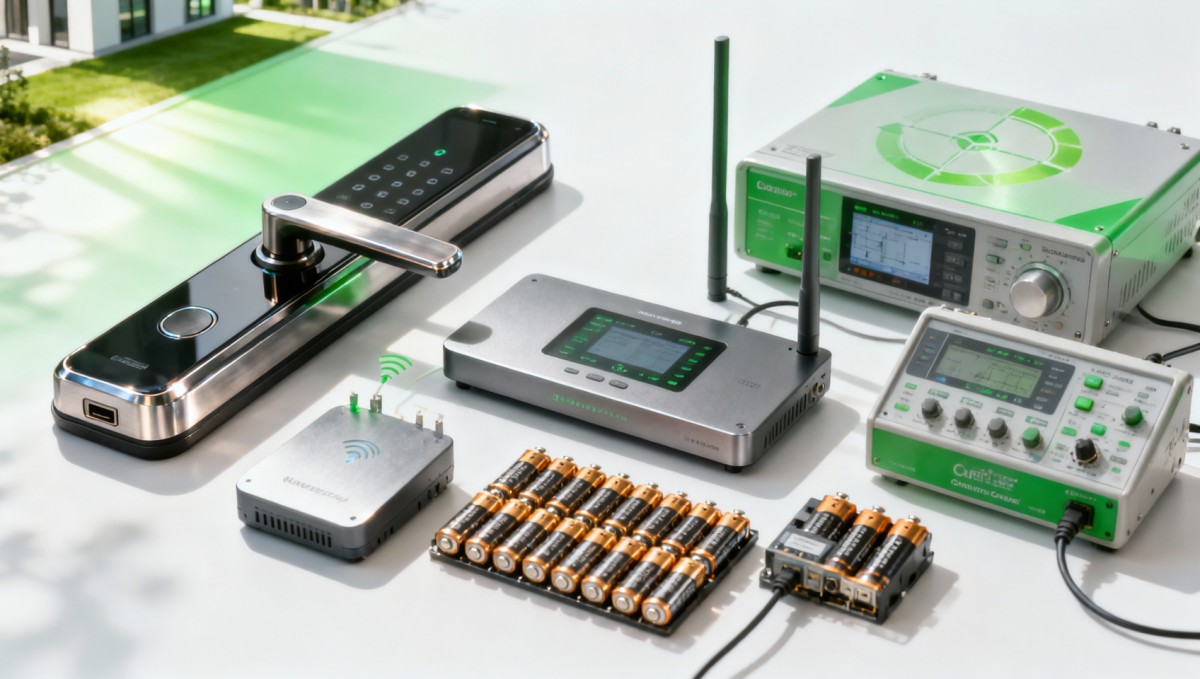
Smart lock procurement often fails because teams evaluate unit price faster than system fit. A lock may look competitive on paper, but if it performs poorly inside a real property environment, the total cost can multiply across installation, maintenance, and support. In commercial buildings, rental housing, energy-conscious smart properties, and integrated IoT environments, a smart lock is not an isolated device. It is part of a broader ecosystem involving gateways, mobile apps, cloud platforms, access rules, energy management logic, and protocol compatibility.
The most expensive mistakes usually come from hidden gaps in five areas:
- Protocol mismatch: the lock does not integrate cleanly with Matter, Zigbee, Thread, BLE, or existing building systems.
- Battery underperformance: real-world discharge is far worse than advertised, increasing service visits and user complaints.
- Security and compliance gaps: certification, encryption, data handling, or regional market requirements are not fully met.
- Manufacturing inconsistency: early samples work, but bulk production quality drifts.
- Weak post-sale support: firmware maintenance, debugging, and field issue response are inadequate.
For procurement teams, these are not technical footnotes. They directly affect margin, operating cost, project rollout speed, and vendor accountability.
Mistake 1: Choosing on unit price instead of total lifecycle cost
A lower factory quote can become the highest-cost option after deployment. Smart lock buyers often underestimate how much field failure costs compared with hardware cost savings. One lock that requires battery replacement too frequently, drops network connections, or causes access failures can trigger multiple layers of expense: technician dispatch, customer support time, replacement logistics, tenant dissatisfaction, and reputational damage.
For business evaluators, the better procurement question is:
What will this lock cost across 12 to 36 months of operation?
Lifecycle cost should include:
- Device purchase price
- Installation and commissioning labor
- Gateway or hub dependency
- Battery replacement frequency
- Firmware update management
- Return and warranty rates
- Integration and debugging hours
- Compliance rework or certification delay
This is especially important in smart buildings and renewable-energy-aware properties where maintenance efficiency and low standby consumption matter. A lock with poor power management can undermine broader energy optimization goals and increase service activity unnecessarily.
Mistake 2: Trusting protocol claims without real interoperability testing
Many sourcing decisions still rely on catalog language such as “supports Matter,” “works with smart home platforms,” or “multi-protocol compatible.” But protocol support in theory is not the same as stable interoperability in practice.
Buyers should ask for evidence tied to actual usage conditions:
- How does the lock perform in dense wireless environments?
- What is the measured latency for lock/unlock commands?
- How stable is the connection under interference?
- Does the lock maintain performance across multi-node networks?
- What functions are native, and what functions depend on cloud workarounds?
This is where Matter protocol data and IoT hardware benchmarking become critical. A supplier may pass a basic compatibility claim but still show poor responsiveness, inconsistent state reporting, or limited feature exposure once deployed into real mixed ecosystems.
For operators, these failures appear as delayed door response, app desynchronization, false status readings, or support tickets that are hard to trace. For procurement teams, this means the sourcing process should include protocol validation, not just document collection.
Mistake 3: Ignoring battery performance under real operating conditions
Battery claims are one of the most misleading areas in connected hardware sourcing. Smart lock brochures often present idealized figures based on low-activity laboratory conditions. In actual use, battery life can drop sharply because of environmental temperature changes, repeated wake cycles, poor firmware optimization, unstable network retries, or power-hungry authentication methods.
That matters even more when locks are deployed at scale. In multifamily housing, hospitality, offices, or remote properties, battery replacements become a recurring operational burden. A sourcing decision that saves a few dollars per unit may create a long-term maintenance problem that erodes total return.
What buyers should verify:
- Standby power consumption under measured conditions
- Battery discharge curves, not just headline lifespan
- Performance in hot, cold, humid, or high-traffic environments
- Power draw during failed communication retries
- Impact of fingerprint, keypad, BLE, Wi-Fi, or Thread functions on battery life
NexusHome Intelligence’s emphasis on hard data is highly relevant here. Claims about “ultra-low power” only become meaningful when tested under repeatable load, interference, and environmental conditions.
Mistake 4: Overlooking compliance, security, and regional requirements
A smart lock can be technically attractive and still be commercially risky if it falls short on compliance or security expectations. This is a major blind spot for teams focused mainly on sourcing speed or price negotiation.
Depending on market and application, buyers may need to review:
- Wireless certifications and regional approvals
- Data privacy and local processing requirements
- Encryption standards and credential protection
- Audit trails and access event integrity
- Fire, emergency egress, or building code implications
- Firmware update security and vulnerability response process
Security is not just a product feature. It is a sourcing risk category. If a supplier cannot clearly explain protocol security layers, key management, biometric error rates, or patch management responsibilities, procurement teams should treat that as a commercial warning sign.
For business evaluators, compliance failures often trigger the most expensive downstream effects: shipment holds, failed project approvals, re-certification costs, and delayed revenue recognition.
Mistake 5: Evaluating samples only, not mass-production consistency
Many smart lock projects start with a promising sample batch. The problem appears later when volume production does not match sample quality. Tolerances drift, assembly consistency drops, firmware versions vary, or component substitutions affect performance.
This is why verified IoT manufacturers should be assessed beyond product appearance and sales responsiveness. Buyers need confidence in manufacturing discipline, process control, and engineering repeatability.
Useful questions include:
- Are there documented quality control checkpoints from PCB to final assembly?
- How are radio modules, batteries, sensors, and mechanical parts qualified?
- What happens when a key component becomes unavailable?
- How are firmware versions tracked across batches?
- What are the actual failure-rate trends from production lots?
This is also where a strong smart home supplier directory can help only if it is backed by real technical verification. A directory that lists factories without benchmarking or validation data may save search time, but it does not reduce procurement risk by itself.
Mistake 6: Underestimating integration workload and support dependency
A lock may be functionally sound but still expensive if integration demands too much custom work. For IoT architects and operators, the hidden cost is often not the hardware but the time needed to make it behave reliably with apps, hubs, property systems, and user workflows.
Before sourcing, teams should understand:
- Available APIs, SDKs, and documentation quality
- Whether the supplier supports integration troubleshooting
- How quickly issues are escalated to engineering teams
- Whether cloud dependency creates future lock-in or outage risk
- How firmware changes affect deployed integrations
For procurement personnel, this is a practical lesson: supplier support quality has direct financial value. A vendor with stronger technical response and clearer integration guidance may create a lower total project cost than a cheaper but less capable alternative.
How buyers can assess smart lock suppliers more accurately before procurement
To avoid expensive sourcing mistakes, decision-makers should shift from brochure comparison to evidence-based evaluation. A useful pre-procurement framework includes four layers:
1. Technical validation
Check measured performance in connectivity, latency, battery behavior, and protocol interoperability. Ask for test methodology, not just test results.
2. Manufacturing verification
Review process controls, component sourcing discipline, production consistency, and failure tracking.
3. Compliance and security review
Confirm required certifications, encryption approaches, update processes, and market-specific obligations.
4. Operational fit
Evaluate installation workflow, maintenance burden, software integration complexity, and after-sales support capability.
This is where a benchmarking-oriented partner like NexusHome Intelligence adds practical value. For buyers who need more than sales claims, independent IoT hardware benchmarking and smart home hardware testing can expose sourcing risk early, when changes are still affordable.
What good sourcing decisions look like in practice
A strong smart lock sourcing decision is usually not the one with the lowest quote or the fastest sample approval. It is the one that stands up across engineering, operations, and commercial review.
In practice, better decisions tend to share these traits:
- The supplier can provide measurable protocol and power data.
- The product has been evaluated in realistic deployment conditions.
- Integration requirements are understood before purchase commitment.
- Compliance and security responsibilities are clearly documented.
- The manufacturer shows consistency, not just a good demo unit.
- The procurement team evaluates risk-adjusted value, not just purchase price.
For users, operators, and commercial evaluators alike, this leads to fewer surprises after installation and a clearer basis for supplier comparison.
Conclusion: the cheapest smart lock mistake is the one caught before sourcing
Smart lock sourcing mistakes cost more later because they usually stay hidden until deployment, when changes are harder and far more expensive. The biggest risks are not always obvious in the quotation stage: protocol instability, battery weakness, compliance gaps, inconsistent manufacturing, and poor support can all turn a seemingly acceptable purchase into a long-term cost center.
The most reliable way to reduce that risk is to source with evidence. Verified IoT manufacturers, independent smart home hardware testing, supplier benchmarking, and real Matter protocol data give buyers a stronger basis for judgment than marketing language ever can. For teams evaluating smart lock projects in connected buildings and modern IoT environments, engineering truth is not a bonus. It is the foundation of better procurement.
Protocol_Architect
Dr. Thorne is a leading architect in IoT mesh protocols with 15+ years at NexusHome Intelligence. His research specializes in high-availability systems and sub-GHz propagation modeling.
Related Recommendations
- Lina Zhao (Security Analyst)Smart lock sourcing mistakes that cost more later
- Lina Zhao (Security Analyst)Which smart lock OEM is easier to scale with?
- Lina Zhao (Security Analyst)Smart lock OEM China: how to vet factory claims
- Lina Zhao (Security Analyst)Smart Lock Matter Compatibility: What Changes
- Lina Zhao (Security Analyst)Access Control System Integration Made Practical
- Lina Zhao (Security Analyst)ANSI Grade 1 Smart Lock Test: What It Means
- Lina Zhao (Security Analyst)What Is a Good FRR for Smart Locks
- Lina Zhao (Security Analyst)How to Evaluate a Smart Safe Box Factory
- Lina Zhao (Security Analyst)Facial Recognition Door Lock Wholesale Checklist
- Lina Zhao (Security Analyst)Radar for perimeter security intrusion: what triggers false alarms
Analyst