
Smart Security Access Control: Which Setup Works Best
author
Choosing the right smart security access control setup now depends on more than features alone. For buyers, operators, and evaluators in renewable energy and connected infrastructure, verified data on Vision AI camera accuracy, biometric false rejection rate FRR, Matter standard compatibility, and protocol latency benchmark results is essential. NexusHome Intelligence brings IoT engineering truth to this decision, linking smart home hardware testing with trusted sourcing, compliance insight, and real-world performance across the IoT supply chain.
In renewable energy environments, access control is no longer limited to locking a door or logging a badge swipe. Solar farms, wind substations, battery energy storage systems, inverter rooms, microgrid control centers, and distributed O&M sites all require different protection models. A setup that works well in a residential tower may fail under dust, vibration, remote networking constraints, or harsh temperature swings from -20°C to 50°C.
That is why operators, procurement teams, and business evaluators need a framework based on measurable performance rather than vendor claims. The right smart security access control setup should balance identity verification accuracy, offline resilience, protocol compatibility, installation complexity, energy efficiency, and lifecycle cost across 3 to 7 years of operation.
Why access control matters in renewable energy infrastructure
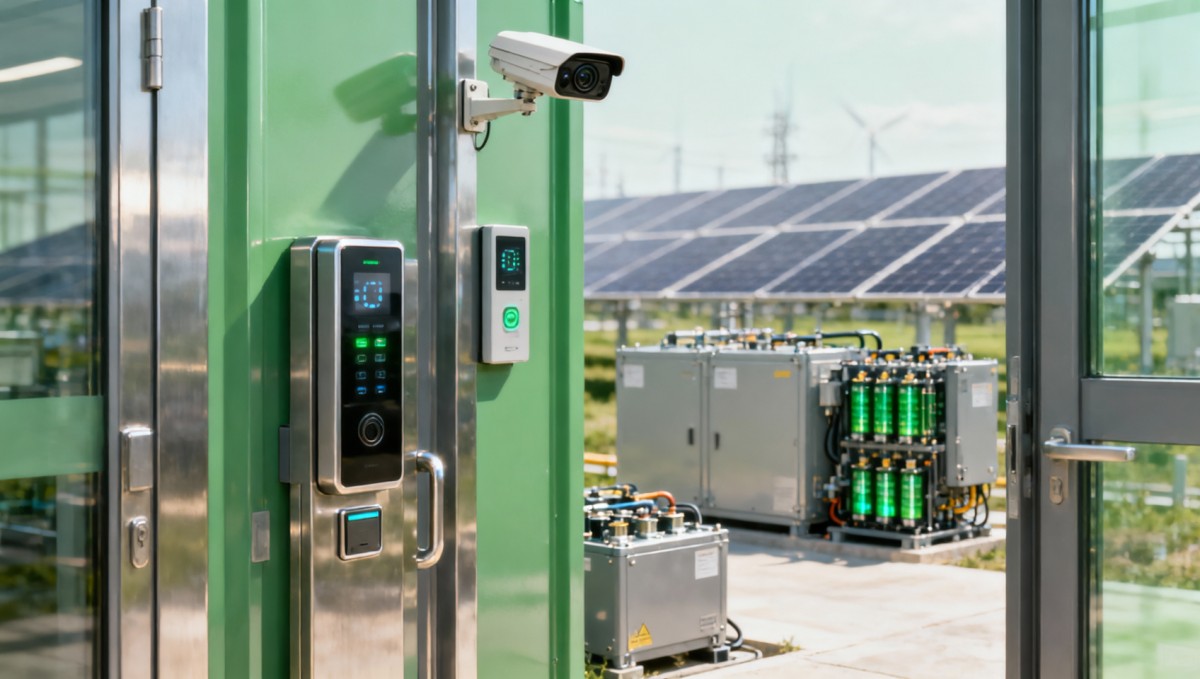
Renewable energy sites are often geographically dispersed and operationally lean. A single utility-scale solar project may cover hundreds of acres, while a battery storage site may operate with limited on-site staff for 20 to 22 hours per day. In these settings, unauthorized access can interrupt dispatch, damage sensitive power electronics, or create safety risks around high-voltage equipment.
Unlike office buildings, these facilities must secure multiple layers of entry. The outer perimeter, maintenance gate, control room, containerized battery units, and communications cabinets each present different risk levels. A one-size-fits-all system tends to overprotect low-risk points and underprotect mission-critical assets. This mismatch increases both capital cost and operational friction.
Another challenge is connectivity fragmentation. Remote sites may rely on LTE, private LoRa backhaul, local Wi-Fi, fiber, or mixed networks. If an access control device is marketed as “smart” but cannot maintain stable response under packet loss, electromagnetic interference, or multi-protocol bridging, the result may be failed entry events, delayed alarms, or maintenance downtime.
NexusHome Intelligence approaches this issue from a data-first perspective. In the NHI model, smart security and access decisions should be validated by metrics such as FRR under weather stress, camera recognition reliability in backlight conditions, local processing speed, and protocol latency in real deployments. For renewable energy operators, these benchmarks matter more than cosmetic feature lists.
Typical risk zones by facility type
The table below shows how access control requirements change across common renewable energy assets. The key point is that site function, staffing pattern, and network reliability should influence the setup choice more than product popularity.
For procurement teams, this comparison highlights a practical truth: the “best” setup is site-specific. For example, a battery storage container usually needs stronger identity assurance than an outer gate, while a communications cabinet may prioritize tamper visibility and low-power endurance over premium biometrics.
Which smart access control setup works best by use case
There is no single configuration that outperforms every other option in renewable energy operations. In practice, the most effective deployments use a layered model: perimeter access for vehicles and visitors, authenticated entry for technical staff, and high-assurance controls for critical power equipment. This reduces unnecessary cost while preserving security where consequences are highest.
For low-to-medium risk access points, mobile credentials or RFID cards remain practical because they are fast, easy to issue, and familiar to contractors. Entry time can often remain below 2 seconds, and replacement costs are manageable. However, cards are easier to share, lose, or misuse, especially when contractor turnover is high during commissioning or seasonal maintenance.
For high-risk zones such as BESS enclosures, SCADA rooms, or dispatch control nodes, biometrics or multi-factor access is usually stronger. Yet buyers should not assume biometrics are automatically better. Fingerprint systems may struggle with dust, moisture, worn fingertips, or gloves, while facial systems can be affected by glare, PPE, and nighttime lighting. The right choice depends on measured error rates under field conditions.
NHI’s engineering lens is especially useful here. A biometric lock should be evaluated by FRR, fallback mode, local storage security, and response time rather than by marketing language. A Vision AI camera should be judged on recognition accuracy at varying angles, distances, and illumination levels, not just on megapixels.
Comparing common setup models
The following comparison helps information researchers and business evaluators match a technology stack to real operating conditions, budget range, and staffing model.
In many renewable energy projects, the best answer is hybrid. A common design is mobile credential or RFID for general staff, plus biometric or camera-assisted verification for rooms that host SCADA servers, battery controls, or grid-intertie functions. This reduces friction for daily operations while preserving strong control over sensitive assets.
A practical selection rule
- Use card or mobile access when there are more than 20 rotating users and entry speed is the main requirement.
- Use biometrics when the zone contains hazardous, high-value, or compliance-critical equipment and user count is controlled.
- Add Vision AI or remote verification when the site is unmanned for long periods or when visitor access must be reviewed off-site.
- Require offline fallback for any site where WAN interruptions may exceed 5 minutes or occur more than 2 times per month.
What metrics buyers should verify before procurement
For procurement personnel and commercial evaluators, the most common mistake is treating access control as a feature checklist. In renewable energy applications, the better approach is metric-driven qualification. A device may support Matter, Thread, Wi-Fi, BLE, or Zigbee, but if latency rises sharply in noisy electrical environments, the operational value drops.
The first metric is identity performance under field stress. Fingerprint systems should be reviewed for FRR in dry, dusty, wet, and cold conditions. Even a modest increase in failed reads can create costly delays when technicians need repeated access across 10 to 30 distributed cabinets in a maintenance shift. Facial systems should be checked for recognition range, oblique angle tolerance, and low-light behavior.
The second metric is network behavior. In a connected energy site, protocol latency above a few hundred milliseconds may affect gate opening speed, alarm escalation, or remote verification workflow. Matter compatibility should be tested beyond logo claims. Buyers should ask whether devices maintain stable performance across multi-node hops, edge gateways, and mixed-vendor stacks.
The third metric is power and environmental resilience. Solar and storage projects value low standby draw, long battery backup, and predictable performance across temperature swings. If an access node consumes more energy than expected or loses sync after brief outages, operating cost and service calls increase over time.
Core evaluation checklist for renewable energy buyers
This checklist is useful during RFQ, sample testing, or factory qualification. It also aligns with NHI’s principle that engineering truth should replace generic marketing language.
- Verify access response time target, ideally within 1–3 seconds for staffed entry points and within 2–5 seconds for remote gate workflows.
- Check FRR or recognition consistency in site-specific conditions such as dust, glare, helmets, gloves, or rain.
- Confirm local edge processing for critical functions if WAN loss is expected, and ask how many events can be buffered offline.
- Review protocol interoperability, especially where Matter, BLE, Thread, Wi-Fi, and legacy systems must coexist.
- Ask about standby power, battery backup duration, firmware update method, and recovery behavior after power interruption.
Sample procurement scoring model
A weighted scoring model can reduce subjective selection. Teams often use 4 to 6 criteria to compare vendors across pilot and scale phases.
This kind of scorecard helps teams avoid selecting on price alone. In many cases, a lower-cost reader or lock becomes more expensive after 12 to 18 months if it generates excessive false rejections, site visits, or manual overrides.
Implementation strategy for operators and project teams
A successful rollout usually follows a phased deployment rather than a full-site replacement. Renewable energy sites often have mixed legacy systems, diverse contractors, and strict uptime requirements. Replacing all access points at once can introduce avoidable operational risk. A 3-stage rollout is generally more manageable: assessment, pilot, then scale deployment.
During assessment, teams should map all entry points by risk tier, staffing frequency, and network condition. For example, a site may classify perimeter gates as Tier 1, service rooms as Tier 2, and battery enclosures or dispatch rooms as Tier 3. This creates a basis for selecting different authentication methods without losing centralized visibility.
During the pilot, operators should test at least 2 or 3 realistic workflows: scheduled technician arrival, emergency after-hours access, and temporary contractor entry. Pilot periods of 30 to 60 days are common because they expose weather effects, shift changes, and remote approval behavior that a short demo cannot capture.
When scaling, edge resilience becomes critical. If a site loses WAN for 10 minutes, access should still function according to locally stored permissions, with events synchronized later. This is especially important in microgrids, remote wind assets, and distributed solar portfolios where connectivity can vary by location.
Recommended deployment flow
- Survey 100% of controlled entry points and classify them by security criticality and daily usage volume.
- Define 3–4 user groups such as operators, maintenance staff, contractors, and auditors, then map permissions by role.
- Run a pilot at 1 high-value zone and 1 routine zone to compare friction, failure events, and network behavior.
- Validate log integrity, remote management, and offline operation before broader installation.
- Scale in waves, usually 10–25 access points per phase, to limit disruption and simplify support.
Common implementation mistakes
One frequent mistake is choosing a protocol stack without considering surrounding infrastructure. A Matter-compatible device may still underperform if gateway placement, backhaul quality, or mixed-vendor interoperability are poorly planned. Another is deploying biometrics in areas where gloves, dust, or poor lighting are constant, then blaming users for failed authentication.
A second mistake is neglecting serviceability. Operators should ask how quickly batteries can be replaced, how firmware is updated, whether spare parts are standardized, and how many minutes are needed to restore a failed reader. In renewable energy fleets, saving even 20 minutes per service event becomes meaningful across dozens of sites.
FAQ for procurement, operators, and business evaluators
How do I choose between biometric access and mobile credentials?
Use biometrics where individual accountability is essential and the environment can support stable capture conditions. Use mobile credentials when user groups change often, remote issuance matters, or site teams need lower friction. In many renewable energy sites, a mixed model works best: mobile for general access and biometric or camera-based verification for high-risk technical zones.
How important is Matter compatibility for renewable energy projects?
It is useful, but compatibility claims should never replace performance testing. Buyers should ask how devices behave in real multi-node environments, what latency appears under interference, and whether local functions continue during network disruption. A standards label is only valuable when backed by stable field performance.
What deployment timeline is typical?
For a small renewable energy facility, planning and pilot may take 2 to 4 weeks, with installation completed in another 1 to 3 weeks depending on wiring, civil work, and network readiness. Multi-site portfolios or high-security battery projects typically need phased deployment over several months to reduce operational disruption.
Which metrics matter most during supplier evaluation?
The highest-value metrics are authentication reliability, protocol latency, offline resilience, environmental tolerance, and lifecycle maintainability. If a vendor cannot clearly explain how their devices behave under dust, heat, unstable networking, and mixed-system integration, the procurement risk remains high regardless of price or branding.
Smart security access control in renewable energy works best when setup decisions are tied to site risk, measured performance, and long-term serviceability. Buyers and operators need more than brochures; they need verifiable data on FRR, Vision AI accuracy, local processing, and protocol behavior across real operating conditions. That is exactly where a data-driven evaluation model creates stronger purchasing confidence and smoother deployment.
NexusHome Intelligence supports this decision process by connecting engineering benchmarks with sourcing transparency, compliance insight, and practical field criteria. If you are comparing suppliers, planning a pilot, or defining a smarter access architecture for solar, wind, storage, or microgrid assets, contact us to get a tailored evaluation framework and learn more solutions for your project.
Protocol_Architect
Dr. Thorne is a leading architect in IoT mesh protocols with 15+ years at NexusHome Intelligence. His research specializes in high-availability systems and sub-GHz propagation modeling.
Related Recommendations
- Lina Zhao (Security Analyst)Smart Lock OEM China: How to Avoid Bad Fits
- Lina Zhao (Security Analyst)What to Ask a Smart Lock OEM Before Sampling
- Lina Zhao (Security Analyst)Smart Security Access Control: Which Setup Works Best
- Lina Zhao (Security Analyst)Smart lock sourcing mistakes that cost more later
- Lina Zhao (Security Analyst)Which smart lock OEM is easier to scale with?
- Lina Zhao (Security Analyst)Smart lock OEM China: how to vet factory claims
- Lina Zhao (Security Analyst)Smart Lock Matter Compatibility: What Changes
- Lina Zhao (Security Analyst)Access Control System Integration Made Practical
- Lina Zhao (Security Analyst)ANSI Grade 1 Smart Lock Test: What It Means
- Lina Zhao (Security Analyst)What Is a Good FRR for Smart Locks
Analyst