
Which smart lock OEM is easier to scale with?
author
Scaling with a smart lock OEM is easiest when the supplier can keep product quality, protocol performance, certification readiness, and delivery consistency stable as volume grows. For most procurement teams, the best partner is not simply the cheapest smart lock OEM China option, but the one with verifiable engineering, clean communication, and enough manufacturing discipline to support multi-market expansion without creating integration or warranty risk.
That is the real answer behind the question, “Which smart lock OEM is easier to scale with?” Buyers, operators, and business evaluators are usually not asking for a brand ranking alone. They want to know which kind of OEM partner can move from pilot orders to large deployments smoothly, especially when projects involve smart home hardware testing, Matter standard compatibility, property rollout schedules, and long-term support expectations.
What makes one smart lock OEM easier to scale with than another?
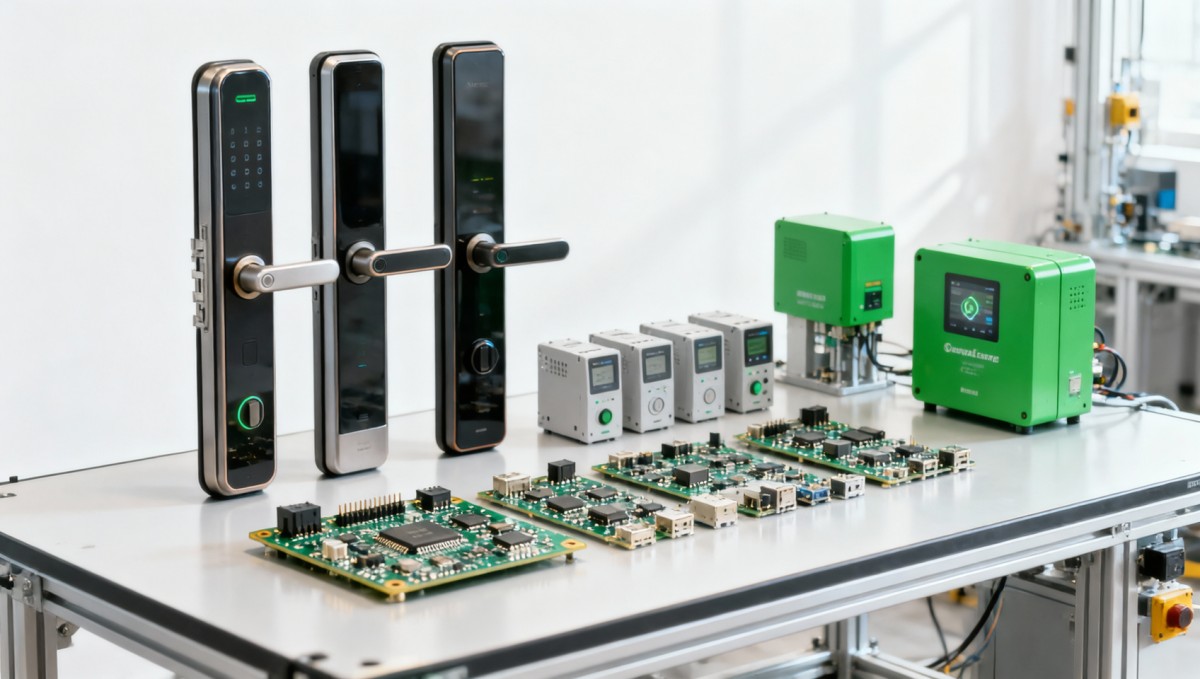
An OEM becomes easier to scale with when four capabilities are already mature before your order volume increases:
- Stable hardware engineering that performs consistently across batches
- Protocol and platform readiness for the ecosystems you plan to support
- Manufacturing and supply chain transparency that reduces delivery surprises
- After-sales and change-management discipline that prevents version chaos
In practice, the easiest OEM to scale with is usually the one that can show test data, certification history, and process control documents instead of relying on sales claims. If an OEM can support a pilot, a regional rollout, and then a multi-market expansion without changing core components unexpectedly, that supplier is already ahead of many competitors.
For smart lock programs, scale risk often appears in hidden places: battery life drops in the field, app compatibility becomes inconsistent, BLE provisioning fails in dense buildings, fingerprint modules behave differently in humid environments, or substitute chipsets are introduced after initial approval. These issues do not always show up in brochures, but they create real costs once deployment expands.
What procurement and evaluation teams usually care about most
For procurement personnel and business evaluation teams, the key concern is not just whether the lock works. It is whether the program remains manageable at 1,000, 10,000, or 100,000 units.
The most common decision questions are:
- Can this OEM maintain quality across larger volumes?
- Will the lock integrate reliably with our chosen ecosystem?
- How likely are certification delays or firmware issues?
- Can the factory support localization, branding, and compliance for multiple markets?
- What happens if there is a field issue after launch?
Operators may care more about installation efficiency, app onboarding, battery replacement cycles, and lock response time. Procurement teams care about lead time stability, MOQ flexibility, component traceability, and warranty exposure. Business evaluators care about margin protection, channel risk, and whether the OEM can support long-term product roadmap needs rather than only a single project.
That is why choosing a trusted smart home factory is often less about a low initial quote and more about how the OEM behaves under complexity.
How to judge scalability before you place a large smart lock order
If you want to know whether a smart lock OEM is easy to scale with, evaluate it in this order.
1. Start with engineering evidence, not catalog breadth
A factory with many lock models is not automatically easier to scale with. In many cases, a narrower portfolio with stronger validation is safer. Ask for:
- Protocol test reports
- Battery life test methodology
- Environmental stress test results
- Firmware version control process
- Failure rate or RMA data from existing projects
If the OEM cannot explain how its products were validated, scaling will depend too much on trial and error.
2. Check protocol maturity and ecosystem fit
For connected locks, protocol stability matters as much as mechanical reliability. An OEM may claim support for BLE, Zigbee, Wi-Fi, Thread, or Matter, but buyers should ask more specific questions:
- Which protocol version is currently deployed in volume?
- What controller, gateway, or app environments were tested?
- How is latency measured during unlock events?
- How does the lock behave during weak signal or mesh congestion?
- What is the current status of Matter standard compatibility?
This is especially important for projects connected to broader smart building or energy-aware automation systems. In the renewable energy context, access devices increasingly interact with occupancy logic, energy-saving scenes, and property-wide automation. A lock that disconnects often or drains batteries too quickly undermines not only access control but also wider operational efficiency goals.
3. Verify manufacturing discipline
Scalability depends on the factory’s ability to reproduce the same product repeatedly. Review:
- Incoming component inspection rules
- PCBA traceability
- End-of-line test coverage
- Aging test process
- Packaging and logistics controls
A smart lock OEM China supplier with strong manufacturing structure should be able to explain exactly how it prevents unauthorized component substitutions and how it controls product revisions.
4. Review support after mass production, not only before it
Many OEMs perform well during quotation and sampling, then become less responsive after the PO is issued. Before committing, clarify:
- Firmware maintenance policy
- Spare parts support window
- Field issue escalation process
- Average response time for technical cases
- Responsibility boundaries between OEM, software platform, and distributor
If support ownership is vague, scale will become expensive.
Why protocol and testing data matter more as deployment grows
At small volume, many lock programs seem successful because installers can manually work around defects. At scale, those workarounds disappear. That is where smart home hardware testing becomes essential.
Useful benchmarking areas include:
- Wireless stability: connection success rates, latency, reconnection time
- Power performance: standby current, wake-up efficiency, battery discharge behavior
- Mechanical durability: cycle testing, torque consistency, outdoor resistance
- User authentication: fingerprint FRR/FAR, keypad response, credential sync accuracy
- Firmware reliability: OTA success rate, rollback safety, bug fix cadence
For evaluation teams, data in these areas is more valuable than generic “premium quality” language. It helps compare OEMs in a way that reflects real deployment conditions, especially in apartments, hospitality projects, offices, and mixed-use buildings.
Red flags that suggest an OEM will be hard to scale with
Some warning signs appear early. If you see several of these together, scaling risk is high:
- The supplier avoids detailed technical questions and redirects everything to sales language
- Protocol support claims are broad but unsupported by validation reports
- Sample quality is good, but production process documentation is weak
- Lead times change frequently without clear component visibility
- Firmware ownership and update responsibility are unclear
- Certification plans are incomplete for your target markets
- There is no clear revision control between pilot and mass production
These issues do not always mean the OEM is poor. But they do mean the partner may be difficult to scale with, especially if your rollout includes multiple property sites or channel partners.
What an easier-to-scale OEM relationship looks like in real business terms
For buyers and business decision-makers, “easy to scale” should translate into measurable outcomes:
- Fewer field failures and lower warranty cost
- Faster rollout from pilot to commercial deployment
- Less engineering rework during ecosystem integration
- More predictable inventory and procurement planning
- Lower risk when entering new regions or compliance regimes
This is also where a data-driven evaluation approach becomes valuable. Instead of selecting a smart lock OEM only by price sheet or visual design, teams can compare suppliers by engineering repeatability, interoperability readiness, and manufacturing transparency. That creates a stronger basis for internal approval and vendor selection.
So, which smart lock OEM is easier to scale with?
The easier OEM to scale with is the one that can prove reliability under real conditions, not just promise capacity. In most cases, the best partner will have:
- Verified smart home hardware testing results
- Clear Matter standard compatibility or roadmap evidence
- Strong version control and supply chain transparency
- Consistent communication between engineering, sales, and production teams
- Experience supporting projects beyond sample stage
If two suppliers look similar on price and feature list, choose the one with better documentation, more stable protocol performance, and a clearer path from pilot to volume delivery. That is usually the supplier that will save more money over the full lifecycle.
In short, scaling is easier with a smart lock OEM that behaves like an engineering partner rather than a catalog vendor. For procurement teams comparing a smart lock OEM China source, the most dependable choice is often the trusted smart home factory that can back every major claim with test data, process control, and long-term support readiness. That is the difference between a supplier that can ship products and one that can truly scale with your business.
Protocol_Architect
Dr. Thorne is a leading architect in IoT mesh protocols with 15+ years at NexusHome Intelligence. His research specializes in high-availability systems and sub-GHz propagation modeling.
Related Recommendations
- Lina Zhao (Security Analyst)Smart lock sourcing mistakes that cost more later
- Lina Zhao (Security Analyst)Which smart lock OEM is easier to scale with?
- Lina Zhao (Security Analyst)Smart lock OEM China: how to vet factory claims
- Lina Zhao (Security Analyst)Smart Lock Matter Compatibility: What Changes
- Lina Zhao (Security Analyst)Access Control System Integration Made Practical
- Lina Zhao (Security Analyst)ANSI Grade 1 Smart Lock Test: What It Means
- Lina Zhao (Security Analyst)What Is a Good FRR for Smart Locks
- Lina Zhao (Security Analyst)How to Evaluate a Smart Safe Box Factory
- Lina Zhao (Security Analyst)Facial Recognition Door Lock Wholesale Checklist
- Lina Zhao (Security Analyst)Radar for perimeter security intrusion: what triggers false alarms
Analyst