
How to Compare IoT Batteries Beyond Rated Capacity
author
Rated capacity is easy to compare, but it is a poor decision tool on its own. In real IoT deployments, the best battery is not the one with the highest mAh number—it is the one that delivers stable voltage under your actual load profile, tolerates your operating temperature range, survives the required service life, and performs predictably with the device’s radio protocol and duty cycle. For procurement teams, operators, engineers, and business leaders, that means battery comparison should be based on measurable field-relevant data, not brochure claims. This guide explains what to evaluate beyond rated capacity and how IoT hardware benchmarking reveals the true value of a lithium battery for IoT applications.
Why rated capacity is not enough for IoT battery selection
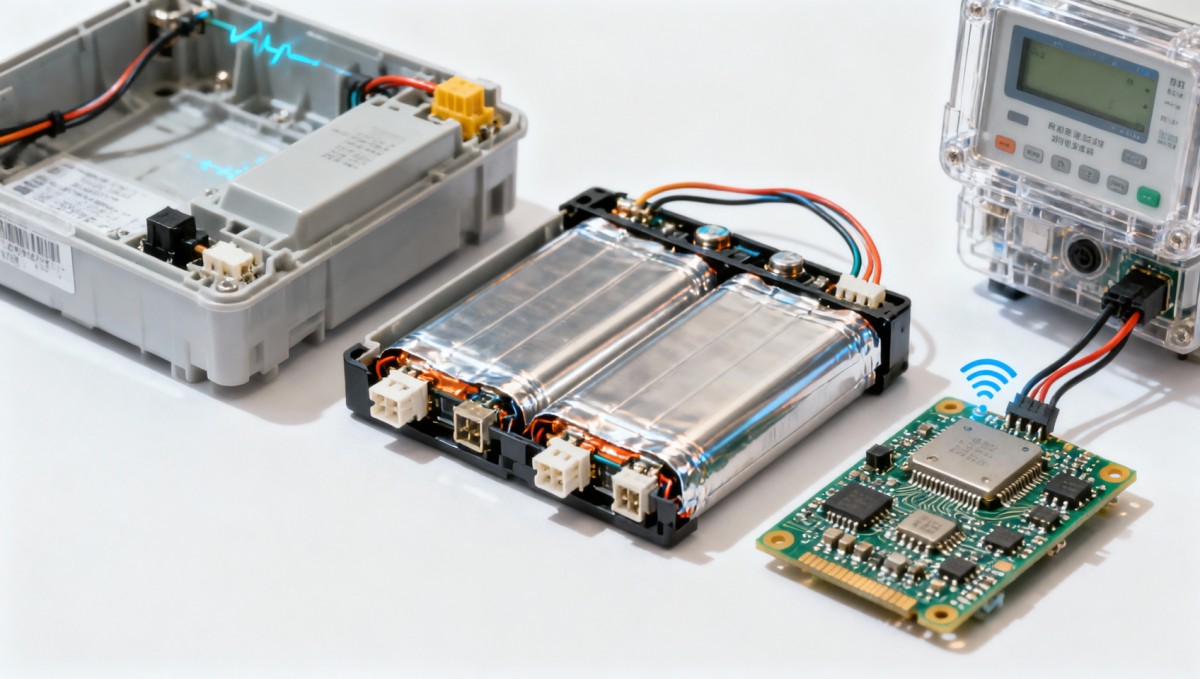
When buyers compare IoT batteries, the first number they usually see is rated capacity in mAh. That number matters, but only under specific test conditions defined by the manufacturer. In practice, two batteries with the same rated capacity can deliver very different results once installed in a smart meter, sensor, tracker, lock, thermostat, or remote asset monitor.
The reason is simple: IoT devices do not consume power in a smooth, constant way. They work in pulses. A device may sleep at microamp level for long periods, then wake up and draw a short burst of current for sensing, processing, encryption, and wireless transmission. That pulse behavior changes effective battery performance dramatically.
For renewable energy and smart home deployments, this creates a real risk. A battery that looks strong on paper may suffer voltage sag during radio transmission, accelerated degradation in cold weather, or shortened life when exposed to repetitive high-current bursts. So if your goal is reliable field uptime, lower maintenance cost, and fewer replacement cycles, rated capacity should be treated as a starting point—not the final answer.
What decision-makers actually need to compare
Most target readers evaluating IoT batteries want answers to practical questions:
- Will this battery support the device’s real communication pattern and standby behavior?
- How long will it last in the actual deployment environment, not just in lab conditions?
- What replacement cost, maintenance burden, and service risk will it create?
- How stable is performance across temperature extremes, storage time, and repeated load cycles?
- Can the supplier provide test data that matches the intended application?
For enterprise buyers and decision-makers, the issue is not only battery chemistry. It is operational risk. A poor battery choice affects truck rolls, SLA performance, asset downtime, customer complaints, and long-term total cost of ownership. For operators and technical evaluators, the focus is often narrower but equally important: voltage stability, pulse handling, protocol compatibility, and lifecycle predictability.
This is why meaningful comparison should combine electrical data, environmental data, protocol load testing, and application-specific benchmarking.
The battery metrics that matter more than capacity
If you want to compare a lithium battery for IoT applications correctly, these are the metrics that deserve priority.
1. Discharge curve, not just total mAh
A battery’s discharge curve shows how voltage changes over time under load. This is often more important than nominal capacity because IoT devices usually require a minimum operating voltage. If voltage drops too early, the device may fail long before the battery has theoretically delivered all of its stored energy.
A flatter and more stable discharge curve is usually more valuable than a higher advertised capacity with poor voltage retention. In low-power wireless systems, usable energy matters more than theoretical energy.
2. Pulse load performance
Many IoT devices draw current spikes when transmitting over Zigbee, BLE, Thread, LoRa, Wi-Fi, or cellular links. Batteries that perform well at low continuous current may struggle under pulse demand. This can cause resets, failed transmissions, or reduced battery life.
Pulse load testing should reflect real communication intervals, payload size, retransmission events, and encryption overhead. Without that data, battery comparisons are incomplete.
3. Internal resistance
Higher internal resistance can lead to larger voltage drops during current bursts. This becomes especially important in cold environments or in aging batteries. A battery with acceptable nominal capacity but rising internal resistance may become unreliable in the field far sooner than expected.
4. Temperature tolerance
Temperature has a major impact on battery chemistry. Low temperatures often reduce available capacity and increase resistance. High temperatures may accelerate degradation and shorten service life. If devices are installed outdoors, in utility cabinets, on rooftops, near HVAC systems, or in renewable energy sites, temperature performance is a critical procurement criterion.
5. Self-discharge rate
For sensors and backup-powered IoT nodes designed to operate for years, self-discharge can materially affect lifetime. Batteries with low self-discharge are especially valuable in low-duty-cycle applications where standby energy preservation matters more than short-term peak power.
6. Lifecycle and storage stability
Not every IoT battery application is fully disposable. Some systems see repeated partial discharge, intermittent recharging, or long storage before deployment. Procurement teams should check how storage age, passivation behavior, and chemical aging affect real performance over time.
How wireless protocol behavior changes battery reality
One of the most overlooked factors in IoT battery selection is protocol-level power demand. A battery is not operating in isolation. It is supporting a complete hardware and firmware system, and protocol behavior can change battery life more than a small difference in rated capacity.
Zigbee, Thread, BLE, Wi-Fi, and cellular all create different load profiles
BLE devices may have relatively low average power draw but frequent advertising or connection events. Zigbee and Thread nodes may face mesh-related overhead, retries, and routing behavior. Wi-Fi modules often create stronger transmission peaks and faster energy drain. Cellular IoT devices can impose even heavier current bursts depending on signal quality and registration behavior.
That means the same battery may perform well in one device category and poorly in another. A battery suited for a BLE beacon may not be appropriate for a Thread border-adjacent node or a smart lock with repeated encrypted handshakes.
Signal conditions also matter
Weak signal environments increase retransmissions and radio-on time. In a crowded smart building or industrial site, interference can push batteries far outside expected life models. This is why smart home hardware testing and IoT hardware benchmarking should include congested RF scenarios, not just ideal lab conditions.
How to compare batteries using application-based benchmarking
The most useful method is to benchmark batteries against the actual device behavior and deployment environment. Instead of asking, “Which battery has the highest capacity?” ask, “Which battery delivers the most stable and lowest-risk performance in this exact use case?”
Build your comparison around these test conditions
- Sleep current and wake-up frequency
- Transmission protocol and packet interval
- Peak current during sensing, processing, and radio events
- Minimum operating voltage of the device
- Expected deployment temperature range
- Target service life and maintenance model
- Interference level and retransmission probability
- Storage duration before installation
Key benchmark outputs to request or generate
- Discharge curves under realistic pulse load profiles
- Voltage sag measurements during transmit bursts
- Capacity retention across low and high temperatures
- Internal resistance changes over aging time
- Estimated service life under actual duty cycles
- Failure threshold behavior near end-of-life
This approach is especially useful for renewable energy monitoring systems, distributed building controls, occupancy sensors, environmental monitors, and asset tracking nodes, where maintenance access is costly and uptime is commercially important.
What procurement teams should ask battery suppliers
If a supplier only provides rated capacity and generic battery life claims, the comparison data is not sufficient. Buyers should ask for evidence that reflects real deployment conditions.
- Under what current, cutoff voltage, and temperature was rated capacity measured?
- Can you provide pulse discharge data for an IoT load profile?
- What is the internal resistance range across temperature and age?
- How does the battery behave after long storage?
- What is the self-discharge rate over the expected service interval?
- Are there benchmark results for Zigbee, Thread, BLE, Wi-Fi, or cellular devices?
- What failure modes appear near end-of-life?
- What quality consistency data exists across production batches?
For enterprise sourcing, consistency is as important as headline performance. One strong sample does not guarantee stable mass supply. Batch variation, cell quality control, and packaging integrity can all affect field reliability.
Common mistakes when evaluating IoT batteries
Several errors repeatedly lead to poor battery choices:
- Choosing the highest mAh value without checking the discharge curve
- Ignoring protocol-related current bursts
- Using room-temperature test data for outdoor deployments
- Assuming average current predicts real battery life accurately
- Overlooking minimum device voltage thresholds
- Failing to account for self-discharge and warehousing time
- Comparing cells without standardized load conditions
These mistakes are costly because they often appear only after rollout—when battery replacement, field service, and downtime have become expensive.
A practical framework for better battery decisions
For most teams, a reliable decision can be made with a simple hierarchy:
- Start with the device profile: define sleep current, pulse current, protocol behavior, and voltage limits.
- Match the environment: check real temperature range, installation constraints, and expected interference.
- Review usable energy: prioritize discharge curve quality and voltage stability over nominal capacity alone.
- Test lifecycle risk: evaluate aging, self-discharge, and storage effects.
- Check supply consistency: validate repeatability across lots, not just engineering samples.
- Model business impact: compare maintenance cost, field replacement frequency, and downtime risk.
This framework aligns technical selection with business outcomes. It helps engineers defend specifications, helps procurement compare suppliers fairly, and helps decision-makers reduce operational uncertainty.
Conclusion
To compare IoT batteries beyond rated capacity, focus on the data that reflects real use: discharge curves, pulse load handling, internal resistance, temperature tolerance, self-discharge, protocol-specific behavior, and lifecycle stability. In connected devices used across renewable energy systems and smart environments, the best battery is the one that remains electrically stable and economically predictable in the field.
That is why IoT hardware benchmarking and smart home hardware testing matter. They turn battery selection from a marketing exercise into an engineering decision. When procurement teams and technical evaluators compare batteries using realistic load profiles and deployment conditions, they make better sourcing choices, reduce service risk, and improve long-term system reliability.
Protocol_Architect
Dr. Thorne is a leading architect in IoT mesh protocols with 15+ years at NexusHome Intelligence. His research specializes in high-availability systems and sub-GHz propagation modeling.
Related Recommendations
- NHI Data Lab (Official Account)Battery Safety for IoT Hardware: What Gets Overlooked
- NHI Data Lab (Official Account)How to Compare IoT Batteries Beyond Rated Capacity
- NHI Data Lab (Official Account)What Shortens Lithium Battery Life in IoT Devices
- NHI Data Lab (Official Account)Lithium Battery for IoT: How to Choose the Right Pack
- NHI Data Lab (Official Account)Global Micro-LiFePO4 Button Battery Prices Drop 12% in April 2026
- NHI Data Lab (Official Account)Global LFP Microbattery Prices Drop 8.2% in April 2026
- NHI Data Lab (Official Account)How to avoid battery mismatch in low-power IoT
- NHI Data Lab (Official Account)Battery choices that reduce IoT field failures
- NHI Data Lab (Official Account)Lithium battery for IoT: what impacts runtime most?
- NHI Data Lab (Official Account)Best LiPo Battery for Wearables in 2026
Analyst