
Lithium battery for IoT: what impacts runtime most?
author
In IoT deployments, the biggest factor behind lithium battery for IoT runtime is rarely battery size alone—it is the interaction between protocol latency, sleep cycles, sensor duty load, and hardware design quality. For procurement teams, operators, and evaluators, smart home hardware testing and IoT hardware benchmarking reveal which devices truly deliver stable endurance, Matter protocol data compliance, and lower lifecycle risk across the IoT supply chain.
That reality matters even more in renewable energy environments, where battery-powered sensors, smart relays, sub-meters, leak detectors, and gateway nodes often sit inside solar installations, energy storage rooms, HVAC optimization systems, and distributed building controls. A device that claims a 5-year runtime in a lab may fall below 18 months when radio retries increase, ambient temperature reaches 45°C, or reporting intervals are tightened from every 60 minutes to every 5 minutes.
For B2B buyers, the core question is not simply which lithium battery for IoT has the highest nominal capacity. The better question is which system architecture preserves usable energy under real-world duty cycles. At NexusHome Intelligence, the answer starts with measured behavior across protocols, PCB quality, firmware efficiency, and field conditions rather than brochure language.
Why IoT Runtime Fails Earlier Than Expected in Renewable Energy Applications
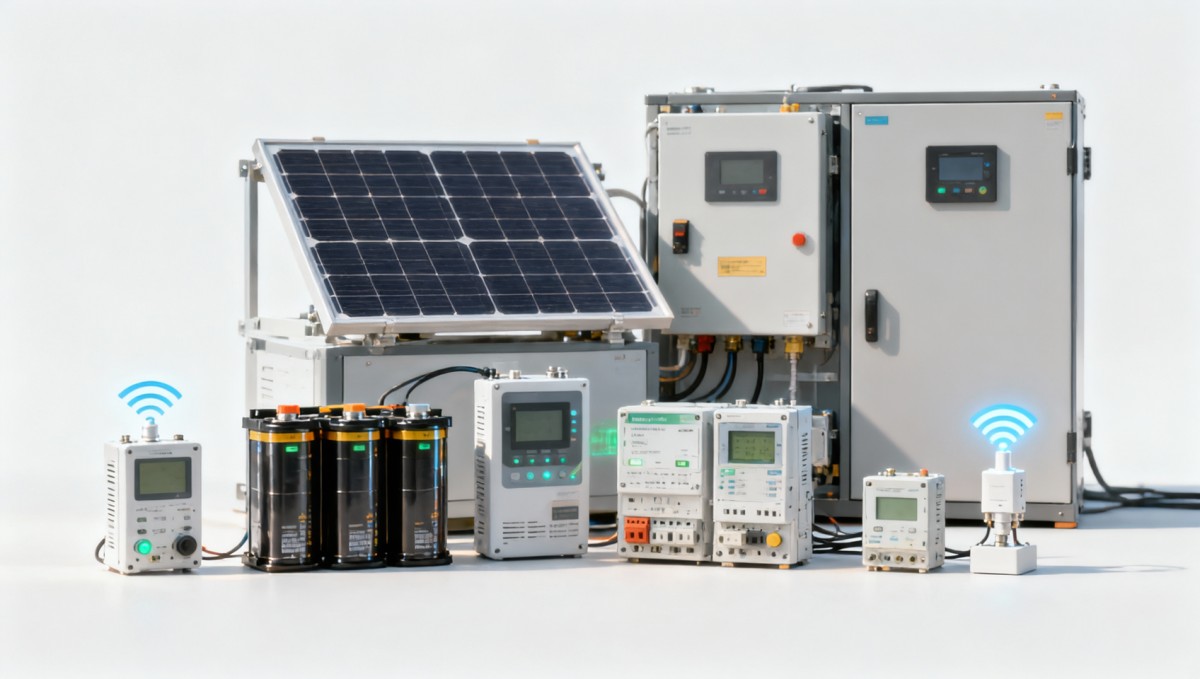
In renewable energy projects, runtime failures often begin with a mismatch between battery chemistry assumptions and actual operating conditions. Solar monitoring nodes, battery storage cabinet sensors, and occupancy-based HVAC controls may all use a lithium battery for IoT, yet their power profiles are very different. A node that transmits a 20-byte payload every 4 hours behaves nothing like one that wakes every 30 seconds, joins a mesh, and repeats failed packets under interference.
Protocol overhead is one of the biggest hidden drains. In environments packed with inverters, metal enclosures, switchgear, and dense building materials, radio links become less efficient. When latency rises from 80 ms to 350 ms or packet retries jump from 1 to 4 attempts, average current draw increases sharply. This is why devices marketed as “ultra-low power” can show unstable runtime in real smart grid or smart building deployments.
Temperature also changes the runtime equation. Many lithium primary cells and rechargeable lithium batteries lose effective capacity outside ideal ranges such as 20°C to 25°C. In rooftop solar control boxes, utility closets, or edge cabinets, actual temperatures may swing from -10°C to 50°C. Under these conditions, voltage sag, internal resistance, and accelerated aging can all reduce usable energy even when nominal mAh ratings look competitive on paper.
Another common problem is sensor duty load. Renewable energy automation increasingly depends on frequent telemetry for energy optimization, predictive maintenance, and peak-load shifting. If a temperature, current, vibration, or air-quality sensor samples at 1-second intervals and performs local edge filtering before transmitting, the sensor subsystem may consume more energy than the radio itself. Buyers who only compare battery capacity without measuring the full duty cycle are likely to underestimate replacement frequency and labor cost.
The four runtime drivers procurement teams should test
- Radio behavior: packet retries, wake-up latency, mesh routing load, and rejoin frequency.
- Sleep efficiency: deep-sleep current in microamp range, wake duration, and firmware scheduling quality.
- Sensor workload: sampling interval, warm-up time, onboard processing, and calibration cycles.
- Thermal and mechanical design: battery holder resistance, PCB leakage, enclosure heat buildup, and connector quality.
When those four areas are benchmarked together, runtime forecasts become more realistic. In many renewable energy deployments, a 15% improvement in sleep current can outperform a 30% increase in battery capacity if the firmware and radio stack are well optimized. This is why data-led benchmarking is more useful than oversized battery specifications alone.
What Impacts Lithium Battery for IoT Runtime Most: A Practical Priority Order
For operators and business evaluators, it helps to rank the major runtime factors in order of field impact. In low-power renewable energy IoT networks, the top three are usually communication frequency, protocol efficiency, and sleep current. Battery capacity still matters, but it often becomes the fourth or fifth variable after the system’s power behavior is understood.
The table below summarizes how typical factors affect battery-powered IoT devices used in solar monitoring, building energy control, and distributed metering. The values are directional planning ranges used for evaluation, not a substitute for device-specific test reports.
The key takeaway is that runtime is driven more by energy consumption patterns than by headline capacity. A larger cell can delay failure, but it cannot fix poor protocol behavior, inefficient wake logic, or unstable radio design. In renewable energy estates with 500 to 5,000 distributed endpoints, that difference directly affects maintenance scheduling, spare inventory, and technician dispatch cost.
Why protocol choice changes battery life
Different protocols produce different power budgets. BLE can be efficient for short-range periodic data bursts, while Zigbee and Thread may perform well in structured mesh topologies if routing loads are controlled. Matter adds interoperability value, but runtime depends on the full implementation stack, not the label alone. Matter-over-Thread in a 3-hop route may behave very differently from a single-hop deployment with strong RSSI and low interference.
Field evaluation checklist
- Measure average current across sleep, wake, transmit, and retry states over at least 72 hours.
- Test at 3 temperature points, such as 0°C, 25°C, and 45°C.
- Simulate realistic reporting intervals for alarms, telemetry, and firmware heartbeat packets.
- Verify battery voltage behavior under peak current draw, not only nominal discharge curves.
This evaluation method gives procurement teams a stronger basis for comparing products across factories and ODM suppliers, especially when marketing claims are similar but implementation quality is not.
How Hardware Design Quality Changes Real Runtime and Lifecycle Cost
Hardware design quality is often the difference between a battery-powered node that lasts 36 months and one that requires replacement in 14 to 18 months. For renewable energy deployments, the issue is not only energy efficiency but service continuity. A failed cabinet temperature sensor in a battery energy storage room can create operational blind spots, while repeated replacement cycles increase labor cost and system risk.
PCB leakage, poor component selection, and unstable voltage regulation are common runtime killers. Even when the battery chemistry is appropriate, a low-quality regulator with high quiescent current or a sensor that never fully powers down can waste enough energy to invalidate the design target. Procurement teams should therefore request current consumption data by subsystem, not just total battery life estimates.
Mechanical details matter too. Contact resistance at the battery terminal, enclosure sealing, and thermal layout can all affect usable energy over time. In solar and storage applications, devices may experience vibration, dust, and daily heat cycling. A cell holder that performs acceptably in a bench test may show intermittent voltage drop after 6 to 12 months in the field, especially if spring contact quality is inconsistent.
Firmware and hardware must also be evaluated together. A good PCB cannot compensate for inefficient rejoin logic, and optimized firmware cannot fully overcome poor RF front-end performance. NHI’s engineering view is that battery endurance should be measured as a system attribute across protocol stack, PCB execution, sensing logic, and operating environment.
Design factors that deserve supplier review
Before approving a lithium battery for IoT device for renewable energy use, buyers should compare the following hardware characteristics. These are often more predictive than headline capacity or generic low-power claims.
The practical conclusion is simple: in renewable energy IoT, a technically modest battery can outperform a larger one when the power architecture is disciplined. For large portfolios, that improvement compounds. Reducing one truck roll per 100 devices per year can create measurable savings across service contracts and operating budgets.
Procurement Standards for Buyers Comparing Battery-Powered IoT Devices
Procurement teams often receive proposals where multiple suppliers claim similar runtime, protocol support, and environmental suitability. The strongest purchasing process therefore focuses on comparable evidence. In renewable energy applications, runtime should be evaluated as part of total lifecycle cost, including battery replacement labor, site access complexity, downtime impact, and spare stocking requirements over a 3-year to 7-year horizon.
For example, a device that costs 12% less upfront may become more expensive if its practical battery life is 18 months instead of 36 months. In distributed solar portfolios or multi-building energy control systems, that difference can double replacement cycles. Evaluators should ask not only how long the battery lasts, but under what report interval, at what temperature, with what protocol route depth, and with what packet retry rate.
A disciplined buyer should require a test matrix rather than a single runtime number. At minimum, suppliers should present data for normal load, high-reporting load, and elevated temperature conditions. If the product is positioned for Matter, Zigbee, Thread, BLE, or hybrid gateway deployments, the test context should reflect those actual protocol states rather than a simplified broadcast mode.
Recommended procurement criteria
- Battery runtime forecast at at least 2 duty cycles, such as hourly reporting and 5-minute reporting.
- Sleep current and transmit current values, ideally with temperature-conditioned test data.
- Protocol-specific performance, including latency, retries, and rejoin behavior.
- Expected maintenance interval, battery replacement procedure time, and enclosure access difficulty.
- Evidence of stress testing in high-interference or high-temperature renewable energy environments.
A practical scoring model
A 100-point evaluation model helps align technical and commercial teams. One practical split is 30 points for runtime evidence, 25 points for protocol reliability, 20 points for environmental resilience, 15 points for maintenance simplicity, and 10 points for supplier documentation quality. This keeps the decision grounded in measurable performance rather than feature inflation.
For operators, the maintenance side is especially important. If battery replacement takes 8 minutes in one device and 22 minutes in another because of enclosure design or recommissioning steps, the labor burden becomes substantial across 1,000 endpoints. Runtime purchasing decisions should therefore include service workflow, not only component cost.
Deployment Guidance, Common Mistakes, and FAQ for Longer Runtime
Even well-selected hardware can underperform if deployment practices are weak. In renewable energy and smart building projects, installers sometimes place battery-powered devices too close to metal cabinets, high-current wiring, or heat-producing assets. This can degrade signal quality, increase retries, and elevate battery temperature at the same time. A good installation plan should include radio survey, thermal awareness, and reporting policy definition before mass rollout.
Another common mistake is over-configuring telemetry. Teams often ask for frequent updates “just in case,” moving from 15-minute or 60-minute intervals to 1-minute reporting without checking whether the operational value justifies the power cost. In many energy management scenarios, exception-based reporting combined with periodic heartbeat packets can deliver a better balance between visibility and runtime.
Firmware governance also matters. A device may ship with one power profile and later receive updates that alter wake frequency, security handshake time, or protocol behavior. Commercial buyers should ask how firmware revisions are validated for battery impact and whether updated runtime estimates are supplied after major releases.
Common mistakes to avoid
- Choosing by battery mAh rating alone without reviewing duty cycle and protocol test conditions.
- Assuming Matter support automatically means low power performance is optimized.
- Ignoring battery replacement labor in rooftop, utility room, or restricted-access locations.
- Skipping temperature and interference testing for devices used near solar and storage infrastructure.
FAQ: what buyers and operators ask most
How should we estimate runtime before purchase?
Use a 3-condition model: nominal load, high reporting load, and high temperature. Ask suppliers for current data across sleep, transmit, and retry states, then map that to your expected interval, such as every 15 minutes, every hour, or event-driven alerts.
Is a rechargeable battery always better for renewable energy IoT?
Not always. Rechargeable lithium batteries suit devices with regular service access or energy harvesting support, but primary lithium cells may be more stable for low-maintenance sensors targeting 3 to 7 years. The right choice depends on replacement logistics, temperature exposure, and recharge control quality.
What is a realistic maintenance planning cycle?
For large portfolios, quarterly monitoring and annual battery health review are practical. If devices operate in hotter sites above 40°C for long periods, a 6-month review interval is often safer, especially in energy storage support spaces or rooftop cabinets.
What should Matter-focused buyers verify?
Verify not just compatibility but actual Matter-over-Thread latency, route depth behavior, join stability, and battery impact during secure commissioning. Interoperability is valuable, but runtime performance depends on implementation discipline.
For renewable energy operators, the most reliable path is to treat lithium battery for IoT runtime as a system-level performance metric. Communication behavior, sleep efficiency, sensor duty load, thermal exposure, and hardware design quality all shape the true maintenance burden and operating cost. If you are comparing battery-powered IoT devices for solar, building energy optimization, storage support, or smart metering, NexusHome Intelligence can help you benchmark the data that actually matters. Contact us to review device performance, compare supplier evidence, and explore a more reliable path to lower lifecycle risk.
Protocol_Architect
Dr. Thorne is a leading architect in IoT mesh protocols with 15+ years at NexusHome Intelligence. His research specializes in high-availability systems and sub-GHz propagation modeling.
Related Recommendations
- NHI Data Lab (Official Account)How to avoid battery mismatch in low-power IoT
- NHI Data Lab (Official Account)Battery choices that reduce IoT field failures
- NHI Data Lab (Official Account)Lithium battery for IoT: what impacts runtime most?
- NHI Data Lab (Official Account)Best LiPo Battery for Wearables in 2026
- NHI Data Lab (Official Account)CR123A Lithium Battery Wholesale Buying Guide
- NHI Data Lab (Official Account)Battery Life Tips for Video Doorbells
- NHI Data Lab (Official Account)NB-IoT Module Battery Life: What Impacts It
- NHI Data Lab (Official Account)Industrial IoT for predictive maintenance — why vibration sampling rate must exceed 10× bearing fault frequency
- NHI Data Lab (Official Account)Aluminum 7075 vs 6061 strength in parts that see repeated load
- NHI Data Lab (Official Account)Why precision aluminum milling wholesale quotes vary more than expected
Analyst