
How to avoid battery mismatch in low-power IoT
author
Battery mismatch is a silent failure point in low-power IoT, affecting device life, protocol stability, and long-term field performance. At about NexusHome Intelligence, we examine lithium battery for IoT selection through IoT hardware benchmarking, Matter protocol data, and smart home hardware testing—helping procurement teams, operators, and evaluators turn IoT engineering truth into smarter sourcing and compliance decisions.
Why battery mismatch becomes a field risk in renewable energy IoT
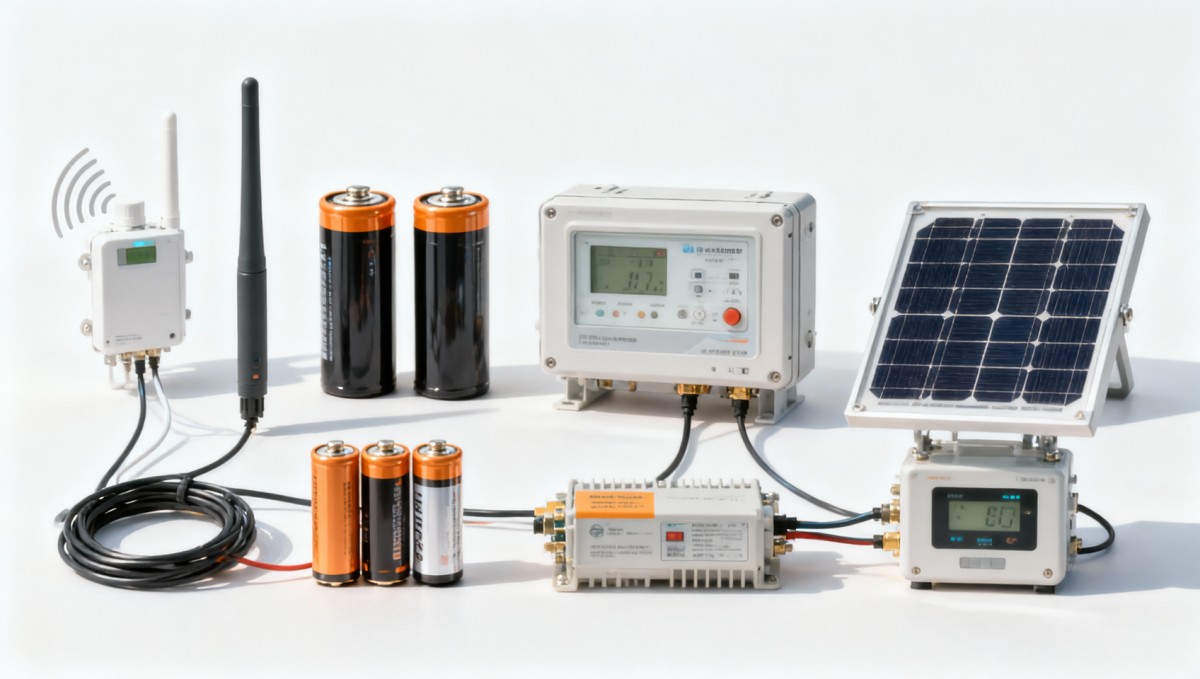
In renewable energy systems, low-power IoT devices do more than report temperature or occupancy. They support inverter monitoring, battery cabinet sensing, remote metering, solar asset diagnostics, and distributed control in buildings or microgrids. When the wrong battery chemistry, discharge profile, or pulse capability is matched to the device, the result is rarely immediate failure. More often, it appears after 3–12 months as unstable joins, packet loss, shortened replacement cycles, or unexpected resets during peak transmission windows.
This matters because many renewable energy deployments operate across mixed protocols such as Zigbee, BLE, Thread, and Matter bridges. A battery that looks acceptable on a datasheet may still underperform when radio bursts, sensor warm-up current, and cold-start events are combined. For operators, that means more truck rolls. For procurement teams, it means lifecycle cost increases. For business evaluators, it creates avoidable risk in warranty assumptions and return on deployment.
At NHI, the issue is not treated as a marketing claim about “long battery life.” It is treated as a hardware-system matching problem. The battery, the PCB power path, the radio duty cycle, the standby current, and the field temperature band must all be evaluated together. In renewable energy environments, common outdoor or semi-conditioned ranges can span -20°C to 60°C, and that spread alone is enough to expose poor battery selection decisions.
Another reason battery mismatch is often missed is that lab qualification cycles are too short. A 7-day bench test can overlook voltage sag that appears only after repeated pulse loads, storage time, or seasonal temperature shifts. This is exactly where benchmarking matters. Procurement teams need evidence on discharge behavior, not just nominal capacity. Operators need confidence that replacement intervals will not collapse from 5 years to 18 months once devices are mounted in exposed plant rooms or outdoor enclosures.
What “battery mismatch” actually includes
Battery mismatch is broader than choosing the wrong size cell. It usually involves at least 4 interacting layers: chemistry compatibility, pulse current support, environmental tolerance, and firmware power behavior. A sensor with low average current may still require short bursts that exceed what a coin cell can reliably deliver, especially after partial depletion or at low temperature.
- Chemistry mismatch: selecting lithium manganese dioxide, lithium thionyl chloride, rechargeable Li-ion, or LiFePO4 without aligning the voltage curve and recovery behavior to the actual electronics.
- Load mismatch: underestimating radio transmission peaks, wake-up current, LED indicators, relay triggers, or sensor heater elements.
- Temperature mismatch: choosing a battery based on room-temperature performance while the device is deployed on rooftops, in substations, or near HVAC and battery storage systems.
- Shelf-life mismatch: buying cells with acceptable rated capacity but poor storage aging relative to project lead time, warehousing, and multi-phase installation schedules.
For renewable energy projects, these mismatches are amplified by long deployment chains. Hardware may sit in storage for 2–6 months before activation, then remain dormant until commissioning. That means procurement cannot evaluate battery suitability only at purchase date. It must consider storage, transport, activation, and maintenance windows as part of the same sourcing decision.
Which battery-device combinations are most vulnerable
Some low-power IoT categories are especially sensitive to battery mismatch because their real current profile is uneven. In renewable energy environments, this includes wireless temperature sensors in battery rooms, contact sensors on service panels, occupancy or daylight nodes in energy-saving building controls, and remote status devices attached to solar and storage equipment. These products often claim multi-year battery life, but the claim can break down once radio retries and environmental stress increase.
The table below helps procurement and evaluation teams compare common deployment patterns. It is not a universal specification guide, but it shows where the mismatch risk usually sits. The goal is to move discussions away from generic “ultra-low power” language and toward practical field-fit assessment.
A practical reading of this table is simple: average current alone is not enough. A product used in a renewable energy building or distributed storage site should be evaluated under realistic event frequency, actual network congestion, and the intended maintenance cycle. If the supplier cannot explain performance across those conditions, the battery claim is incomplete.
Why protocol behavior changes battery outcomes
Protocol silos create one of the least visible causes of battery mismatch. The same device architecture can show different battery life depending on whether it runs over BLE advertising, Zigbee mesh, Thread border routing, or a Matter stack on top of Thread. Join attempts, route maintenance, acknowledgement timing, and retransmission all affect peak current and energy use.
For example, a node that reports every 5 minutes may still drain faster than expected if it experiences repeated route repair events or weak link margins. That is why NHI emphasizes combined testing: protocol compliance alone does not prove field-ready battery behavior. In procurement reviews, teams should ask for at least 3 scenario layers—nominal traffic, interference traffic, and low-temperature traffic—before accepting battery life estimates.
This is especially relevant in smart buildings tied to renewable energy strategies, where occupancy control, HVAC load shifting, and meter feedback all coexist. Once dozens or hundreds of nodes share a constrained wireless environment, battery performance becomes a system issue rather than an isolated component issue.
How to evaluate battery suitability before procurement
Battery selection for low-power IoT should start with a structured evaluation path, not a battery catalog. In B2B sourcing, the most effective approach is to narrow the choice through application load, operating environment, maintenance plan, and protocol overhead. This reduces the chance of buying a technically acceptable cell that still fails the business model because field replacement becomes too frequent or site access becomes too expensive.
Procurement teams can use 5 core checks to filter battery-device fit before sample approval. These checks do not require proprietary data, but they do require disciplined supplier questioning. If even one check cannot be answered, the battery life promise should be treated as provisional rather than bankable.
- Define the real duty cycle: report interval, alarm frequency, join frequency, firmware update frequency, and expected transmission retries.
- Verify the temperature band: indoor controlled space, rooftop cabinet, utility room, or semi-outdoor enclosure often changes battery selection more than capacity does.
- Check pulse load margin: confirm whether the battery can support short current peaks at beginning-of-life and near end-of-life.
- Map service cycle: 12-month, 24-month, or 60-month replacement plans influence the acceptable battery cost and chemistry.
- Review storage and transport: if deployment is phased over 2–4 quarters, warehousing conditions become part of battery suitability.
For operators, the biggest hidden cost is not battery price. It is field intervention. A low-cost cell that reduces service life by even 12–18 months can erase all upfront savings when installed across dispersed renewable energy assets. For evaluators, this means total cost must include maintenance labor, travel, downtime risk, and revalidation effort, not just bill-of-materials impact.
Procurement decision matrix for low-power IoT batteries
The matrix below is useful when comparing candidate devices or OEM proposals. It frames the decision around field fit, not brochure language. Renewable energy buyers can adapt these criteria to solar sites, energy storage systems, green buildings, or hybrid smart infrastructure.
This kind of matrix helps business evaluators turn technical ambiguity into a buying framework. It also supports vendor comparison during RFQ or pilot review. When suppliers answer these questions clearly, the project moves faster. When they cannot, the risk is usually real rather than theoretical.
Recommended pre-approval workflow
For most renewable energy IoT projects, a 4-step workflow is practical. First, define use cases and environmental range. Second, request battery-related test evidence under realistic radio behavior. Third, validate a pilot batch over 2–6 weeks using representative event settings. Fourth, lock procurement specifications so later substitutions do not quietly change field performance.
This workflow is especially important for OEM and ODM sourcing, where a battery vendor change or PCB power-path revision can happen without changing the outward product description. A stable part number does not always guarantee a stable energy profile. Documentation control matters.
Standards, compliance, and lifecycle planning teams often overlook
Battery mismatch is not only a technical concern. It also affects compliance, maintenance planning, and project governance. In renewable energy and smart building environments, teams frequently need to align with transport rules for lithium batteries, environmental documentation, product safety expectations, and site-specific maintenance procedures. A device may be electrically functional yet still create logistical friction if the battery specification is poorly documented.
From a sourcing perspective, buyers should request consistent documentation in 3 areas: battery chemistry disclosure, storage and handling instructions, and field replacement procedure. If low-power IoT devices are deployed across multiple countries or regional warehouses, battery transport and packaging requirements may affect lead time by 1–3 weeks depending on the route and shipment method. This should be included in commercial planning.
Lifecycle planning is just as important. A device with a theoretical 5-year battery life is not automatically the better commercial choice if the battery is difficult to source regionally, requires special service tools, or has unstable lead times. Procurement teams should compare not only expected runtime but also replacement accessibility, spare stock policy, and approved equivalent options.
For commercial evaluators, one useful practice is to separate “design life” from “service policy.” Design life reflects ideal engineering conditions. Service policy reflects the actual replacement interval accepted by the operator, often every 24, 36, or 60 months. Good planning uses the more conservative of the two, especially for widely distributed renewable energy sites.
Common mistakes in compliance and lifecycle review
- Assuming a device certification scope automatically validates long-term battery behavior under real network conditions.
- Approving alternative battery brands without rechecking pulse load response, storage age, and low-temperature behavior.
- Ignoring installation phase duration, even though staged deployment can materially reduce effective service life before commissioning.
- Treating battery replacement as a minor maintenance item rather than a labor, safety, and downtime planning issue.
These mistakes are common because battery mismatch sits between departments. Engineering sees the electrical design. Procurement sees the price and lead time. Operations sees the replacement burden. NHI’s value in this process is to connect those views through measurable hardware benchmarking and protocol-aware performance review.
FAQ: what buyers and operators ask before approving low-power IoT batteries
The questions below reflect common search intent and project review discussions. They are particularly relevant when renewable energy deployments combine smart building controls, distributed sensing, and protocol interoperability requirements.
How do I know whether a battery life claim is realistic?
Ask what assumptions were used. A credible answer should include reporting interval, event frequency, network retries, operating temperature, and end-of-life voltage threshold. If a supplier gives only a single number such as “5 years” without test conditions, the claim is incomplete. For procurement review, request at least 3 operating scenarios: nominal, high-event, and low-temperature.
Which low-power IoT applications are most sensitive to battery mismatch?
Applications with burst traffic, alarm behavior, mesh networking, or difficult site access are the most sensitive. In renewable energy settings, this often includes remote meter interfaces, battery room sensors, rooftop or cabinet-mounted nodes, and occupancy-based energy control devices. Sensitivity rises when ambient conditions fall below 0°C or exceed 40°C for extended periods.
Should buyers prefer higher-capacity batteries by default?
Not always. Higher capacity does not solve chemistry mismatch, pulse current limitations, regulator dropout issues, or storage-aging problems. In some designs, the right battery is the one with the most suitable discharge behavior and environmental tolerance, not the largest nominal capacity. Mechanical fit, transport rules, and replacement process also matter.
What is a reasonable pilot period before volume purchase?
For many building and renewable energy IoT scenarios, 2–6 weeks is a practical minimum for pilot observation if the test uses realistic report intervals and environmental placement. For seasonal or outdoor exposure concerns, a longer validation window may be justified. The key is to observe voltage behavior, network stability, and event-trigger performance together rather than in isolation.
Why work with NHI when battery selection affects sourcing risk
NexusHome Intelligence approaches low-power IoT battery selection as a measurable engineering problem tied to protocol behavior, PCB-level design, and real deployment conditions. That matters in renewable energy projects, where buyers are increasingly asked to justify not just purchase price but also system resilience, maintenance burden, and cross-protocol reliability. NHI acts as an engineering filter between vendor claims and procurement decisions.
Our benchmarking focus is especially useful for teams dealing with fragmented ecosystems. If your project includes Matter-ready products, Thread nodes, Zigbee sensors, or BLE devices in the same energy management environment, battery evaluation cannot stop at the label. It must include radio duty cycle, standby behavior, environmental fit, and long-term sourcing consistency. This is where data-backed comparison improves both technical confidence and commercial clarity.
You can contact NHI for practical support on parameter confirmation, product selection logic, sample evaluation scope, expected delivery impact from battery choices, replacement-cycle planning, and sourcing discussions linked to compliance or documentation needs. For OEM or ODM projects, we can also help define what should be locked in the specification to reduce the risk of silent component substitution.
If your team is comparing low-power IoT hardware for solar, storage, smart building, or energy optimization deployments, start with the questions that affect long-term field truth: Which battery profile matches the actual load? What test scenarios are missing? What maintenance interval is financially realistic? What substitutions are acceptable? These are the conversations that turn battery selection from a hidden risk into a controlled procurement decision.
Protocol_Architect
Dr. Thorne is a leading architect in IoT mesh protocols with 15+ years at NexusHome Intelligence. His research specializes in high-availability systems and sub-GHz propagation modeling.
Related Recommendations
- NHI Data Lab (Official Account)How to avoid battery mismatch in low-power IoT
- NHI Data Lab (Official Account)Battery choices that reduce IoT field failures
- NHI Data Lab (Official Account)Lithium battery for IoT: what impacts runtime most?
- NHI Data Lab (Official Account)Best LiPo Battery for Wearables in 2026
- NHI Data Lab (Official Account)CR123A Lithium Battery Wholesale Buying Guide
- NHI Data Lab (Official Account)Battery Life Tips for Video Doorbells
- NHI Data Lab (Official Account)NB-IoT Module Battery Life: What Impacts It
- NHI Data Lab (Official Account)Industrial IoT for predictive maintenance — why vibration sampling rate must exceed 10× bearing fault frequency
- NHI Data Lab (Official Account)Aluminum 7075 vs 6061 strength in parts that see repeated load
- NHI Data Lab (Official Account)Why precision aluminum milling wholesale quotes vary more than expected
Analyst