
Battery choices that reduce IoT field failures
author
Battery failure is one of the fastest ways to turn promising IoT deployments into costly service calls. For buyers, operators, and evaluators navigating the IoT supply chain index, the right lithium battery for IoT is not a marketing detail but a reliability decision. This article explores how smart home hardware testing, IoT hardware benchmarking, and Matter protocol data help identify verified IoT manufacturers and trusted smart home factories that can reduce field failures at scale.
Why battery choice directly affects renewable-energy IoT uptime
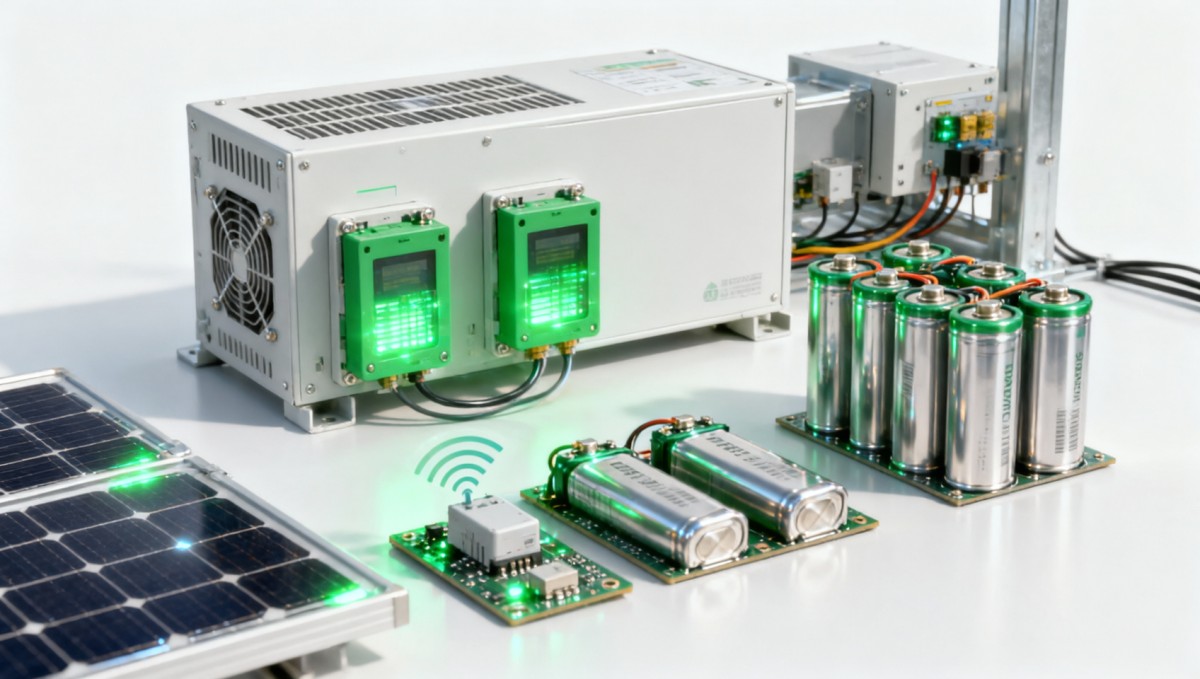
In renewable-energy systems, IoT devices often work at the edge: solar inverters, battery storage monitors, remote meters, HVAC controllers, leak sensors, and occupancy nodes in energy-managed buildings. These devices may be expected to run for 2–10 years with limited maintenance access. When a cell drops voltage too early, the problem rarely stays local. It can break reporting intervals, weaken mesh connectivity, and trigger dispatch costs that exceed the hardware price many times over.
For operators, field failure usually appears as unstable telemetry, delayed alarms, or unexplained packet loss. For procurement teams, the same problem starts much earlier: unclear battery chemistry, weak low-temperature behavior, poor traceability, or discharge claims based on ideal lab conditions only. In smart buildings and distributed energy assets, battery selection is therefore both an engineering question and a commercial risk-control step.
NexusHome Intelligence (NHI) approaches this issue from a data-first perspective. Instead of accepting “ultra-low power” claims, the useful question is more specific: under what duty cycle, at what temperature range, with which radio protocol, and with what pulse current? A Zigbee node transmitting every 5 minutes behaves differently from a Matter-over-Thread sensor that must maintain stronger routing participation. Battery choice has to reflect that load profile.
In renewable-energy deployments, common stress windows include 0°C–45°C for indoor utility areas, -20°C–60°C for outdoor enclosures, and seasonal humidity swings that accelerate seal and contact problems. If procurement compares suppliers only by nominal capacity in mAh, it misses the variables that actually drive field reliability: voltage plateau stability, pulse handling, self-discharge, mechanical packaging, and compatibility with the device power architecture.
What field failures usually look like in practice
Battery-related IoT failure is not always a clean “device off” event. In many renewable-energy sites, it starts with intermittent communication, increasing join failures, inaccurate sensor readings, or a sudden rise in maintenance tickets after 6–18 months. That is why smart home hardware testing and IoT hardware benchmarking should include both battery curve analysis and protocol behavior under declining voltage.
- Low-voltage radio instability that appears before the battery is fully depleted, especially in Thread, BLE, and Zigbee edge devices.
- Cold-start failure in outdoor renewable-energy monitoring nodes during winter mornings or high-altitude sites.
- Premature service calls caused by inflated battery-life assumptions based on standby current only, not real transmission bursts.
- Cross-supply inconsistency, where two approved vendors use different cell grades, causing uneven maintenance cycles across the same project.
Which battery chemistries reduce IoT field failures in energy and smart-building environments?
There is no single best lithium battery for IoT. The right answer depends on environmental range, peak current demand, expected lifetime, shipping constraints, enclosure size, and service model. In renewable-energy and smart-building hardware, the most discussed choices usually include lithium thionyl chloride, lithium manganese dioxide coin cells, rechargeable lithium-ion packs, and lithium iron phosphate in specific higher-load architectures.
The key decision is matching chemistry to real duty cycle. A remote meter pulse counter sending small packets 1–4 times per hour is different from a high-traffic indoor air-quality node with frequent reporting, local processing, and Matter support. Procurement teams should compare chemistry behavior not just by capacity but also by load suitability, temperature resilience, and shelf-life stability.
The table below helps buyers and commercial evaluators compare common battery paths for renewable-energy IoT applications. It is not a substitute for device-level testing, but it is a practical shortlisting tool when reviewing verified IoT manufacturers and trusted smart home factories.
A useful pattern emerges from this comparison. Long-life, low-data-rate devices often benefit from primary cells with predictable self-discharge behavior, while gateways or solar-assisted devices may justify rechargeable architectures. The mistake is treating all renewable-energy IoT nodes as if they shared the same current profile. They do not. Testing has to reflect packet interval, sleep behavior, retransmission load, and environmental stress.
How protocol behavior changes the battery decision
Protocol silos matter because radio stacks consume power differently. Matter protocol data becomes relevant not as a branding point, but as an operational variable. Thread routing duties, BLE advertising intervals, Zigbee mesh participation, and Wi-Fi association patterns can all change pulse current demand. A battery that looks adequate in a single-device lab test may underperform in a congested multi-node building deployment.
For buyers reviewing smart home factories, a practical checkpoint is whether the supplier can show battery testing under at least 3 conditions: nominal room temperature, low-temperature stress, and interference-heavy communication. Without those three views, battery life projections are often too optimistic for renewable-energy assets installed across multiple geographies.
Short selection rules by device type
- Choose long-life primary chemistry for low-duty outdoor monitoring where truck-roll reduction is the main KPI.
- Choose rechargeable architecture when data frequency, local compute, or solar trickle charging justifies a battery management design.
- Avoid thin coin-cell assumptions for devices with repeated radio bursts, actuator triggers, or poor thermal insulation.
- Require supplier evidence on pulse current handling, not only nominal capacity or datasheet shelf life.
What should procurement teams verify before approving a lithium battery for IoT?
Procurement errors often happen because battery review is separated from protocol review, enclosure review, and service planning. In practice, those four items are linked. A battery approved without checking firmware duty cycle, low-voltage threshold design, and connector quality may create a hidden service burden that appears only after deployment. For B2B buyers, the approval process should cover at least 5 checkpoints before mass order release.
Commercial evaluators should also ask whether a supplier’s battery source is stable across batches. In the OEM and ODM market, specification drift can happen quietly. The sample unit may use one cell source, while volume production uses another with different impedance behavior or manufacturing date control. Verified IoT manufacturers should be able to document incoming inspection logic and lot traceability.
The table below turns procurement concerns into a practical evaluation grid. It is especially useful for smart home hardware testing projects linked to renewable-energy retrofits, building management systems, and distributed energy monitoring programs where multi-year reliability matters more than a small first-cost difference.
This evaluation grid helps separate serious engineering suppliers from presentation-led vendors. It also supports faster internal alignment between purchasing, technical teams, and commercial reviewers. If a supplier cannot explain how battery life changes under different reporting intervals or protocol loads, that is usually an early warning sign rather than a minor documentation gap.
A 4-step approval process that works in B2B projects
For most renewable-energy IoT programs, a disciplined approval flow can reduce avoidable failures before volume rollout. Typical timelines range from 2–4 weeks for sample validation and 4–8 weeks for broader pilot review, depending on environmental testing and protocol interoperability needs.
- Define the actual power profile: wake-up frequency, transmission interval, sensor sampling, and actuator events.
- Request test evidence under realistic temperatures, especially if devices operate outdoors or near inverters and electrical rooms.
- Run a pilot with at least small-batch diversity rather than one perfect engineering sample.
- Approve only after confirming lot control, fallback sourcing, and low-voltage behavior in the selected protocol stack.
This process is particularly important when comparing trusted smart home factories that claim broad compatibility across Zigbee, Thread, BLE, and Matter. Battery reliability should be validated as part of protocol reality, not as an isolated component checkbox.
Where do hidden costs appear, and when is a cheaper battery actually more expensive?
In B2B renewable-energy projects, the unit battery price is only one layer of cost. The bigger equation includes installation labor, site access, replacement frequency, communication failure diagnosis, and business interruption risk. A battery that saves a small amount at purchase can become expensive if it shortens maintenance intervals from 5 years to 18 months in dispersed assets.
This matters especially in projects with rooftop solar, energy storage peripherals, utility metering, and commercial building automation. Service visits may involve access coordination, technician scheduling, tenant communication, or temporary shutdown windows. Procurement should therefore model total field cost over at least 3–5 years, not only landed component cost.
Three cost traps are common. First, using a lower-grade cell that increases replacement frequency. Second, underestimating protocol-related retransmissions that reduce battery life. Third, approving a chemistry that performs acceptably at 25°C but degrades sharply in the actual installation environment. All three traps can be reduced through IoT hardware benchmarking rather than brochure comparison.
Common misconceptions that lead to avoidable failures
Many teams assume the largest nominal capacity always gives the longest runtime. In reality, effective runtime depends on cut-off voltage, impedance growth, pulse demand, and firmware behavior. A higher-capacity option can still perform worse if the radio repeatedly browns out during transmission or if the enclosure exposes the cell to unfavorable thermal cycling.
Another misconception is that renewable-energy devices can always use rechargeable batteries because the site has solar power. That is not always practical. Small sensors may have limited charging windows, poor light exposure, or seasonal generation swings. In such cases, a carefully selected primary lithium battery for IoT may deliver more stable service with less design complexity.
A third misconception is that compliance and transport are only logistics issues. In fact, handling, storage period, and installation timing affect battery condition. Projects with long warehousing or phased commissioning should confirm storage guidance early, especially when devices may sit for 3–6 months before activation.
Risk signals buyers should not ignore
- Battery-life claims presented as a single number without duty-cycle assumptions.
- No explanation of low-temperature behavior or high-current transmission pulses.
- No batch traceability or unclear battery sourcing for scale orders.
- Protocol compatibility claims without corresponding power-consumption evidence.
FAQ: how buyers, operators, and evaluators make better battery decisions
The questions below reflect common search intent from procurement teams, site operators, and business evaluators comparing lithium battery options for IoT hardware in renewable-energy and smart-building programs.
How do I choose a lithium battery for IoT sensors in outdoor energy projects?
Start with the site conditions and duty cycle. Check the expected temperature range, reporting frequency, maintenance access, and protocol type. For low-duty outdoor nodes with 3–10 year service targets, long-life primary chemistries are often shortlisted first. Then verify pulse current support, enclosure thermal behavior, and low-voltage communication stability before final approval.
What should procurement teams ask verified IoT manufacturers?
Ask for battery test conditions, not just battery type. Useful questions include the test temperature range, reporting interval assumptions, protocol stack used, expected storage window, and whether production lots use a fixed approved vendor list. Also ask how the supplier handles substitutions if a cell source changes during the project lifecycle.
Are Matter devices harder on batteries than older low-power IoT products?
Not always, but they can be more demanding depending on role and network behavior. Matter protocol data should be reviewed together with Thread routing responsibilities, wake intervals, and actual traffic levels. The correct question is not whether Matter is “good” or “bad” for battery life, but how the implemented device behaves under realistic multi-node conditions.
What is a realistic battery validation period before mass deployment?
A practical screening cycle is often 2–4 weeks for bench validation plus a longer pilot where devices run under real communication and environmental conditions. For renewable-energy assets exposed to seasonal stress, the pilot should ideally include at least one meaningful temperature challenge or accelerated environmental check rather than room-temperature testing only.
Why work with a data-driven evaluation partner before final supplier approval?
When battery decisions affect network reliability, truck-roll cost, and long-term renewable-energy performance, buyers need more than generic catalog language. NHI is built for that gap. Our approach connects smart home hardware testing, IoT hardware benchmarking, protocol verification, and component-level scrutiny so teams can compare suppliers using engineering evidence instead of assumptions.
This is especially relevant when sourcing across fragmented ecosystems involving Zigbee, Z-Wave, Thread, BLE, and Matter. The battery may sit at component level, but its failure impacts the whole system: data continuity, alarm integrity, maintenance planning, and end-user trust. A data-driven review helps procurement teams identify trusted smart home factories and verified IoT manufacturers with stronger technical discipline.
If you are comparing battery-powered sensors, gateways, or building-energy devices, we can support practical decision points rather than vague consulting language. That includes parameter confirmation, battery chemistry shortlisting, protocol-related power review, sample evaluation logic, delivery cycle discussion, and supplier comparison for renewable-energy IoT programs.
Contact NHI if you need help with 4 specific areas: product selection for multi-year uptime targets, battery and protocol fit analysis, sample and pilot review criteria, or quote-stage supplier evaluation. For teams under tight rollout windows, we can also help structure a clearer shortlisting process before volume procurement begins.
Protocol_Architect
Dr. Thorne is a leading architect in IoT mesh protocols with 15+ years at NexusHome Intelligence. His research specializes in high-availability systems and sub-GHz propagation modeling.
Related Recommendations
- NHI Data Lab (Official Account)How to avoid battery mismatch in low-power IoT
- NHI Data Lab (Official Account)Battery choices that reduce IoT field failures
- NHI Data Lab (Official Account)Lithium battery for IoT: what impacts runtime most?
- NHI Data Lab (Official Account)Best LiPo Battery for Wearables in 2026
- NHI Data Lab (Official Account)CR123A Lithium Battery Wholesale Buying Guide
- NHI Data Lab (Official Account)Battery Life Tips for Video Doorbells
- NHI Data Lab (Official Account)NB-IoT Module Battery Life: What Impacts It
- NHI Data Lab (Official Account)Industrial IoT for predictive maintenance — why vibration sampling rate must exceed 10× bearing fault frequency
- NHI Data Lab (Official Account)Aluminum 7075 vs 6061 strength in parts that see repeated load
- NHI Data Lab (Official Account)Why precision aluminum milling wholesale quotes vary more than expected
Analyst