
Battery Safety for IoT Hardware: What Gets Overlooked
author
Battery safety in connected devices is often reduced to battery life, yet the real risks emerge in thermal behavior, charging logic, enclosure design, and long-term field reliability. For teams evaluating the IoT supply chain index, verified IoT manufacturers, or lithium battery for IoT performance, this analysis from the IoT independent think tank at NexusHome Intelligence reveals what standard sourcing checklists and smart home hardware testing often miss.
In renewable energy environments, this issue becomes more critical. IoT hardware is no longer limited to consumer smart home gadgets; it now supports solar inverters, battery energy storage systems, HVAC optimization, occupancy sensing, sub-metering, leak detection, and distributed load management across homes, campuses, and commercial buildings. When a low-power node fails because of poor battery safety design, the cost is rarely just one dead device. It can mean blind spots in energy monitoring, maintenance dispatches across multiple sites, or avoidable safety incidents in enclosed electrical spaces.
For procurement leaders, operators, R&D teams, and decision-makers, the real question is not whether a device advertises ultra-low power. The question is whether its battery system can survive 24–36 months of field use under fluctuating heat, charging cycles, radio traffic, and enclosure pressure without swelling, leakage, unstable voltage, or accelerated degradation. That is where disciplined benchmarking matters.
Why battery safety in renewable-energy IoT is more than a runtime metric
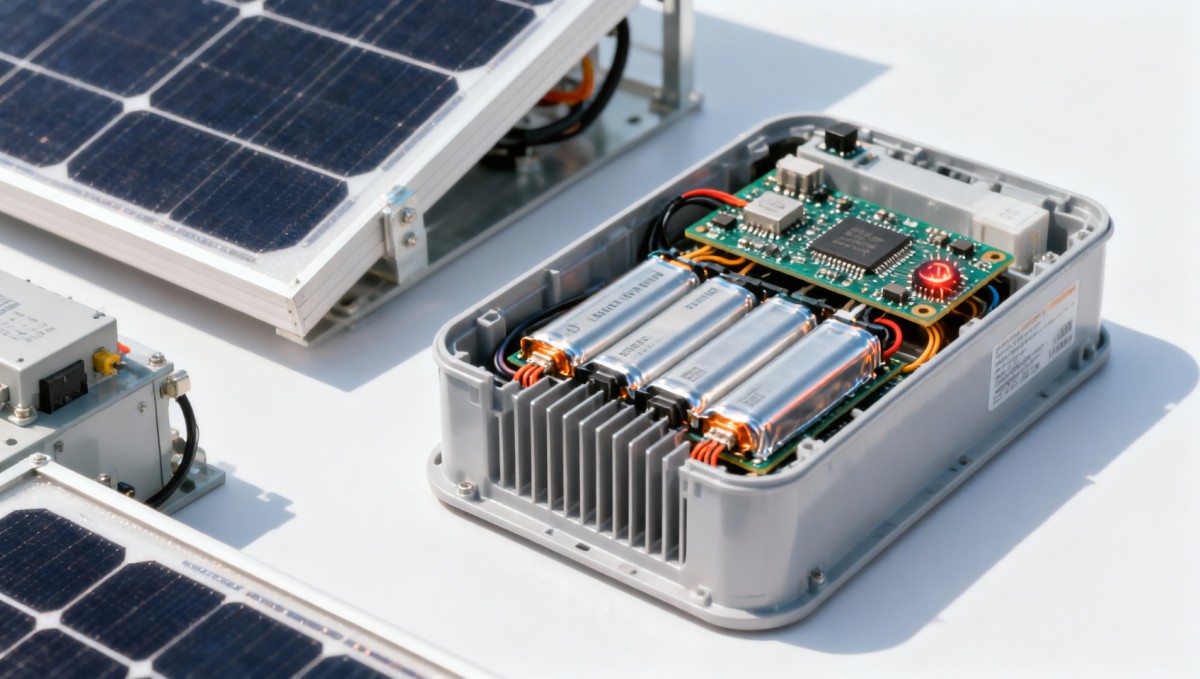
In energy and climate-control deployments, battery-powered IoT nodes often operate in harsher conditions than buyers expect. A sensor mounted near a rooftop solar combiner box, inside an EV charging cabinet, or above a mechanical room ceiling may experience ambient temperatures from 0°C to 45°C in normal operation, with localized hot spots rising even higher. Battery chemistry that looks stable in a laboratory at 23°C can behave very differently in an enclosed field installation.
The first overlooked issue is thermal accumulation. Many devices pass initial bench tests because their average current draw is low, perhaps 20–80 µA in sleep mode. But real deployments involve radio bursts, firmware wake-ups, sensor polling, and sometimes repeated network rejoin events. A device that transmits every 5 minutes under ideal mesh conditions may transmit every 30–60 seconds when the network is unstable, multiplying both heat and peak current stress.
The second issue is charging logic in energy-aware systems. Renewable energy applications increasingly use rechargeable cells in indoor solar monitors, wireless power meters, and edge controllers paired with micro energy harvesting. If the charge algorithm lacks temperature gating, overvoltage protection, or proper trickle thresholds, even a modest 1-cell lithium design can degrade quickly after 300–500 cycles. The result is not only shorter service life, but higher swelling risk and unstable sensor behavior.
The third issue is enclosure interaction. Compact industrial IoT devices often prioritize ingress protection, slim form factors, and easy wall mounting. Yet IP-rated housings, dense PCBA layouts, and limited venting can trap heat around the battery. A design that is electrically sound may still be mechanically unsafe if the cell sits too close to regulators, RF modules, or heat-producing relays.
Field conditions that distort battery safety assumptions
Battery safety failures in renewable energy IoT rarely start as dramatic events. More often, they begin as subtle instability: voltage sag during peak transmission, 10%–20% faster capacity loss than expected, intermittent resets, or battery impedance growth after one heating season. These signs are easy to miss when buyers review only nominal capacity in mAh and vendor claims about standby years.
- Temperature cycling caused by day-night load variation, especially near solar, storage, and HVAC equipment.
- Frequent radio retries in protocol-dense buildings using Zigbee, Thread, BLE, and Wi-Fi in parallel.
- Mechanical compression or enclosure stress in compact wall boxes and DIN-adjacent installations.
- Charging irregularity from unstable auxiliary power, micro-harvesting inputs, or poor power-path design.
For NHI-style benchmarking, the core lesson is straightforward: battery life estimates without thermal, charging, and enclosure validation do not provide a reliable procurement basis. Runtime is only one layer of battery safety. Field survivability is the real metric.
What standard sourcing checklists usually miss
Many sourcing teams evaluate connected hardware through a familiar list: battery capacity, protocol support, enclosure rating, lead time, and unit cost. Those points matter, but they do not reveal whether a product can maintain battery safety over a 2-year or 3-year deployment in renewable energy infrastructure. A smart meter add-on or wireless environmental sensor may look comparable on paper while carrying very different long-term risk profiles.
One common blind spot is peak-current behavior. A battery can be adequately sized in total capacity while still failing under short bursts of current from radio transmission or wake-on-event operation. For example, a node drawing an average of less than 1 mA can still require pulse currents above 80–150 mA. If internal resistance climbs over time, voltage dips can trigger resets, false alarms, or repeated reconnect cycles that worsen battery stress.
Another missed factor is battery protection circuit quality. Buyers often ask whether overcharge and overdischarge protection exists, but not how quickly it reacts, how consistently it performs across temperature ranges, or whether the protection design has been validated after transport vibration and enclosure assembly. In low-cost ODM hardware, weak spot welding, inconsistent tabs, or poor insulation spacing can remain hidden until late field failures appear.
Supply chain transparency also matters. In the renewable energy sector, where devices may be expected to stay in service for 5–7 years, cell substitution risk is significant. A vendor may qualify one cell lot in pilot production and ship another chemistry or supplier batch later to control cost. Without lot traceability and incoming quality control, battery safety drift can occur silently.
Checklist gaps that deserve engineering review
The table below shows where standard procurement reviews tend to stop, and where deeper battery safety validation should begin for renewable-energy IoT hardware.
The procurement implication is clear: battery safety assessment should not be delegated to a single checkbox under “power.” It needs cross-functional review involving hardware, firmware, thermal design, and field operations. In renewable energy deployments, that cross-check can prevent costly truck rolls and service disruption months after installation.
Minimum questions for verified IoT manufacturers
- What battery chemistry and approved cell suppliers are locked for production over the next 12 months?
- What is the tested operating window for both charging and discharge, not just storage?
- How does the device behave after repeated network retry events over 24–72 hours?
- What pack-level and board-level protection exists, and how is it validated after assembly?
- What field replacement interval is recommended under a 10-minute reporting cadence versus a 1-minute cadence?
Battery design factors that most influence long-term safety
The most reliable renewable-energy IoT products are rarely the ones with the largest battery. They are the ones with balanced electrochemical, electronic, and mechanical design. In practical terms, five design factors usually determine whether a device remains safe and stable beyond the first year: chemistry selection, protection architecture, charging strategy, enclosure heat path, and firmware power behavior.
Chemistry selection should match the duty cycle. Primary lithium cells may work well for sensors expected to run 3–5 years with infrequent transmission, while lithium-ion or lithium-polymer cells can suit rechargeable monitors tied to auxiliary power or harvesting. However, the wrong chemistry in a warm enclosure can accelerate capacity loss quickly. A product installed near energy equipment should not be qualified solely from office-condition testing.
Protection architecture is equally important. Safe design is layered, not singular. Cell-level protection, PCB safeguards, firmware cutoffs, and fault logging each play a role. If one layer fails, another should prevent deep discharge, unsafe charging, or repeated brownout loops. This matters in unattended assets such as remote energy cabinets, rooftop gateways, and distributed environmental sensing nodes.
Firmware behavior often receives too little attention in battery safety discussions. Power management bugs can create unexpected wake storms, continuous scanning, or excessive handshake retries. A 15% increase in radio-on time may not sound severe, yet over 6–12 months it can materially increase heat, shorten service intervals, and expose the battery to more stress than the mechanical design assumed.
Recommended engineering focus by application type
Different renewable-energy IoT scenarios create different battery safety priorities. The comparison below helps buyers and technical evaluators align use case, risk, and validation depth.
A strong supplier should be able to discuss these interactions with specificity. If the answer to battery safety concerns remains limited to “low power consumption” or “long battery life,” the evaluation is incomplete. For renewable energy projects, buyers should seek evidence of stress testing under realistic reporting intervals, temperature windows, and enclosure configurations.
Practical thresholds worth requesting during evaluation
- Operating discharge verification across at least 3 conditions: low, room, and elevated temperature.
- Cycle-retention data after 300 or more charge cycles for rechargeable designs.
- Documented voltage behavior during transmission pulses above 80 mA where relevant.
- Assembly review showing battery spacing from heat-generating components and connector edges.
How to benchmark suppliers and devices before purchase
For buyers comparing verified IoT manufacturers, the goal is not to build a perfect laboratory inside the sourcing process. The goal is to screen out hidden battery risk before volume deployment. A disciplined benchmark plan can usually be completed in 2–4 weeks and should combine document review, sample stress testing, and supplier process validation.
Start with three sample categories: fresh production samples, pilot-lot samples, and if possible aged samples stored for 3–6 months. This helps reveal variance between ideal engineering units and real supply chain output. In renewable-energy projects, such variance matters because rollouts often happen site by site, not all at once, meaning some inventory may sit before installation.
Next, align the test profile with the real application. If a wireless meter node will report every 2 minutes in a metal-rich electrical room, test it there or under equivalent RF interference. If an energy sensor may face 40°C cabinet conditions, do not rely on room-temperature discharge data alone. Realistic test cadence is often more valuable than longer but irrelevant idle tests.
Finally, review manufacturing controls. Battery safety is influenced by incoming inspection, storage humidity, assembly torque, cable routing, and pack handling discipline. A technically strong product can still become unreliable if production process control is weak or substitutions are poorly managed.
A practical 5-step benchmark workflow
- Define the real field profile: reporting interval, protocol, ambient range, enclosure type, and expected service interval.
- Collect battery-related documentation: cell source, protection design, charging limits, storage conditions, and revision history.
- Run accelerated operational tests for 24–72 hours with realistic transmission load and thermal exposure.
- Inspect mechanical integration: battery placement, adhesive, compression points, cable strain, and proximity to heat sources.
- Score supplier readiness: lot traceability, substitution control, failure analysis process, and post-sale support capability.
Teams that follow this process gain a better decision basis than those relying on brochures and nominal capacity figures. This is especially relevant in fragmented protocol environments where radio behavior affects power draw. NexusHome Intelligence emphasizes hard data because battery safety is never just a component question; it is a system question involving protocol, firmware, mechanics, and supply chain discipline.
FAQ for procurement and operations teams
How long should a battery-powered energy IoT device be expected to last?
In many building-energy and smart infrastructure applications, a realistic target is 24–60 months, depending on reporting interval, temperature, protocol overhead, and event frequency. Any claim should be tied to a specific use profile, not a generic standby estimate.
What is the biggest hidden battery safety risk in procurement?
Cell substitution without transparent revalidation is one of the biggest risks. Even if nominal capacity appears unchanged, impedance, thermal response, and cycle stability may differ enough to affect long-term safety and reliability.
Should operators prioritize replaceable or rechargeable batteries?
That depends on service access and duty cycle. Replaceable primary cells can be safer for very low-duty sensors with 3–5 year intervals. Rechargeable options may fit devices with stable auxiliary power or harvesting, but they demand stricter charging and temperature management.
Reducing lifecycle risk in renewable-energy deployments
Battery safety should be managed across the full lifecycle, not only at product selection. In renewable energy projects, deployment may span multiple buildings, utility-adjacent sites, or phased retrofits over 6–18 months. That creates inventory aging, installation variance, and maintenance complexity. A device that appears safe at commissioning may show weakness later if storage and replacement practices are not controlled.
Operations teams should define battery maintenance rules early. This includes storage temperature guidance, first-in-first-out stock use, field inspection triggers, and replacement criteria. For example, if voltage sag, enclosure warping, or unusual wake frequency appears, the response should be standardized instead of left to site-level improvisation. Consistency reduces both safety risk and service cost.
Decision-makers should also compare total cost of ownership rather than unit price alone. A device that is 8% cheaper but requires replacement visits 12 months earlier may be significantly more expensive across 500 or 5,000 nodes. In energy optimization systems, downtime can also degrade data continuity, making carbon reporting, peak-load control, or fault detection less reliable.
The strongest sourcing strategy is to partner with manufacturers willing to expose test conditions, production controls, and component traceability. That aligns with NHI’s broader vision: trust is built through measurable engineering performance, not marketing phrases. In a fragmented IoT ecosystem, battery safety is one of the clearest places where transparent data creates procurement confidence.
For renewable-energy IoT hardware, overlooked battery safety issues usually come down to four areas: heat, charging logic, enclosure mechanics, and long-term supply consistency. Evaluating these factors early helps researchers, operators, procurement teams, and enterprise leaders avoid false economies and improve deployment resilience. If you are comparing IoT supply chain options, reviewing lithium battery for IoT performance, or screening verified IoT manufacturers for smart energy projects, now is the right time to request deeper benchmark data. Contact NexusHome Intelligence to discuss application-specific evaluation criteria, supplier screening, and data-driven hardware selection.
Protocol_Architect
Dr. Thorne is a leading architect in IoT mesh protocols with 15+ years at NexusHome Intelligence. His research specializes in high-availability systems and sub-GHz propagation modeling.
Related Recommendations
- NHI Data Lab (Official Account)Battery Safety for IoT Hardware: What Gets Overlooked
- NHI Data Lab (Official Account)How to Compare IoT Batteries Beyond Rated Capacity
- NHI Data Lab (Official Account)What Shortens Lithium Battery Life in IoT Devices
- NHI Data Lab (Official Account)Lithium Battery for IoT: How to Choose the Right Pack
- NHI Data Lab (Official Account)Global Micro-LiFePO4 Button Battery Prices Drop 12% in April 2026
- NHI Data Lab (Official Account)Global LFP Microbattery Prices Drop 8.2% in April 2026
- NHI Data Lab (Official Account)How to avoid battery mismatch in low-power IoT
- NHI Data Lab (Official Account)Battery choices that reduce IoT field failures
- NHI Data Lab (Official Account)Lithium battery for IoT: what impacts runtime most?
- NHI Data Lab (Official Account)Best LiPo Battery for Wearables in 2026
Analyst