
Why concentricity tolerance fails in Swiss turning small parts
author
In Swiss turning, chasing swiss turning concentricity tolerance on small parts often leads to misleading pass/fail results when spindle error, tool deflection, and datum strategy are poorly controlled. For engineers, buyers, and decision-makers in renewable energy and precision hardware, understanding cnc spindle runout measurement, micro machining tolerance limits, and precision grinding surface roughness is essential to prevent hidden quality risks and costly field failures.
Why does concentricity tolerance fail so often in renewable energy small-part manufacturing?
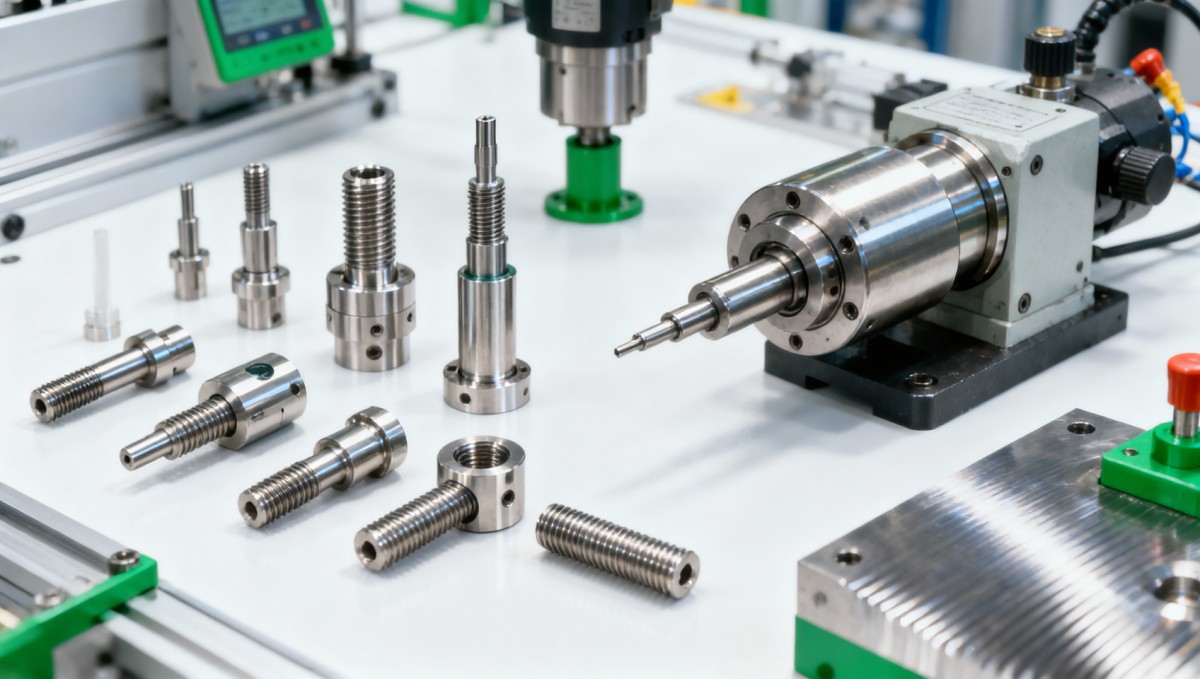
In renewable energy hardware, many Swiss-turned parts are physically small but functionally critical. Examples include miniature shafts in smart actuators, threaded inserts for battery management assemblies, valve pins in hydrogen flow control devices, and sensor housings used in distributed energy monitoring. These components often operate inside connected systems where mechanical error becomes electrical instability, sealing failure, signal drift, or premature wear.
The core problem is that concentricity tolerance is frequently specified as a final drawing requirement without a matching process strategy. A supplier may hold diameter within a few microns on one station, yet still fail true functional alignment because spindle condition, collet clamping, guide bushing behavior, and cutoff distortion are not controlled as a system. On parts below 6 mm diameter, that gap between print compliance and functional performance becomes especially dangerous.
For renewable energy applications, this matters because products are expected to survive long duty cycles, outdoor temperature swings, vibration, and service intervals that may run 3–10 years. A small eccentric shaft inside an actuator for louver control, micro-pump regulation, or smart relay mechanics can create friction, power draw, and signal inconsistency that only appears after weeks or months in the field. Procurement teams then discover that “accepted” parts were never truly stable.
This is exactly where a data-first review becomes more useful than brochure language. NHI’s approach aligns with the reality of fragmented hardware ecosystems: trust should come from measurable process capability, not from general claims such as precision grade or high accuracy machining. In practice, buyers should investigate at least 4 linked variables together: cnc spindle runout measurement, tool deflection trend, datum selection logic, and downstream surface finish after grinding or secondary operations.
- Parts may pass diameter inspection but fail rotational stability during assembly or live operation.
- A concentricity callout can hide poor datum strategy when the referenced axis is not the functional axis.
- Micro machining tolerance limits tighten rapidly when part length-to-diameter ratio rises above common stable ranges.
- In smart energy devices, mechanical eccentricity can increase battery load, heat, latency, or sensor drift over repeated cycles.
What actually causes swiss turning concentricity tolerance failure?
The first cause is spindle-related error, and it is often underestimated. A machine may be suitable for general precision work but still struggle with micro features. If cnc spindle runout measurement is not verified at startup, after tool crashes, and during preventive maintenance intervals, the machine can cut parts that look acceptable in static inspection while producing unstable rotational geometry. For small parts, even minor runout becomes proportionally large relative to the tolerance band.
The second cause is tool deflection. Swiss turning supports slender work well, but it does not eliminate bending forces. Long tools, worn inserts, aggressive feed settings, or unbalanced cutoff timing can shift the cutting path. On diameters in the 1 mm–4 mm range, very small tool movement can create measurable axis deviation. This is especially important on stainless steel, brass, and engineering alloys often used in energy control hardware because material response changes as tools wear.
The third cause is poor datum logic. Many quality disputes start because the drawing uses one reference structure, the supplier measures with another, and the final assembly behaves according to a third. Concentricity tolerance fails when the inspection axis does not reflect the true working axis of the part. In renewable energy devices, the functional datum may be the sealing seat, bearing journal, optical reference, or threaded engagement centerline rather than the largest external diameter.
The fourth cause is secondary processing. Precision grinding surface roughness may improve appearance and local roundness, yet the grinding setup can also re-reference the part in a way that masks or amplifies axis shift. If grinding, polishing, or coating is introduced after turning, teams should review whether the final geometry still tracks the same datum sequence. A low Ra value alone does not guarantee stable concentricity.
Four process variables buyers should request before approving a supplier
Instead of asking only for drawing compliance, procurement teams should request a short process evidence package. This is particularly valuable for small renewable energy assemblies where field replacement is expensive and downtime can affect entire monitoring or control chains.
This type of review does not require confidential factory disclosure. It simply gives buyers a practical filter. In NHI’s data-driven philosophy, the objective is not to reward the loudest precision claim, but to identify which supplier can translate process discipline into repeatable field performance.
How do tolerance, runout, and surface finish affect renewable energy device reliability?
Renewable energy products increasingly blend electromechanics, sensors, communications, and low-power control. A small Swiss-turned part is rarely isolated. It may sit inside a smart damper, micro-valve, compact relay, lockout mechanism, metering node, or enclosure access module. When concentricity tolerance fails, the result can cascade into extra motor current, unstable switch timing, leakage, encoder noise, or higher battery drain in remote installations.
This is why micro machining tolerance limits should be matched to real use conditions instead of defaulting to the tightest print possible. If a component runs intermittently in a controlled indoor cabinet, one tolerance strategy may be sufficient. If it operates across -20°C to 60°C in an outdoor solar monitoring unit or wind-adjacent control box, thermal cycling and contamination risk may require a different balance between fit, finish, and concentricity verification.
Precision grinding surface roughness also deserves careful interpretation. A smoother surface can reduce friction and wear, but only when the grinding process preserves geometric relationships. A part with attractive finish but weak axis control may perform worse than a slightly rougher part with stronger functional alignment. For operators and maintenance teams, this difference appears as inconsistent startup behavior, vibration, or uneven wear after several thousand cycles.
For decision-makers, the financial issue is not just scrap cost. It includes delayed commissioning, repeated incoming inspection, supplier disputes, replacement logistics, and reputational damage when deployed hardware underperforms. In distributed renewable energy systems, one marginal part can trigger service labor far greater than the original unit price. That is why a component worth only a few dollars can still justify a much more rigorous validation protocol.
Functional impact by application scenario
The table below helps teams connect geometric quality issues to field outcomes. It is designed for information researchers, operators, and procurement managers comparing risk across small-part applications in renewable energy and connected infrastructure.
The important lesson is that mechanical precision should be judged by system effect, not by an isolated drawing note. NHI’s broader verification model across connectivity, energy control, and hardware quality supports this kind of cross-domain thinking, which is increasingly necessary in IoT-enabled renewable energy equipment.
How should procurement teams evaluate suppliers beyond a pass/fail drawing report?
A pass/fail inspection report is useful, but it is not enough for strategic sourcing. Buyers should evaluate whether the supplier understands how swiss turning concentricity tolerance connects to application function. This matters even more when sourcing across regions, where quote comparison often emphasizes piece price, lead time, and stated capability while hiding process variability that only appears after pilot builds or volume launch.
A practical procurement review should cover 5 key checkpoints: drawing review quality, machine condition control, in-process measurement frequency, secondary process discipline, and traceability at lot level. For critical parts, request first article evidence plus a clear explanation of how the functional datum is established. For medium-volume production, many teams also benefit from asking how often offsets are adjusted and what triggers tool replacement during unattended runs.
Lead time should be interpreted carefully. A nominal delivery promise of 2–4 weeks may look attractive, but it can become risky if the supplier skips process qualification or rushes setup approval. In contrast, a 3-stage plan with sample validation, pilot lot verification, and controlled release often reduces downstream disruption. Renewable energy projects frequently combine hardware with integration milestones, so a delayed correction cycle can cost more than a slightly longer initial validation schedule.
NHI advocates for evidence-based sourcing because hardware ecosystems are too complex for generic claims. The same logic used to benchmark protocol performance and energy behavior should apply to mechanical supply chains. Buyers need comparable data points, not vague assurances. That approach helps uncover technically disciplined manufacturers, including smaller factories whose real strength lies in process integrity rather than sales presentation.
A procurement checklist for small precision parts
- Confirm whether cnc spindle runout measurement is recorded by machine and by maintenance interval rather than described only as “within standard.”
- Ask which feature is used as the primary datum during machining, inspection, and assembly simulation. Misaligned datum logic is a common root cause of false acceptance.
- Request the expected micro machining tolerance limits by material, diameter range, and part length. Capability on a 10 mm part does not automatically apply to a 2 mm shaft.
- Review whether precision grinding surface roughness is measured together with geometric stability, especially for sealing, bearing, or rotational contact surfaces.
- For projects with annual demand swings, verify whether the supplier can maintain the same process discipline from prototype lots to medium-volume and higher-volume output.
When is a tighter tolerance not the right answer?
Many decision-makers assume that specifying a tighter concentricity value automatically reduces risk. In reality, over-tightening can increase cost, inspection disagreement, and production instability without improving field performance. If the true issue is spindle condition, unsupported geometry, or wrong datum selection, tighter tolerances simply expose process weakness while pushing up scrap and quote price. The better path is to align the tolerance strategy with actual function and measurement capability.
Common misconceptions, implementation advice, and what to ask before launch
One common misconception is that concentricity tolerance is the best universal control for all rotational parts. In many situations, runout, position, or total indicated reading may provide a more usable inspection framework, especially when the assembly function is easier to simulate that way. Another misconception is that a polished surface automatically proves precision. Surface finish and axis integrity are related, but they are not interchangeable controls.
Another frequent mistake is evaluating suppliers only on sample appearance. A first-off batch of 20 or 50 parts can look strong because tools are fresh and operators are focused. Problems often emerge later during sustained runs, material changeovers, or longer unattended shifts. For this reason, operators and buyers should discuss process drift over time, not just single-sample success. A review window covering startup, mid-run, and end-of-lot conditions is often more informative.
Implementation should follow a simple 4-step sequence: define the functional datum, select the appropriate geometric control, verify machine and tooling stability, and validate the finished part under realistic assembly or motion conditions. For renewable energy products with electronics nearby, it is wise to include environmental considerations such as vibration, temperature cycling, and maintenance interval expectations during the validation plan.
This method reflects the wider NHI position that engineering truth must bridge fragmented ecosystems. Whether the issue is a wireless protocol claim or a micro mechanical tolerance claim, the same principle applies: performance should be verified under conditions that resemble deployment, not reduced to marketing shorthand.
FAQ for researchers, operators, and buyers
How should I compare suppliers for Swiss turning small parts?
Compare them on at least 3 levels: machine control evidence, measurement method, and application understanding. A low quote is less meaningful if the supplier cannot explain cnc spindle runout measurement, datum setup, and how micro machining tolerance limits change across material and geometry. For critical renewable energy hardware, ask for sample data, process notes, and secondary finishing controls together.
Which parts are most sensitive to concentricity-related failure?
Parts with rotating, sealing, sliding, or switching functions are the most sensitive. Typical examples include miniature shafts, valve pins, couplers, sensor stems, and threaded precision inserts used in compact energy control assemblies. Risk rises when diameter is small, unsupported length is relatively long, or the part operates through thousands of cycles under temperature variation.
Does a smoother ground surface guarantee better part quality?
No. Precision grinding surface roughness can improve friction behavior, but it does not guarantee that the functional axis is preserved. A good evaluation should connect roughness, roundness, and final axis relationship to the same datum strategy. If those references are disconnected, the part may still fail in service even though the surface looks excellent under inspection lighting.
What lead time should buyers expect for validated small precision parts?
For many projects, a realistic path includes 1–2 weeks for drawing and process review, 1–3 weeks for sample or first article preparation depending on complexity, and an additional validation phase before larger release. Exact timing depends on material, secondary operations, and whether inspection fixtures already exist. Faster schedules are possible, but only if quality evidence remains intact.
Why work with NHI when evaluating precision hardware for renewable energy systems?
NHI is built around a simple idea: engineering decisions should be grounded in measurable evidence. In a market crowded with generic precision claims and fragmented technical language, we help global teams filter suppliers and component options through data, not slogans. That approach fits renewable energy projects where mechanical reliability, low-power operation, and connected system performance increasingly overlap.
Our perspective is especially useful when procurement, R&D, and operations need a common reference point. We look beyond isolated claims such as “tight tolerance” or “works with smart systems” and focus on verification logic. For small Swiss-turned parts, that means connecting concentricity risk to actual device behavior, sourcing decisions, and long-term hardware stability within the broader IoT and energy ecosystem.
If you are comparing suppliers, refining a drawing, or trying to understand why accepted parts still fail in the field, we can support focused discussions around parameter confirmation, product selection, sample review, delivery planning, and validation priorities. We can also help frame the right questions around datum strategy, cnc spindle runout measurement, micro machining tolerance limits, and precision grinding surface roughness before a sourcing decision is locked in.
Contact NHI to discuss 6 practical topics: critical dimensions, functional datums, sample support, lot validation method, delivery cycle expectations, and cross-border sourcing risk. For teams building renewable energy devices, smart controls, or data-driven hardware platforms, that conversation can prevent expensive quality surprises long before field deployment.
Protocol_Architect
Dr. Thorne is a leading architect in IoT mesh protocols with 15+ years at NexusHome Intelligence. His research specializes in high-availability systems and sub-GHz propagation modeling.
Related Recommendations
- Dr. Aris ThorneWhat surface roughness is realistic in precision grinding?
- Dr. Aris ThorneWhy concentricity tolerance fails in Swiss turning small parts
- Dr. Aris ThorneHow to check CNC spindle runout before finish machining
- Dr. Aris Thorne7075 vs 6061 aluminum strength under real machining loads
- Dr. Aris ThorneWhat changes fatigue life data in common aerospace alloys?
- Dr. Aris ThorneEDM surface integrity analysis: where hidden damage starts
- Dr. Aris ThorneCNC milling chatter frequency analysis for unstable thin walls
- Dr. Aris Thorne5 axis CNC surface finish Ra: what affects the final number
- Dr. Aris ThorneInconel 718 tool wear rate rises fast under which conditions?
- Dr. Aris ThorneTitanium Grade 5 machinability: where cycle time gets lost
Analyst