
What surface roughness is realistic in precision grinding?
author
In renewable energy manufacturing, precision grinding surface roughness is more than a cosmetic metric—it directly affects fatigue life, sealing reliability, and system efficiency. This article examines what surface roughness is realistic in precision grinding, connecting practical Ra expectations with cnc spindle runout measurement, edm surface integrity analysis, and micro machining tolerance limits to help engineers, buyers, and decision-makers evaluate process capability with data instead of marketing claims.
What is a realistic surface roughness range in precision grinding for renewable energy parts?
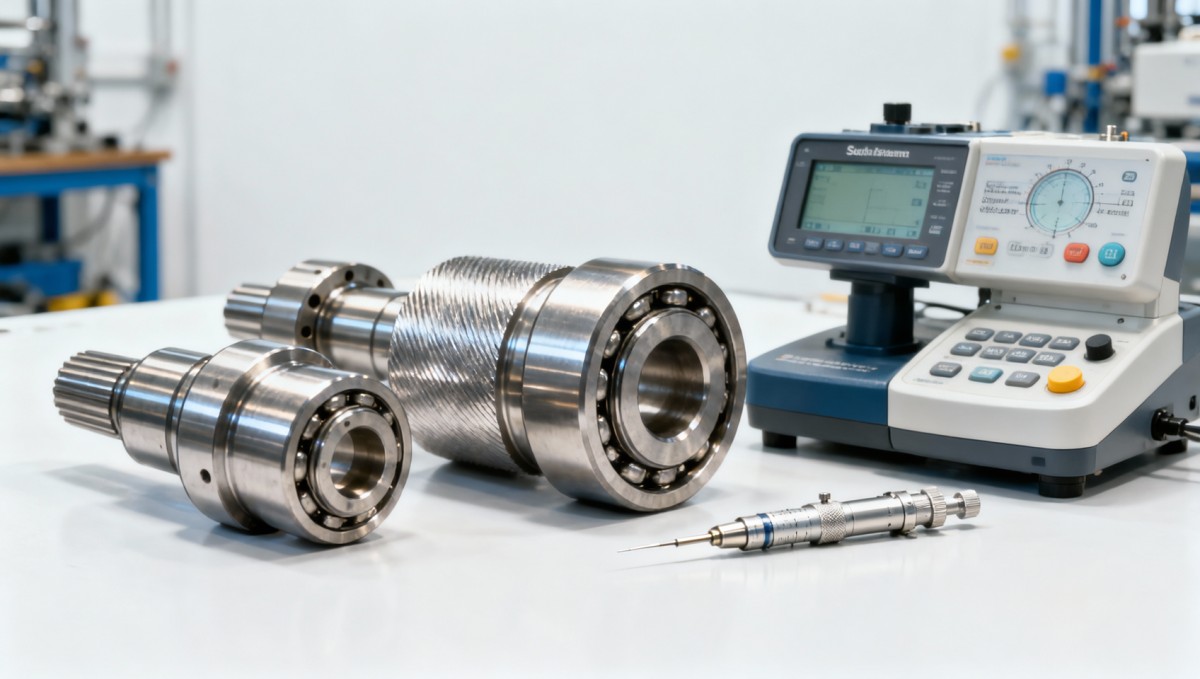
For renewable energy components, a realistic precision grinding target depends on material, geometry, wheel condition, coolant stability, and the actual function of the surface. In most industrial procurement conversations, the practical question is not whether a shop can produce a very low Ra on one sample coupon, but whether it can hold that finish across a batch of shafts, seal faces, bearing journals, or ceramic interfaces over 20, 200, or 2,000 parts.
As a working rule, many precision grinding applications land in the Ra 0.2–0.8 µm range. Well-controlled cylindrical or surface grinding may achieve around Ra 0.1–0.2 µm on favorable materials and simple geometries, while ordinary production grinding often stays closer to Ra 0.4–1.6 µm. Claims below Ra 0.05 µm usually move into superfinishing, lapping, honing, or polishing territory rather than standard precision grinding.
This distinction matters in wind power, solar thermal equipment, hydrogen systems, and smart energy hardware because the wrong expectation can distort sourcing decisions. A specification that is tighter than the process really supports may increase lead time by 2–4 weeks, raise scrap risk, and drive cost without improving sealing, vibration behavior, or energy efficiency in the field.
At NHI, the core principle is the same one we apply across connected hardware and energy-related components: do not accept performance claims in isolation. Ask how roughness is measured, at what cutoff length, on what material, after how many parts, and under what spindle condition. Data-backed capability is more valuable than a brochure promise.
Why “realistic” matters more than “minimum possible”
In a lab setting, a supplier may produce an excellent finish on a short test path. Production conditions are different. Thermal drift, wheel wear, dressing interval, fixture rigidity, and machine vibration all influence results. Renewable energy equipment often uses long shafts, hardened steels, nickel alloys, ceramics, copper alloys, and coated surfaces, each with different grinding behavior and surface integrity risks.
A realistic target therefore balances three variables: functional need, achievable process window, and inspection repeatability. For example, a sealing face in a hydrogen handling assembly may need a much tighter and more uniform finish than a non-contact mounting surface in a battery enclosure or inverter frame. The correct roughness is application-specific, not marketing-specific.
Typical practical interpretation
- Ra 0.8–1.6 µm: Often realistic for general production grinding where the surface supports fit, flatness, or subsequent coating, but not extreme sealing performance.
- Ra 0.2–0.8 µm: Common target band for many precision bearing seats, motor shafts, valve lands, and contact surfaces in renewable energy systems.
- Ra 0.1–0.2 µm: Feasible in controlled setups with rigid machines, stable coolant, suitable wheel selection, and disciplined cnc spindle runout measurement.
- Below Ra 0.1 µm: Usually requires secondary finishing processes or a very narrow process window that should be validated part by part.
For sourcing teams, the best question is not “What is your lowest Ra?” but “What Ra can you hold consistently at our tolerance, material, lot size, and inspection method?” That wording filters out vague claims and quickly reveals whether a supplier understands production reality.
Which renewable energy applications demand tighter grinding surface roughness?
Different renewable energy applications place different demands on precision grinding surface roughness. In high-speed rotating assemblies, roughness affects lubrication film behavior, friction, vibration, and fatigue initiation. In sealing systems, it influences leak paths and contact consistency. In power electronics cooling interfaces, it affects thermal contact and assembly repeatability. That is why finish requirements should be linked to function, not copied from a legacy drawing.
Wind turbine gearbox elements, generator shafts, hydraulic actuator rods, hydrogen compressor parts, and smart valve components often require more disciplined surface control than static brackets or non-critical housings. The difference is especially important when parts operate under cyclic load, temperature variation, humidity, corrosive exposure, or 24/7 duty cycles, which are common in renewable energy environments.
The table below translates typical renewable energy part functions into practical roughness expectations. These are common industrial ranges rather than universal rules. Final specifications still depend on geometry, material hardness, mating part condition, and whether grinding is the final process or an intermediate one.
The main takeaway is that tighter is not always better. For some thermal contact or coated surfaces, an extremely low Ra may not improve performance and can complicate coating adhesion or increase machining cost. Procurement teams should confirm whether the engineering goal is sealing, fatigue resistance, bearing behavior, thermal contact, or cosmetic appearance before approving a drawing revision.
Application-specific risks that operators and buyers often miss
A low arithmetic roughness value does not automatically mean a safe or durable surface. In critical renewable energy parts, burns, tensile residual stress, smeared material, micro-cracks, and recast effects from previous processes may still remain. That is where edm surface integrity analysis becomes relevant, especially if the part was pre-shaped by EDM and then finish ground.
For mixed-process components, engineers should review at least 4 checkpoints: pre-grind surface condition, heat treatment state, grinding stock allowance, and post-process inspection method. This is particularly important for hard alloys and fine-feature parts used in sensors, valve seats, miniature pumps, and distributed energy control hardware.
- If the part is fatigue-sensitive, ask for evidence that grinding did not introduce thermal damage.
- If the part is seal-critical, ask whether roughness was measured in the correct direction and on the actual sealing band.
- If the part is miniature, confirm whether micro machining tolerance limits and roughness requirements are compatible.
What process factors define achievable Ra, and where do false claims usually start?
Achievable surface roughness in precision grinding is controlled by a chain of variables rather than one machine label. Wheel specification, dressing frequency, spindle condition, workholding rigidity, feed rate, depth of cut, spark-out strategy, coolant delivery, and material response all contribute. If one link is unstable, the Ra value on the inspection report may fluctuate even when the machine looks modern and the setup sounds advanced.
One of the most useful reality checks is cnc spindle runout measurement. A supplier may advertise fine finishes, but if spindle runout, wheel imbalance, or fixture vibration is not controlled at the micron level, repeatability is difficult. In production, even small runout variation can show up as waviness, chatter marks, inconsistent sealing behavior, or premature wear in rotating renewable energy assemblies.
Another hidden factor is stock allowance. If too little material remains after turning, milling, or EDM, grinding may polish an unstable geometry rather than truly correct it. If too much remains, heat generation rises and thermal damage risk increases. In many production settings, stable results come from disciplined process windows, not aggressive last-pass promises.
The table below shows how common process variables influence realistic precision grinding surface roughness and sourcing risk. It can be used by engineers, operators, and purchasing teams during technical review or supplier qualification.
The pattern is clear: false claims usually begin when one good-looking sample is used to represent an unproven production process. NHI’s data-first approach is especially relevant here. Whether the part ends up in an inverter cooling path, a wind drivetrain subsystem, or an IoT-enabled energy control module, process capability must be demonstrated under real operating and manufacturing conditions.
How process limits interact with micro features and mixed manufacturing routes
For miniature renewable energy components such as sensor housings, valve inserts, MEMS-adjacent hardware, and precision battery tooling, micro machining tolerance limits can dominate. A feature may require ±0.005 mm positional control, but the same geometry may not allow an aggressive grinding wheel approach without edge roll-off or local overheating. In these cases, the lowest Ra target may conflict with dimensional stability.
Where EDM is involved, the challenge becomes more complex. EDM can create precise geometry in hard materials, but the recast layer and heat-affected zone must be understood before grinding. If the remaining layer thickness, stock removal plan, and inspection sequence are unclear, the measured Ra may look acceptable while subsurface integrity remains questionable.
Practical process review checklist
- Confirm the required Ra, Rz, or waviness parameter rather than using “smooth finish” as a loose instruction.
- Review spindle condition, wheel type, and dressing interval over a normal production shift of 8–12 hours.
- Check whether prior EDM, turning, or heat treatment could limit final surface integrity.
- Validate that micro machining tolerance limits and finish targets can be achieved together, not separately.
How should procurement teams evaluate suppliers for precision grinding capability?
For procurement teams in renewable energy, selecting a grinding supplier is a risk-control exercise as much as a price exercise. Surface roughness affects downstream reliability, but the commercial impact often appears later as seal leakage, bearing noise, assembly variation, field maintenance, or rejected batches. A slightly lower quotation can become expensive if it comes with unstable process capability or incomplete verification.
A practical supplier review should cover at least 5 dimensions: achievable Ra range, batch consistency, measurement method, surface integrity control, and response to mixed-process parts. This is especially relevant when components are used in wind power controls, energy storage systems, hydrogen assemblies, or smart grid hardware where mechanical precision and data-driven reliability must work together.
The table below can be used as a sourcing scorecard during RFQ review, pilot qualification, or second-source comparison. It is designed for teams that want to compare more than unit price and understand whether a supplier can support real renewable energy operating conditions.
This evaluation method helps procurement teams move from subjective confidence to auditable criteria. It also supports cleaner internal communication between quality, engineering, sourcing, and management. In many cases, the strongest supplier is not the one offering the lowest nominal Ra, but the one that can explain process limits, control points, and corrective action paths clearly.
Questions decision-makers should raise before approval
- Is the specified roughness tied to an engineering function such as sealing, fatigue life, or thermal contact, or is it a copied legacy value?
- Can the supplier show stable output over 3 stages: sample, pilot lot, and serial production?
- Does the lead time increase significantly if Ra is pushed from 0.4 µm to 0.1 µm, and is the performance gain worth it?
- Are there hidden constraints from geometry, thin walls, hard materials, or micro machining tolerance limits?
For many renewable energy programs, a robust Ra 0.2–0.4 µm process with controlled integrity is more valuable than an unstable Ra 0.05 µm claim. That is a practical sourcing lesson with direct cost and reliability consequences.
Common misconceptions, FAQs, and what to do next
Precision grinding surface roughness is often misunderstood because drawings, quotes, and inspection reports compress a complex process into a single number. Below are common questions from information researchers, machine operators, buyers, and enterprise decision-makers who need a clearer basis for action.
Does a lower Ra always mean better performance?
No. Lower Ra can help in sealing and some bearing applications, but it is not universally better. A too-smooth surface may add cost without adding value, and it does not guarantee the absence of grinding burn, residual stress, or waviness. In renewable energy parts, performance should be judged against function over time, not appearance at first inspection.
How should we compare suppliers that quote the same Ra?
Ask at least 4 follow-up questions: what material was used, what lot size was validated, what measurement settings were used, and how machine condition is controlled. If one supplier supports its answer with cnc spindle runout measurement records, defined dressing intervals, and mixed-process review including edm surface integrity analysis, that quote carries more decision value than a simple Ra line on a brochure.
Can very small parts meet both tight tolerances and low roughness?
Sometimes yes, but not automatically. Micro features often encounter micro machining tolerance limits before ideal roughness is reached. Edge fragility, local heat, wheel access, and measurement repeatability become more difficult as feature size decreases. This is why miniature valves, sensor parts, and fine energy hardware should be reviewed as a combined geometry-and-finish problem.
What lead time impact is common when roughness requirements tighten?
A tighter finish can increase setup validation, wheel dressing frequency, inspection time, and sometimes secondary finishing needs. In practical sourcing, this may add several days for a small run or 2–4 weeks for qualified serial production changes, depending on material, geometry, and approval flow. Teams should account for that during project planning rather than discovering it after PO release.
Why choose a data-driven technical partner for this evaluation?
Because mechanical quality claims increasingly intersect with connected energy systems, smart controls, and cross-border supply chains. NHI’s value is not generic promotion. It is the ability to interpret hardware capability through measurable indicators, compare technical claims against operating reality, and help teams cut through vague language. That matters when renewable energy programs depend on both mechanical precision and reliable system performance.
Why work with NHI for evaluation and sourcing support
If your team is reviewing precision grinding requirements for renewable energy hardware, NHI can support a more disciplined decision process. You can consult us for parameter confirmation, realistic Ra target setting, supplier comparison, cnc spindle runout measurement review, edm surface integrity analysis checkpoints, micro machining tolerance limits, sample strategy, lead time planning, and technical communication between engineering and procurement.
This is particularly useful when you are qualifying a new supplier, comparing Asian manufacturing sources, validating a drawing change, or trying to decide whether a low-roughness requirement is truly necessary. Instead of relying on slogans, your team gets a structured path to ask better questions, identify hidden risk, and align performance, cost, and delivery.
Contact NHI if you need support with 3 practical next steps: reviewing part-function-to-Ra logic, building a supplier evaluation checklist, or preparing technical questions for RFQ and sample approval. In renewable energy manufacturing, better decisions start when process claims are translated into measurable capability.
Protocol_Architect
Dr. Thorne is a leading architect in IoT mesh protocols with 15+ years at NexusHome Intelligence. His research specializes in high-availability systems and sub-GHz propagation modeling.
Related Recommendations
- Dr. Aris ThorneWhat surface roughness is realistic in precision grinding?
- Dr. Aris ThorneWhy concentricity tolerance fails in Swiss turning small parts
- Dr. Aris ThorneHow to check CNC spindle runout before finish machining
- Dr. Aris Thorne7075 vs 6061 aluminum strength under real machining loads
- Dr. Aris ThorneWhat changes fatigue life data in common aerospace alloys?
- Dr. Aris ThorneEDM surface integrity analysis: where hidden damage starts
- Dr. Aris ThorneCNC milling chatter frequency analysis for unstable thin walls
- Dr. Aris Thorne5 axis CNC surface finish Ra: what affects the final number
- Dr. Aris ThorneInconel 718 tool wear rate rises fast under which conditions?
- Dr. Aris ThorneTitanium Grade 5 machinability: where cycle time gets lost
Analyst