
Radar for perimeter security intrusion: what triggers false alarms
author
In renewable energy sites, radar for perimeter security intrusion is increasingly used to protect remote assets, yet false alarms can undermine trust, response speed, and operating costs. This article examines what triggers false detections, how radar false positive rate analysis connects with sensor fusion lidar and camera, edge computing for smart city, and edge ai facial recognition access control, and what buyers, operators, and decision-makers should evaluate before deployment.
Why false alarms matter more at renewable energy sites
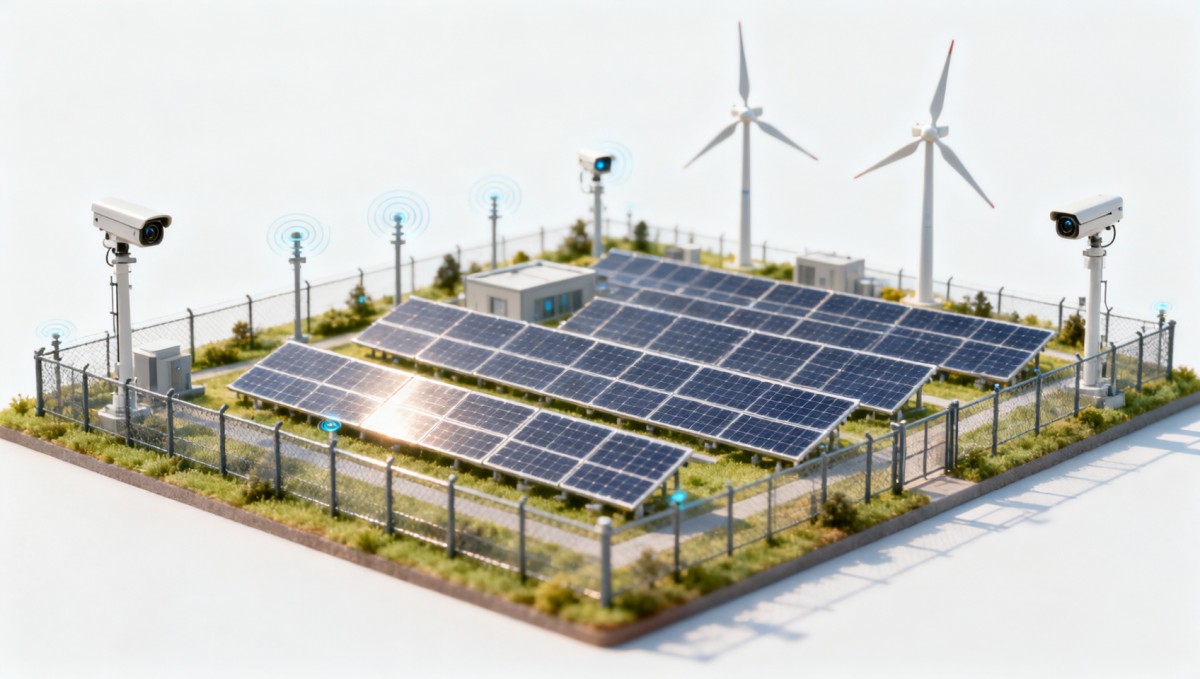
A radar for perimeter security intrusion system behaves very differently at a solar farm, wind park, battery storage yard, or substation than it does at a compact urban facility. Renewable energy assets are often spread across hundreds of meters to several kilometers, with fence lines exposed to wind, dust, wildlife, uneven terrain, and minimal nighttime staffing. In these conditions, false alarms are not just an annoyance. They consume patrol time, increase monitoring fatigue, and can delay reaction to a real intrusion attempt.
For operators, even a modest false alarm frequency can become expensive. A site that generates 5–20 nuisance events per night may force guard teams or remote SOC personnel to verify each incident by video, radio check, or physical dispatch. Over a 30-day period, that creates a measurable burden on labor, bandwidth, and response discipline. When false detections rise, users stop trusting the alarm feed, and that is when true perimeter breaches are most likely to be missed.
For procurement teams and enterprise decision-makers, the challenge is that vendor brochures often present long-range detection values but say little about the operational false positive rate. Detection range by itself does not define site protection quality. What matters is how the radar performs in rain bands, blade-shadow environments, shifting vegetation, bird activity, and cluttered access roads. In renewable energy security, engineering truth matters more than generic claims.
This is where a data-first approach becomes important. NexusHome Intelligence focuses on benchmark thinking rather than marketing language. In fragmented IoT and security ecosystems, buyers need verifiable insight into latency, event filtering, protocol compatibility, and edge processing behavior. A perimeter stack that looks integrated on paper can still fail in the field if radar, camera, lidar, and access systems do not exchange clean event data within a practical response window of 1–3 seconds.
What makes renewable energy sites uniquely sensitive to false detections
- Large open perimeters create wide radar coverage zones, but also increase exposure to moving clutter such as grass, dust plumes, and birds crossing low to mid elevation.
- Remote operation models depend on fewer on-site staff, so each alarm has a higher operational cost than at continuously staffed industrial facilities.
- Mixed technology estates are common. Operators may combine legacy CCTV, new radar analytics, thermal cameras, fence sensors, and access control from different vendors.
- Weather and terrain vary sharply across regions, which means lab performance and field performance can diverge within 2–4 weeks of deployment if tuning is weak.
What usually triggers false alarms in perimeter radar systems
The most common triggers are not mysterious. They usually come from environmental clutter, poor zone design, target misclassification, and weak integration logic. Wind-driven vegetation near fences is one of the first causes. If radar beams cover bushes, tall grass, plastic barrier strips, or cable markers, motion signatures can resemble a human approach under some sensitivity settings. This is especially common when installation teams configure zones broadly to maximize range without refining exclusion masks.
Wildlife is another major factor. Birds, stray dogs, foxes, and livestock near rural sites can repeatedly trigger detection logic, especially at dawn and dusk. Small target filtering helps, but it is not enough when flocks create dense movement patterns or when animals move in and out of the same corridor used by maintenance staff. At wind energy locations, rotating blades and tower reflections may also generate changing radar returns if the mounting angle and background suppression are not well tuned.
Weather-related clutter can be underestimated during procurement. Heavy rain, sleet, blowing snow, fog, and dust can all reduce signal clarity or introduce transient reflections. While radar generally outperforms optical-only systems in poor visibility, it is not immune to false positives. The issue is less about whether the radar still detects motion and more about whether the analytics layer can classify motion correctly when the scene becomes noisy for 10–60 minutes.
A fourth trigger is poor calibration between radar and downstream systems. If a radar event automatically steers a PTZ camera, launches video analytics, and escalates to access control lockout, every weak detection can become a costly multi-system alarm. The false alarm is no longer isolated. It propagates through the stack. This is why radar false positive rate analysis must be linked to the entire workflow, not only to the sensor itself.
High-probability sources of false detections
The table below helps buyers and operators separate predictable nuisance sources from deeper system design problems. In renewable energy projects, this distinction matters because the corrective action may involve zone reconfiguration, mounting adjustments, firmware tuning, or a broader sensor fusion redesign.
A useful lesson for procurement is that false alarm reduction rarely depends on one feature alone. It usually requires a combined process: better site survey, cleaner zoning, stronger event classification, and disciplined post-install tuning. Buyers who ask only for range and price often inherit avoidable alarm instability later.
Configuration mistakes that create hidden alarm inflation
- Using one sensitivity profile for all sectors, even though gate lanes, fence corners, and open fields have different clutter patterns.
- Ignoring seasonal changes. A corridor that is stable in winter can behave very differently in spring growth or dry summer wind.
- Failing to separate detection from escalation. Not every radar event should trigger dispatch, siren, or access lockdown in the first second.
- Deploying without a tuning window. Most sites need at least 7–30 days of event review before alarm logic reaches a stable baseline.
How sensor fusion reduces radar false positive rate
A single sensor rarely delivers the best balance between sensitivity and reliability in renewable energy security. That is why sensor fusion lidar and camera workflows are becoming more relevant. Radar is strong at wide-area motion detection and all-weather awareness, but it benefits from secondary confirmation. Lidar can improve object contour and movement path interpretation, while thermal or visible cameras provide visual verification that helps remote operators classify events in seconds rather than minutes.
In a well-designed architecture, radar acts as the first detection layer, then triggers a camera or lidar confirmation stage before a human or automated policy escalates the incident. This layered logic can cut nuisance dispatches significantly, especially on sites where wildlife and weather create repeated transient motion. The exact reduction depends on terrain, calibration, and workflow discipline, so buyers should ask vendors for validation methods rather than generic percentage claims.
Edge computing for smart city principles also translate well to renewable energy campuses. Instead of sending every raw event to the cloud, an edge node can correlate radar tracks, camera snapshots, access schedules, and rule-based geofencing locally within milliseconds. This lowers bandwidth demand and helps sites with unstable backhaul. It also supports privacy-conscious design when video processing stays on-site instead of traveling across external networks.
Some operators also connect perimeter events with edge ai facial recognition access control at gates, maintenance compounds, or battery container entrances. The purpose is not to replace radar but to create context. If radar detects movement near a gate during a maintenance window and the access system confirms an authorized arrival within the same 30–90 second period, the event can be classified differently from a fence-line approach with no matching identity or work order context.
Radar-only versus fused perimeter security logic
The comparison below is useful during early solution design. It does not suggest that one stack is always superior. It shows where each approach fits, especially when balancing capital cost, verification speed, and operational burden.
For many buyers, the best route is phased deployment. Start with radar plus camera on the highest-risk sectors, collect event data for one or two reporting cycles, then decide whether lidar or deeper edge analytics are justified. This method limits overbuying and creates a cleaner baseline for false alarm analysis.
Key integration checks before approval
- Event correlation latency: can the platform associate radar, video, and gate data within 1–3 seconds?
- Protocol compatibility: does the stack support the site’s VMS, access platform, and edge hardware without fragile middleware?
- Storage logic: are raw events, snapshots, and audit logs retained long enough for tuning and incident review?
- Fallback behavior: if one camera or network segment fails, does the radar layer still provide actionable alerts?
What procurement teams should evaluate before buying
Procurement should not treat perimeter radar as a standalone hardware purchase. It is a site-specific security system with ongoing tuning and integration implications. A lower unit price can become a higher lifecycle cost if the system requires constant filtering, repeated site visits, or manual alarm verification. For renewable energy operators managing multiple facilities, consistency across sites also matters. A solution that behaves differently at each location increases training and support complexity.
A practical buying model starts with 5 core checks: coverage fit, false alarm handling, environmental suitability, integration depth, and service support. Coverage fit means more than headline range. It includes sector shape, blind spots, terrain tolerance, and mounting constraints. False alarm handling means understanding how the vendor defines nuisance events, how long the tuning phase usually lasts, and what data is available for adjustment.
Environmental suitability is especially important in renewable energy. Solar sites may face heat shimmer, dust, and panel reflections. Wind parks may present rotating structures and open-field weather exposure. Battery storage facilities often require more precise zoning around container rows, utility corridors, and emergency access routes. The same radar settings should not be assumed across all three environments.
NHI’s data-driven perspective is valuable here because it reframes procurement from claim-based buying to benchmark-based decision-making. Instead of asking whether a solution is “advanced,” decision-makers should ask how it was tested, under what clutter conditions, over what adjustment period, and with which edge processing assumptions. Those questions reveal system maturity much faster than sales language.
Procurement checklist for lower false alarm risk
The following table can be used during vendor comparison, pilot planning, or internal approval review. It focuses on issues that directly affect alarm quality and operating cost.
This checklist also helps non-technical decision-makers. It converts a complex security discussion into observable milestones and responsibilities. If a vendor cannot describe the post-install tuning path, the buyer should assume the operational burden may shift back to the site owner.
A practical 4-step buying path
- Define risk zones first: gates, transformer areas, inverter blocks, battery yards, and remote fence corridors.
- Run a pilot on representative sectors for 2–4 weeks rather than judging only from a one-day demonstration.
- Review alarm logs with operations staff, not only with the vendor’s engineering team.
- Approve scale-up only after confirming event quality, workflow fit, and maintenance responsibility.
Implementation, compliance, and common misconceptions
Implementation quality has a direct effect on false alarm frequency. A strong deployment usually includes 3 stages: survey and design, installation and calibration, then tuning and acceptance. Skipping the third stage is a frequent mistake. Sites often declare success when the radar detects movement, but that is not the same as proving stable event quality across real operating conditions. Acceptance should include day and night review, adverse-weather review where feasible, and controlled walk-test scenarios from multiple directions.
Compliance considerations should also be addressed early. While the exact regulatory set depends on country and project type, buyers commonly need to review electrical safety, EMC behavior, cybersecurity posture, video privacy handling, and data retention policy. If edge ai facial recognition access control is part of the wider security design, the organization should verify whether local privacy and employment rules impose additional notice, consent, or processing restrictions.
One common misconception is that more sensitivity always equals better security. In practice, oversensitive settings can damage site resilience because they overload users with low-value alerts. Another misconception is that radar alone can solve every perimeter challenge. At some sites, fencing condition, lighting strategy, gate procedures, and response SOPs are just as important as sensor performance. Technology cannot compensate for weak process design indefinitely.
A third misconception is that integration is only an IT issue. In reality, protocol behavior, event mapping, and edge device processing can determine whether a site reacts in 10 seconds or 3 minutes. NHI’s broader benchmarking mindset is useful because connected systems fail at the boundaries as often as they fail at the sensor. Protocol silos, dropped packets, delayed metadata, and unstable edge nodes can all turn a technically good radar into a poor operational outcome.
FAQ for buyers and operators
How long does it usually take to stabilize radar false alarms after installation?
A realistic tuning period is often 7–30 days, depending on site size, weather variability, and integration complexity. Small battery storage yards may settle faster than large solar farms with open-field clutter. The key is not just elapsed time, but the number of reviewed event cycles across day, night, and changing weather.
Is radar or camera better for perimeter intrusion at renewable energy sites?
Neither is universally better on its own. Radar is usually stronger for wide-area detection and poor-visibility conditions. Cameras are stronger for visual verification. For many renewable energy sites, radar plus camera provides the best balance of cost and operational clarity, with lidar added only when terrain or object discrimination demands it.
What should procurement ask about false positive rate analysis?
Ask how the vendor defines a false alarm, what event logs are available, how many tuning rounds are included, and how seasonal changes are handled. Also ask whether alarm review can be segmented by zone, time period, and weather condition. Without that granularity, “low false alarm” claims are difficult to evaluate.
Can edge computing reduce operating cost in remote sites?
Yes, often by reducing unnecessary upstream traffic and enabling local event correlation. On remote renewable energy sites with constrained backhaul, edge computing can shorten decision paths and lower verification delay. The benefit is strongest when radar, video, and access metadata are processed locally with clear retention and failover rules.
Why work with a data-driven evaluation partner
When renewable energy owners assess radar for perimeter security intrusion, they do not just need product brochures. They need evidence that a system can survive real field conditions, fit mixed-protocol environments, and maintain practical alarm quality over time. That is where a benchmarking mindset becomes commercially useful. It helps information researchers compare options, operators reduce noise, procurement teams validate scope, and decision-makers avoid expensive integration surprises.
NexusHome Intelligence approaches connected security from the perspective of measurable performance. Our broader vision, Bridging Ecosystems through Data, is especially relevant when perimeter radar intersects with camera analytics, lidar, edge computing, and access control. In fragmented ecosystems, the risk is rarely a single weak device. The risk is an unverified chain of assumptions between devices, protocols, and workflows.
If you are comparing perimeter solutions for a solar farm, wind park, BESS site, or energy substation, we can help structure the evaluation around the issues that matter in practice: parameter confirmation, false alarm review logic, sensor fusion design, edge processing strategy, deployment timeline, and compatibility with existing systems. This is especially useful when your team must choose between multiple OEM or ODM sources with very different levels of technical transparency.
Contact us to discuss sample evaluation criteria, product selection routes, typical 2–4 week pilot planning, integration checkpoints, certification-related questions, and quotation communication for your target application. Whether you need help screening hardware candidates or shaping a data-backed procurement brief, the goal is the same: reduce uncertainty before deployment and build a perimeter security stack that operators will actually trust.
Protocol_Architect
Dr. Thorne is a leading architect in IoT mesh protocols with 15+ years at NexusHome Intelligence. His research specializes in high-availability systems and sub-GHz propagation modeling.
Related Recommendations
- Lina Zhao (Security Analyst)Smart Lock Matter Compatibility: What Changes
- Lina Zhao (Security Analyst)Access Control System Integration Made Practical
- Lina Zhao (Security Analyst)ANSI Grade 1 Smart Lock Test: What It Means
- Lina Zhao (Security Analyst)What Is a Good FRR for Smart Locks
- Lina Zhao (Security Analyst)Facial Recognition Door Lock Wholesale Checklist
- Lina Zhao (Security Analyst)Radar for perimeter security intrusion: what triggers false alarms
- Lina Zhao (Security Analyst)Radar false positive rate analysis for outdoor security systems
- Lina Zhao (Security Analyst)Edge AI facial recognition access control — how lighting variance breaks accuracy below 10 lux
- Lina Zhao (Security Analyst)80 Residential Communities Face Property Management Withdrawal: IoT Hardware Gains New Overseas Opportunities
- Lina Zhao (Security Analyst)Trusted Smart Home Factories: How Many Actually Pass Third-Party Cybersecurity Validation?
Analyst