
What to Check Before Choosing a Smart Lock OEM
author
Before choosing a smart lock OEM in China, do not start with price, industrial design, or catalog claims. Start with proof. A capable OEM should be able to demonstrate stable protocol compatibility, measurable biometric performance, verified security architecture, battery life under realistic conditions, and consistent manufacturing quality. For procurement teams, operators, and business decision-makers, the real question is not whether a supplier can make a smart lock. It is whether they can make one that performs reliably in the field, integrates into your ecosystem, and scales without creating service risk.
In today’s fragmented IoT market, that decision is more technical than many buyers expect. A brochure may say “Matter-ready,” “low power,” or “bank-level security,” but those phrases do not tell you how the lock behaves in a noisy wireless environment, how often fingerprints fail in humid weather, or whether the battery drains too quickly after deployment. This guide explains what to check before selecting a smart lock OEM, with a focus on engineering validation, supply chain reliability, and the benchmarks that matter for real-world smart home and smart building projects.
What matters most when evaluating a smart lock OEM
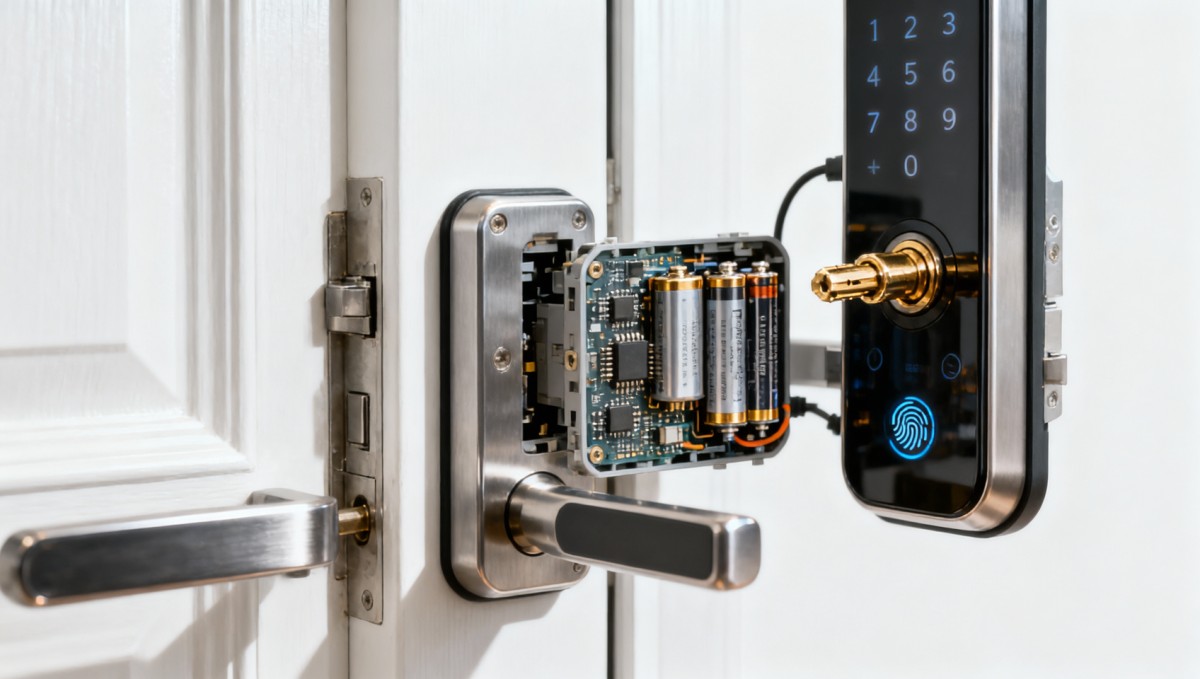
If you need a practical shortlist, evaluate every smart lock OEM against five core areas: connectivity, security, biometric performance, power management, and manufacturing consistency. These are the factors most likely to affect customer satisfaction, operating cost, return rate, and long-term project success.
- Connectivity and protocol reliability: Does the lock actually support your required ecosystem, such as Matter, Thread, Zigbee, BLE, or Wi-Fi, with stable performance?
- Security architecture: Does the device include secure element design, encrypted communication, hardware root of trust, and update protection?
- Biometric accuracy: If fingerprint or face access is included, what are the false rejection rate (FRR) and false acceptance indicators under real usage conditions?
- Battery and power performance: Is battery life tested under realistic open-close cycles, environmental changes, and wireless traffic loads?
- OEM manufacturing discipline: Can the factory maintain consistent quality across pilot orders and large-volume production?
For most buyers, these checks are far more important than generic claims about smart features. A lock that looks advanced but fails on battery stability, protocol latency, or enrollment accuracy becomes a support burden very quickly.
Check protocol compatibility beyond “works with Matter” claims
One of the biggest sourcing mistakes is accepting protocol support as a marketing statement instead of a testable engineering result. If your project involves smart home platforms, apartment deployments, energy-aware building systems, or mixed IoT environments, protocol performance affects user experience and maintenance cost.
Ask the OEM to provide evidence for:
- Matter standard compatibility: Which device types, controller environments, and certification stages are supported?
- Thread, Zigbee, BLE, or Wi-Fi behavior: What happens under interference, mesh congestion, or weak signal conditions?
- Latency benchmarks: How long does it take from app command to unlock action in actual deployment scenarios?
- Fallback mechanisms: If cloud connection fails, what local access methods still work?
- Integration documentation: Are APIs, SDKs, and onboarding guides mature enough for your technical team?
This is especially important for buyers working in connected buildings or renewable-energy-adjacent environments where access control may be part of a broader intelligent infrastructure strategy. If your smart lock is expected to coexist with energy management systems, local gateways, and cross-protocol automation, unstable interoperability can create hidden operational friction.
A reliable smart home factory should be able to discuss protocol behavior in technical terms, not just sales language.
Verify security design at the hardware level, not just at the app level
Smart locks are security products first and convenience products second. That means your OEM should prove device-level protection, not just mobile app features.
Key questions to ask include:
- Is there a hardware root of trust? This helps ensure trusted boot, secure authentication, and resistance to firmware tampering.
- How are credentials stored? Sensitive data should be protected with secure storage and strong encryption.
- Is communication encrypted end to end? Ask which encryption standards are used for device, gateway, and cloud communication.
- How are firmware updates protected? Secure OTA updates with signature verification are essential.
- What anti-tamper mechanisms exist? Physical intrusion detection, debug port control, and abnormal access logging all matter.
For procurement leaders and enterprise decision-makers, this is not only a product issue but also a liability issue. Weak embedded security can expose property managers, distributors, or brand owners to reputational and legal risk. If the OEM cannot explain its security architecture clearly, that is already a warning sign.
Review biometric performance using measurable FRR and real-condition testing
If the smart lock includes fingerprint access, face recognition, or palm vein options, biometric performance should be evaluated with hard data. Many buyers ask whether biometrics are “accurate,” but the more useful question is how accuracy changes in real environments.
Focus on these metrics and conditions:
- False Rejection Rate (FRR): How often does the system reject authorized users?
- False Acceptance behavior: What protections are in place against unauthorized access?
- Environmental sensitivity: Does performance degrade in rain, dust, cold weather, sweat, or direct sunlight?
- User diversity: Has the lock been tested across different age groups, skin conditions, and fingerprint quality ranges?
- Enrollment quality: Is the registration process fast and repeatable, or does it create setup frustration?
This matters because poor FRR can cause more field complaints than complete hardware failure. Users may not care whether a sensor is technically advanced if they need several attempts every time they unlock the door. For operators and installers, that translates directly into support tickets and reduced product satisfaction.
Ask how battery life is tested, not just what number is advertised
Battery claims are often presented under ideal lab conditions that do not reflect actual use. In smart home hardware testing, power performance must be tied to actual communication intervals, wake cycles, motor load, standby current, and climate variation.
Ask the OEM for battery validation data covering:
- Typical daily unlock cycles across residential, rental, and light commercial scenarios
- Standby consumption during long idle periods
- Peak consumption during motor actuation and wireless communication bursts
- Battery degradation in low-temperature and high-humidity environments
- Low-battery warning logic and emergency power backup options
This is where IoT hardware benchmarking becomes far more useful than product sheets. A trustworthy OEM should show discharge curves, testing methods, and assumptions behind battery life claims. If a factory only provides a single headline figure such as “12 months battery life” without test methodology, treat it cautiously.
For buyers in property technology, hospitality, and energy-conscious building projects, power efficiency also affects maintenance planning. Frequent battery replacement can erase the value of an otherwise attractive lock design.
Inspect manufacturing quality and consistency before committing volume orders
Even a well-designed smart lock can fail commercially if manufacturing quality is inconsistent. OEM evaluation should therefore include process control, component sourcing discipline, and test coverage across production batches.
Important areas to review:
- PCBA and assembly quality: What inspection methods are used, such as AOI, functional testing, and aging tests?
- Critical component traceability: Can the factory track secure chips, sensors, wireless modules, and battery components by batch?
- Incoming quality control: How are key components verified before assembly?
- Reliability testing: Are there cycle tests for lock body mechanics, motor durability, and keypad or sensor wear?
- Pilot-to-mass-production consistency: How often do specifications drift after sample approval?
This is where many verified IoT manufacturers separate themselves from generic suppliers. A serious OEM will be comfortable sharing quality flowcharts, defect handling processes, and production test logic. Buyers should also ask whether firmware, calibration, and module sourcing remain stable across repeat orders.
Evaluate the OEM’s engineering support, not just its factory capacity
Choosing a smart lock OEM is not purely a manufacturing decision. It is also an engineering collaboration decision. This becomes more important when your product needs custom firmware, ecosystem integration, white-label deployment, or compliance adaptations for different markets.
Assess whether the OEM can support:
- Pre-sales technical validation with engineers instead of only sales representatives
- Customization feasibility for app behavior, access modes, industrial design, and backend integration
- Certification support for target markets and wireless requirements
- Post-deployment troubleshooting using logs, debug methods, and firmware updates
- Roadmap transparency for protocol upgrades and future component availability
For enterprise buyers and decision-makers, this support capability can determine whether the OEM becomes a scalable long-term partner or just a low-cost supplier. The difference shows up later in project delays, support burden, and total lifecycle cost.
Use a practical supplier checklist before making the final decision
To make evaluation easier, use a shortlist framework that combines technical, commercial, and operational questions.
- Can the OEM prove protocol compatibility with test reports or certification evidence?
- Can it explain embedded security architecture in concrete technical terms?
- Does it provide biometric FRR and reliability data under realistic conditions?
- Are battery life claims tied to transparent test methodology?
- Does the factory show strong quality control and traceability?
- Can engineering teams support customization and integration?
- Has the supplier demonstrated performance stability across sample and production phases?
- Are risks around firmware updates, component continuity, and after-sales support clearly addressed?
If a supplier performs well on all of these points, you are no longer buying on hope or presentation quality. You are buying on evidence.
Conclusion: choose a smart lock OEM based on verified performance, not brochure confidence
Before choosing a smart lock OEM, the most important step is to replace assumptions with verification. Buyers should look beyond showroom demos and compare suppliers using smart home hardware testing, IoT hardware benchmarking, and production-quality evidence. Matter compatibility, biometric FRR, hardware root of trust, battery reliability, and manufacturing consistency are not secondary details. They are the factors that determine whether a smart lock succeeds in real-world use.
For information researchers, operators, procurement teams, and business decision-makers, the best OEM is not simply the one with the lowest quote or the broadest feature list. It is the one that can prove engineering integrity, support reliable deployment, and reduce long-term operational risk. In a fragmented smart ecosystem, verified data is the clearest path to a confident sourcing decision.
Protocol_Architect
Dr. Thorne is a leading architect in IoT mesh protocols with 15+ years at NexusHome Intelligence. His research specializes in high-availability systems and sub-GHz propagation modeling.
Related Recommendations
- Lina Zhao (Security Analyst)Smart lock OEM China options differ most in security validation
- Lina Zhao (Security Analyst)Where smart security access control systems usually fail first
- Lina Zhao (Security Analyst)Hardware root of trust choices that affect long-term device risk
- Lina Zhao (Security Analyst)Smart Lock OEM China: How to Avoid Bad Fits
- Lina Zhao (Security Analyst)What to Ask a Smart Lock OEM Before Sampling
- Lina Zhao (Security Analyst)Smart Security Access Control: Which Setup Works Best
- Lina Zhao (Security Analyst)Hardware Root of Trust: When Is It Necessary
- Lina Zhao (Security Analyst)How to Reduce Risk When Sourcing Smart Lock Hardware
- Lina Zhao (Security Analyst)Smart Security Access Control: Which Hardware Fails First
- Lina Zhao (Security Analyst)What to Check Before Choosing a Smart Lock OEM
Analyst