
Smart Security Access Control: Which Hardware Fails First
author
In smart security access control, failure rarely starts with the lock alone—it begins where biometric sensor metrics, Matter standard compatibility, and real-world protocol latency benchmark results fall apart. For buyers, operators, and enterprise decision-makers in renewable-energy buildings, this guide examines which hardware fails first, why smart home hardware testing matters, and how IoT engineering truth helps identify verified IoT manufacturers before weak components disrupt security, uptime, and long-term energy performance.
In solar campuses, battery energy storage sites, microgrids, EV charging depots, and net-zero commercial buildings, access control hardware is part of operational resilience, not a standalone convenience layer. When one weak component fails, it can interrupt technician access, slow emergency response, create audit gaps, and increase energy waste through unmanaged entry, lighting, and HVAC activation.
That is why NexusHome Intelligence (NHI) approaches smart security access as an engineering verification problem. Instead of accepting broad claims like “works with Matter” or “industrial-grade security,” the focus should be on measurable outcomes: FRR under rain and dust, relay endurance across 100,000 cycles, battery discharge behavior at -10°C to 45°C, and protocol latency when gateways are loaded by building automation traffic.
Why Access Control Hardware Fails Early in Renewable-Energy Facilities
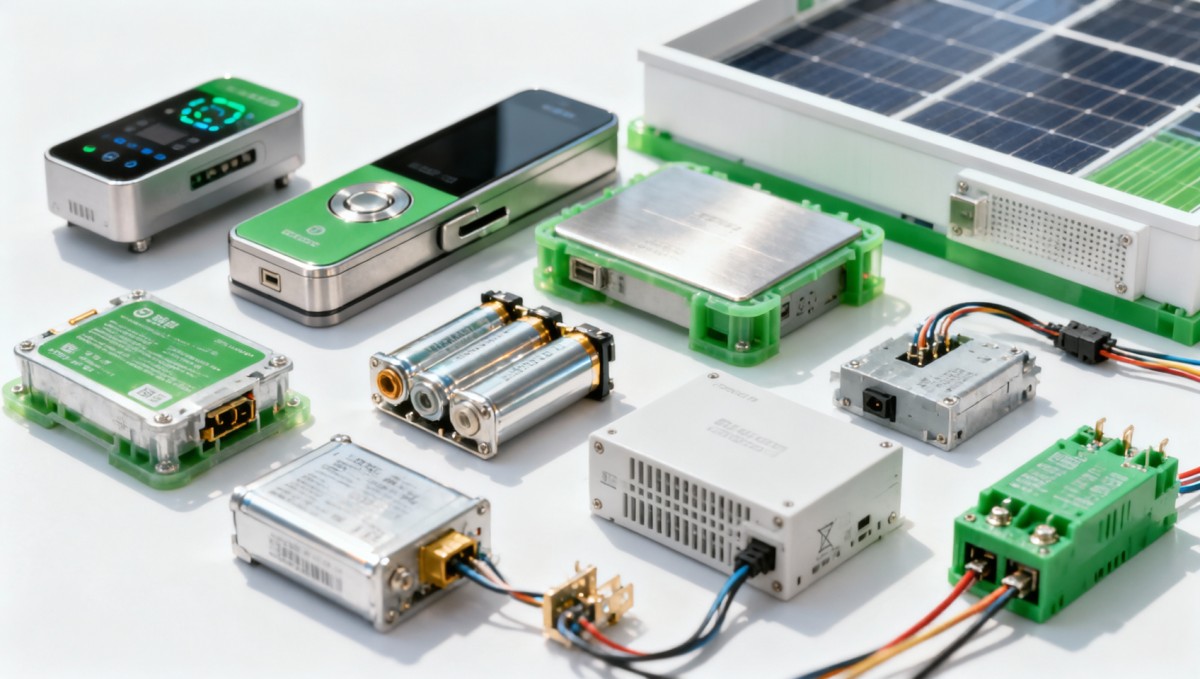
Renewable-energy facilities create a harder operating environment than typical residential smart homes. Outdoor solar inverters, wind-site substations, ESS containers, and distributed energy management rooms expose readers, locks, gateways, and sensors to heat swings, vibration, humidity, dust, and unstable network paths. Under these conditions, the first failure often appears in the supporting hardware stack rather than the deadbolt body itself.
The most common early weak points are biometric modules, battery packs, communication radios, and relay or actuator boards. A fingerprint sensor with a lab FRR of 2% may behave very differently after 6 months of outdoor exposure. In practice, dirty fingers, gloves, condensation, and surface scratching can push rejection events far higher, creating operator frustration and unsafe workarounds like propped-open doors.
Protocol instability is another hidden source of early failure. A lock that responds in 300–500 ms in a controlled room may exceed 1.5–2 seconds when routed through Thread border routers, local edge controllers, and overloaded building management networks. In renewable-energy sites where technicians move between zones quickly, those delays are not minor usability defects; they become throughput and safety problems.
Power design also matters more than many procurement teams expect. Access devices installed at remote gates, rooftop plant rooms, or temporary modular battery enclosures often depend on coin cells, lithium primary batteries, or small DC backup systems. If standby current drifts from the expected microwatt range into repeated high-drain wake cycles, field life can collapse from 24 months to less than 9 months.
The four earliest failure patterns seen in the field
- Biometric degradation caused by moisture, dust, glare, fingerprints, or glove-based operation.
- Battery instability caused by temperature variation, poor power management, or excessive wake events.
- Wireless communication loss due to interference from metal enclosures, switchgear rooms, and dense IoT traffic.
- Mechanical or relay fatigue after repeated cycles at high-use access points such as charging depots and control rooms.
The table below shows which components typically fail first, what triggers the issue, and what renewable-energy operators should monitor during pilot deployments and ongoing maintenance.
For most renewable-energy deployments, the earliest failure is not a dramatic total breakdown. It starts as rising latency, irregular battery replacement intervals, or an FRR that slowly climbs beyond acceptable field tolerance. That is why NHI emphasizes benchmarking under stress, not just feature checklists from brochures.
Biometric Sensors, Batteries, and Radios: The Most Vulnerable Hardware Layer
If a procurement team asks which hardware fails first in smart security access control, the honest answer is usually “the sensing and communication layer.” Locks and readers rarely operate alone. They depend on biometric capture quality, local power stability, edge processing, and a reliable path to gateways or control software. Each layer creates a separate failure mode, and renewable-energy buildings often stress all four at once.
Biometric readers are especially sensitive to field conditions. A facial module installed at an outdoor inverter room can struggle with backlighting at dawn and dusk. A fingerprint unit on a battery storage enclosure may face oily residue, dust, and repeated glove contact. In practical acceptance tests, operators should measure access success over at least 500 to 1,000 cycles across 3 conditions: dry, humid, and low-light.
Battery performance is another major source of silent failure. Marketing often focuses on “up to 2 years” of battery life, but site reality is driven by wake frequency, encryption overhead, radio retries, and ambient temperature. At 35°C to 45°C, many compact battery designs age faster, while at -10°C to 0°C the available discharge capacity can drop enough to trigger erratic behavior even when the battery is not fully depleted.
Communication radios create the third weak point. Thread, Zigbee, BLE, Wi-Fi, and sub-gig links each have trade-offs. In a renewable-energy site, metal cabinets, cable trays, switchgear, and reinforced concrete can severely affect propagation. A device that passes a benchtop interoperability test may still fail in a real building if the protocol path includes 3 to 5 hops and shared bandwidth with HVAC, metering, and lighting control traffic.
Hardware signals procurement teams should verify before volume purchase
Before committing to large-scale deployment, buyers should request test data beyond nominal specifications. The goal is to understand how the hardware behaves after stress, not just at day-one startup.
- Measure biometric FRR and retry count after dust exposure, water mist, and bright-light variation.
- Check battery discharge curves at 3 temperature bands, such as -10°C, 25°C, and 45°C.
- Record command latency across a realistic mesh or hybrid network, not just direct-link operation.
- Verify local fail-safe behavior when the cloud path is unavailable for 30–60 minutes.
- Test event logging continuity during power switchover from mains to backup supply.
Minimum test thresholds worth discussing with suppliers
For high-value renewable-energy assets, many teams use practical thresholds rather than generic vendor claims. Examples include command latency under 800 ms for routine entry, battery replacement intervals above 12 months in real duty cycles, and mechanical cycle ratings aligned with daily traffic. A low-traffic solar control room may need 20,000 to 30,000 cycles, while a busy EV charging operations hub may need 100,000 cycles or more.
Why Matter Compatibility and Protocol Latency Change the Failure Timeline
In fragmented smart ecosystems, compatibility claims can hide the real source of failure. A device can be nominally compatible with Matter and still produce poor field performance if firmware maturity is low, border router behavior is inconsistent, or local gateways are overloaded. For renewable-energy properties, where access control often connects with lighting, occupancy, HVAC, and energy management, protocol quality directly affects uptime.
Latency becomes more than a user-experience metric in this context. If an operator badge or biometric authentication takes 2 seconds instead of 400 ms, queues can form at shift changes. If commands occasionally fail under interference, maintenance teams may revert to unsecured fallback behavior. Over 6 to 12 months, these workarounds reduce both security integrity and energy discipline because doors are left unlocked, conditioned zones are exposed, or occupancy-based control logic is bypassed.
Matter, Thread, Zigbee, BLE, and Wi-Fi all have valid use cases, but they must be selected according to building topology and energy infrastructure. A compact net-zero office may tolerate a simple local mesh. A 5-building renewable-energy campus with ESS, solar canopies, and charging stations often needs edge orchestration, segmented traffic, and local logic to keep access events from competing with metering or climate-control data streams.
This is where NHI’s data-driven approach matters. Instead of asking whether a device “supports” a protocol, the better question is how it behaves under 3 conditions: high interference, multi-hop routing, and partial network loss. That shift from marketing language to engineering truth helps identify which hardware is reliable enough for procurement lists.
Protocol selection by renewable-energy building scenario
The table below compares protocol considerations for common access-control environments linked to renewable-energy operations.
The key lesson is that compatibility alone does not prevent early failure. Procurement teams should ask for multi-node latency data, local failover behavior, and interference testing relevant to electrical rooms, rooftop equipment areas, and dense building automation environments.
How to Evaluate Verified IoT Manufacturers for Security-Critical Renewable-Energy Projects
For buyers and enterprise decision-makers, the real challenge is supplier screening. Many OEM and ODM vendors can present polished datasheets, but fewer can provide disciplined evidence on SMT consistency, sensor drift, battery reliability, and protocol behavior under load. In renewable-energy projects, that gap matters because site access affects safety procedures, service continuity, and energy optimization workflows.
A verified IoT manufacturer should be able to discuss failure mechanisms at component level. That includes PCB assembly tolerances, seal quality around reader modules, battery chemistry choices, standby current behavior, and environmental validation windows. Teams should also ask whether firmware updates can be staged locally and whether audit logs remain intact during unstable connectivity, which is common in remote or distributed energy sites.
NHI’s supply-chain perspective is useful here because it separates engineering capability from marketing volume. Hidden champions in Asia and other manufacturing hubs may not lead with aggressive branding, yet they often provide stronger process control, cleaner test documentation, and better long-term consistency. For access hardware in green buildings, that consistency often matters more than headline feature counts.
Supplier evaluation should combine laboratory evidence and field-oriented acceptance criteria. A 2-week pilot in one building is rarely enough. More reliable decisions usually come from a 30–90 day validation period covering weather shifts, shift changes, multiple user groups, and at least one communications disruption scenario.
A practical procurement checklist
- Request FRR, latency, and battery data captured under non-ideal conditions, not only standard lab conditions.
- Ask for mechanical cycle expectations aligned with your traffic profile, such as 50,000 or 100,000 cycles.
- Verify support for local processing and local credential validation if cloud links fail.
- Review change management for firmware, including rollback capability and maintenance windows.
- Confirm compatibility with renewable-energy building systems such as occupancy-linked HVAC and energy-saving schedules.
Questions that reveal engineering maturity
Useful questions include: What is the standby current in sleep mode? How many retries occur before a command timeout? How does the reader perform after dust exposure or direct sunlight? What happens to event logs if connectivity is lost for 1 hour? Vendors with strong engineering discipline can usually answer these questions with specific ranges and test methods rather than generic claims.
Implementation, Maintenance, and FAQ for Long-Term Reliability
Even strong hardware can fail early if implementation is rushed. For renewable-energy buildings, access control should be deployed in stages. First comes a site survey covering door materials, power conditions, RF obstacles, temperature exposure, and emergency egress requirements. Second comes pilot installation with 2 to 4 representative door types. Third comes validation against actual user behavior, including maintenance crews, contractors, and operations staff.
Maintenance planning should begin before go-live. Batteries should be replaced according to measured discharge trends rather than fixed calendar assumptions. Reader lenses and fingerprint surfaces need scheduled cleaning intervals, often every 30 to 60 days in dusty or outdoor-adjacent spaces. Audit logs should be reviewed for repeated retries, rising rejection counts, and offline events that may signal a coming hardware issue.
Access control also needs to support energy performance goals. In renewable-energy buildings, entry events often trigger zoned lighting, ventilation, and occupancy logic. If access hardware is unstable, those automations become unreliable, which can increase after-hours HVAC runtime, unnecessary lighting loads, and missed opportunities for peak-load management. Reliable access hardware therefore supports both security and energy efficiency.
The implementation timeline for a mid-scale commercial green building is often 4 to 8 weeks, depending on retrofit complexity, protocol bridging, and whether edge computing nodes are already in place. Projects involving multi-building campuses or battery storage safety controls may require longer validation due to compliance review and higher reliability thresholds.
FAQ: What buyers and operators ask most often
How do we choose between biometric and credential-based access for energy facilities?
If staff frequently wear gloves, work outdoors, or move through dusty environments, card, mobile, or multi-factor access can be more reliable than fingerprint-only systems. Biometric access can still work well, but it should be validated under real environmental conditions and paired with fallback methods.
What battery life should we realistically expect?
For low-traffic indoor doors, 12–24 months may be realistic. For exposed or high-traffic renewable-energy sites with frequent retries, heavy radio activity, or temperature extremes, real field life can be closer to 6–12 months unless the power design is carefully optimized.
Is Matter enough to guarantee interoperability?
No. Matter helps standardize part of the ecosystem, but real performance still depends on firmware quality, border router behavior, edge control logic, and the interaction with other building systems. Always request latency and failover data, not just certification language.
Which maintenance KPI should we watch first?
Start with 4 KPIs: failed entry rate, average unlock latency, battery replacement interval, and offline event frequency. These four indicators often reveal hidden deterioration before a visible failure occurs.
For renewable-energy operators, procurement teams, and building decision-makers, the main lesson is straightforward: the first hardware to fail is usually the least scrutinized layer—sensor quality, power design, radio behavior, or protocol handling under real load. The lock body alone rarely tells the full reliability story.
NexusHome Intelligence (NHI) was built around that reality. By focusing on measurable latency, battery discharge behavior, biometric performance, and component-level validation, NHI helps organizations move beyond marketing claims and toward verified IoT manufacturers that can support secure, efficient renewable-energy buildings at scale.
If you are comparing smart security access hardware for solar facilities, energy storage sites, EV charging campuses, or net-zero commercial buildings, now is the time to evaluate engineering evidence before deployment. Contact us to discuss project requirements, request a tailored benchmarking framework, or explore more data-driven solutions for resilient access control.
Protocol_Architect
Dr. Thorne is a leading architect in IoT mesh protocols with 15+ years at NexusHome Intelligence. His research specializes in high-availability systems and sub-GHz propagation modeling.
Related Recommendations
- Lina Zhao (Security Analyst)Smart lock OEM China options differ most in security validation
- Lina Zhao (Security Analyst)Where smart security access control systems usually fail first
- Lina Zhao (Security Analyst)Hardware root of trust choices that affect long-term device risk
- Lina Zhao (Security Analyst)Smart Lock OEM China: How to Avoid Bad Fits
- Lina Zhao (Security Analyst)What to Ask a Smart Lock OEM Before Sampling
- Lina Zhao (Security Analyst)Smart Security Access Control: Which Setup Works Best
- Lina Zhao (Security Analyst)Hardware Root of Trust: When Is It Necessary
- Lina Zhao (Security Analyst)How to Reduce Risk When Sourcing Smart Lock Hardware
- Lina Zhao (Security Analyst)Smart Security Access Control: Which Hardware Fails First
- Lina Zhao (Security Analyst)What to Check Before Choosing a Smart Lock OEM
Analyst