
How to Reduce Risk When Sourcing Smart Lock Hardware
author
Reducing sourcing risk in smart lock hardware starts with verifiable data, not supplier claims. For buyers navigating the IoT supply chain, trusted smart home factories, smart lock OEM China options, and Matter standard compatibility must be validated through smart home hardware testing, protocol latency benchmark results, and hardware compliance inquiry. At NexusHome Intelligence, we turn IoT engineering truth into actionable sourcing insight.
Why smart lock hardware sourcing is riskier in renewable energy projects
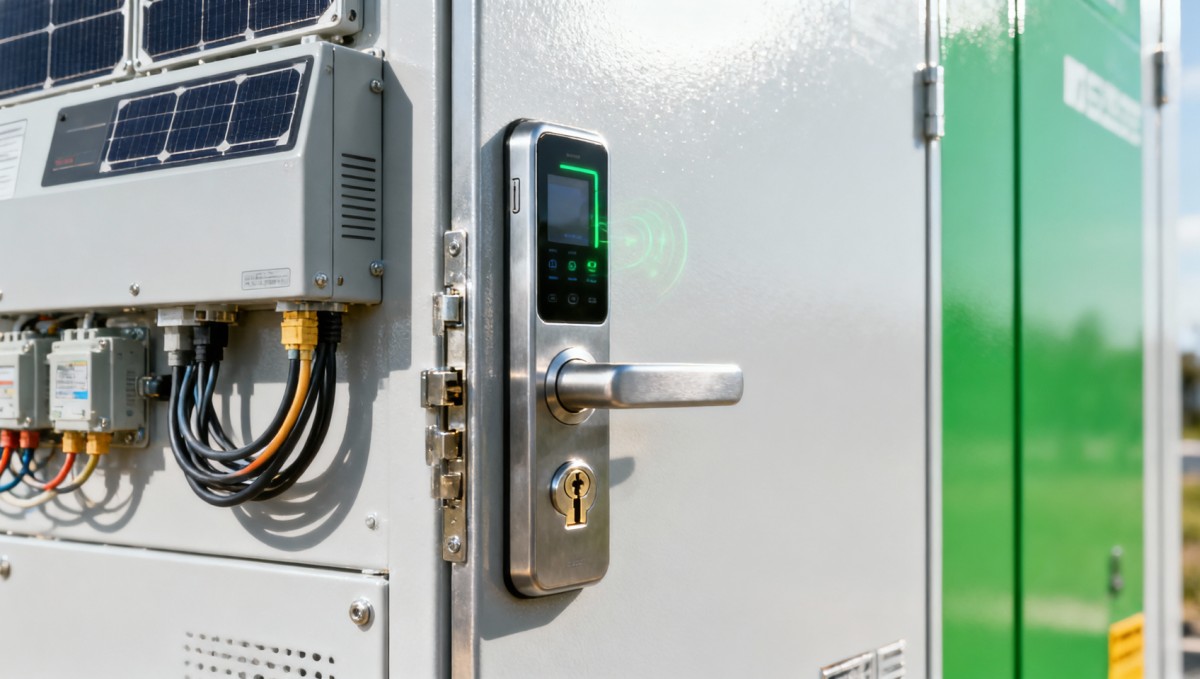
In renewable energy facilities, smart lock hardware does far more than open doors. It often protects battery rooms, inverter cabinets, EV charging control spaces, microgrid enclosures, rooftop solar access points, and remote maintenance rooms. That changes the sourcing standard completely. A lock that performs acceptably in a residential hallway may fail quickly when exposed to heat swings, dust, unstable wireless conditions, and maintenance cycles tied to field operations rather than daily office use.
This is where many sourcing mistakes begin. Procurement teams compare price lists, communication protocols, and industrial-looking housings, yet skip the hardware evidence that actually predicts field reliability. In practice, 3 categories create most of the risk: communication failure, power instability, and access-control inconsistency. For renewable energy operators, any one of these can slow maintenance response, increase truck rolls, or create compliance gaps around restricted infrastructure.
NexusHome Intelligence approaches the issue from an engineering-filter perspective. Instead of accepting phrases such as “works with Matter” or “ultra-low power,” NHI emphasizes measurable proof: latency under multi-node conditions, battery discharge behavior, environmental tolerance ranges, and protocol compliance inquiry before pilot approval. That matters when smart lock hardware must coexist with broader IoT systems used in energy monitoring, HVAC automation, or distributed site security.
For information researchers, operators, buyers, and business decision-makers, the main question is not simply which lock is cheaper. The real question is whether the hardware can survive a 12–36 month deployment cycle, integrate with current control architecture, and maintain predictable operation during seasonal peaks, site expansion, and firmware updates. Reducing sourcing risk starts by aligning lock evaluation with operational reality, not brochure language.
Where the hidden risk usually sits
- Protocol mismatch between lock modules and existing gateways, especially in mixed environments using BLE, Zigbee, Thread, or early Matter adoption.
- Battery life claims based on ideal lab cycles rather than cold mornings, hot enclosures, frequent retries, and remote wake-up behavior.
- Mechanical durability gaps when enclosure doors, metal cabinets, and vibration-prone utility spaces create alignment stress over time.
- Weak compliance documentation, making it harder to validate component traceability, radio conformity, or environmental suitability during procurement review.
What procurement teams should verify before choosing a smart lock OEM
A safer procurement process starts with a structured checklist. If your sourcing path includes smart lock OEM China suppliers, contract manufacturers, or cross-border ODM candidates, the key is not location alone but verification depth. In most B2B smart home hardware testing programs, buyers should review at least 5 core dimensions before sample approval: protocol compatibility, power architecture, mechanical endurance, firmware update path, and compliance documentation readiness.
For renewable energy use cases, protocol compatibility deserves extra scrutiny. A smart lock may technically connect through BLE or Zigbee, yet still behave poorly in metal-dense equipment zones or mixed gateway topologies. If Matter standard compatibility is claimed, ask what part of the stack is validated, under which controller environment, and whether latency was measured across single-hop and multi-hop conditions. A vague compatibility statement is not enough for site-scale sourcing.
Battery and standby behavior also require disciplined review. In remote solar fields, energy storage stations, or containerized energy systems, a lock that enters repeated reconnect cycles can drain power much faster than expected. Rather than accept a broad “up to 12 months” statement, buyers should ask for test conditions, wake frequency assumptions, credential methods used, and whether low-temperature or high-interference scenarios were considered during smart home hardware testing.
The final piece is engineering responsiveness. A manufacturer can have solid hardware but still create risk through weak pre-sales technical answers, slow bug tracing, or poor version control. In sourcing, a fast and documented hardware compliance inquiry process often predicts smoother pilot execution better than a polished catalog does.
Core sourcing checks for a renewable energy smart lock program
The table below summarizes 6 practical evaluation dimensions that buyers can use during RFQ review, sample testing, and supplier comparison. These checkpoints are especially useful when procurement teams must balance integration risk, maintenance workload, and field deployment speed.
A table like this turns sourcing discussions into evidence-based decisions. It also helps enterprise buyers separate suppliers that can support energy-sector deployments from those optimized only for consumer-grade shipments. When every row is tied to test records, the RFQ process becomes much less vulnerable to vague marketing claims.
A practical 4-step screening flow
- Shortlist 3–5 suppliers based on protocol fit, enclosure type, and support capability rather than unit price alone.
- Request engineering documents before samples, including communication architecture, battery assumptions, and update methods.
- Run a 2-stage pilot: bench validation first, then live field testing at 1–2 representative renewable energy locations.
- Approve only after issue closure records, compliance inquiry results, and spare-part or replacement terms are confirmed.
How to compare smart lock hardware for cabinets, sites, and commercial energy assets
Not every renewable energy access point needs the same smart lock hardware. A battery container door, an indoor control room, and a solar farm maintenance cabinet present different risks. That is why comparison analysis should focus on operating context first. Buyers who start with product appearance or app screenshots often end up selecting hardware that looks advanced but creates unnecessary maintenance cost after deployment.
In general, cabinet-level access points need compact locks with stable wake behavior and durable mechanical engagement. Indoor infrastructure rooms may prioritize credential flexibility and audit logging. Remote outdoor points often need stronger environmental tolerance, simpler serviceability, and communication strategies that do not depend on ideal signal conditions. These are not cosmetic differences. They directly affect replacement cycles, operator workload, and downtime risk.
A clear comparison also helps decision-makers understand why one sourcing option carries lower total risk even if its initial unit price is slightly higher. If a lock reduces failed access attempts, shortens maintenance dispatch time, or integrates cleanly into existing IoT policy, the operational savings can outweigh purchase price differences over a 12–24 month horizon.
The matrix below compares common smart lock deployment priorities in renewable energy environments. It can guide both initial specification writing and supplier discussion during pilot planning.
Scenario-based comparison matrix
Use this table when aligning smart lock OEM discussions with actual energy-site conditions. It helps translate general supplier claims into scenario-specific sourcing judgment.
The comparison shows a central sourcing truth: the best smart lock hardware is not universal. It depends on how the lock interacts with people, power conditions, enclosure materials, and surrounding networks. Smart home hardware testing therefore should mirror the exact renewable energy scenario, not a generic demo setup.
Questions buyers should ask during comparison
- What is the expected authentication path under weak wireless conditions, and how many retries occur before local fallback is triggered?
- Does the supplier provide protocol latency benchmark records for the same communication mode proposed in the project?
- How are battery alerts, emergency access, and audit logs handled when the site is offline for several hours or longer?
- Can spare parts, firmware revisions, and lock body variants be managed consistently over a multi-site rollout?
Which standards, tests, and documents reduce sourcing uncertainty fastest
In B2B sourcing, risk drops fastest when documentation, testing, and compliance review move together. A smart lock supplier may have acceptable hardware, but if document readiness is weak, procurement still slows down. For renewable energy buyers, the goal is not to collect every paper available. It is to gather the documents that answer 4 critical questions: can the lock communicate reliably, can it operate safely, can it be maintained predictably, and can the supply chain support repeatable delivery?
Common areas of review include radio and electrical conformity, material or environmental declarations where applicable, firmware revision tracking, and manufacturing traceability at the PCBA and finished-device level. If Matter standard compatibility is part of the brief, ask whether the supplier can explain the tested topology, controller conditions, and update history instead of presenting a single claim line. This is where protocol latency benchmark evidence adds real value.
Operational testing should be framed around site reality. For example, a buyer may define a 7–14 day pilot for bench validation and a following 2–6 week field observation period. During that period, teams can track lock response time, credential stability, battery notifications, enclosure fit, and incident recovery behavior. Even simple observation logs often reveal problems that never appear in a supplier’s sample-room demo.
NHI’s data-driven position is especially relevant here. By emphasizing verifiable protocol behavior, battery performance patterns, and compliance inquiry discipline, buyers gain a practical method to move from supplier storytelling to measurable sourcing judgment. That is essential in renewable energy projects where access hardware must align with uptime, safety, and distributed maintenance planning.
Document package that usually deserves priority
- Communication architecture summary showing supported protocols, pairing logic, and update path for the exact module under quotation.
- Power and battery assumptions, including test conditions, access frequency range, and alert thresholds used in life estimates.
- Mechanical drawings or mounting notes for cabinet, door, or enclosure fit checks before pilot installation.
- Hardware compliance inquiry materials covering applicable radio, electrical, and traceability records needed by the buyer’s region or project workflow.
Common mistakes that delay approval
One frequent mistake is treating all “smart” locks as software-led devices while underestimating PCB quality, antenna placement, and mechanical tolerance. Another is assuming a successful office demo predicts field success. Renewable energy infrastructure often introduces harder conditions: metal shielding, maintenance gloves, infrequent access patterns, and mixed-vendor IoT stacks. A third mistake is approving samples before clarifying replacement strategy, firmware ownership, and failure escalation windows.
A better rule is simple: if the supplier cannot answer a hardware compliance inquiry clearly within a normal review window of a few business days, or cannot provide test context for core claims, sourcing risk remains high even when pricing is attractive. Documentation maturity is often a leading indicator of deployment maturity.
FAQ for buyers, operators, and decision-makers
The questions below reflect common search intent and procurement concerns around smart lock hardware for renewable energy environments. They are useful during early research, supplier comparison, and internal decision review.
How should we validate Matter standard compatibility before procurement?
Do not stop at a compatibility label. Ask which device functions were tested, which controller environment was used, whether the implementation depends on Thread border router behavior, and whether protocol latency benchmark data exists for real access events. For a purchase decision, a 2-stage validation approach is practical: bench verification first, then a live pilot in the target site environment. That process usually exposes integration issues faster than spec-sheet comparison alone.
What delivery timeline is realistic for smart lock OEM sourcing?
Actual timing depends on customization depth, compliance document readiness, and sample revision count. In general, buyers should separate the timeline into 3 phases: technical review, sample and pilot validation, and mass-order release. A simple standard configuration may move faster, while a customized gateway, credential flow, or enclosure change can extend the cycle. What matters most is not speed alone but whether the supplier can maintain document consistency through each phase.
What are the biggest sourcing risks with low-cost options?
The lowest visible price often hides the highest field cost. Risks include weak battery consistency, unstable radio behavior in metal environments, undocumented firmware changes, and poor failure response support. In renewable energy projects, even a small percentage of access failures can create disproportionate cost because service teams may need extra travel, repeated authorization checks, or manual workarounds across distributed assets.
Which teams should be involved in the sourcing decision?
At minimum, involve 4 roles: procurement, site operations, system integration or IT, and business approval leadership. Procurement checks commercial and document readiness. Operators verify use practicality. Integration teams examine protocol fit and update control. Decision-makers align the purchase with asset security, maintenance cost, and rollout scale. When these views are combined early, smart home hardware testing becomes more targeted and delays drop significantly.
Why choose NHI when evaluating smart lock hardware suppliers
NexusHome Intelligence is built around one idea: trust should come from engineering evidence. In a market crowded with protocol claims, low-power promises, and broad OEM language, NHI helps buyers evaluate what actually matters for sourcing risk. That includes protocol behavior, stress-tested hardware logic, battery realism, and hardware compliance inquiry discipline across the wider IoT supply chain.
For renewable energy organizations, this approach is especially useful because smart lock hardware rarely operates alone. It sits inside a larger ecosystem of monitoring nodes, gateways, building controls, security systems, and distributed maintenance routines. NHI’s verification mindset supports sourcing decisions that are grounded in interoperability, not isolated product claims. That reduces avoidable surprises during pilot rollout and scale-up.
If you are comparing trusted smart home factories, reviewing smart lock OEM China candidates, or planning a hardware sourcing strategy around Matter standard compatibility, NHI can help you focus the evaluation. Useful consultation topics include parameter confirmation, protocol-fit review, sample test planning, delivery cycle expectations, compliance document checkpoints, and quote discussion aligned with project risk rather than price alone.
Contact NHI when you need a clearer sourcing path for smart lock hardware in renewable energy applications. You can start with a shortlist review, a pilot test framework, a document gap check, or a technical comparison of candidate suppliers. That is the fastest way to turn fragmented supplier information into actionable procurement confidence.
Protocol_Architect
Dr. Thorne is a leading architect in IoT mesh protocols with 15+ years at NexusHome Intelligence. His research specializes in high-availability systems and sub-GHz propagation modeling.
Related Recommendations
- Lina Zhao (Security Analyst)Smart lock OEM China options differ most in security validation
- Lina Zhao (Security Analyst)Where smart security access control systems usually fail first
- Lina Zhao (Security Analyst)Hardware root of trust choices that affect long-term device risk
- Lina Zhao (Security Analyst)Smart Lock OEM China: How to Avoid Bad Fits
- Lina Zhao (Security Analyst)What to Ask a Smart Lock OEM Before Sampling
- Lina Zhao (Security Analyst)Smart Security Access Control: Which Setup Works Best
- Lina Zhao (Security Analyst)Hardware Root of Trust: When Is It Necessary
- Lina Zhao (Security Analyst)How to Reduce Risk When Sourcing Smart Lock Hardware
- Lina Zhao (Security Analyst)Smart Security Access Control: Which Hardware Fails First
- Lina Zhao (Security Analyst)What to Check Before Choosing a Smart Lock OEM
Analyst