
Hardware Root of Trust Is Not a Box to Tick
author
Hardware root of trust is not a compliance checkbox. In renewable energy systems, smart buildings, distributed energy assets, and connected infrastructure, it is the starting point for device identity, secure firmware, trusted updates, and operational resilience. If that trust anchor is weak, every higher-layer claim—whether about cybersecurity, interoperability, uptime, or remote management—becomes harder to verify.
For procurement teams, operators, engineers, and business leaders, the practical question is not “Does this product mention hardware security?” but “Can this device prove its integrity in the field, under real operating conditions, across its full lifecycle?” That distinction matters when evaluating verified IoT manufacturers, reviewing smart home hardware testing data, or comparing devices inside an IoT supply chain index.
At NexusHome Intelligence, we treat hardware root of trust as an engineering truth issue, not a marketing phrase. In environments where renewable energy assets and smart infrastructure increasingly depend on connected devices, buyers need evidence: secure boot behavior, key protection design, update integrity, protocol implementation quality, and measurable field performance—not generic claims of being “secure by design.”
Why hardware root of trust matters far beyond basic compliance
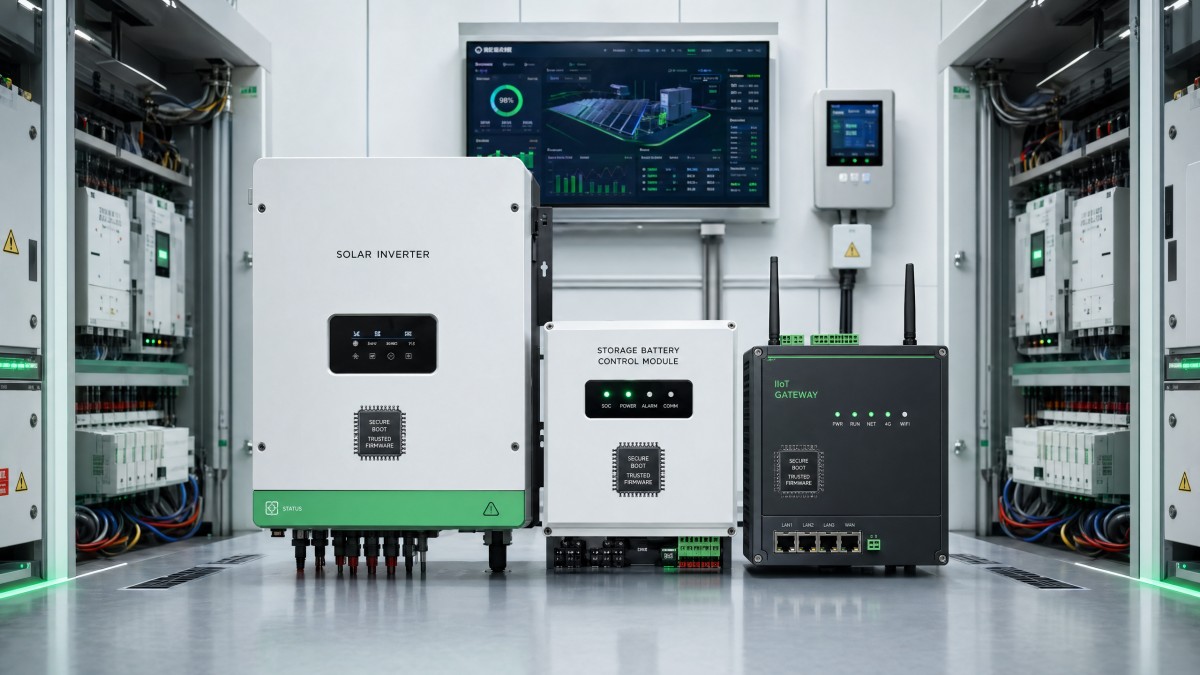
A hardware root of trust is the low-level foundation that allows a device to establish what it is, what code it should run, and whether its software and communications can be trusted. In simple terms, it is the embedded trust anchor that supports secure boot, cryptographic key storage, device identity, attestation, and protected firmware updates.
In renewable energy and connected infrastructure, this matters because edge devices are no longer isolated components. Smart meters, relays, inverters, battery controllers, HVAC nodes, access systems, gateways, and sensor modules all participate in decisions that affect uptime, efficiency, and safety. If one insecure endpoint becomes an entry point, the consequences can extend beyond data exposure to operational disruption.
This is why treating root of trust as a box to tick is dangerous. A vendor may pass a procurement questionnaire, include a secure element on the bill of materials, or reference compliance standards in a brochure. But that alone does not tell you whether the implementation is robust, whether keys are properly provisioned, whether boot chains are verifiable, or whether updates can be trusted after deployment.
For decision-makers, the real issue is business risk. Weak trust foundations can lead to higher maintenance costs, failed audits, fragmented device fleets, patching difficulties, and unacceptable exposure in critical deployments. For operators, it can mean more downtime and less confidence in remote management. For engineers, it often means integration friction and hidden debugging costs that surface only after rollout.
What buyers and technical teams actually need to verify
When evaluating hardware for renewable energy or smart infrastructure use cases, the right question is not whether a product “supports security,” but whether its trust model is demonstrable.
The most useful verification areas include:
- Secure boot chain: Can the device cryptographically verify firmware from power-on through runtime?
- Protected key storage: Are private keys isolated in hardware, or exposed to weaker software-controlled environments?
- Device identity and attestation: Can the device prove its identity to platforms, controllers, or cloud services in a verifiable way?
- Firmware update integrity: Are updates signed, validated, and protected against rollback or tampering?
- Lifecycle provisioning: How are keys injected, managed, rotated, or revoked across manufacturing and field operations?
- Physical and environmental resilience: Does the trust implementation remain dependable under temperature stress, power instability, interference, or long service intervals?
These checks are especially important in renewable energy deployments, where devices often remain in service for years, operate in harsh conditions, and connect into wider control environments. A weak implementation may not fail visibly on day one. It may fail quietly over time, when a field update breaks trust validation, when certificate management becomes unscalable, or when device replacement introduces provisioning inconsistency.
Why marketing language often hides the real security picture
Terms like “military-grade security,” “bank-level encryption,” or “Matter-ready secure hardware” often create a false sense of confidence. They may describe isolated technical features, but they rarely explain whether security has been engineered as a system.
For example, a device may include a hardware security chip but still suffer from weak update logic, poor provisioning controls, or inconsistent implementation across product variants. Another product may advertise protocol compatibility, but its security posture under real-world network stress may not match claims made in the datasheet.
This gap between claimed security and measured security is where many procurement and deployment problems begin. It is also why independent benchmarking matters. In the same way that connectivity claims should be tested through latency, packet loss, and interference performance, trust claims should be examined through evidence of implementation quality.
For readers comparing vendors through an IoT supply chain index or searching for verified IoT manufacturers, the key lesson is simple: brochure language is not proof. Security value emerges from architecture, process discipline, and testable outcomes.
How root of trust affects renewable energy performance and operational resilience
In renewable energy, cybersecurity is often discussed as a compliance issue. In practice, it is also an uptime, reliability, and asset-management issue.
Consider a distributed energy environment with smart controllers, building energy management systems, wireless sensors, and remote monitoring gateways. If devices cannot be trusted at the hardware level, operators may face:
- Reduced confidence in remote firmware updates
- Longer maintenance cycles due to manual validation steps
- Higher replacement risk when component provenance is unclear
- Exposure to counterfeit or modified hardware entering the supply chain
- Weaker segmentation between critical and non-critical systems
- More difficult incident response after anomalies or attempted compromise
By contrast, a strong hardware root of trust supports a more resilient operating model. It enables secure onboarding of field devices, stronger access control, better auditability, and safer remote lifecycle management. In a sector where physical assets and digital controls are increasingly interdependent, that trust foundation contributes directly to system continuity.
This is particularly relevant in mixed-protocol environments where Matter, Thread, Zigbee, BLE, and Wi-Fi devices may coexist in broader building or energy ecosystems. Interoperability without verifiable trust can expand convenience while also expanding attack surfaces. Root of trust helps contain that risk by anchoring device integrity below the protocol layer.
How to evaluate vendors without getting lost in technical theater
Not every buyer needs to perform silicon-level analysis, but every serious buyer should ask for evidence that separates engineered trust from sales positioning.
A practical evaluation framework includes the following questions:
- What hardware-based trust mechanism is implemented?
Ask whether the device uses a secure element, trusted execution environment, TPM-like architecture, or other hardware trust anchor—and why that approach was chosen. - How is secure boot implemented and validated?
Request details on chain-of-trust design, firmware signature enforcement, and rollback protection. - How are cryptographic keys provisioned during manufacturing?
This is critical when assessing IoT manufacturers. A strong design can still be undermined by weak factory provisioning controls. - Can the vendor support device attestation and lifecycle certificate management at scale?
This affects fleet growth, replacements, renewals, and long-term maintenance. - What third-party test evidence exists?
Ask for independent security validation, hardware testing reports, protocol compliance testing, and field reliability data. - How does the implementation behave under stress?
Real-world security must survive voltage fluctuation, wireless interference, environmental extremes, and update interruptions.
These questions help procurement teams and enterprise decision-makers move from feature comparison to risk evaluation. They also help operators avoid systems that look acceptable during pilot phases but become expensive and fragile at scale.
Where NexusHome Intelligence adds value in the decision process
NexusHome Intelligence exists for exactly this gap between claim and proof. In fragmented IoT and smart infrastructure markets, the hardest problem is often not finding suppliers—it is filtering them.
Our role is to help buyers, engineers, and strategy teams interpret technical truth through evidence. That means looking beyond certification logos and examining measurable factors such as protocol behavior, power characteristics, PCBA quality, update reliability, and implementation-level security maturity.
For organizations sourcing connected hardware in renewable energy, building automation, or smart ecosystem deployments, this matters in three ways:
- Better procurement decisions: benchmarked evidence reduces dependence on unverified marketing claims
- Lower deployment risk: implementation flaws can be identified before scale rollout
- Stronger manufacturer selection: technically sound suppliers stand out, even if they are not the loudest brands in the market
Security is only one pillar, but it is inseparable from the others. Matter protocol data, wireless stability, energy efficiency, and hardware quality all intersect with trust. A device that cannot maintain trusted operation across updates, power events, and network changes is not truly ready for mission-relevant deployment.
What a mature buying decision looks like
A mature buying decision does not reject compliance—but it does not stop there. It treats compliance as a minimum threshold, then asks whether the hardware can be trusted in context.
For information researchers, that means looking for evidence-based comparison points, not broad vendor narratives. For operators, it means understanding whether the device can be safely managed over time. For procurement professionals, it means evaluating lifecycle risk as carefully as price and lead time. For enterprise leaders, it means recognizing that trust architecture influences operational resilience, reputational risk, and long-term ROI.
In practical terms, a strong choice is usually one where security architecture, manufacturing discipline, interoperability performance, and field maintainability all reinforce each other. That is the difference between a product that merely qualifies on paper and one that performs reliably in connected, energy-aware environments.
In summary: hardware root of trust is not a box to tick because it determines whether connected devices deserve trust after they leave the factory, after they receive updates, and after they become part of critical infrastructure. In renewable energy and smart ecosystem deployments, that foundation affects cybersecurity, uptime, vendor credibility, and procurement confidence.
For organizations navigating the IoT supply chain index, assessing verified IoT manufacturers, or relying on smart home hardware testing and Matter protocol data, the smart question is not “Does this device claim security?” It is “Can this device prove trust under real conditions?” That is where better decisions begin—and where engineering truth matters most.
Protocol_Architect
Dr. Thorne is a leading architect in IoT mesh protocols with 15+ years at NexusHome Intelligence. His research specializes in high-availability systems and sub-GHz propagation modeling.
Related Recommendations
- Lina Zhao (Security Analyst)Hardware Root of Trust Is Not a Box to Tick
- Lina Zhao (Security Analyst)Smart lock OEM China options differ most in security validation
- Lina Zhao (Security Analyst)Where smart security access control systems usually fail first
- Lina Zhao (Security Analyst)Hardware root of trust choices that affect long-term device risk
- Lina Zhao (Security Analyst)Smart Lock OEM China: How to Avoid Bad Fits
- Lina Zhao (Security Analyst)What to Ask a Smart Lock OEM Before Sampling
- Lina Zhao (Security Analyst)Smart Security Access Control: Which Setup Works Best
- Lina Zhao (Security Analyst)Hardware Root of Trust: When Is It Necessary
- Lina Zhao (Security Analyst)How to Reduce Risk When Sourcing Smart Lock Hardware
- Lina Zhao (Security Analyst)Smart Security Access Control: Which Hardware Fails First
Analyst