
How biometric sensor metrics affect daily usability
author
In renewable-energy-linked smart buildings and homes, biometric sensor metrics shape far more than access speed—they influence trust, uptime, safety, and daily usability. From biometric false rejection rate FRR in smart security access control to SpO2 sensor accuracy and continuous glucose monitoring latency, measurable performance determines whether connected systems truly work in the field. This article explores how data-driven IoT hardware benchmarking and smart home hardware testing reveal practical value beyond marketing claims.
Why biometric sensor metrics matter in renewable-energy environments
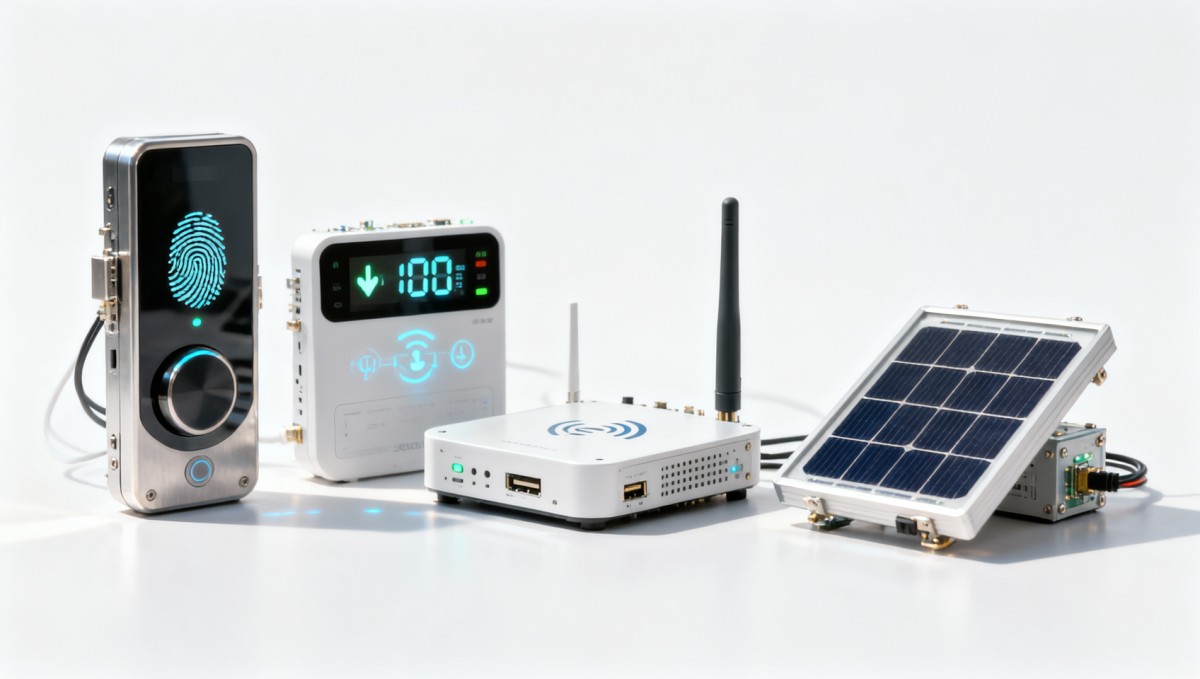
In renewable-energy projects, daily usability is rarely a standalone comfort issue. It directly affects site continuity, energy optimization, building access, and operator response time. A biometric smart lock with unstable FRR, a wearable with drifting SpO2 readings, or a sensor node with battery degradation can create friction across solar-powered homes, battery-backed buildings, and distributed energy facilities.
For users and operators, the problem appears simple: a door fails to open on the first attempt, a health alert arrives late, or a remote unit stops reporting. For procurement teams and business evaluators, the deeper issue is that daily usability depends on measurable metrics collected over 30-day, 90-day, and seasonal operating cycles rather than on brochure claims.
This matters even more in smart buildings tied to renewable energy because power profiles are dynamic. Devices may experience battery charging windows, standby periods, edge-processing loads, and protocol switching between BLE, Zigbee, Thread, or Matter. Under those conditions, biometric sensor metrics become operational indicators, not just lab specifications.
NexusHome Intelligence approaches this challenge through engineering verification. Instead of accepting generic claims such as fast recognition or ultra-low power, NHI evaluates latency, drift, standby consumption, interference tolerance, and protocol behavior under field-like stress. That data-led method is especially relevant when renewable-energy deployments require reliability during peak-load shifting, backup operation, and mixed-vendor integration.
What daily usability actually includes
Daily usability is not limited to whether a biometric device functions once. It includes how consistently it performs across repeated interactions, environmental changes, and network conditions. In practical terms, procurement teams should assess at least 4 dimensions: recognition accuracy, response time, power behavior, and interoperability with building or energy-management systems.
- Recognition consistency: whether fingerprint, facial, or optical sensing remains stable after frequent daily use, dry skin, humidity shifts, or outdoor dust exposure.
- Latency and workflow speed: whether authentication takes 1 second or 4 seconds can significantly change user acceptance at shared entrances and secured utility rooms.
- Energy resilience: whether a device maintains its stated battery life when edge AI, wireless communication, and backup power transitions happen together.
- Protocol compatibility: whether the device behaves reliably inside mixed ecosystems where Zigbee, Thread, BLE, and Matter may coexist in the same building.
When these dimensions are ignored, a system may pass factory acceptance yet fail in day-to-day operations. That is why renewable-energy buyers increasingly need benchmark-style evidence rather than generic compliance language.
Which biometric metrics have the biggest impact on real-world usability?
Not every metric deserves the same weight. In renewable-energy-linked smart homes and commercial buildings, the most important biometric sensor metrics are the ones that influence access continuity, health-data reliability, and maintenance workload. Procurement teams should prioritize metrics that can be tested repeatedly across 3 common conditions: normal indoor operation, outdoor weather variation, and constrained-power operation.
For biometric access control, FRR and response latency are usually the first indicators to review. A system with low theoretical false acceptance but high false rejection in rain, cold mornings, or dusty utility areas can frustrate users and increase manual override events. In an energy-conscious building, every manual intervention adds labor cost and weakens automation value.
For wearable or health-linked monitoring, the key concern shifts to sensor drift, optical accuracy margins, and data-delivery latency. SpO2 sensors can be sensitive to motion, skin contact, temperature, and algorithm filtering. Continuous glucose monitoring latency also matters because delayed readings reduce the usefulness of alerts in assisted living or health-integrated home energy systems.
NHI’s verification philosophy is useful here because it treats metrics as system behavior, not isolated numbers. A biometric module can look excellent in a static lab test but perform poorly once radio congestion, edge-processing delay, and power-saving modes are activated together.
Core metrics procurement teams should request
The table below summarizes practical biometric sensor metrics and why they matter when smart security, health monitoring, and renewable-energy control systems intersect. These are not abstract engineering values; they influence service calls, user acceptance, and integration risk.
The value of this table is practical: it shifts discussions from “does it support biometric access?” to “how does it behave over repeated use, unstable power windows, and protocol congestion?” That is the level at which daily usability becomes visible.
A useful metric hierarchy for evaluation
For most B2B buyers, a 3-tier hierarchy works well. Tier 1 covers must-have functional metrics such as FRR, response latency, and battery consumption. Tier 2 covers lifecycle metrics such as drift, firmware stability, and packet reliability over 6 to 12 months. Tier 3 covers business metrics such as support complexity, replacement rate, and integration effort.
This hierarchy prevents a common purchasing mistake: choosing devices that benchmark well only in one category. In renewable-energy projects, cross-functional stability usually matters more than one headline metric.
How protocol silos and power constraints change biometric performance
Biometric sensor metrics do not operate in isolation. In smart buildings, a fingerprint reader, a wearable health sensor, or a facial-recognition node is part of a broader system that includes gateways, cloud links, local edge processing, and renewable-energy-aware power management. Protocol silos can therefore reshape usability even when the sensor itself appears capable.
A biometric lock connected through one protocol and managed through another may encounter delayed sync, missed state updates, or battery drain caused by repeated retries. A health sensor that reports acceptable readings locally may still fail to support timely action if the end-to-end path introduces congestion. In buildings where solar generation, battery storage, and HVAC automation already compete for resources, these problems become more visible.
This is one reason NHI emphasizes connectivity and protocol verification alongside smart security and access metrics. A claim such as “Works with Matter” does not answer the practical questions procurement teams need answered: how does the device behave across multi-node hops, interference, and mixed-vendor firmware states over a 24-hour or 7-day operating cycle?
In renewable-energy-linked properties, power constraints add another layer. Devices may switch between mains-backed operation and battery-backed operation, or spend long intervals in low-power states. That can change wake-up behavior, authentication speed, and data synchronization timing.
Common failure paths buyers overlook
- A biometric sensor performs well in a lab but slows down after firmware updates increase edge-computing load on the gateway.
- Battery-life estimates assume low reporting frequency, yet the building requires frequent status checks every few minutes during energy events.
- A lock or health node is certified for one wireless mode, but actual deployment adds bridging layers that increase latency and packet retries.
- Outdoor or semi-outdoor installation raises temperature swings, surface moisture, and dust exposure, increasing FRR and maintenance effort.
These issues are not edge cases. They are typical integration risks in fragmented IoT ecosystems. That is why benchmarking must reflect system conditions, not only component claims.
Scenario comparison for decision-makers
The next comparison helps users, procurement teams, and business evaluators identify which biometric concerns dominate in different renewable-energy use cases.
The comparison shows why one-size-fits-all procurement language is ineffective. A residential deployment may tolerate a slightly slower cloud sync if local access remains reliable, while a senior living environment may rank data timeliness above nearly all other variables.
What should procurement teams verify before selecting biometric hardware?
Procurement decisions often fail because teams compare feature lists instead of operational evidence. In the renewable-energy sector, buyers should define a selection framework that includes 5 checkpoints: metric relevance, protocol fit, power profile, lifecycle maintenance, and compliance pathway. This helps avoid low-cost purchases that become high-cost service burdens within the first 6 to 18 months.
The first checkpoint is metric relevance. A biometric module intended for shared access control should not be judged only by enrollment capacity or app interface quality. Buyers need evidence of FRR behavior, real authentication timing, and reliability across different environmental conditions. For wearable or health-linked sensors, latency windows and drift trends are equally important.
The second checkpoint is protocol fit. If the building already runs Zigbee lighting, Thread border routers, BLE peripherals, and an energy-management gateway, each biometric endpoint must be evaluated for integration overhead. Otherwise, hidden bridging layers can undermine both battery life and responsiveness.
The third and fourth checkpoints are power profile and lifecycle maintenance. Renewable-energy projects cannot assume stable mains conditions at all times. Ask whether the quoted performance holds during backup operation, firmware update cycles, and reduced-power states. Also ask what recalibration, battery replacement, or field diagnostics are expected every quarter, every half year, or annually.
A practical shortlisting checklist
- Request benchmark evidence under at least 3 conditions: normal indoor use, interference-heavy network conditions, and constrained-power operation.
- Confirm whether biometric performance changes when edge AI, logging, and remote synchronization are enabled together.
- Review expected maintenance intervals, battery service steps, and firmware update process before PO approval.
- Check alignment with data protection, access logging, and local processing requirements relevant to the deployment market.
- Compare not only unit price, but also integration effort, troubleshooting burden, and replacement risk across 12-month and 24-month planning horizons.
This is where NHI’s role becomes especially useful for procurement and business evaluation teams. By serving as an engineering filter between manufacturers and global buyers, NHI helps transform vague vendor positioning into benchmark-driven purchasing logic.
Compliance and documentation questions worth asking
Not every project requires the same paperwork, but buyers should still ask structured questions. How is biometric data processed locally versus remotely? What event logs are retained, and for how long? Does the device support secure update procedures? How is protocol compliance documented when Matter, Zigbee, BLE, or Wi-Fi modules interact? These questions reduce risk during technical review and commercial negotiation.
Even when exact certification scope varies by region, a disciplined documentation review can prevent costly surprises late in the deployment schedule. For projects operating on tight 2-to-4-week integration windows, missing documentation can delay acceptance as much as missing hardware.
Common misconceptions, implementation risks, and how to reduce them
One common misconception is that better biometric security automatically means better daily usability. In practice, a highly restrictive system with frequent false rejections can reduce security because users search for workarounds. In renewable-energy facilities and smart buildings, operators need systems that support both secure control and smooth access during routine work.
Another misconception is that low standby power equals long field life in all cases. Real battery endurance depends on reporting frequency, protocol retries, environmental conditions, edge computation, and update behavior. A device may look efficient in a static power chart and still disappoint when installed in a busy building with daily authentication peaks.
A third misconception is that protocol compatibility claims guarantee integration success. “Compatible” is often a starting point, not a performance conclusion. Buyers should ask whether compatibility was tested under realistic network load, multi-node routing, and mixed-vendor operation.
The practical answer is structured implementation. Before full rollout, pilot the device in 1 to 3 representative zones, observe behavior for at least 2 to 6 weeks, and compare results across access reliability, support tickets, battery trend, and event latency. This short pilot often reveals issues that factory demos do not show.
FAQ for users, buyers, and business evaluators
How do I choose biometric metrics for a smart building linked to renewable energy?
Start with the building’s operational objective. If the device controls entry, prioritize FRR, authentication latency, and behavior during backup power periods. If the device supports health or occupancy-related services, prioritize sensor accuracy margin, data latency, and long-term drift. Then review whether these metrics were tested under real protocol and power conditions, not only in ideal lab mode.
Which scenarios are most sensitive to biometric daily usability problems?
Shared entrances, rooftop or utility-room access, senior living environments, and remote support facilities are usually the most sensitive. These locations combine repeated daily use with environmental variation, time-critical access, or maintenance limitations. Small usability failures become larger operational issues in these settings.
What should procurement teams look at beyond unit price?
Look at total deployment impact over 12 to 24 months. That includes integration effort, battery service frequency, firmware management, support response needs, protocol bridging complexity, and user retraining risk. A cheaper device that creates repeated access failures or data delays can become more expensive than a better-verified option.
How long does a meaningful evaluation usually take?
A basic document and sample review may take 7 to 15 days. A more useful pilot, especially in a renewable-energy-linked building with mixed IoT protocols, often needs 2 to 6 weeks. That timeline allows teams to observe weekday peaks, low-power periods, firmware behavior, and environmental variation.
Why work with NHI when evaluating biometric hardware for smart energy ecosystems?
NexusHome Intelligence was built for a market where protocol silos, inflated claims, and fragmented supply chains make hardware decisions harder than they should be. For users, operators, procurement managers, and business evaluators, the advantage is not generic consulting language. It is a data-driven review process that connects biometric sensor metrics to actual operating outcomes.
NHI’s strength comes from combining multiple verification pillars: connectivity and protocol behavior, smart security and access testing, energy and climate-control awareness, component-level hardware scrutiny, and wearable or health-tech benchmarking. That cross-domain view matters because daily usability is rarely caused by one isolated component. It emerges from the interaction between sensors, firmware, power, and ecosystem compatibility.
If you are comparing biometric smart locks, wearable sensing modules, or mixed-protocol IoT hardware for renewable-energy projects, NHI can help clarify what to test before you commit. Discussion topics can include parameter confirmation, product selection logic, protocol-fit assessment, typical delivery-cycle expectations, sample evaluation planning, compliance-document review, and quotation comparison based on operational risk rather than marketing promises.
Contact NHI when you need a clearer basis for supplier shortlisting, benchmark interpretation, custom deployment scenarios, or pre-procurement technical validation. That is the fastest way to turn biometric sensor metrics from scattered specifications into confident purchasing decisions for connected, energy-aware environments.
Protocol_Architect
Dr. Thorne is a leading architect in IoT mesh protocols with 15+ years at NexusHome Intelligence. His research specializes in high-availability systems and sub-GHz propagation modeling.
Related Recommendations
- Lina Zhao (Security Analyst)Biometric access control: accuracy or speed first?
- Lina Zhao (Security Analyst)How biometric sensor metrics affect daily usability
- Lina Zhao (Security Analyst)Biometric false rejection rate FRR: what is acceptable?
- Lina Zhao (Security Analyst)How to Judge Biometric Spoofing Resistance
- Lina Zhao (Security Analyst)Biometric Fingerprint Sensor Module Selection Guide
- Lina Zhao (Security Analyst)Edge AI facial recognition access control and false rejects
- Lina Zhao (Security Analyst)Smartwatch OEM Factory: What Quality Control Gaps Emerge When Biometric Sensors Shift to High-Volume Lines?
- Lina Zhao (Security Analyst)Smart home hardware testing: Why lab-grade validation matters more than certification stickers
- Lina Zhao (Security Analyst)Biometric false rejection rate FRR: Why lab-measured FRR often misleads real-world access control decisions
- Lina Zhao (Security Analyst)Smart security access control: How biometric sensor metrics shift when tested with gloves or wet fingers
Analyst