
Biometric false rejection rate FRR: what is acceptable?
author
In smart security access control, biometric false rejection rate FRR is more than a usability metric—it directly affects trust, deployment efficiency, and hardware compliance inquiry outcomes. For procurement teams, operators, and evaluators navigating the IoT supply chain, understanding what FRR is truly acceptable requires verified IoT manufacturers, smart home hardware testing, and IoT hardware benchmarking grounded in real-world protocol, climate, and performance data.
Why FRR matters in renewable energy access control
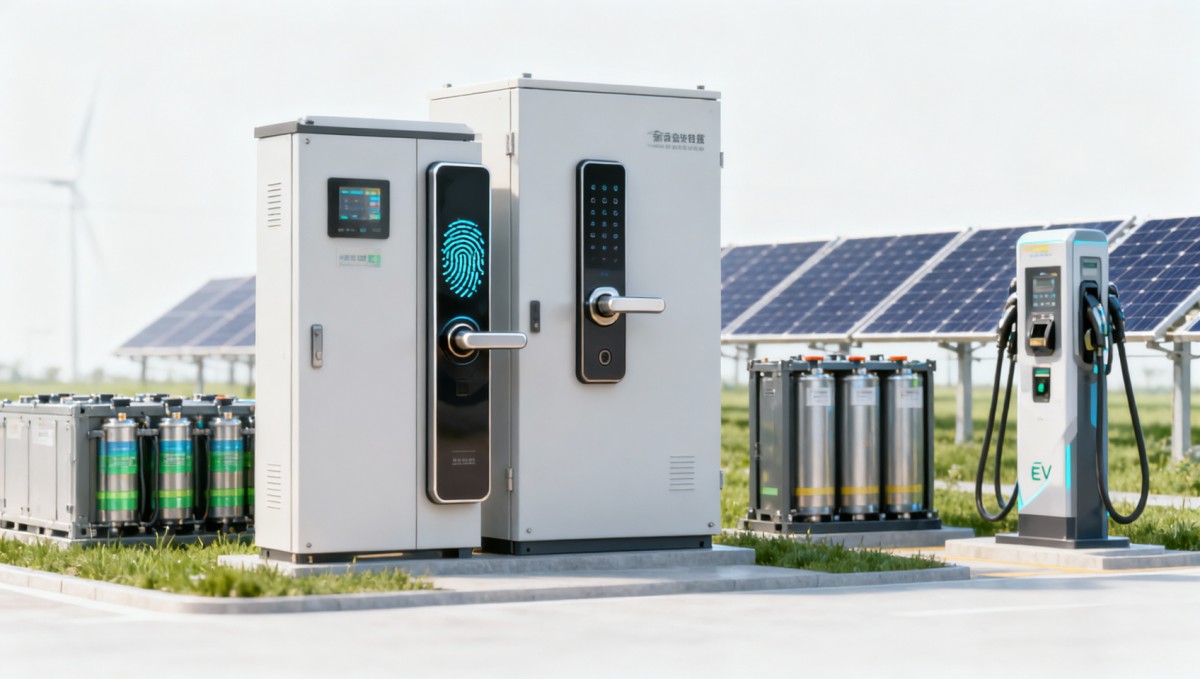
In renewable energy operations, biometric access systems are no longer limited to office doors. They are increasingly deployed at solar farms, battery energy storage sites, inverter rooms, remote substations, EV charging hubs, and hybrid energy management facilities. In these environments, biometric false rejection rate FRR becomes a practical business issue because denied access can delay maintenance, interrupt safety checks, and increase labor costs across geographically distributed assets.
An acceptable FRR depends on the operational consequence of a failed match. If an operator must authenticate 10–30 times per shift across indoor and outdoor zones, even a seemingly low rejection rate can create visible friction. In renewable energy infrastructure, where uptime windows may be limited to 2–4 hours for certain maintenance tasks, repeated authentication failure can affect both service efficiency and site security procedures.
This is where NHI’s data-driven position becomes relevant. Marketing claims such as fast unlock or secure identification are not enough when biometrics must coexist with Zigbee gateways, BLE provisioning workflows, Matter-ready edge nodes, and energy control systems. Procurement decisions should be based on measured behavior under temperature swings, dust exposure, glove use, intermittent connectivity, and battery-powered edge deployment conditions.
For buyers and evaluators in the renewable energy sector, FRR should be treated as part of a larger hardware validation package. The right question is not simply “What is the FRR?” but “Under what test conditions was FRR measured, over how many attempts, and with what impact on energy site operations?” That shift in framing leads to better supplier comparison and fewer costly field corrections after installation.
- For operators, high FRR increases queue time, manual override requests, and shift-change delays.
- For procurement teams, unclear FRR test methods create supplier comparison risk and hidden post-deployment cost.
- For commercial evaluators, FRR influences return on investment, service workload, and long-term hardware credibility.
What is an acceptable biometric false rejection rate FRR?
There is no single universal FRR threshold that fits every renewable energy project. Acceptability is determined by environment, user frequency, fallback workflow, and the business criticality of the access point. A biometric lock protecting a low-traffic indoor control room can tolerate a different FRR range than a battery storage enclosure visited by technicians during high-heat daytime maintenance or emergency nighttime inspections.
In practical procurement language, acceptable FRR means the system supports daily operations without creating repeated access friction. If field teams begin bypassing biometric login through shared PINs, mechanical keys, or permanently open doors, the nominal security design has already failed. Therefore, FRR should be evaluated together with retry logic, secondary credential options, local processing latency, and network resilience during edge-to-cloud synchronization.
For many B2B buyers, a useful benchmark is to classify sites into three tiers: low-criticality indoor access, standard industrial energy access, and harsh-environment critical access. This method does not invent fixed universal numbers; instead, it creates a controlled framework for vendor evaluation over 3 core variables: environmental variability, authentication frequency, and consequence of delay.
NHI encourages procurement teams to request FRR data from repeated field-like testing rather than relying only on laboratory brochure values. A vendor that reports performance across dry indoor conditions, high humidity, dusty surfaces, and temperature fluctuation over several testing cycles offers much stronger decision support than a supplier that publishes a single ideal-condition value with no context.
The table below shows how renewable energy buyers can frame acceptable FRR by operational scenario rather than by isolated marketing claims.
This comparison helps buyers avoid a common mistake: selecting hardware with acceptable FRR in a showroom but unacceptable rejection behavior at actual energy sites. In many renewable energy projects, the key is not the best-looking specification sheet but the most credible environmental test coverage.
FRR should always be read next to FAR and retry design
A low FRR is valuable, but not if it is achieved by making the system too permissive. Buyers should always read FRR together with false acceptance rate FAR, especially where access protects energy assets, power switching points, or battery safety enclosures. Security teams usually need a balance across 3 dimensions: user convenience, unauthorized entry resistance, and manageable support workload.
Retry logic also matters. A biometric reader that completes a second attempt within 1–2 seconds with clear local feedback may still be operationally acceptable in some scenarios. By contrast, a slower device connected through unstable edge networking can turn moderate FRR into a major productivity issue. In short, acceptable FRR is not an isolated number; it is a system-level outcome.
Which field conditions raise FRR in energy and climate-sensitive deployments?
Renewable energy sites present a wider range of biometric failure triggers than standard commercial buildings. Solar and wind assets often involve dust, strong light, skin dryness, wet surfaces, gloves, vibration, and temperature shifts between early morning and peak afternoon. These conditions affect biometric capture quality and directly influence false rejection rate FRR, even when the underlying algorithm performs well in a stable indoor lab.
Battery energy storage and smart grid environments add another layer of complexity because access events often happen during maintenance escalation, inspection cycles, and alarm responses. In those moments, users may approach the reader quickly, with sweat, residue, or incomplete finger placement. If the device has weak sensor tolerance or poor local processing design, FRR rises precisely when access reliability is most important.
NHI’s benchmarking philosophy is especially valuable here. A meaningful test should include multiple environmental variables rather than a single neat condition. For example, teams should request testing across at least 4 dimensions: temperature variation, humidity or moisture exposure, interference from site networking conditions, and power behavior under battery-backed operation. This approach reflects actual energy infrastructure, where security devices are part of a larger connected ecosystem.
Another overlooked cause of FRR is protocol and edge workflow mismatch. If biometric access hardware depends on delayed synchronization with gateways or cloud services, a local recognition success can still become a practical denial event. In renewable energy projects, where sites may rely on BLE commissioning, Zigbee mesh relays, Thread border routers, or intermittent backhaul, access architecture must be assessed as a whole, not as a standalone lock feature.
Environmental variables procurement teams should test
Before approving a supplier, buyers should define a simple but rigorous test matrix. Even a 2–3 week pilot can reveal more than a polished catalog. Test planning should capture both user behavior and site stress conditions, especially for smart security access in renewable energy installations.
- Temperature range exposure, such as cool morning startup and hot afternoon enclosure conditions.
- Surface contamination events, including dust, moisture, sunscreen residue, and worksite grime.
- User interaction variation, including fast touch, partial touch, repeated shifts, and glove-to-fingerprint fallback.
- Network dependency behavior, including local unlock during delayed synchronization or gateway interruption.
- Power continuity, especially in battery-backed nodes and low-power edge devices expected to run for extended cycles.
A practical interpretation rule
If a vendor cannot explain how FRR changes across these field variables, the published number should be treated as incomplete, not invalid. For procurement and commercial evaluation, incomplete data creates hidden implementation cost. It often leads to more site visits, more access exceptions, and more user complaints within the first 30–90 days after rollout.
How to compare suppliers: benchmark questions beyond the FRR number
Supplier comparison becomes difficult when each manufacturer reports biometric false rejection rate FRR using different definitions, sample groups, and environmental assumptions. Some present a single headline metric; others disclose retry conditions, enrollment method, sensor type, and local processing architecture. For renewable energy buyers, a good comparison model should normalize these differences into a repeatable evaluation framework.
NHI’s value lies in turning fragmented technical claims into comparable engineering evidence. Instead of asking only whether a lock or reader supports smart home integration, buyers should ask how it performs within mixed-protocol ecosystems and whether measured behavior remains stable when connected to energy monitoring nodes, edge controllers, and remote maintenance workflows. That is especially important where procurement spans multiple sites, regions, or OEM sources.
A strong RFQ or technical inquiry should include at least 5 checks: test condition disclosure, retry timing, fallback credential options, local versus cloud dependency, and battery or standby power behavior. These are not secondary details. In renewable energy infrastructure, poor answers in any one of these categories can erase the operational value of an attractive FRR claim.
The comparison table below can be used by procurement teams, operators, and business evaluators when screening biometric access suppliers for solar, storage, charging, or distributed energy deployments.
This table is useful because it shifts attention from single-point specification shopping to operational fit. A supplier with a moderate but transparently tested FRR may be a better choice than one with a lower headline claim but weak disclosure on protocols, power behavior, and fallback access methods.
A 4-step procurement workflow
- Define site class: indoor control room, semi-exposed equipment shelter, or harsh outdoor energy asset.
- Set 3–5 acceptance criteria: FRR context, retry time, protocol fit, backup access, and maintenance workload.
- Run a pilot over a realistic operating cycle, such as 7–15 days or one maintenance rotation.
- Review field logs with operator feedback before scaling procurement across additional sites.
This workflow improves commercial clarity. It also supports cross-functional evaluation because operations, procurement, and business teams can review the same evidence without relying on subjective vendor language.
What standards, compliance, and implementation factors should buyers review?
Biometric access procurement in renewable energy is not only about unlocking accuracy. Buyers also need to review privacy handling, local data processing, edge security architecture, and environmental suitability. Depending on deployment geography and project type, teams may need to align with internal cybersecurity policies, regional privacy obligations, and utility or infrastructure access procedures.
It is reasonable to ask whether biometric templates are stored locally, in encrypted edge form, or synchronized to a remote platform. It is also reasonable to ask whether access logs can be exported for audit review and whether offline operation remains available during network disruption. In distributed energy environments, access control should degrade safely rather than fail unpredictably when backhaul is unstable.
Implementation planning should also address service timing. Typical B2B hardware onboarding may involve 3 stages: sample verification, pilot integration, and scaled rollout. Depending on protocol alignment and regional logistics, sample assessment can take 7–15 days, while integration and acceptance may take 2–6 weeks. This timeline matters because rushed access control deployments often overlook FRR testing in the actual environmental envelope of the site.
For renewable energy operators focused on uptime and safety, a compliant solution is one that remains auditable, maintainable, and operationally predictable. That includes clear enrollment procedures, role-based permissions, firmware update controls, and measurable fallback access paths for technicians and third-party service personnel.
Common implementation mistakes
- Testing biometric access only in an office before deploying it to dusty, hot, or remote energy assets.
- Ignoring low-power and standby behavior for battery-backed access hardware at distributed nodes.
- Approving a device without checking whether FRR rises during offline operation or delayed synchronization.
- Using one access policy for all sites instead of separating indoor, industrial, and harsh-environment scenarios.
FAQ for buyers and evaluators
How should we interpret FRR during supplier negotiations?
Ask for the test method, the environmental conditions, the retry rules, and the fallback method. If the supplier cannot explain these four items clearly, the FRR number alone is not enough for procurement approval. In renewable energy deployments, context is often more valuable than a headline claim.
Are biometric locks suitable for remote solar or storage sites?
They can be suitable if local processing, backup credentials, environmental resilience, and power behavior are all verified. The right choice depends on how often technicians access the site, whether the hardware runs on battery or wired supply, and how the lock behaves during network interruptions.
What is the minimum pilot period before large-scale purchase?
A short pilot can work if it covers realistic environmental cycles and user profiles. In many cases, 7–15 days can reveal obvious issues, while 2–4 weeks gives a stronger view of maintenance routines, weather variation, and shift-based access frequency.
Why choose NHI for FRR evaluation and supplier screening?
NexusHome Intelligence approaches biometric false rejection rate FRR as an engineering truth problem, not a brochure problem. In fragmented IoT ecosystems, renewable energy buyers need more than product claims. They need verified IoT manufacturers, smart home hardware testing with industrial relevance, and IoT hardware benchmarking that reflects real deployment conditions across protocols, power models, and climate-sensitive environments.
Our advantage is the ability to connect smart security access analysis with the wider system architecture around it. That means looking at FRR together with Matter readiness, BLE onboarding, Zigbee or Thread coexistence, edge processing logic, and standby energy behavior. For renewable energy projects, that integrated view reduces selection risk and helps teams avoid expensive mismatches between security hardware and energy-site operations.
If you are comparing biometric access devices for solar plants, battery storage, EV charging networks, or smart building energy infrastructure, we can help you review 6 practical decision areas: FRR test context, protocol compatibility, low-power operation, backup access design, rollout timeline, and supplier disclosure quality. This makes commercial evaluation more concrete and easier to align across technical and purchasing teams.
Contact NHI when you need support with parameter confirmation, product selection, sample evaluation, deployment planning, delivery cycle review, certification-related inquiry, or quotation comparison. If your team is trying to identify hidden technical risk before placing volume orders, a data-based benchmarking conversation is the fastest place to start.
Protocol_Architect
Dr. Thorne is a leading architect in IoT mesh protocols with 15+ years at NexusHome Intelligence. His research specializes in high-availability systems and sub-GHz propagation modeling.
Related Recommendations
- Lina Zhao (Security Analyst)Biometric access control: accuracy or speed first?
- Lina Zhao (Security Analyst)How biometric sensor metrics affect daily usability
- Lina Zhao (Security Analyst)Biometric false rejection rate FRR: what is acceptable?
- Lina Zhao (Security Analyst)How to Judge Biometric Spoofing Resistance
- Lina Zhao (Security Analyst)Biometric Fingerprint Sensor Module Selection Guide
- Lina Zhao (Security Analyst)Edge AI facial recognition access control and false rejects
- Lina Zhao (Security Analyst)Smartwatch OEM Factory: What Quality Control Gaps Emerge When Biometric Sensors Shift to High-Volume Lines?
- Lina Zhao (Security Analyst)Smart home hardware testing: Why lab-grade validation matters more than certification stickers
- Lina Zhao (Security Analyst)Biometric false rejection rate FRR: Why lab-measured FRR often misleads real-world access control decisions
- Lina Zhao (Security Analyst)Smart security access control: How biometric sensor metrics shift when tested with gloves or wet fingers
Analyst