
How to Judge Biometric Spoofing Resistance
author
Biometric spoofing resistance is no longer a niche metric but a frontline requirement for smart security in renewable-energy-driven buildings and resilient IoT infrastructure. For engineers, buyers, and decision-makers evaluating smart lock Matter compatibility, biometric fingerprint sensor module performance, and smart lock false rejection rate FRR, the practical answer is this: a biometric system is only as trustworthy as its ability to stop presentation attacks without creating operational friction. To judge that well, you need more than vendor claims. You need evidence across attack testing, sensor quality, liveness detection, environmental stability, integration readiness, and lifecycle risk.
For most organizations, the best purchasing and deployment decisions come from asking a few hard questions early: What spoof types were tested? Under what temperature, humidity, and lighting conditions? What were the false acceptance and false rejection results during anti-spoof testing? How does the device behave when connected to a broader access control system integration stack? And can it maintain secure, reliable performance in the real operating environment, not just in a lab demo?
What does “biometric spoofing resistance” actually mean in real deployments?
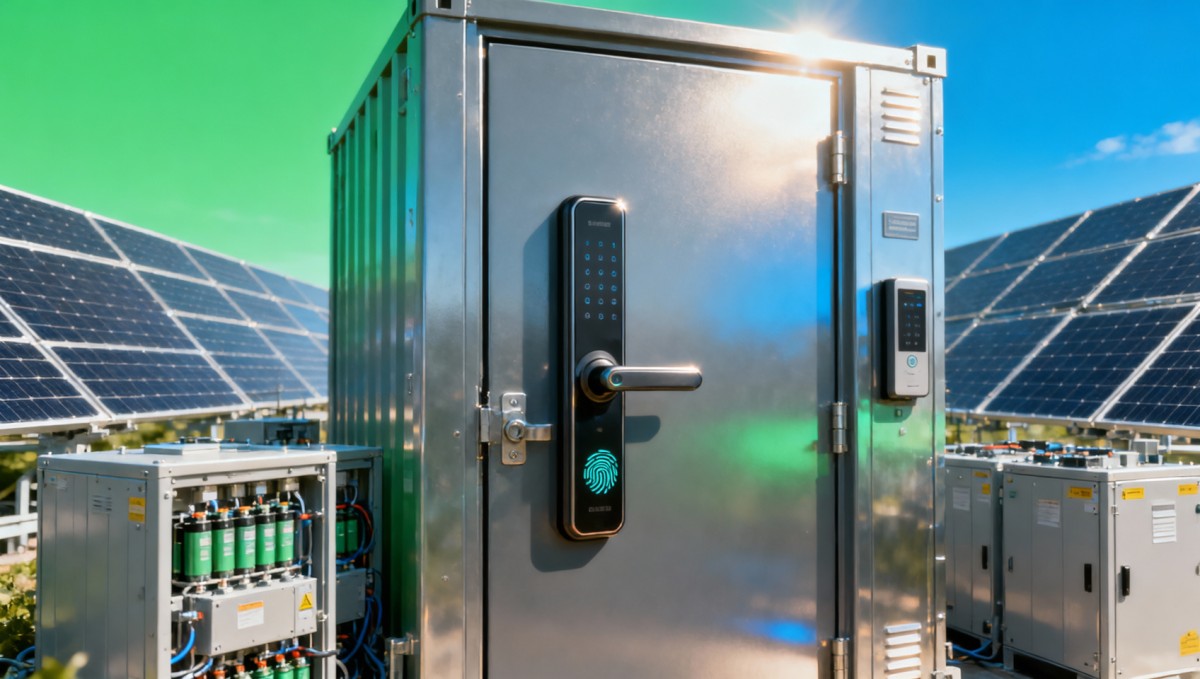
Biometric spoofing resistance is the ability of a biometric system to detect and reject fake biometric samples designed to imitate an authorized user. In smart locks, access terminals, and distributed IoT security nodes, this usually means resisting presentation attacks such as fake fingerprints made from silicone, latex, glue, gelatin, printed conductive films, lifted latent prints, or high-resolution reproductions.
For renewable energy facilities, smart buildings, and distributed infrastructure, this matters because access points are often unattended, remotely managed, or exposed to variable environmental conditions. A lock protecting an energy control room, battery storage enclosure, rooftop equipment zone, or edge-computing cabinet cannot rely on ideal indoor assumptions. The system must preserve security under dust, moisture, heat, cold, and repeated use.
A strong anti-spoofing system is not just one that blocks fakes in marketing videos. It should also maintain practical usability. If spoof resistance is high but authorized users are frequently denied, the result is poor operations, more support calls, bypass behavior, and lower trust in the system.
What is the core search intent behind this topic?
People searching for how to judge biometric spoofing resistance usually do not want a generic definition. They want a reliable decision framework. In practice, their search intent often falls into four categories:
- Technical evaluation: Engineers want to compare biometric fingerprint sensor module designs, liveness detection methods, and test evidence.
- Procurement validation: Buyers want to know how to separate genuine security performance from vague claims like “AI-powered” or “military-grade.”
- Operational suitability: Installers and operators want to understand whether the system will still work under field conditions and with existing access platforms.
- Business risk assessment: Decision-makers want to reduce breach risk, avoid deployment failure, and justify ROI in smart security investments.
That means the most useful article is not one that explains every biometric concept equally. It is one that helps readers judge whether a device is truly deployable, secure, and economically sensible.
What should engineers, buyers, and decision-makers care about first?
The first priority is not the algorithm name or the brand story. It is whether the system has been tested against realistic attacks and realistic operating conditions. The most important questions are:
- Which spoof materials were tested? Basic tests against one fake sample are not enough.
- Was liveness detection independently validated? Claims without methodology are weak.
- What are the false acceptance rate and false rejection rate FRR under anti-spoof mode?
- How does the reader perform when fingers are wet, dirty, aged, or partially placed?
- Does the lock or terminal support reliable access control system integration?
- Is smart lock Matter compatibility relevant to the deployment, and if so, does it affect security workflows?
- What happens during network loss, low battery, or edge-case authentication failures?
For business evaluators, these questions translate directly into risk: unauthorized entry, operational disruption, maintenance burden, and hidden replacement cost.
How to judge spoofing resistance: the practical evaluation framework
The most effective way to assess spoof resistance is to review six layers of evidence together rather than relying on a single headline metric.
1. Attack coverage
Ask for a list of presentation attack types used in validation. A credible vendor should be able to state whether the system was tested against multiple spoof materials, multiple fingerprint replication methods, and repeated attempts by different operators. The broader the attack set, the more meaningful the result.
2. Liveness detection quality
Liveness detection may use capacitive behavior, sub-dermal sensing, pulse-related signals, thermal response, skin conductivity, texture analysis, or multi-spectral imaging. No method is perfect on its own. Systems combining hardware sensing and software analysis are generally harder to fool than purely image-based approaches.
3. Error-rate balance
A system can appear secure simply by rejecting too many inputs. That is why anti-spoofing performance must be judged alongside usability. Review:
- False acceptance rate under spoof testing
- Smart lock false rejection rate FRR for legitimate users
- Retry behavior and unlock time
- Performance consistency across user groups
If FRR rises sharply when anti-spoof controls are enabled, the device may create workflow problems even if the security story sounds strong.
4. Environmental resilience
In renewable-energy and smart infrastructure applications, environmental reliability is not optional. Test data should include temperature variation, humidity exposure, surface contamination, direct sunlight if applicable, and long-term wear. A sensor that performs well in an office may degrade quickly in utility rooms, semi-outdoor installations, or high-traffic shared entrances.
5. System integration behavior
A biometric module does not operate in isolation. Review how it interacts with lock firmware, credential fallback methods, mobile apps, cloud dashboards, local edge gateways, and building management systems. Good access control system integration means authentication events are logged clearly, policy rules are enforced consistently, and security does not collapse when one subsystem disconnects.
6. Lifecycle maintainability
Ask how spoof resistance is maintained over time. Can detection models be updated? Are firmware patches signed and auditable? Is there a secure rollback process? Can the sensor surface tolerate years of use without causing degraded reads? Long-term maintainability often separates a lab-capable product from a field-capable one.
Which metrics matter most beyond marketing claims?
Many product pages focus on convenience metrics while avoiding security specifics. To judge real performance, prioritize measurable indicators such as:
- Presentation attack detection performance across multiple spoof categories
- False acceptance rate during both normal and spoof-focused testing
- False rejection rate FRR for daily legitimate use
- Authentication time under normal and adverse conditions
- Sensor durability after repeated touch cycles
- Battery impact of always-on liveness detection in smart locks
- Offline fail-secure or fail-safe behavior depending site policy
- Audit log completeness for security investigations and compliance reviews
For smart lock Matter compatibility, readers should also verify whether biometric events, lock state, and policy controls are exposed consistently through the integration layer. Compatibility alone does not guarantee strong security implementation.
How does spoof resistance affect renewable energy and smart building projects?
In renewable energy and energy-aware buildings, access security is directly linked to uptime, asset protection, and safety. A weak biometric lock on a battery energy storage room, inverter cabinet, EV charging control area, or rooftop equipment access point can create both cyber-physical and operational risk.
Strong spoof resistance helps in several ways:
- Reduces the chance of unauthorized entry into critical infrastructure zones
- Supports cleaner audit trails for maintenance contractors and service teams
- Lowers dependence on easily shared PINs or lost cards
- Improves trust in distributed smart security deployments
- Supports resilience in facilities that rely on remote monitoring and lean staffing
For enterprise decision-makers, this means spoof resistance is not just a security feature. It is part of risk control, insurance posture, and business continuity.
What red flags suggest the product may not be truly spoof-resistant?
Several warning signs appear repeatedly in under-tested biometric products:
- Security claims with no disclosed test methodology
- Only one spoof type demonstrated
- No mention of FRR changes when anti-spoofing is enabled
- Heavy emphasis on app design or industrial design, but little sensor detail
- No environmental test data
- Unclear firmware update and key management process
- Integration claims that focus on compatibility badges rather than event-level security behavior
If a vendor cannot explain how its biometric fingerprint sensor module handles edge cases, contamination, and repeated attack attempts, the buyer should assume the real-world performance is less mature than the brochure suggests.
What should you ask vendors before procurement or deployment?
A good evaluation meeting should produce evidence, not slogans. Useful questions include:
- What spoof materials and attack methods were used in your tests?
- Were tests performed by an internal team, third party, or certification lab?
- What are the measured false acceptance and smart lock false rejection rate FRR values in anti-spoof mode?
- How does performance change under temperature, humidity, dirty fingers, and aging sensors?
- What fallback authentication methods exist, and how are they protected?
- How is biometric data stored, matched, and protected on-device or at the edge?
- How does the product support access control system integration with enterprise platforms?
- Does smart lock Matter compatibility expose any security limitations or feature gaps?
- How are firmware updates authenticated and delivered?
- What is the expected maintenance profile over three to five years?
These questions help both technical teams and business stakeholders make a grounded comparison between options.
How to make the final judgment
To judge biometric spoofing resistance well, do not ask whether the product has anti-spoofing. Ask whether its anti-spoofing is documented, tested, balanced, and sustainable in your environment. The best product is not the one with the boldest security label. It is the one that can prove four things at the same time: it resists realistic attacks, keeps FRR manageable for legitimate users, integrates cleanly into the access ecosystem, and remains reliable over time.
For smart security projects in renewable-energy facilities, smart buildings, and connected infrastructure, this evidence-first approach is essential. It reduces procurement risk, improves operational trust, and helps teams choose systems that deliver both security and usability under real conditions.
In short, biometric spoofing resistance should be judged as a field performance issue, not a marketing feature. If the data is incomplete, the risk is not. Choose solutions backed by attack coverage, measurable error rates, environmental validation, and strong system integration evidence.
Protocol_Architect
Dr. Thorne is a leading architect in IoT mesh protocols with 15+ years at NexusHome Intelligence. His research specializes in high-availability systems and sub-GHz propagation modeling.
Related Recommendations
- Lina Zhao (Security Analyst)How to Judge Biometric Spoofing Resistance
- Lina Zhao (Security Analyst)Smartwatch OEM Factory: What Quality Control Gaps Emerge When Biometric Sensors Shift to High-Volume Lines?
- Lina Zhao (Security Analyst)Smart home hardware testing: Why lab-grade validation matters more than certification stickers
- Lina Zhao (Security Analyst)Biometric false rejection rate FRR: Why lab-measured FRR often misleads real-world access control decisions
- Lina Zhao (Security Analyst)Smart security access control: How biometric sensor metrics shift when tested with gloves or wet fingers
- Lina Zhao (Security Analyst)Biometric sensor metrics: What ‘1:N matching speed’ hides about concurrent user throughput limits
- Lina Zhao (Security Analyst)Hardware Compliance Inquiry: When a 'Yes' on Paper Doesn’t Guarantee Real-World Security
- Lina Zhao (Security Analyst)Biometric Sensors and Smart Home Compliance: When Lab-Approved Doesn’t Mean User-Ready
- Lina Zhao (Security Analyst)Biometric fingerprint sensor module performance degrades faster than expected in humid environments
- Lina Zhao (Security Analyst)Wearable health tech using SpO2 sensors sees 37% higher return rates in humid climates—thermal condensation is the overlooked culprit
Analyst