
Biometric access control: accuracy or speed first?
author
In renewable energy facilities, biometric access control is not just about convenience—it directly affects uptime, safety, and compliance. This article examines whether accuracy or speed should come first, using biometric false rejection rate FRR, protocol latency benchmark, and smart security access control data to help operators, buyers, and evaluators make evidence-based decisions aligned with IoT engineering truth.
Why the accuracy-versus-speed question matters in renewable energy sites
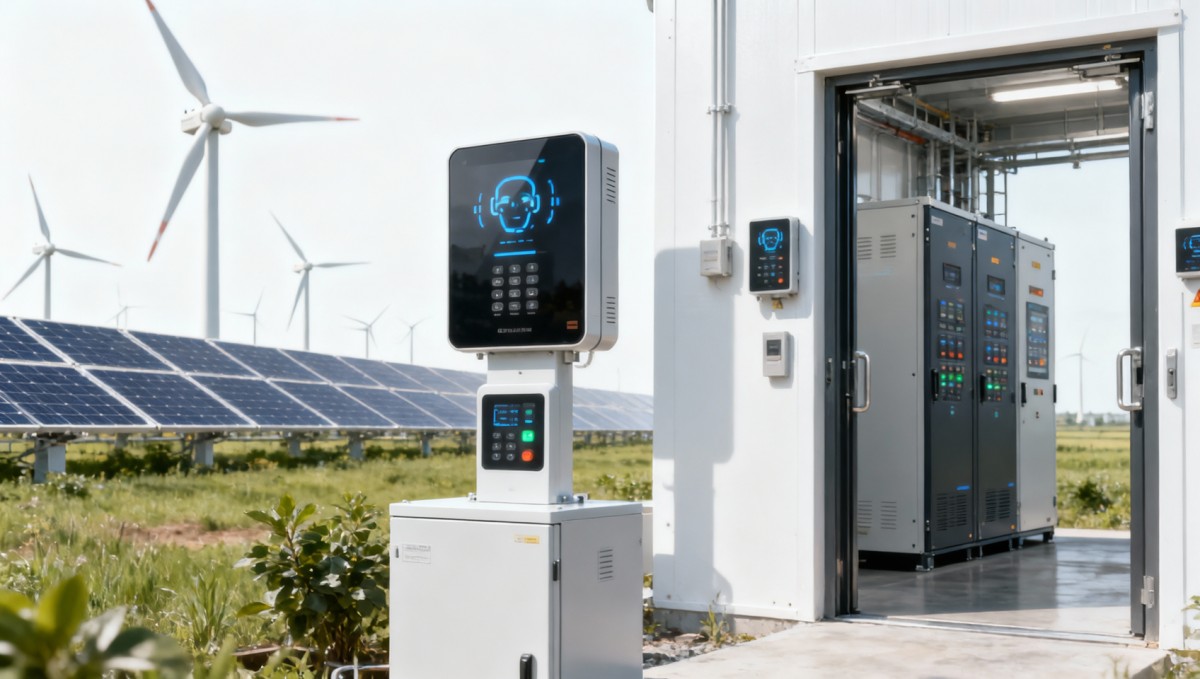
A biometric access control decision in a wind farm, solar plant, battery energy storage station, or substation is never isolated from operations. If authentication is too slow, shift handovers, contractor entry, and emergency intervention are delayed. If authentication is fast but inconsistent, false acceptance and false rejection both create risk. In renewable energy environments, where remote assets often run 24/7 and staffing levels can be lean, even a 3–8 second delay per access event can become operational friction across a full month.
The real issue is not choosing speed first or accuracy first as abstract ideals. The better question is: which metric fails first in your site conditions? Outdoor gateways, inverter rooms, switchgear areas, and control centers expose biometric devices to dust, glove use, moisture, temperature swings, and unstable network segments. Under these conditions, biometric false rejection rate FRR and protocol latency benchmark become more useful than generic claims such as fast unlock or high security.
For operators, the pain point is workflow interruption. For procurement teams, the pain point is evaluating products that look similar on paper but behave differently after deployment. For business evaluators, the pain point is translating access control performance into downtime risk, audit readiness, and lifecycle cost. This is exactly where a data-driven method matters: benchmark latency, verify protocol behavior, test edge processing, and compare performance by scenario rather than brochure language.
NexusHome Intelligence approaches this problem from an engineering filter perspective. In fragmented IoT ecosystems, devices may support BLE, Zigbee, Thread, Wi-Fi, or hybrid architectures, yet field performance depends on how they behave under interference, intermittent backhaul, and local processing limits. In renewable energy security, the right choice usually comes from balancing 3 core indicators: authentication accuracy, response speed, and resilience during degraded network conditions.
Where biometric performance breaks down first
- Outdoor exposure can increase rejection events when sensors face rain, dust, direct sunlight, or cold surfaces at entry points.
- Network dependency can slow credential verification if cloud routing is involved instead of edge-based matching.
- Mixed workforce access, including staff, contractors, and maintenance vendors, raises enrollment quality and template management complexity.
- Emergency access scenarios require both fast throughput and fallback methods within seconds, not minutes.
Which metric should come first: FRR, latency, or system resilience?
In most renewable energy projects, accuracy should come first at critical zones, while speed should dominate at high-throughput but lower-risk access points. That sounds simple, but the decision becomes clearer when translated into measurable dimensions. A biometric system that opens in under 1 second but rejects authorized technicians during wet or dirty conditions will increase manual overrides. A system with very strict matching that takes 2–4 seconds but maintains stable FRR under field conditions may be the better choice for battery rooms, SCADA spaces, and transformer access.
FRR matters because renewable energy sites often operate with limited staffing and strict maintenance windows. If a technician is denied entry repeatedly during a 30-minute inspection window, the labor impact is immediate. Latency matters because congestion at shift changes or scheduled service visits can cause queue buildup. Resilience matters because no access control strategy should collapse when a gateway loses backhaul for 5–15 minutes or when local interference affects mesh links.
The practical model is zone-based prioritization. Accuracy-first design fits areas where unauthorized entry can trigger safety hazards, compliance issues, or production loss. Speed-first design fits areas where traffic volume is high and risk is moderate, provided there is a well-defined secondary factor or audit trail. This is why a protocol latency benchmark should always be read together with local matching capability, offline behavior, and event logging retention.
The table below helps procurement and evaluation teams align metric priority with actual renewable energy use cases rather than vendor slogans.
This comparison shows why a single marketing phrase cannot define a good biometric access control system. In renewable energy, the right answer is rarely universal. It depends on zone criticality, environmental exposure, throughput, and fallback design. A strong evaluation framework separates entry points into at least 3 categories: mission-critical, routine-restricted, and high-throughput access.
A practical decision rule for buyers
If a rejected legitimate user can delay maintenance, trigger a safety escalation, or create audit exceptions, prioritize lower FRR and robust offline logic. If an extra 1–2 seconds per user could cause bottlenecks across 50–200 daily entries, prioritize speed after confirming acceptable error handling. If the site relies on mixed protocols or remote gateways, resilience should rank equal to speed and accuracy instead of being treated as a secondary feature.
How to benchmark biometric access control for wind, solar, and storage facilities
The biggest buying mistake is testing in office conditions and deploying in field conditions. Renewable energy access control should be benchmarked under environmental and networking realities. A useful test plan normally includes 4 stages: enrollment quality check, latency measurement, degraded-condition authentication, and failover verification. Even before brand comparison, procurement teams should ask whether the solution performs matching locally, at the controller, or via cloud relay, because that directly affects both protocol latency benchmark and outage behavior.
A minimum field-oriented benchmark should cover dry hands, wet hands, dusty surfaces, bright outdoor light for face-based systems, and repeated use over several days. Operators should also simulate normal throughput periods such as morning entry, service contractor arrival, and urgent after-hours access. In protocol terms, testing should observe how long identity verification, door command relay, and event upload each take under normal load and under constrained connectivity.
NHI’s data-driven viewpoint is especially relevant here. It is not enough for a vendor to claim support for Matter, BLE, Zigbee, or Wi-Fi. In fragmented ecosystems, interoperability claims must be translated into measurable delays, node stability, and local processing reliability. For smart security access control in energy infrastructure, a 200–500 millisecond communication delay may be acceptable in one zone and disruptive in another, depending on how much of the authentication path depends on the network.
The following table outlines a procurement-oriented benchmark structure that operators and evaluators can use during pilot selection.
These benchmark items help teams compare engineering behavior instead of cosmetic feature lists. The strongest products are not simply those with the fastest nominal unlock speed; they are the ones that remain predictable across repeated field conditions, preserve event integrity, and degrade gracefully during network issues.
4-step pilot process before bulk procurement
- Define 3 user groups: operators, maintenance technicians, and external contractors, then map their access frequency and zone sensitivity.
- Run a 2–4 week pilot at one real entry point, not a meeting room demonstration.
- Capture FRR events, unlock time, fallback usage, and offline continuity behavior.
- Approve procurement only after controller logs, edge processing design, and integration pathway are reviewed.
What procurement teams should check before selecting a biometric solution
Buying biometric access control for renewable energy is rarely a hardware-only decision. It is a system decision that includes reader type, controller logic, lock compatibility, edge computing capability, protocol stability, credential fallback, and maintenance burden. A low initial device price can become expensive if field rejection rates increase truck rolls, if battery-powered endpoints degrade quickly, or if integration with site management software requires custom middleware.
Procurement teams should evaluate at least 5 dimensions: environmental fit, access volume, local-versus-cloud decision path, cybersecurity and audit readiness, and lifecycle serviceability. In renewable energy, deployment schedules may be tight, often within 2–6 weeks for retrofit phases, so buyers also need clarity on sample lead time, integration support, and replacement part availability. This is especially important when sites are geographically distributed and maintenance access is limited.
Business evaluators should also ask whether the system can support a mixed authentication strategy. In real operations, biometric access control often works best when paired with PIN, card, mobile credential, or supervised remote release as fallback. This reduces operational disruption when weather, PPE, or temporary user enrollment problems affect biometrics. The objective is not biometric purity; it is secure continuity.
The checklist below can be used during RFQ or technical review to separate deployment-ready solutions from high-risk offers.
RFQ checklist for renewable energy biometric access control
- Confirm whether biometric matching is performed on-device, on a local controller, or via cloud dependency, and request expected response time for each path.
- Request field-use guidance for dust, moisture, temperature fluctuation, and protective gear conditions common at solar, wind, and storage sites.
- Verify offline mode, event buffering duration, and log synchronization method after network restoration.
- Ask for supported protocols and integration boundaries, including whether claimed interoperability has been tested under multi-node or noisy environments.
- Review enrollment workflow for 20, 100, or 500 users, including template update process for staff turnover and contractor rotation.
- Clarify spare parts, firmware update process, and expected maintenance intervals over 12–36 months.
Common procurement mistake
Many teams compare only authentication speed and unit cost. That misses hidden cost drivers such as integration troubleshooting, repeated re-enrollment, lock-controller mismatch, and emergency override handling. In a remote renewable energy estate, one poorly planned access control rollout can consume more budget in corrective visits than the original hardware difference between two shortlisted options.
Standards, compliance, and common misconceptions in smart security access control
Renewable energy operators are increasingly expected to document who accessed which zone, when, and under what authority. That makes audit trail quality as important as reader performance. While specific legal obligations vary by region, buyers should assess whether biometric data handling, local processing, retention rules, and access logs align with internal privacy policy, site security requirements, and relevant data protection expectations. Where possible, local processing can reduce unnecessary exposure compared with always-on cloud verification.
A common misconception is that higher accuracy automatically means slower access. In practice, architecture matters more than slogans. A well-designed edge-based system can preserve strong matching performance while keeping unlock time within an operationally acceptable 1–2 second range. Another misconception is that protocol support guarantees smooth deployment. Support for a standard is only the start; real success depends on latency, controller behavior, firmware maturity, and how the system performs when interference or packet loss appears.
Another frequent error is assuming one biometric method fits every renewable energy location. Fingerprint can be practical indoors but less stable for dirty or wet field conditions. Face recognition can improve throughput but may require careful positioning, lighting control, and privacy review. Multimodal or fallback-capable systems often provide a more balanced result, especially where PPE, weather, and contractor turnover vary from one site to another.
The right compliance mindset is simple: choose a solution that can be explained, tested, and audited. That aligns with the NHI philosophy of engineering truth. Data-driven procurement reduces the gap between what a product claims in a catalog and what it actually does across 12 months of real site operation.
FAQ for operators, buyers, and evaluators
How should we choose between fingerprint, face, and hybrid biometric access control?
Start with the environment and user behavior. Indoor control rooms may tolerate fingerprint well. Outdoor or dusty maintenance zones often benefit from face or hybrid methods. If users frequently wear gloves, helmets, or eye protection, test real workflows before selection. A 2–4 week pilot with 3 user groups usually reveals whether the system favors speed, accuracy, or fallback too heavily.
What matters more in procurement: biometric false rejection rate FRR or unlock speed?
For critical infrastructure rooms, FRR usually matters more because denial of authorized access can disrupt maintenance and create safety or compliance issues. For main entrances with high daily traffic, unlock speed becomes more important once FRR is acceptable. In short, prioritize by zone, not by a single site-wide rule.
What is a realistic deployment timeline for a renewable energy retrofit?
For a modest pilot, 2–4 weeks is a practical planning window including sample setup, integration review, and field validation. For broader rollout across multiple entry points, 4–8 weeks is common depending on wiring condition, controller compatibility, enrollment volume, and approval flow. Timelines extend if protocol bridging or custom middleware is required.
Can biometric access control work reliably during network outages?
It can, but only if offline continuity is designed into the system. Buyers should confirm local template storage, cached authorization logic, event buffering, and synchronization after reconnect. If a product depends heavily on cloud validation, remote renewable energy sites may face unnecessary operational risk during backhaul loss.
Why choose us for evidence-based selection and what to discuss with us first
NexusHome Intelligence is built for teams that need more than marketing language. Our role is to function as an engineering filter between hardware claims and field reality. In biometric access control, that means focusing on measurable FRR behavior, protocol latency benchmark results, edge processing logic, and interoperability under real operating conditions. For renewable energy projects, this approach is especially valuable because remote assets, mixed protocols, and uptime pressure expose weak system design quickly.
If you are comparing suppliers, planning a pilot, or reviewing an upgrade path, we can help structure the decision around practical variables instead of generic promises. Typical discussion points include parameter confirmation for site environment, product selection by zone criticality, expected delivery window, protocol compatibility, fallback strategy, sample evaluation scope, and documentation needed for internal approval. This makes it easier for operators, procurement staff, and business evaluators to align on one decision framework.
A useful first conversation usually covers 6 items: site type, number of access points, user volume range, online or offline requirement, existing protocol environment, and reporting or compliance expectations. With those basics, it becomes possible to narrow whether your project needs accuracy-first readers, speed-first entry points, hybrid authentication, or a staged rollout across 2–3 phases.
If you want a more grounded path to selection, contact us to discuss biometric access control parameters, benchmark design, sample support, integration boundaries, delivery timing, and quotation communication. In fragmented IoT ecosystems, better decisions start with verified data. That is how renewable energy security moves from assumption to engineering truth.
Protocol_Architect
Dr. Thorne is a leading architect in IoT mesh protocols with 15+ years at NexusHome Intelligence. His research specializes in high-availability systems and sub-GHz propagation modeling.
Related Recommendations
- Lina Zhao (Security Analyst)Biometric access control: accuracy or speed first?
- Lina Zhao (Security Analyst)How biometric sensor metrics affect daily usability
- Lina Zhao (Security Analyst)Biometric false rejection rate FRR: what is acceptable?
- Lina Zhao (Security Analyst)How to Judge Biometric Spoofing Resistance
- Lina Zhao (Security Analyst)Biometric Fingerprint Sensor Module Selection Guide
- Lina Zhao (Security Analyst)Edge AI facial recognition access control and false rejects
- Lina Zhao (Security Analyst)Smartwatch OEM Factory: What Quality Control Gaps Emerge When Biometric Sensors Shift to High-Volume Lines?
- Lina Zhao (Security Analyst)Smart home hardware testing: Why lab-grade validation matters more than certification stickers
- Lina Zhao (Security Analyst)Biometric false rejection rate FRR: Why lab-measured FRR often misleads real-world access control decisions
- Lina Zhao (Security Analyst)Smart security access control: How biometric sensor metrics shift when tested with gloves or wet fingers
Analyst