
Edge AI facial recognition access control and false rejects
author
In renewable energy facilities, edge ai facial recognition access control is gaining traction as operators seek faster, more secure entry management without overloading cloud networks. Yet false rejects can disrupt shift changes, maintenance access, and site safety. This article explores how edge computing for smart city and industrial environments, combined with sensor fusion lidar and camera, can reduce rejection errors while improving reliability, compliance, and operational efficiency for modern energy infrastructure.
Why false rejects matter more in renewable energy access control
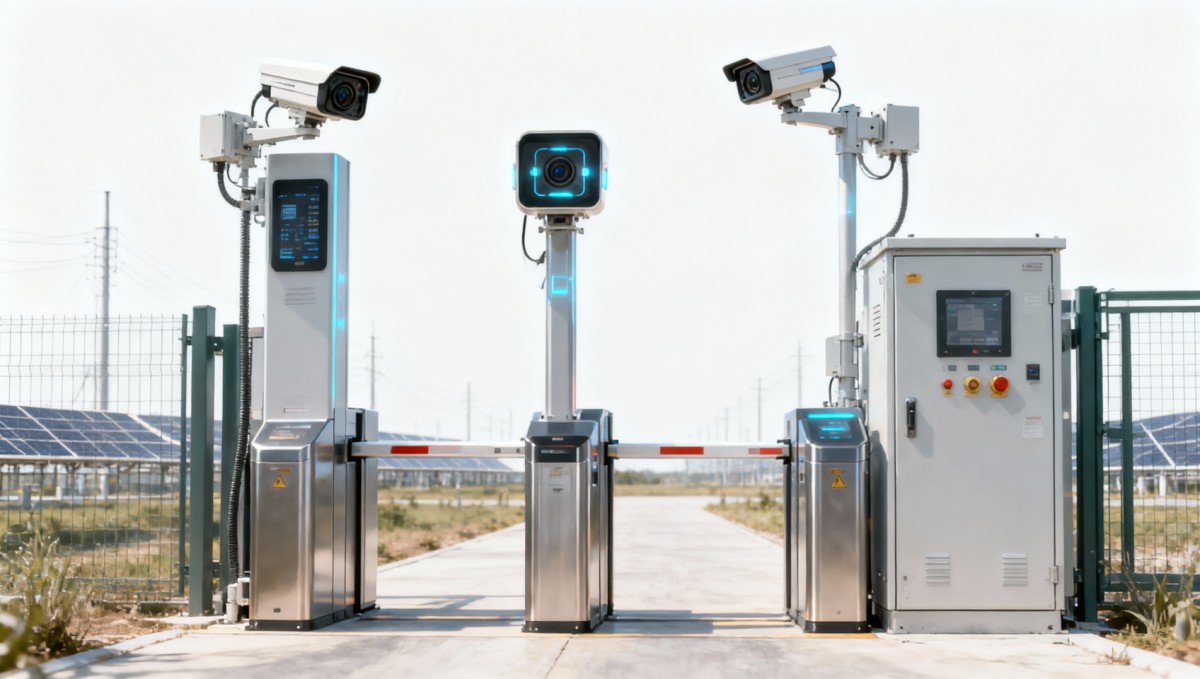
A false reject in facial recognition access control means an authorized worker is denied entry. In a solar farm, wind site, battery storage plant, or distributed energy control room, that is not a minor inconvenience. It can delay a maintenance window, interrupt contractor scheduling, and create unsafe crowding at gates during shift handover. For sites running 24/7 operations, even a 2–5 minute delay per person can accumulate into material downtime across a week.
Renewable energy sites also present harder biometric conditions than standard office buildings. Operators may wear helmets, eye protection, dust masks, insulated jackets, or anti-glare face shields. Morning sun, backlight, fog, rain, salt spray, and blowing dust all change image quality. A system that performs well in a showroom can behave very differently after 6–12 months of outdoor use or during seasonal weather swings.
This is why edge AI facial recognition access control should be evaluated as an operational technology component, not as a generic smart building feature. NHI’s data-driven approach is useful here: protocol claims, camera claims, and AI claims must be verified under real interference, real latency, and real environmental stress. In renewable energy facilities, trust depends on measurable field behavior rather than brochure language.
For information researchers, the core question is not only “Does facial recognition work?” but “Under which conditions does false rejection increase?” For operators, the concern is smooth entry during busy periods. For procurement teams, the issue is lifecycle stability across 2–4 procurement cycles. For decision-makers, the priority is balancing security, uptime, compliance, and total deployment risk.
Typical site conditions that increase FRR
- Strong backlighting at sunrise or sunset near perimeter gates in solar and wind installations.
- Personal protective equipment that covers 20%–50% of facial landmarks, especially masks, helmets, and glasses.
- Network instability that interrupts cloud verification, creating delays that users interpret as access failure.
- Temperature shifts, dust, moisture, and vibration that affect sensors, enclosure windows, and camera focus over time.
How edge AI and sensor fusion reduce false rejects in the field
Edge AI changes the access control architecture by processing biometric decisions locally instead of sending every event to a remote server. In practical terms, local inference reduces dependence on unstable WAN links and lowers response time during high traffic periods. In many industrial deployments, buyers look for door decision latency within a low sub-second range under normal conditions, because long pauses cause user frustration and tailgating behavior even when recognition accuracy is acceptable.
False rejects often come from weak input quality rather than poor algorithms alone. That is where sensor fusion lidar and camera become valuable. A visible camera can capture facial texture, while lidar or depth sensing helps validate position, distance, and three-dimensional contour. This combination improves performance when users approach from inconsistent angles or when background lighting changes sharply across a 1–3 meter capture zone.
In renewable energy facilities, edge computing for smart city and industrial environments also helps with privacy and resilience. Local processing can limit unnecessary transmission of biometric data and supports architectures where only events, logs, or encrypted templates move upstream. For facilities with segmented OT networks, that is often easier to govern than always-on cloud streaming, especially when security teams need stricter control over data flows.
NHI’s verification mindset is especially relevant because access control cannot be judged by one headline metric. Buyers should examine at least 3 layers at once: biometric capture quality, edge inference speed, and protocol behavior between door controller, identity server, and site management platform. A low false reject setup can still fail operationally if the device drops packets, reboots under temperature stress, or loses synchronization with access rules.
Key technical levers that influence rejection performance
1) Local inference and caching
If authorized templates and access rules are cached on the edge node, the system can keep operating through short network disruptions. This is important for remote wind farms, substation perimeters, and temporary maintenance compounds, where link quality may fluctuate across the day. Procurement teams should ask how long the node can operate in offline mode and how rule reconciliation is handled after connection recovery.
2) Multi-modal capture path
A single RGB camera may be sufficient indoors, but outdoor sites benefit from depth support, infrared assistance, or sensor fusion lidar and camera. These options help when glare, shadows, or partial occlusion reduce feature quality. For harsh environments, the right capture path can lower repeated attempts and shorten queue time during shift peaks.
3) Environmental hardening and enclosure design
The sensor can be strong while the installation is weak. Lens contamination, enclosure reflection, misaligned mounting height, and vibration from nearby machinery all affect results. Site planners should define mounting distance, sunshade design, cable routing, and cleaning intervals from day one rather than treating them as afterthoughts.
Which deployment model fits solar, wind, storage, and hybrid energy sites?
Not every renewable energy facility needs the same access control architecture. A battery energy storage site may prioritize anti-tailgating and audit trails. A wind farm may value offline operation and remote diagnostics. A utility-scale solar project may need fast contractor onboarding during construction, then tighter credential governance during operation. Matching edge AI facial recognition access control to site type prevents both overbuying and under-specifying.
The table below compares common deployment contexts and the access control priorities that typically affect false reject risk, uptime, and procurement decisions. The goal is not to force one design, but to show how environmental and operational conditions should shape technical selection.
The comparison shows why protocol silos and isolated device claims are dangerous. A site may use multiple subsystems for gates, CCTV, alarms, visitor management, and energy control. NHI’s ecosystem perspective matters because interoperability, latency, and local processing behavior must be validated together. In mixed estates, edge computing for smart city and industrial environments is often most effective when each subsystem is benchmarked under realistic load rather than accepted on marketing terms.
For operators, the practical question is simple: can the system keep people moving during real work conditions? For procurement teams, the deeper question is whether the selected architecture will remain supportable over the next 3–5 years as standards, identity policies, and facility expansions evolve.
A quick selection checklist by scenario
- Construction-heavy sites should prioritize rapid enrollment, temporary permissions, and queue handling at shift start.
- Remote assets should prioritize offline decision capability, local storage, and remote health monitoring.
- High-security energy assets should prioritize layered authentication, auditability, and role-based zoning.
What should procurement teams verify before buying?
Procurement mistakes usually come from buying a camera, not a verified access workflow. To reduce false rejects, buyers should request a structured review covering biometric behavior, edge compute capability, installation constraints, and integration path. In practice, at least 5 checks should be completed before a pilot: operating environment, PPE impact, local processing mode, network dependence, and compatibility with existing control infrastructure.
The most common hidden cost is rework after installation. If mounting height is wrong, if sunlight direction was ignored, or if the template enrollment process is poor, the system may show elevated false rejects from the first week. That leads to repeated service visits, frustrated users, and manual overrides that weaken security. A realistic procurement process should include a site survey, pilot validation, and acceptance criteria defined in advance.
The table below can be used as a practical evaluation framework for renewable energy buyers. It helps distinguish between attractive product claims and deployment-ready capability. It also aligns with NHI’s emphasis on verifiable data, protocol compliance, and stress testing rather than generic “smart” positioning.
A strong supplier should be able to discuss deployment steps in concrete terms. Typical pilot and validation cycles often run 2–6 weeks depending on site readiness, integration scope, and user enrollment volume. If a vendor cannot explain testing conditions, fallback logic, and maintenance assumptions clearly, the buyer should treat claimed performance with caution.
Recommended 4-step buying process
- Define the risk profile by site: remote asset, high-security storage, construction-phase solar, or multi-building energy campus.
- Run a pilot under real PPE, lighting, and traffic conditions instead of relying on showroom demos.
- Confirm interoperability with controllers, networks, and reporting workflows already used by the facility.
- Set acceptance criteria for latency, rejection handling, offline behavior, and maintenance responsibility before rollout.
Compliance, operational risk, and common misconceptions
Many buyers assume that reducing false rejects is only a software problem. In reality, it is an end-to-end systems issue involving optics, edge hardware, firmware stability, enrollment quality, user behavior, and governance. A renewable energy operator should review access control with at least 3 teams involved: security, operations, and IT or OT integration. If one group is missing, blind spots appear quickly.
Compliance is another area where edge AI can help, but only if designed properly. Local processing may support privacy-by-design principles because fewer raw images need to travel across networks. Still, organizations must define retention periods, event logging rules, template protection, administrator permissions, and cross-border data handling. For multi-country energy groups, those governance questions should be settled before scaling from one site to ten.
Another misconception is that a low false reject system should simply be made less strict. That can increase false accepts and weaken perimeter security. The better route is to improve capture quality, add depth verification, optimize enrollment, and segment access policies by zone. High-value energy areas such as battery rooms, control rooms, and switching interfaces often require a more layered approach than general staff entrances.
NHI’s technical benchmarking philosophy is relevant because it separates claims from engineering reality. In access control, the right question is not who uses the boldest marketing phrase, but which solution withstands interference, latency pressure, environmental stress, and policy complexity. For procurement leaders, that mindset reduces long-term risk more effectively than chasing the lowest initial quotation.
FAQ for renewable energy buyers
How should we evaluate false rejects during a pilot?
Use real users, real PPE, and real lighting windows. A useful pilot normally covers multiple periods such as morning glare, midday brightness, and evening low light across at least several operating days. Include repeated entries, not just first-pass demos, and document fallback behavior when the network link is degraded or unavailable.
Is cloud-based facial recognition always worse than edge AI?
Not always. Cloud can support centralized management and analytics, but for remote or latency-sensitive renewable energy sites, edge AI facial recognition access control usually offers stronger resilience. The best design is often hybrid: local decision-making for door access, with upstream synchronization for policy, logs, and maintenance monitoring.
When is sensor fusion lidar and camera worth the extra investment?
It is usually justified when the site faces unstable lighting, variable user approach angles, or partial facial occlusion from PPE. Outdoor solar, wind, and industrial energy environments often fit that profile. If a site is indoor, controlled, and lightly used, a simpler capture stack may be sufficient after testing.
What delivery and rollout timing should buyers expect?
Timelines vary by integration depth, site readiness, and enrollment scope. In many B2B projects, buyers should plan around several stages: survey, pilot, integration, and acceptance. For remote assets, extra time may be needed for field logistics, civil preparation, and coordination with safety shutdown windows.
Why work with a data-driven evaluation partner
NexusHome Intelligence approaches access control as part of a wider connected ecosystem, not as an isolated device purchase. That matters in renewable energy because identity management, edge computing, connectivity protocols, and energy-site operating conditions intersect. A decision that looks inexpensive in a catalog can become costly when it triggers repeat service visits, protocol conflicts, and avoidable false rejects.
Our value lies in translating fragmented hardware claims into practical engineering judgment. We focus on benchmark thinking: local processing behavior, protocol reliability, environmental suitability, and measurable deployment risk. For procurement teams and decision-makers, that means clearer comparison between options. For operators, it means fewer surprises after commissioning. For researchers, it means access to a framework grounded in verification rather than slogans.
If you are reviewing edge AI facial recognition access control for a solar farm, wind site, battery storage facility, or hybrid energy campus, you can consult NHI on concrete topics: parameter confirmation, sensor fusion lidar and camera suitability, protocol compatibility, pilot planning, delivery cycle expectations, compliance considerations, sample evaluation, and quotation alignment with deployment scope.
A productive next step is to share your site type, environmental conditions, current access workflow, and integration constraints. From there, the discussion can move to shortlist criteria, pilot design, acceptance checkpoints, and realistic rollout priorities. In a market crowded with broad claims, engineering truth is the fastest path to lower false rejects and more dependable access control.
Protocol_Architect
Dr. Thorne is a leading architect in IoT mesh protocols with 15+ years at NexusHome Intelligence. His research specializes in high-availability systems and sub-GHz propagation modeling.
Related Recommendations
- Lina Zhao (Security Analyst)How to Judge Biometric Spoofing Resistance
- Lina Zhao (Security Analyst)Edge AI facial recognition access control and false rejects
- Lina Zhao (Security Analyst)Smartwatch OEM Factory: What Quality Control Gaps Emerge When Biometric Sensors Shift to High-Volume Lines?
- Lina Zhao (Security Analyst)Smart home hardware testing: Why lab-grade validation matters more than certification stickers
- Lina Zhao (Security Analyst)Biometric false rejection rate FRR: Why lab-measured FRR often misleads real-world access control decisions
- Lina Zhao (Security Analyst)Smart security access control: How biometric sensor metrics shift when tested with gloves or wet fingers
- Lina Zhao (Security Analyst)Biometric sensor metrics: What ‘1:N matching speed’ hides about concurrent user throughput limits
- Lina Zhao (Security Analyst)Hardware Compliance Inquiry: When a 'Yes' on Paper Doesn’t Guarantee Real-World Security
- Lina Zhao (Security Analyst)Biometric Sensors and Smart Home Compliance: When Lab-Approved Doesn’t Mean User-Ready
- Lina Zhao (Security Analyst)Biometric fingerprint sensor module performance degrades faster than expected in humid environments
Analyst