
Biometric Fingerprint Sensor Module Selection Guide
author
Choosing the right biometric fingerprint sensor module is not mainly about buying the “most advanced” part on paper. For smart buildings, distributed energy sites, and access systems tied to renewable-energy operations, the best module is the one that balances spoofing resistance, false rejection rate (FRR), power consumption, environmental durability, and integration fit with your controller, lock, or gateway. For most buyers and specifiers, the real decision comes down to this: can the module stay reliable in the field, work with your system architecture, and keep security risks and maintenance costs under control over time?
What should you evaluate first when selecting a biometric fingerprint sensor module?
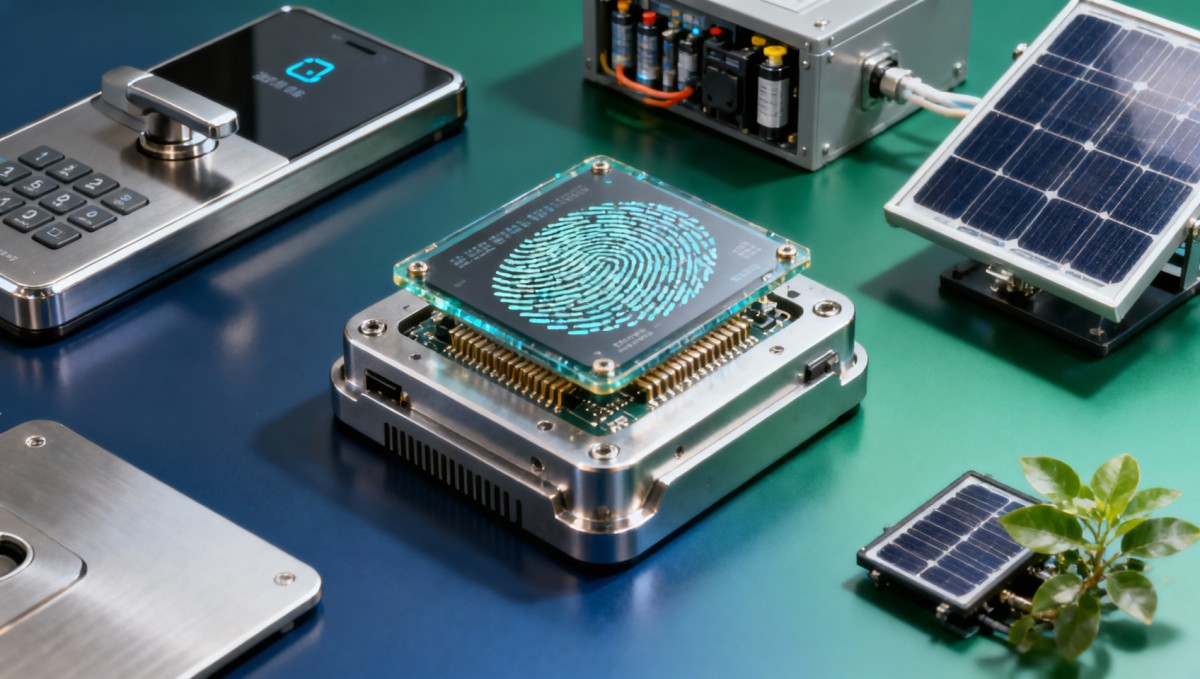
If you are comparing fingerprint modules for energy-aware access control, do not start with marketing labels. Start with deployment reality. A good biometric fingerprint sensor module selection guide should help you screen products in this order:
- Security performance: How well does the module resist spoofing attempts, lifted prints, silicone molds, or replay attacks?
- Recognition reliability: What are the actual FRR and FAR values under real operating conditions, not just lab conditions?
- Power profile: What are active, standby, wake-up, and enrollment power figures for battery-backed or solar-assisted systems?
- Environmental tolerance: Can it maintain stable fingerprint capture in dust, rain, condensation, heat, cold, and outdoor cabinet conditions?
- System integration: Does it support your MCU, smart lock controller, edge node, or building access platform, including Matter-related architecture where relevant?
- Lifecycle cost: How many service calls, failed scans, user complaints, and replacements should you expect over 2–5 years?
For researchers and engineers, these criteria reduce technical uncertainty. For operators, they reduce day-to-day failure. For buyers and decision-makers, they reduce the risk of selecting a module that looks good in a datasheet but performs poorly after rollout.
Why FRR matters more than many buyers expect
In real-world access control, false rejection rate (FRR) often creates more operational pain than raw false acceptance concerns. A module can appear secure, but if authorized users are frequently rejected, the result is queueing, support tickets, manual overrides, and loss of trust in the system.
This is especially important in renewable-energy and smart infrastructure settings, where personnel may wear gloves, have dry skin, wet fingers, dusty hands, or need quick access during maintenance windows. In these environments, a lab-tested FRR number is only a starting point.
Ask suppliers for FRR data under conditions such as:
- Dry, wet, and contaminated fingers
- High and low temperature exposure
- Direct outdoor light or reflective metal surroundings
- High-frequency use during shift changes
- Users with worn fingerprints or older skin patterns
A practical rule: if your use case involves high traffic, field workers, or critical access points, choose a module with proven stability under imperfect finger conditions, even if it costs more. The added hardware cost is often far lower than the long-term cost of access failures.
How to assess biometric spoofing resistance without relying on buzzwords
Biometric spoofing resistance is one of the most important buying criteria, but also one of the most poorly explained in vendor literature. Claims such as “high security” or “anti-fake fingerprint” are not enough.
You should look for evidence of:
- Liveness detection: The module should distinguish real skin characteristics from fake surfaces.
- Multi-layer matching logic: Better modules do more than simple image matching.
- Template protection: Fingerprint data should be stored and transmitted securely, ideally in encrypted or secure-element-backed form.
- Attack test records: Ask whether the module has been evaluated against gelatin, silicone, latex, film overlays, or high-resolution print attacks.
For enterprise buyers, the key question is not whether a module blocks every attack. It is whether its spoofing resistance is appropriate for the threat level of the deployment. A residential cabinet lock has a different risk profile from a battery storage room, inverter control area, or multi-tenant smart facility.
If the vendor cannot explain the anti-spoofing method in technical terms, that is a warning sign.
Which sensor type fits your application best?
Not all fingerprint modules use the same sensing approach. The right choice depends on environment, budget, and security level.
- Capacitive sensors: Common, cost-effective, compact, and suitable for many smart locks and indoor access points. They generally offer good performance, but can be affected by moisture, contamination, or certain surface conditions.
- Optical sensors: Useful in some applications, but module size and environmental sensitivity can vary. Quality differs widely by vendor.
- Ultrasonic or advanced sensing designs: Often stronger in complex surface reading and some anti-spoofing scenarios, but cost and integration complexity are usually higher.
For many renewable-energy and commercial building deployments, the best answer is not necessarily the highest-end sensor type. It is the one that delivers stable matching in the actual access environment and fits your power and enclosure constraints.
How power consumption affects renewable-energy and smart building deployments
In a renewable-energy context, power efficiency is not a side issue. It directly affects uptime, maintenance cycles, and design choices for remote or low-power systems. A fingerprint module may be technically strong, but if it drains standby power or has inefficient wake-up behavior, it can create major issues in solar-powered gates, remote cabinets, battery-supported smart locks, or off-grid monitoring enclosures.
Check these power metrics carefully:
- Standby current: Critical for always-available access systems
- Wake-up speed and wake current: Important for user experience and energy efficiency
- Peak scan current: Relevant for battery sizing and power rail design
- Enrollment energy cost: Often overlooked in systems with frequent user onboarding
- Power-save modes: Useful in low-traffic access points
For buyers evaluating total cost of ownership, lower power consumption can translate into fewer battery replacements, fewer service visits, and more flexibility in access point placement.
What integration questions should engineers and buyers ask?
Even a strong sensor can fail as a product choice if integration is weak. This is where many projects lose time and budget. A biometric fingerprint sensor module should be evaluated not just as a part, but as a subsystem.
Important questions include:
- What communication interfaces are supported: UART, SPI, USB, I2C, or custom protocol?
- Does the module provide an SDK, API, or reference firmware?
- How are templates stored: on-module, host-side, or hybrid?
- Can the module work with secure MCUs, smart lock boards, or edge gateways already in your design?
- What are the latency implications for unlock flow or access approval logic?
- How does it interact with broader smart lock Matter compatibility planning?
On the last point, fingerprint modules themselves are usually not “Matter devices” in isolation. But they may be embedded inside smart locks or access systems that need to operate within a Matter-oriented building ecosystem. So the real issue is not whether the fingerprint module is natively Matter-compatible, but whether it can be integrated into a lock or controller architecture that supports your connectivity roadmap.
How to compare modules for smart locks, commercial buildings, and energy sites
A practical selection framework is to compare modules against the actual scenario instead of using one universal score.
For smart residential or light commercial locks:
- Prioritize fast unlock speed, low FRR, compact size, and low standby power
- Good user tolerance is often more important than maximum anti-attack complexity
For commercial buildings and multi-user systems:
- Prioritize user database management, stable repeated use, integration with access controllers, and auditability
- Look closely at enrollment workflow and permission management
For renewable-energy infrastructure and remote equipment access:
- Prioritize environmental sealing, low-power operation, high reliability, and resistance to dirty or damaged fingerprints
- Serviceability and field failure rates matter as much as biometric accuracy
This use-case-based comparison is often the fastest way for business evaluators and enterprise decision-makers to narrow the field.
What procurement teams should ask suppliers before approving a module
To avoid weak selections, procurement and technical teams should ask for measurable evidence, not generic brochures. A supplier should be able to answer questions such as:
- What are the tested FAR and smart lock false rejection rate FRR values?
- Under what environmental conditions were those results measured?
- What anti-spoofing tests were performed, and with what pass criteria?
- What is the standby and peak power profile in a reference design?
- What is the expected module lifetime and failure rate?
- Is there long-term supply continuity for the sensor and controller components?
- What compliance, data security, and firmware update support are available?
For enterprise decision-makers, one extra question is essential: what happens when the module fails in the field? The quality of diagnostics, remote support, replacement policy, and firmware maintenance often determines whether a deployment remains scalable.
A simple decision model for shortlisting the right module
If you need a fast internal evaluation method, score each candidate module across five weighted categories:
- Security: spoofing resistance, template protection, access logic
- Reliability: FRR, stability, environmental tolerance, user consistency
- Efficiency: standby current, scan current, wake behavior
- Integration: interfaces, SDK support, controller fit, system latency
- Commercial viability: price, supply continuity, support quality, maintenance burden
Then weight the categories based on the actual project. A remote renewable-energy site may weight efficiency and durability more heavily. A premium commercial smart lock may weight user experience and spoofing resistance more heavily.
This approach helps mixed teams—researchers, operators, buyers, and executives—make decisions using a shared framework instead of subjective preference.
Final takeaway
The best biometric fingerprint sensor module is the one that proves itself under your real operating conditions. In most cases, that means looking beyond headline accuracy and evaluating biometric spoofing resistance, smart lock false rejection rate FRR, environmental reliability, integration fit, and power behavior together. For smart buildings and renewable-energy deployments, these factors determine not only security, but also maintenance cost, user acceptance, and long-term project success.
If you compare modules using field-relevant data rather than marketing claims, you will make a safer and more commercially sound decision. In fingerprint module selection, engineering truth matters more than specification theater.
Protocol_Architect
Dr. Thorne is a leading architect in IoT mesh protocols with 15+ years at NexusHome Intelligence. His research specializes in high-availability systems and sub-GHz propagation modeling.
Related Recommendations
- Lina Zhao (Security Analyst)How to Judge Biometric Spoofing Resistance
- Lina Zhao (Security Analyst)Biometric Fingerprint Sensor Module Selection Guide
- Lina Zhao (Security Analyst)Edge AI facial recognition access control and false rejects
- Lina Zhao (Security Analyst)Smartwatch OEM Factory: What Quality Control Gaps Emerge When Biometric Sensors Shift to High-Volume Lines?
- Lina Zhao (Security Analyst)Smart home hardware testing: Why lab-grade validation matters more than certification stickers
- Lina Zhao (Security Analyst)Biometric false rejection rate FRR: Why lab-measured FRR often misleads real-world access control decisions
- Lina Zhao (Security Analyst)Smart security access control: How biometric sensor metrics shift when tested with gloves or wet fingers
- Lina Zhao (Security Analyst)Biometric sensor metrics: What ‘1:N matching speed’ hides about concurrent user throughput limits
- Lina Zhao (Security Analyst)Hardware Compliance Inquiry: When a 'Yes' on Paper Doesn’t Guarantee Real-World Security
- Lina Zhao (Security Analyst)Biometric Sensors and Smart Home Compliance: When Lab-Approved Doesn’t Mean User-Ready
Analyst