
Biometric False Rejection Rate FRR: What Is Acceptable
author
What is an acceptable biometric false rejection rate FRR in real-world smart security access control, and why does it matter for renewable-energy sites, smart buildings, and critical IoT deployments? At NexusHome Intelligence, our smart home compliance laboratory turns marketing claims into measurable truth through smart home hardware testing, biometric sensor metrics, and protocol-level validation—helping procurement teams and decision-makers compare verified IoT manufacturers with confidence across the evolving IoT supply chain.
For renewable-energy operators, FRR is not a theoretical lab metric. It directly affects whether an authorized technician can enter a battery room during a thermal event, whether a maintenance crew can unlock a wind turbine access door in freezing rain, and whether a remote solar site can maintain secure yet workable access control with minimal downtime. In these environments, a biometric lock that rejects legitimate users too often can become an operational risk.
The challenge is that “acceptable” FRR depends on context. A data room inside a utility-scale energy management center has different tolerance levels than an unmanned inverter enclosure, a distributed EV charging cabinet, or a mixed-use smart building connected to a renewable microgrid. Procurement teams therefore need more than vendor claims. They need testing conditions, threshold ranges, fallback logic, and deployment guidance tied to real operating scenarios.
Why FRR Matters in Renewable-Energy Access Control
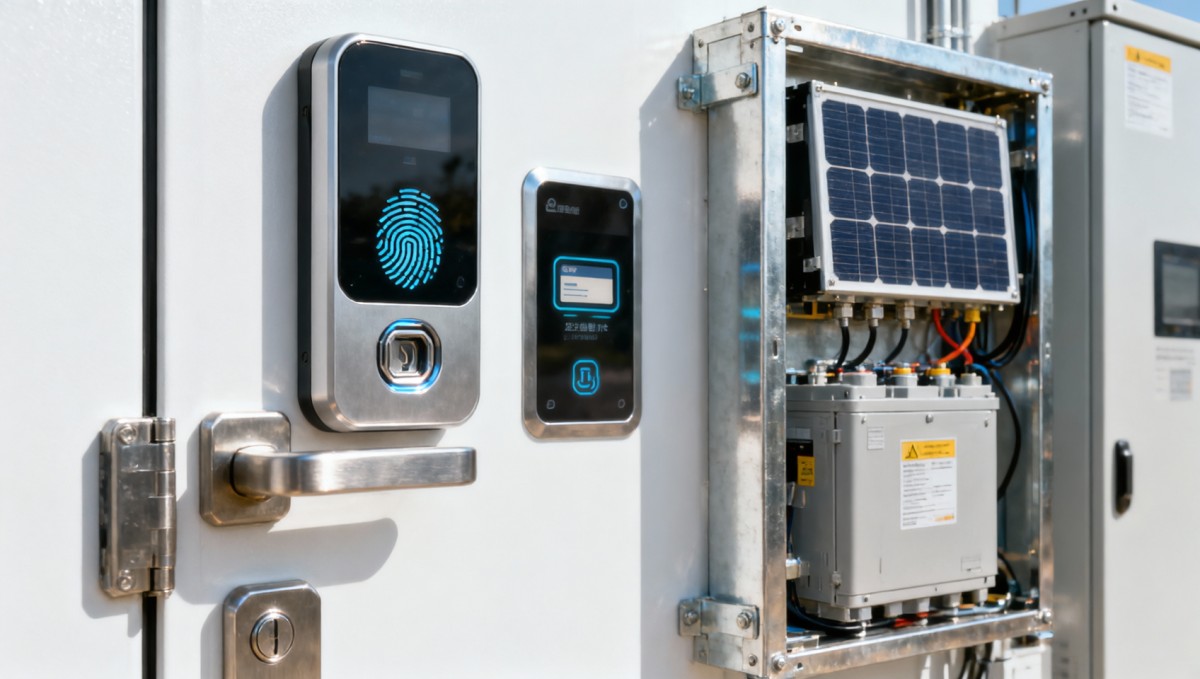
False Rejection Rate refers to the percentage of valid authentication attempts that a biometric system incorrectly denies. In practical terms, if 1,000 legitimate access attempts are made and 20 are rejected, the FRR is 2%. That number may seem low on a product sheet, but in a renewable-energy operation with multi-shift staffing, emergency callouts, and weather exposure, even a 1%–3% rejection range can create meaningful delays.
Renewable-energy sites are unusually demanding for biometric access devices. Fingerprint readers may face dust from solar construction zones, salt spray at offshore-adjacent assets, glove use in winter, and skin dryness in desert installations. Facial recognition systems may face backlighting, helmet interference, or low-light maintenance windows between 5:00 a.m. and 7:00 a.m. These conditions can raise FRR well above controlled indoor benchmarks.
For operators and technicians, a high FRR means lost minutes during scheduled maintenance and potentially dangerous delays during fault response. For procurement managers, it means hidden lifecycle cost: more support tickets, more badge override requests, more mechanical key backups, and more complaints from site personnel. For decision-makers, it may indicate that the chosen hardware is not aligned with actual deployment conditions.
At NHI, we view FRR as part of a broader engineering reality: access control is not only about preventing unauthorized entry; it is also about maintaining continuity, safety, and audited accountability. In a grid-tied battery energy storage system, where alarm response windows may be measured in minutes rather than hours, repeated false rejections can interfere with service-level expectations and compliance workflows.
Common renewable-energy environments that distort FRR
- Utility-scale solar farms with dust, UV exposure, and surface temperatures that may exceed 50°C on enclosure exteriors.
- Wind sites where technicians wear gloves, helmets, and weather protection for 6–12 hour maintenance windows.
- Battery storage rooms where rapid access may be required during alarms, shutdowns, or sensor-triggered inspections.
- Smart buildings connected to renewable microgrids, where access systems must integrate with Zigbee, BLE, Thread, or IP-based infrastructure.
What Is an Acceptable FRR Range by Use Case
There is no single universal FRR threshold for every deployment. A realistic benchmark depends on access criticality, user frequency, environmental stress, and whether a secondary credential is available. In general, indoor controlled environments can tolerate stricter biometric-only logic, while outdoor renewable-energy sites usually require a lower-friction design with documented fallback methods.
As a practical procurement guideline, an FRR below 1% under real operating conditions is strong for controlled technical rooms, 1%–3% is often workable for mixed indoor-outdoor smart infrastructure, and anything above 5% should trigger closer review unless usage frequency is low and backup authentication is immediate. The key phrase is real operating conditions, not showroom testing at room temperature.
Decision-makers should also separate first-attempt FRR from eventual access success. A lock that rejects a user once but accepts the same user on the second attempt within 3 seconds is operationally different from a system that requires multiple retries, app relogin, or remote administrator intervention. In renewable-energy access control, speed to authorized entry often matters as much as nominal FRR.
Indicative FRR guidance by deployment scenario
The table below summarizes practical FRR ranges for renewable-energy and connected building scenarios. These are not absolute rules, but useful screening benchmarks when comparing vendors, test reports, and pilot outcomes.
The main takeaway is that acceptable FRR is not judged in isolation. A 2% FRR may be reasonable at an outdoor solar site with fast multi-factor fallback, while a 2% FRR may be too high for a critical battery room where every delay increases safety and business risk. Context, workflow, and fallback design determine the real acceptability threshold.
A practical decision rule
- Measure first-attempt FRR and total access completion time, not just final success rate.
- Test under at least 3 environmental conditions: normal, peak heat or cold, and contaminated surface use.
- Require a fallback credential path that restores access in under 10 seconds for standard operations.
- For emergency zones, verify manual or supervised override procedures every 90 days.
How to Test FRR in Real Renewable-Energy Conditions
Many biometric vendors still present FRR results gathered in ideal indoor conditions, often with clean sensors, trained users, and short enrollment-to-test intervals. That is not enough for renewable-energy buyers. A serious validation program should examine how FRR changes across temperature, humidity, glare, user behavior, and protocol connectivity. This is especially important when smart locks report events through BLE gateways, Matter bridges, or mixed IP and non-IP systems.
At NHI, protocol-level validation matters because access reliability is not purely biometric. If a smart lock authenticates locally but fails to sync logs due to network congestion, procurement teams lose audit confidence. If a cloud-dependent fallback path stalls during a site outage, the effective user experience worsens even if the biometric engine itself performs well. In renewable infrastructure, edge processing and local fail-secure or fail-operational logic deserve equal attention.
A useful FRR test plan should include at least 30–50 enrolled users, repeated access attempts across 7–14 days, and a clear split between first-attempt rejection, repeat-attempt rejection, and final lockout events. It should also track latency from user touch or face presentation to unlock action. In field operations, a 1-second unlock feels very different from a 5-second unlock, even when both are technically “successful.”
Recommended FRR validation dimensions
The following matrix can help procurement teams and site engineers compare suppliers using consistent criteria rather than marketing language.
This type of testing is especially relevant when sourcing from a fragmented global IoT supply chain. Two products may both claim low FRR, but one may rely on a more stable sensor package, better edge firmware, or stronger protocol handling under interference. NHI’s position is simple: measurable stress testing is more useful than broad claims of “advanced AI” or “industrial-grade reliability.”
Field-test checklist before approval
- Verify performance with gloves removed and after repeated outdoor work exposure.
- Measure unlock time under normal network conditions and temporary gateway disruption.
- Check battery draw in standby and frequent-use cycles, especially for off-grid cabinets.
- Confirm local event logging capacity if the site loses upstream connectivity for 24–72 hours.
How Procurement Teams Should Select Biometric Systems for Energy Sites
For procurement teams, the most common mistake is comparing only headline specs such as FRR, ingress rating, or claimed protocol support. In renewable-energy projects, the better approach is to score devices across four layers: biometric performance, environmental durability, systems integration, and serviceability. A sensor with a nominal FRR of 0.5% may still be the wrong choice if firmware updates are slow, battery replacement intervals are too short, or event logs are difficult to export into enterprise systems.
Operator usability is equally important. If maintenance teams rotate frequently, enrollment workflows must be efficient. If subcontractors require temporary access for 2–14 days, credential provisioning must be time-bounded and auditable. If a site uses mixed communication layers such as BLE at the door, Thread in the building, and IP uplink to the management platform, compatibility and latency should be assessed before any bulk order is placed.
Decision-makers should also define what failure looks like. Is one extra retry acceptable? Is remote administrator approval available after hours? Is a mechanical override required by internal policy? Procurement quality improves significantly when these questions are answered before vendor comparison, not after installation.
Selection criteria for B2B buyers
The matrix below can be used in RFQ or pilot review to align engineering teams, procurement personnel, and business stakeholders around the same evaluation framework.
In practice, the winning product is often not the one with the lowest claimed FRR, but the one with the most balanced operational profile. Buyers should seek a verified combination of acceptable biometric performance, low support burden, strong interoperability, and reliable local behavior during network interruptions. That is especially true in energy projects where access control is connected to safety, uptime, and audit trails.
Four procurement questions worth asking every supplier
- What is the measured FRR after environmental stress, not only at room temperature?
- How long does unlock take on first attempt and on fallback credential?
- What happens if the site loses internet or gateway connectivity for 48 hours?
- How are firmware updates, event logs, and user enrollment managed across multiple sites?
Deployment Risks, Misconceptions, and Best Practices
One common misconception is that lowering FRR is always an absolute good. In reality, biometric systems balance FRR against False Acceptance Rate, and tuning too aggressively in one direction can affect security posture. Renewable-energy operators should avoid buying devices solely on one published number. The better objective is a balanced access policy that preserves both security and operational flow.
Another frequent mistake is treating enrollment as a one-time setup task. Poor enrollment quality can materially raise FRR later in the field. For fingerprint systems, dry skin, worn fingertips, and rushed registration sessions can reduce matching quality. For face systems, PPE variations, lighting changes, and angle mismatch can create avoidable rejections. A structured enrollment process with user guidance can improve performance without changing hardware.
Maintenance discipline also matters. Dirty sensors, degraded batteries, and delayed firmware updates can gradually increase real-world rejection rates. Renewable-energy sites often prioritize generation assets first and peripheral devices later, but access control should not be neglected. A quarterly maintenance interval is a reasonable baseline for exposed sites, while controlled indoor energy rooms may support 6-month review cycles.
Best practices for stable FRR performance
- Use multi-factor design where biometric authentication is primary but not the sole route to urgent access.
- Run pilot testing on at least 1 high-exposure site and 1 controlled indoor site before enterprise rollout.
- Document acceptable unlock time, retry count, and manual override escalation in site SOPs.
- Review access logs monthly to identify rising rejection patterns linked to weather, shift, or hardware aging.
FAQ for researchers, operators, and buyers
How low should FRR be for a solar or battery site?
For controlled indoor zones, below 1% is a strong target. For outdoor or mixed-condition renewable assets, 1%–3% may be workable if fallback access is fast and audit-ready.
Is biometric-only access a good idea for remote renewable infrastructure?
Usually not. Remote sites benefit from at least one secondary method such as mobile credential, PIN, or managed card access, especially when weather, gloves, or dirty surfaces can raise FRR.
How long should a pilot test run before procurement approval?
A 7–14 day pilot is a useful minimum. For highly exposed environments or multi-site rollouts, 30 days provides better evidence of battery behavior, sensor contamination effects, and shift-based user variance.
What should enterprise buyers ask beyond FRR?
Ask about retry behavior, unlock latency, offline logging, firmware management, protocol interoperability, and maintenance burden. These factors often determine long-term operational value more than a single benchmark number.
An acceptable biometric false rejection rate is the one that matches the risk, environment, and workflow of the renewable-energy site where it will actually be used. For most energy operators, that means looking beyond the headline FRR and evaluating first-attempt success, fallback speed, environmental resilience, and protocol reliability together. A system that performs well in a lab but poorly in dust, glare, cold, or disconnected conditions is not truly acceptable for field deployment.
NexusHome Intelligence helps procurement teams, integrators, and decision-makers replace vague claims with measurable benchmarks across biometric performance, connectivity behavior, and real-world IoT hardware testing. If you are comparing access control devices for solar, wind, battery storage, smart buildings, or broader renewable-energy infrastructure, contact us to discuss validated evaluation criteria, supplier comparison support, and a more data-driven path to deployment.
Protocol_Architect
Dr. Thorne is a leading architect in IoT mesh protocols with 15+ years at NexusHome Intelligence. His research specializes in high-availability systems and sub-GHz propagation modeling.
Related Recommendations
- Lina Zhao (Security Analyst)What Biometric Sensor Metrics Actually Predict Performance
- Lina Zhao (Security Analyst)Why Biometric Sensors Pass Lab Tests but Fail in Use
- Lina Zhao (Security Analyst)How to Compare Biometric Sensor Metrics Across Vendors
- Lina Zhao (Security Analyst)Biometric False Rejection Rate FRR: What Is Acceptable
- Lina Zhao (Security Analyst)Japan METI Expands PSE Certification to Biometric Smart Locks from Apr 2026
- Lina Zhao (Security Analyst)Biometric access control: accuracy or speed first?
- Lina Zhao (Security Analyst)How biometric sensor metrics affect daily usability
- Lina Zhao (Security Analyst)Biometric false rejection rate FRR: what is acceptable?
- Lina Zhao (Security Analyst)How to Judge Biometric Spoofing Resistance
- Lina Zhao (Security Analyst)Biometric Fingerprint Sensor Module Selection Guide
Analyst