
PCBA Solution Mistakes That Raise Maintenance Costs
author
In renewable energy IoT deployments, small PCBA solution errors can trigger recurring failures, longer service cycles, and rising maintenance budgets. For after-sales teams managing smart controls, meters, and edge devices, choosing the right pick and place robot manufacturer is not just a production issue—it directly affects soldering consistency, component reliability, and field repair rates. Understanding these hidden mistakes is the first step toward lowering lifecycle costs and improving long-term system stability.
Why do PCBA solution mistakes matter so much in renewable energy after-sales service?
For after-sales maintenance personnel, a PCBA problem is rarely just a factory issue. In renewable energy systems, boards are embedded in solar inverters, battery management units, smart meters, environmental sensors, gateway controllers, and remote monitoring nodes. When a board fails in the field, the result is not only a replacement part. It can mean truck rolls, site access delays, inverter downtime, data gaps, customer complaints, and repeated diagnostic work.
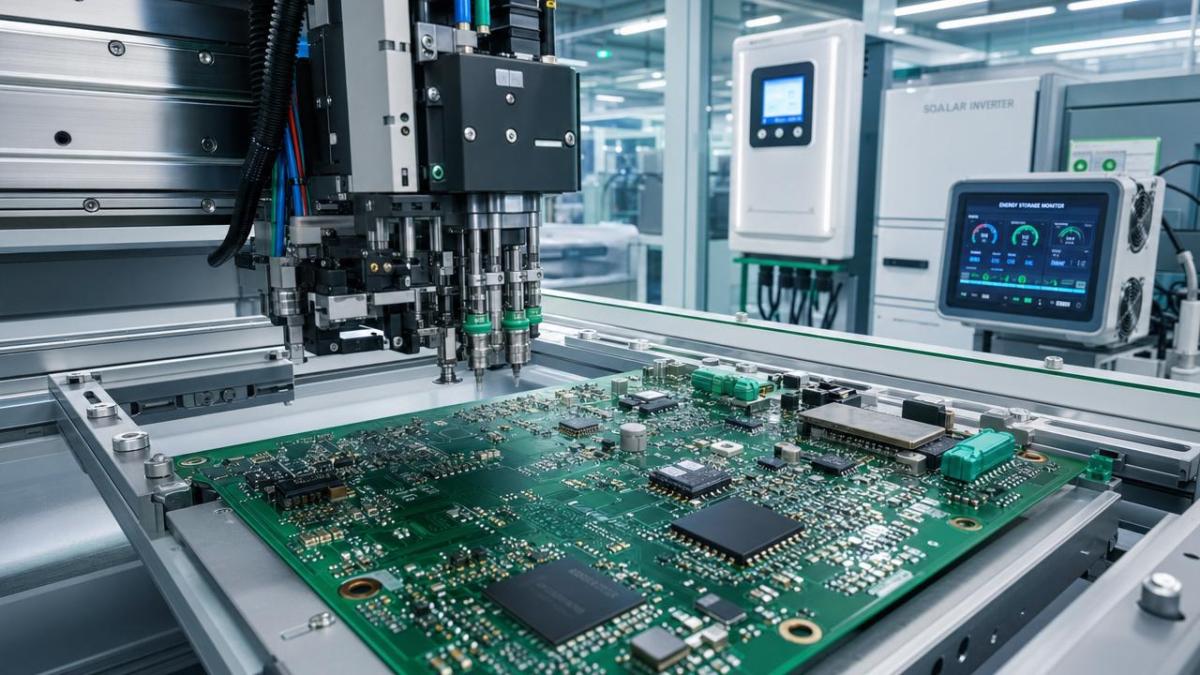
This is why the upstream manufacturing chain matters. A capable pick and place robot manufacturer contributes to placement precision, stable component orientation, lower tombstoning risk, better solder joint consistency, and fewer latent defects. In harsh renewable energy environments where boards face heat cycling, humidity, dust, vibration, and long operating hours, small assembly errors often evolve into expensive maintenance events months later.
NexusHome Intelligence emphasizes data-driven hardware verification because maintenance cost is usually decided long before the service ticket appears. If procurement teams select a PCBA supplier without understanding placement capability, process controls, and long-term reliability data, after-sales teams inherit the consequences. That is why maintenance staff should care about who the pick and place robot manufacturer is, how accurate the line performs, and whether the assembly process fits renewable energy IoT conditions.
What are the most common PCBA solution mistakes that increase maintenance costs?
The most expensive mistakes are often the least visible during incoming inspection. They pass initial tests, then fail under real load or climate stress. Below are the recurring issues that after-sales teams should watch closely.
- Choosing low-precision placement equipment for high-density boards, resulting in misalignment and unstable solder joints.
- Ignoring the actual capability of the pick and place robot manufacturer when handling tiny passives, RF modules, power ICs, and mixed-package components.
- Using a design that does not account for thermal stress near power sections common in solar and energy storage electronics.
- Selecting components based only on price, not lifecycle durability, drift performance, or replacement continuity.
- Insufficient conformal coating, cleaning, or contamination control for outdoor or semi-outdoor installations.
- Weak test coverage, especially no meaningful burn-in, no vibration checks, and no environmental simulation.
- Poor traceability, making failure analysis slow and preventing quick root-cause isolation.
For maintenance teams, the key point is that these mistakes do not create identical symptoms. One batch may show intermittent communication loss. Another may show sensor drift, startup failure, relay sticking, or unexplained resets. Because the symptoms are diverse, field teams can waste hours replacing cables, firmware, or power modules when the true problem is hidden in PCBA process quality.
How does the choice of pick and place robot manufacturer affect field reliability?
Many buyers treat placement equipment as a background detail, but it has a direct effect on service outcomes. A strong pick and place robot manufacturer does more than sell speed. The real value lies in repeatable placement accuracy, feeder stability, vision correction, nozzle suitability, support for mixed components, and process consistency over long production runs.
In renewable energy IoT devices, boards often combine communication modules, microcontrollers, sensors, protection circuits, and power conversion sections on limited space. If placement is slightly off, the board may still pass functional test at room temperature. But under temperature cycling inside an inverter cabinet or rooftop enclosure, marginal joints can degrade. The maintenance consequence is intermittent failure, which is one of the most expensive fault types to diagnose.
A reliable pick and place robot manufacturer usually supports better machine calibration, finer component recognition, and stronger process documentation. This reduces variation between batches. For after-sales teams, lower batch variation means fewer mystery failures and more predictable spare part behavior. In practice, that can shorten service time, improve first-time fix rates, and reduce repeat site visits.
When evaluating a supplier, maintenance teams should not ask only whether the board works. They should ask whether the manufacturing line can maintain stable output for the exact bill of materials, board density, and environmental profile required by renewable energy applications. That question often reveals the difference between a low purchase price and a low lifecycle cost.
Which warning signs suggest the PCBA solution is likely to create future service problems?
Maintenance personnel can often identify risk early if they know what to request from engineering or procurement. The following table summarizes common warning signs and what they usually mean for long-term service performance.
These signs are especially important in distributed renewable energy deployments. A single rooftop or utility-edge device might seem low value, but when the same board design is deployed across hundreds or thousands of sites, even a 1% assembly weakness can become a major maintenance budget line.
What mistakes happen when buyers focus on price instead of total maintenance cost?
The most common mistake is evaluating PCBA quotes as if all boards are equal once they pass end-of-line test. They are not. A lower quote can hide weaker feeder systems, older placement platforms, lower inspection coverage, and less capable support from the pick and place robot manufacturer behind the production line.
For after-sales teams, the true cost shows up later in four areas. First, diagnosis takes longer because intermittent faults are difficult to isolate. Second, spare consumption rises because replacing one suspected module does not always solve the root issue. Third, labor cost increases due to return visits. Fourth, customer confidence drops, which matters greatly in renewable energy projects where uptime and reporting continuity are tied to financial performance.
A better approach is to compare suppliers using lifecycle indicators: expected field failure rate, batch consistency, supported test methods, environmental durability, traceability depth, and responsiveness during root-cause analysis. If one supplier works with a higher-grade pick and place robot manufacturer and can prove stable placement for your exact board architecture, that advantage can outweigh a modest difference in unit price.
In short, low-cost assembly can be expensive service infrastructure. Maintenance teams should actively join supplier reviews because they understand which defects create the most field burden.
How should after-sales teams assess a PCBA supplier before problems reach the field?
After-sales personnel do not need to become SMT engineers, but they should ask practical questions that link manufacturing quality to future service load. Start with the assembly process. Ask which pick and place robot manufacturer is used, what package sizes are routinely supported, how placement accuracy is verified, and how often calibration is performed. Then move to application fit. Ask whether boards have been validated under temperature cycling, humidity exposure, vibration, power fluctuation, and long-duration operation relevant to renewable energy installations.
It is also useful to request defect history by product family. A mature supplier should be able to discuss common failure modes, corrective actions, and whether problems were linked to component quality, stencil design, reflow profile, or placement stability. If the answers are vague, the process may not be mature enough for large-scale field deployment.
Another critical point is traceability. Maintenance teams should confirm whether each board can be tied to a production date, component lot, software version, and inspection record. Without that, every field issue becomes a manual investigation. With strong traceability, a service team can quickly determine whether a failure is isolated or batch-related and respond faster.
Finally, request cooperation rules for failure analysis. The best suppliers are not just board vendors; they are technical partners. They can analyze returned units, compare lot data, correlate failures with assembly conditions, and help prevent recurrence. This kind of partnership is far more valuable than a low initial quote from a supplier with weak technical support.
Which practical checks can reduce maintenance risk in solar, storage, and smart energy IoT devices?
For renewable energy hardware, a risk-reduction checklist should be specific rather than generic. Before approving a PCBA solution, verify that the design separates heat-sensitive components from power hotspots where possible. Confirm that coatings and cleaning processes suit outdoor dust, humidity, and possible chemical exposure. Review the component strategy for long-life capacitors, connectors, relays, and communication modules. Ask whether the pick and place robot manufacturer and the assembler have proven results on similar mixed-technology boards.
From a service perspective, insist on realistic validation. That includes thermal cycling, high-load runtime, communication stress, and repeated power interruption testing. Renewable energy systems often operate in environments where unstable grid conditions, enclosure heating, and seasonal moisture can expose weaknesses that lab-perfect samples never show.
It is also wise to review maintainability at the board level. Can key failures be isolated quickly? Are diagnostic points accessible? Is firmware recovery practical? Are replacement modules standardized across product generations? Good PCBA decisions reduce both failure frequency and service complexity, and both matter when maintenance teams manage large distributed fleets.
What should you clarify first if you plan to source or improve a PCBA solution?
If you need to confirm a new solution, compare suppliers, or reduce recurring field faults, begin with the questions that connect manufacturing to maintenance outcomes. Clarify the target environment, expected service life, key failure symptoms already seen in the field, and the acceptable cost of downtime. Then ask the supplier to map those requirements to assembly capability, validation scope, traceability depth, and support process.
For many organizations, the most useful starting points are these: Which pick and place robot manufacturer supports the line? What placement and inspection data can be shared? How is long-term reliability verified under renewable energy conditions? What are the standard failure-analysis steps for returned boards? How are component changes controlled across batches? And what service documentation will be available to help after-sales teams diagnose issues faster?
When those questions are answered early, procurement becomes smarter, engineering validation becomes more relevant, and maintenance costs become more controllable. In a market moving toward connected energy infrastructure, the right PCBA solution is not just about production efficiency. It is about building hardware that stays stable, serviceable, and trustworthy throughout its operating life.
Protocol_Architect
Dr. Thorne is a leading architect in IoT mesh protocols with 15+ years at NexusHome Intelligence. His research specializes in high-availability systems and sub-GHz propagation modeling.
Related Recommendations
- NHI Data Lab (Official Account)PCBA Solution Mistakes That Raise Maintenance Costs
- NHI Data Lab (Official Account)How PCBA Solutions Affect Renewable Equipment Lifespan
- NHI Data Lab (Official Account)PCBA Solutions Behind Smarter Inverter Control Boards
- NHI Data Lab (Official Account)Wi-Fi 7/Matter Dual-Mode PCBA Lead Times Hit 10 Weeks
- NHI Data Lab (Official Account)Wi-Fi 7 + Matter Dual-Mode PCBA Lead Times Extend to 10 Weeks
- NHI Data Lab (Official Account)How Trusted Are Trusted Smart Home Factories?
- NHI Data Lab (Official Account)What Makes a Smart Home Supplier Directory Useful?
- NHI Data Lab (Official Account)How to Verify Claims From IoT Manufacturers
- NHI Data Lab (Official Account)Where IoT Supply Chain Audits Often Miss Risk
- NHI Data Lab (Official Account)What Smart Home OEM Data Can Reveal Before Sourcing
Analyst