
How to Verify Claims From IoT Manufacturers
author
In renewable energy and smart infrastructure projects, verifying supplier promises is no longer optional. From protocol latency benchmark results to Matter standard compatibility, buyers need evidence—not slogans. This guide shows how to assess verified IoT manufacturers through IoT hardware benchmarking, smart home hardware testing, and IoT supply chain audit methods, helping procurement teams and decision-makers identify trusted smart home factories with confidence.
Why verification matters in renewable energy IoT procurement
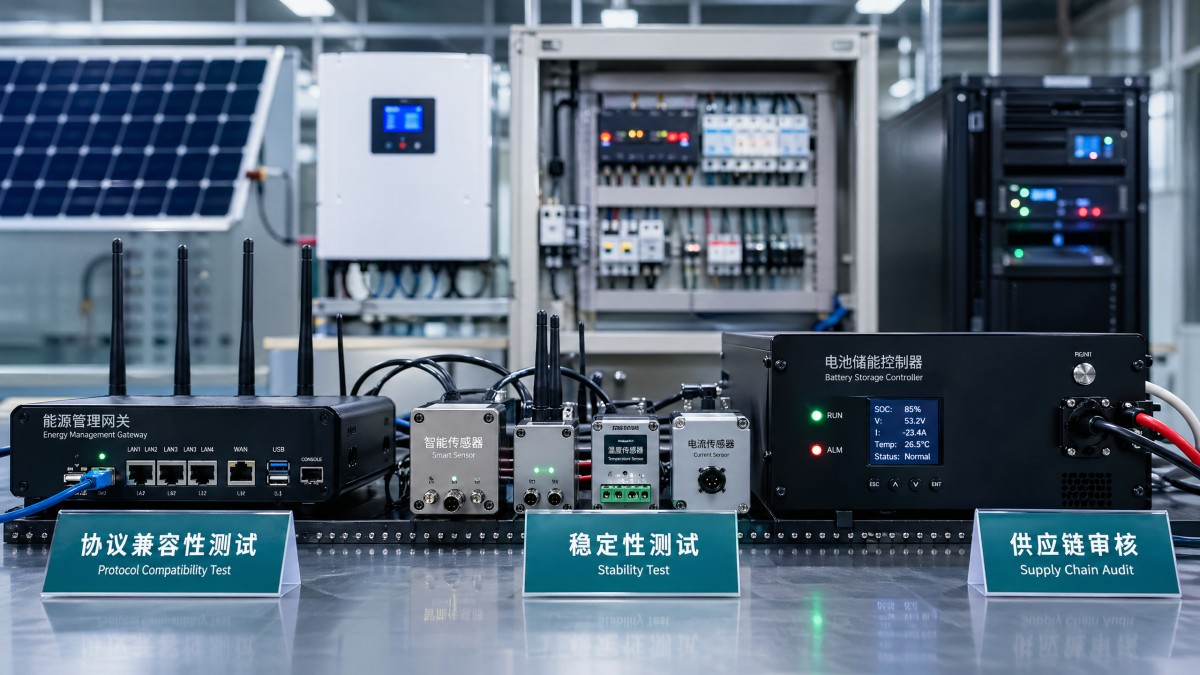
Renewable energy systems now depend on connected hardware far beyond basic monitoring. Solar inverters, battery storage controls, heat pump interfaces, smart relays, environmental sensors, and building energy gateways all exchange data across mixed protocols. In many projects, failure does not begin with a dramatic outage. It starts with 200–500 ms command delays, unstable mesh routing, standby draw higher than expected, or inaccurate metering that distorts optimization logic.
That is why claims from IoT manufacturers must be verified in a structured way. A brochure may say “low power,” “interoperable,” or “secure by design,” but a renewable energy operator needs to know what that means under real operating conditions. For example, an energy management node installed in a commercial microgrid may need continuous operation across seasonal temperature shifts, dense wireless interference, and 24/7 reporting intervals measured in seconds rather than hours.
For procurement teams, the risk is not only technical. Incorrect supplier selection can delay commissioning by 2–6 weeks, create rework during integration, and increase service visits over the first 12 months. For enterprise decision-makers, weak verification can turn a cost-saving sourcing decision into a lifecycle cost problem. In renewable energy environments, total value depends on reliability, protocol behavior, maintainability, and compliance readiness.
NexusHome Intelligence (NHI) approaches this challenge as an engineering filter rather than a marketing directory. Instead of accepting broad claims, NHI focuses on measurable proof: protocol latency, network behavior under interference, standby consumption, sensor drift, security implementation, and supply chain transparency. This data-driven approach is especially relevant when buyers need to compare multiple OEM or ODM partners serving smart energy and smart building deployments.
What renewable energy buyers should verify first
- Protocol fit: confirm whether the device supports the exact stack required for the project, such as Matter, Thread, Zigbee 3.0, BLE, Wi-Fi, Modbus, or gateway translation between them.
- Power behavior: request standby power data, battery discharge assumptions, reporting interval conditions, and load behavior across different duty cycles.
- Measurement accuracy: check how energy monitoring, switching accuracy, and sensor drift are tested over time, especially for peak-load shifting or HVAC automation.
- Deployment resilience: examine results from interference, temperature, packet loss, and long-run stability tests lasting 24–72 hours or longer.
How to verify claims from IoT manufacturers step by step
A reliable verification process should move from claim review to technical evidence, then to production validation. This reduces the chance of approving a supplier based only on samples that perform well in a clean lab but fail in a mixed renewable energy environment. The most useful process usually includes 4 steps: document screening, benchmark review, pilot testing, and factory-level audit.
During document screening, ask for protocol declarations, interface specifications, firmware update methods, component lists where possible, environmental ratings, and test conditions. If a supplier says a device “works with Matter,” ask which device type, which commissioning path, what controller environment was used, and whether multi-node behavior was tested. A valid answer is specific. A weak answer stays promotional.
The second step is benchmark review. This is where IoT hardware benchmarking and smart home hardware testing become useful. Instead of focusing on headline features, compare hard metrics such as latency range, packet stability, relay endurance cycles, battery assumptions, and local processing responsiveness. In renewable energy settings, milliseconds, microwatts, and drift rates matter because they affect automation logic, maintenance intervals, and energy optimization outcomes.
The third and fourth steps are pilot testing and supply chain audit. Run a limited project with 10–50 units, depending on system scale, under realistic reporting intervals and mixed network conditions. Then review manufacturing consistency through an IoT supply chain audit that checks PCBA quality control, firmware version discipline, traceability, and response processes for non-conformance. This is often where trusted smart home factories separate themselves from generic traders.
A practical 4-step verification workflow
- Define the project profile: energy asset type, protocol stack, control frequency, site temperature range, and integration constraints.
- Request evidence: test reports, sample logs, protocol matrices, power profiles, and update procedures under stated conditions.
- Run a pilot: test 2–4 weeks where possible, with real gateway loads, interference sources, and operational thresholds.
- Audit manufacturability: confirm repeatability, QC checkpoints, firmware control, and issue response before scaling to mass procurement.
Questions that expose weak claims quickly
Ask for the exact test condition behind every major claim. What reporting interval was used for battery life? What interference profile was used for mesh stability? Was latency measured on a single hop or across multiple nodes? Was standby power measured with radio idle, connected idle, or periodic wake behavior? These questions are simple, but they reveal whether a manufacturer has engineering discipline or only sales language.
Which technical metrics matter most for smart energy and smart infrastructure?
Not every metric deserves equal weight. In renewable energy and building electrification, the right evaluation framework depends on whether the device controls loads, reports measurements, secures access, or bridges protocols. For example, a sensor node for occupancy-based HVAC logic may tolerate moderate latency but cannot tolerate unstable battery behavior. A relay used in demand response may require tighter switching confidence and better thermal behavior under repeated cycling.
NHI’s verification model is useful here because it divides assessment into five pillars: connectivity and protocols, smart security and access, energy and climate control, IoT hardware components, and smart wearables or health-linked sensing where relevant. For renewable energy buyers, the first four pillars are especially important because they map directly to grid-edge control, smart buildings, and distributed energy management.
The table below summarizes the metrics that usually deserve priority in energy-related projects. These are not fixed acceptance values. They are evaluation categories that help buyers compare suppliers using the same technical lens. A strong verified IoT manufacturer should be able to explain both the result and the test method behind each category.
The main lesson is simple: do not compare suppliers by feature list alone. Compare them by test visibility. A trusted smart home factory or IoT OEM partner should offer enough technical detail for your engineering, operations, and procurement teams to make the same conclusion independently. That internal alignment reduces sourcing risk and speeds approval cycles.
Three metrics often underestimated by buyers
First, standby power is frequently overlooked because it seems small on a single device. Across hundreds or thousands of nodes, however, small differences can accumulate into visible energy waste and shorter maintenance windows. Second, long-term sensor drift can silently reduce optimization value over 6–18 months. Third, firmware control discipline matters because even good hardware can become unreliable if version management is weak.
How to compare suppliers without being misled by brochures
Many procurement problems start when buyers compare suppliers using inconsistent criteria. One vendor shares detailed logs. Another shares only a one-page datasheet. A third claims compliance without showing the exact scope. To make a clean decision, build a common scoring sheet for all candidates. Use the same 5–7 dimensions for every supplier, and require evidence for each score.
In renewable energy projects, buyers usually need to weigh at least five factors: protocol interoperability, energy performance, environmental suitability, manufacturing consistency, and support responsiveness. Price should remain part of the decision, but not the first filter. If two modules differ by a modest unit cost yet one causes delayed commissioning or repeated field visits, the cheaper option may become the more expensive one within the first service cycle.
The supplier comparison table below is designed for B2B renewable energy procurement teams. It supports cross-functional review between engineering, operations, sourcing, and management. You can adapt the weighting to project type, whether you are buying sensor nodes, relays, gateways, energy monitors, or access-linked building controls.
This comparison method helps prevent a common mistake: selecting on specification breadth instead of specification proof. For high-mix renewable energy deployments, proof usually matters more than long feature lists. A manufacturer that admits its limits but documents them clearly is often safer than one that promises universal compatibility without evidence.
A short procurement checklist before approval
- Confirm whether sample performance and mass-production performance are governed by the same BOM and firmware branch.
- Check whether benchmark results were produced over 24-hour, 48-hour, or longer runs, not only short demos.
- Ask how the supplier handles issue isolation between protocol stack, hardware design, and gateway integration.
- Review realistic lead time windows such as 2–4 weeks for samples and longer for validated production, depending on configuration and volume.
What standards, compliance, and audit points should buyers check?
Verification is not complete without compliance review. In renewable energy and smart building projects, hardware may need to align with radio requirements, electrical safety expectations, environmental constraints, cybersecurity policies, and regional data handling rules. Buyers should avoid assuming that one certification or one test summary covers every target market or every deployment scenario.
Instead, separate compliance into three layers. The first layer covers protocol-related declarations and interoperability scope. The second covers electrical, environmental, and installation suitability. The third covers data handling, update governance, and operational access control. This layered review is useful because many sourcing failures happen when only the first layer is checked and the rest are deferred until late-stage integration.
An IoT supply chain audit should also look beyond documents. Buyers should ask how non-conforming lots are identified, how firmware revisions are approved, how component substitutions are controlled, and how test records are stored. In practice, 6 audit points often provide a strong baseline: traceability, incoming inspection, process control, firmware management, final functional test, and corrective action handling.
For global renewable energy rollouts, this matters because one unresolved change can ripple through multiple sites. A sensor module used in a battery room, a smart thermostat interface in a hybrid HVAC system, or a relay embedded in peak-load control all depend on consistency from lot to lot. Stable documentation and controlled change management are often as important as the original performance benchmark.
Six audit points worth reviewing before scale-up
- Traceability by batch, firmware revision, and production date.
- Incoming quality checks for key components that affect radio, sensing, and power behavior.
- In-process controls for SMT, assembly, and functional verification.
- Final test coverage for communications, switching, metering, or sensing functions.
- Controlled firmware update and rollback procedures.
- Corrective action flow for field issues and production deviations.
Common compliance misunderstanding
A frequent mistake is treating “compatible with” as equal to “validated for my deployment.” They are not the same. Compatibility language may describe a broad protocol relationship. Validation should describe tested behavior in a known topology, under known environmental and operational conditions. Procurement teams should insist on that distinction before final approval.
FAQ: practical questions buyers ask before choosing verified IoT manufacturers
How do I verify an IoT manufacturer if I only have a sample unit?
Start with a controlled sample plan. Test communication stability, response time, standby behavior, and update handling under your target environment. A useful sample phase often lasts 2–4 weeks and includes repeated cycles rather than a one-day demo. Ask whether the sample unit uses the same BOM and firmware branch planned for production. If the answer is unclear, your sample result has limited purchasing value.
What matters more in renewable energy projects: protocol support or low power?
Both matter, but the priority depends on the device role. For always-powered relays or gateways, protocol stability and integration behavior often dominate. For battery-powered sensors spread across large facilities, low-power design and reporting assumptions may be equally critical. The correct choice comes from application fit, not from one universal rule. This is why smart home hardware testing should be mapped to the project function first.
How long does supplier verification usually take?
A practical timeline can range from 1–2 weeks for document screening to 2–6 additional weeks for pilot validation and audit preparation, depending on complexity. Simple component replacement projects may move faster. Multi-protocol renewable energy systems with gateways, controls, and metering usually require more time because interoperability checks and field-like testing are harder to shortcut safely.
What are the most common red flags when evaluating trusted smart home factories?
Watch for vague compatibility claims, no explanation of test conditions, inconsistent sample documentation, weak traceability, or inability to explain firmware version control. Another red flag is a supplier that avoids discussing failure modes. Strong manufacturers understand where devices can struggle and can describe mitigation steps clearly. That honesty is often a sign of technical maturity rather than weakness.
Why work with NHI when procurement decisions need technical proof?
NHI is positioned to help buyers move from marketing claims to engineering evidence. In fragmented IoT ecosystems, especially those touching smart grids, solar-linked controls, energy monitoring, and building automation, purchasing decisions need more than catalog comparison. They need standardized benchmarking logic, protocol-aware evaluation, and supply chain visibility that can stand up to internal technical review.
Our value is grounded in independent, data-driven verification across connectivity, security, energy behavior, hardware quality, and edge performance. That means buyers can ask more precise questions before committing budget: Which protocol path is actually stable? Which standby assumptions are realistic? Which factory can maintain lot-to-lot consistency? Which claimed feature is tested, and which is simply advertised?
If your team is evaluating verified IoT manufacturers for renewable energy projects, NHI can support practical decision points such as parameter confirmation, supplier comparison, protocol benchmarking review, smart home hardware testing interpretation, audit preparation, and shortlisting of trusted smart home factories. This is especially useful when project stakeholders include researchers, operators, procurement teams, and enterprise decision-makers who need one evidence-based view.
Contact NHI when you need help with sample evaluation, product selection, expected lead-time ranges, customized verification criteria, compliance review, or quotation-stage technical clarification. A focused discussion at the start can prevent costly rework later. In complex connected energy systems, the best sourcing decision is rarely the one with the loudest claim. It is the one supported by the clearest proof.
Protocol_Architect
Dr. Thorne is a leading architect in IoT mesh protocols with 15+ years at NexusHome Intelligence. His research specializes in high-availability systems and sub-GHz propagation modeling.
Related Recommendations
- NHI Data Lab (Official Account)How Trusted Are Trusted Smart Home Factories?
- NHI Data Lab (Official Account)What Makes a Smart Home Supplier Directory Useful?
- NHI Data Lab (Official Account)How to Verify Claims From IoT Manufacturers
- NHI Data Lab (Official Account)Where IoT Supply Chain Audits Often Miss Risk
- NHI Data Lab (Official Account)What Smart Home OEM Data Can Reveal Before Sourcing
- NHI Data Lab (Official Account)Why Smart Home PCB Assembly Compliance Gets Overlooked
- NHI Data Lab (Official Account)Canton Fair Phase II 2026: Zigbee 3.0 + Matter Dual-Mode PCBA Orders Surge
- NHI Data Lab (Official Account)Canton Fair Phase II 2026: Zigbee 3.0 + Matter Dual-Mode PCBA Orders Surge
- NHI Data Lab (Official Account)Canton Fair Phase II 2026: Zigbee 3.0 + Matter Dual-Mode PCBA Orders Surge
- NHI Data Lab (Official Account)Canton Fair 2026 Day 1: Zigbee 3.0 + Matter Dual-Mode PCBA Orders Surge
Analyst