
What Makes a Smart Home Supplier Directory Useful?
author
A useful smart home supplier directory does more than list vendors—it turns sourcing into evidence-based decision-making. For buyers, engineers, and executives navigating Matter standard compatibility, Zigbee mesh capacity, Wi-Fi 7 IoT modules, and energy-critical devices, the real value lies in verified IoT manufacturers, smart home hardware testing, and transparent IoT supply chain metrics. That is where NexusHome Intelligence brings IoT engineering truth to the global renewable-energy and connected-building ecosystem.
In renewable energy projects, smart home and building devices are no longer optional accessories. They influence load balancing, HVAC optimization, battery storage behavior, access control, and real-time energy monitoring. When a solar-powered residential block, a net-zero office, or a distributed microgrid depends on connected hardware, supplier selection becomes a technical and financial decision, not a catalog exercise.
This is why a smart home supplier directory is only useful when it helps users compare protocol reliability, power consumption, component quality, and deployment readiness. For researchers, operators, procurement teams, and executives, the right directory should reduce sourcing risk, shorten qualification cycles, and expose the difference between marketing claims and engineering performance.
Why renewable-energy buyers need more than a vendor list
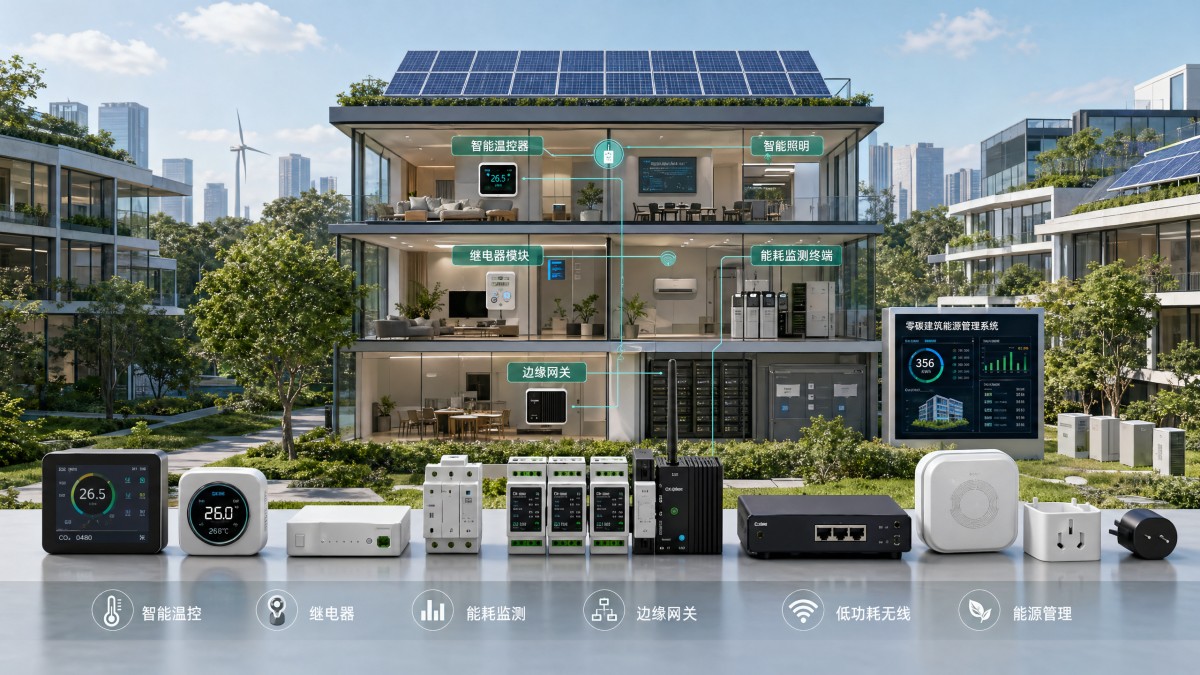
Renewable-energy environments create stricter requirements than ordinary consumer smart home setups. In a connected building powered by rooftop solar, battery storage, and intelligent load scheduling, devices must operate reliably across 24/7 cycles, temperature swings, and network congestion. A supplier directory becomes useful only when it helps buyers understand whether a device can perform under those real conditions.
For example, a smart relay used for energy load shifting should not be judged only by app features. Procurement teams need to know standby consumption in microwatts or low milliwatt ranges, switching durability over thousands of cycles, and whether latency remains stable when connected through Matter, Thread, or Zigbee. A 300 ms delay may be acceptable in lighting control, but it can be problematic when coordinating multiple energy assets during a peak-load event.
Traditional directories often stop at company descriptions, product photos, and broad terms like “low power” or “industrial quality.” That is not enough for a renewable-energy deployment where one unstable controller can affect comfort, energy savings, and maintenance costs for 3 to 5 years. A more useful directory should function as an engineering filter that helps teams identify technically suitable suppliers before they enter lengthy sampling or audit stages.
What decision-makers are really trying to reduce
Across solar-integrated homes, smart apartment portfolios, and commercial green buildings, stakeholders are usually trying to reduce four risks at once: integration failure, hidden operating cost, warranty exposure, and delayed deployment. These risks often emerge after installation, when replacing a device can cost 5 to 10 times more than the original hardware price once labor, downtime, and commissioning are included.
- Integration risk: the product claims compatibility, but multi-protocol performance degrades in mixed networks.
- Energy risk: standby draw is too high for large-scale deployment across 500 to 5,000 endpoints.
- Reliability risk: battery-backed sensors show accelerated degradation after 6 to 12 months in harsh conditions.
- Procurement risk: the supplier can sample quickly but cannot maintain consistent PCBA quality in volume production.
NHI’s model aligns with these needs because it prioritizes verifiable metrics over promotional language. That matters in renewable-energy projects, where connected hardware affects not only convenience but measurable efficiency, carbon reduction targets, and building operating expenditure.
The characteristics of a truly useful smart home supplier directory
A high-value directory should help users compare suppliers through structured technical criteria. In the renewable-energy sector, the most useful directories do not ask, “Who sells this category?” They ask, “Which supplier can support interoperable, low-power, field-reliable deployment in an energy-sensitive environment?” That shift changes the quality of sourcing decisions immediately.
The best directories combine supplier discovery with protocol testing context, hardware validation, and supply chain visibility. If a buyer is sourcing smart thermostats, relays, occupancy sensors, or edge gateways for a low-carbon building, they should be able to compare network standards, update capability, environmental tolerances, and manufacturing consistency in one place.
The table below shows the difference between a generic listing platform and a directory built for serious renewable-energy procurement.
The practical conclusion is simple: a useful directory must connect sourcing with qualification. For teams working on smart buildings, electrified housing, or solar-plus-storage communities, that can reduce supplier screening time from several weeks to a more focused 7 to 14 day evaluation window.
Core selection criteria that should appear in the directory
1. Protocol and ecosystem transparency
A directory should specify whether products are built for Zigbee 3.0, Z-Wave, Thread, BLE, Wi-Fi, or Matter, and ideally explain deployment constraints. In renewable-energy properties, mixed-device networks are common, so multi-node stability matters more than a simple compatibility badge.
2. Energy-performance relevance
Low standby draw, measurement accuracy, and battery endurance are not secondary features. A 0.5 W difference across 1,000 installed devices can materially affect annual energy waste, especially in buildings marketed around efficiency targets.
3. Manufacturing consistency
A useful directory should show more than sourcing geography. Buyers need insight into PCBA control, sensor stability, firmware update policy, and whether a factory can maintain quality between pilot volumes and mass production lots.
How NHI adds value through data-driven verification
NexusHome Intelligence is positioned differently from a standard sourcing platform because it treats supplier evaluation as a technical benchmarking task. That matters in renewable-energy applications where smart home devices support demand response, climate optimization, and distributed energy coordination. Buyers do not just need options; they need proof.
NHI’s five verification pillars make the directory more useful because they connect supplier identity to measurable engineering outcomes. Connectivity and protocol testing helps users understand real performance under interference. Security and access benchmarking matters in shared residential assets and commercial energy sites. Energy and climate control metrics directly connect device behavior to carbon and cost goals.
This approach is especially valuable when renewable-energy projects include hundreds of endpoints across HVAC controls, smart meters, occupancy sensors, relays, locks, and gateways. A supplier may appear strong on paper, but if packet loss rises sharply under interference or if energy-monitoring deviation is too high for load optimization, the procurement value changes immediately.
Why the five-pillar model matters in low-carbon buildings
- Connectivity & Protocols: useful for comparing Matter-over-Thread latency, Zigbee mesh density, and Wi-Fi module throughput in multi-device buildings.
- Smart Security & Access: important for site entry, energy-room security, and edge-device compliance where local processing speed affects privacy and reliability.
- Energy & Climate Control: directly linked to HVAC efficiency, standby losses, and measurement accuracy for peak-load shifting.
- IoT Hardware Components: helps buyers assess PCB-level quality, sensor drift, and battery behavior before large-scale rollout.
- Smart Wearables & Health Tech: relevant for elderly care, assisted living, and wellness-integrated sustainable housing.
For procurement leaders, one of the biggest advantages of a data-driven directory is shortlist quality. Instead of reviewing 30 to 50 suppliers with similar claims, teams can prioritize the 5 to 8 vendors whose technical fit matches the building’s energy architecture, protocol environment, and maintenance model.
For operators, the same data supports better commissioning and after-sales expectations. If a directory includes realistic operating thresholds, firmware behavior, and power benchmarks, site teams can predict where a device fits best and where support risks may appear after deployment.
What procurement teams should compare before shortlisting suppliers
A useful supplier directory becomes most valuable during pre-RFQ comparison. At this stage, buyers should avoid focusing only on unit cost, because renewable-energy projects usually carry longer operating horizons and stricter efficiency expectations. A slightly cheaper device can become more expensive over a 36 to 60 month lifecycle if it causes energy drift, communication failures, or repeated maintenance visits.
The comparison should include protocol fit, energy profile, installation complexity, environmental resilience, and production readiness. This is true whether the product is a smart thermostat for solar-optimized homes, a relay for load scheduling, or a gateway for multi-building energy data aggregation.
The following framework can help procurement teams evaluate suppliers more consistently.
This comparison method helps separate attractive brochures from deployment-ready suppliers. In practice, buyers should also ask whether the supplier can support pilot batches of 50 to 200 units and then scale to 2,000 or more without major BOM changes or firmware fragmentation.
A practical 5-step shortlist process
- Define the energy use case, such as HVAC optimization, solar self-consumption, battery coordination, or access-linked occupancy control.
- Filter suppliers by protocol and installation environment, including indoor, semi-exposed, or high-interference buildings.
- Compare measurable metrics like latency, standby power, battery life range, and control response behavior.
- Request pilot samples and validate performance over a 2 to 4 week test period.
- Confirm production stability, firmware support, and realistic lead times before commercial rollout.
When a directory supports this process, it becomes a strategic procurement tool rather than a passive listing database.
Common sourcing mistakes in connected renewable-energy projects
One common mistake is treating interoperability as a yes-or-no feature. In reality, “works with Matter” or “supports Zigbee” says very little about network behavior at scale. A pilot with 10 devices may perform well, while a live environment with 150 endpoints and multiple access points exposes latency spikes, routing instability, or battery drain.
A second mistake is underestimating standby energy. In efficiency-led developments, small losses multiply quickly. If a single device consumes even 0.8 W on standby and the site deploys 1,200 units, the annual waste becomes significant. For projects designed around carbon reduction, these details matter both economically and operationally.
A third mistake is evaluating the supplier without evaluating the manufacturing system behind the supplier. Renewable-energy projects often run on phased construction schedules. If the hardware partner cannot maintain component consistency, lead time discipline, or firmware continuity, the installation sequence can be disrupted across multiple project milestones.
Warning signs buyers should not ignore
- Technical documents describe compatibility but provide no latency, range, or interference data.
- Battery life claims are presented without duty-cycle assumptions or temperature context.
- Energy-monitoring products lack stated accuracy ranges, calibration practice, or drift guidance.
- Lead times appear unusually short, but there is no clarity on component sourcing resilience or production batching.
How to reduce post-installation surprises
Use a directory that supports evidence-based screening, then validate with application-specific pilots. For a smart energy retrofit, test at least one control cycle involving HVAC, occupancy, and metering. For new construction, run interoperability checks before final device lock-in. Even a 14 day validation window can reveal issues that save months of costly correction later.
This is where NHI’s independent benchmarking perspective is especially relevant. It helps buyers identify “hidden champions” whose engineering discipline is stronger than their marketing volume, which is often where long-term procurement value is found.
FAQ for buyers, operators, and project leaders
How do I know if a smart home supplier directory is relevant to renewable-energy projects?
Check whether it includes data tied to power behavior, controls accuracy, interoperability, and deployment conditions. If the directory only lists brands and product categories, it is useful for discovery but not for technical procurement. A better directory should help you assess devices used in HVAC, load shifting, access control, and energy monitoring.
What metrics matter most when sourcing connected devices for efficient buildings?
Focus on 4 core metrics: standby consumption, communication latency, sensing or metering accuracy, and production consistency. Depending on the product, battery life, mesh capacity, or local processing speed may also be critical. These measurements are more decision-useful than generic claims about being smart, green, or secure.
How long should supplier validation take before ordering at scale?
For most projects, a structured 2 to 4 week validation period is reasonable. That typically includes protocol checks, installation review, energy behavior assessment, and a limited field simulation. Large portfolios or multi-protocol environments may need longer, but short pilots are still far safer than skipping verification entirely.
Who benefits most from a data-driven supplier directory?
Information researchers benefit from faster market mapping. Operators benefit from clearer deployment expectations. Procurement teams benefit from better shortlists and lower qualification waste. Enterprise decision-makers benefit from reduced lifecycle risk, especially when smart devices are tied to sustainability goals, property performance, and long-term operating budgets.
A smart home supplier directory becomes truly useful when it helps teams make technical, commercial, and operational decisions with confidence. In renewable-energy and connected-building projects, that means going beyond supplier names to compare protocol reality, energy performance, component quality, and manufacturing discipline.
NexusHome Intelligence stands out by turning fragmented smart home sourcing into a data-led evaluation process. Through independent benchmarking, transparent metrics, and a focus on engineering truth, NHI helps buyers and project teams identify suppliers that fit real low-carbon deployment needs rather than polished claims.
If you are evaluating smart home hardware, verified IoT manufacturers, or supplier options for renewable-energy buildings, now is the time to work from evidence instead of assumptions. Contact NHI to discuss your sourcing priorities, request a tailored evaluation approach, or explore smarter supplier discovery for connected energy projects.
Protocol_Architect
Dr. Thorne is a leading architect in IoT mesh protocols with 15+ years at NexusHome Intelligence. His research specializes in high-availability systems and sub-GHz propagation modeling.
Related Recommendations
- NHI Data Lab (Official Account)How Trusted Are Trusted Smart Home Factories?
- NHI Data Lab (Official Account)What Makes a Smart Home Supplier Directory Useful?
- NHI Data Lab (Official Account)How to Verify Claims From IoT Manufacturers
- NHI Data Lab (Official Account)Where IoT Supply Chain Audits Often Miss Risk
- NHI Data Lab (Official Account)What Smart Home OEM Data Can Reveal Before Sourcing
- NHI Data Lab (Official Account)Why Smart Home PCB Assembly Compliance Gets Overlooked
- NHI Data Lab (Official Account)Canton Fair Phase II 2026: Zigbee 3.0 + Matter Dual-Mode PCBA Orders Surge
- NHI Data Lab (Official Account)Canton Fair Phase II 2026: Zigbee 3.0 + Matter Dual-Mode PCBA Orders Surge
- NHI Data Lab (Official Account)Canton Fair Phase II 2026: Zigbee 3.0 + Matter Dual-Mode PCBA Orders Surge
- NHI Data Lab (Official Account)Canton Fair 2026 Day 1: Zigbee 3.0 + Matter Dual-Mode PCBA Orders Surge
Analyst