
Where IoT Supply Chain Audits Often Miss Risk
author
Many teams treat an IoT supply chain audit as a compliance checkpoint: collect certificates, verify factory details, confirm component lists, and move on. But in renewable energy, smart buildings, and distributed infrastructure, that approach often misses the risks that matter most in deployment. The biggest failures usually come from gaps between paperwork and real-world performance—unstable protocol behavior, weak component consistency, hidden firmware dependencies, battery underperformance, and supplier claims that do not hold up under stress. The practical conclusion is simple: if your audit does not include technical validation, protocol benchmarking, and evidence-based supplier assessment, it is not fully measuring supply chain risk.
For procurement teams, operators, and business decision-makers, the goal is not to create a longer checklist. It is to identify which hidden weaknesses can affect uptime, maintenance costs, energy efficiency, cybersecurity exposure, and long-term scalability. This is where data-driven benchmarking becomes more valuable than vendor messaging.
Why conventional IoT supply chain audits miss the risks that actually affect operations
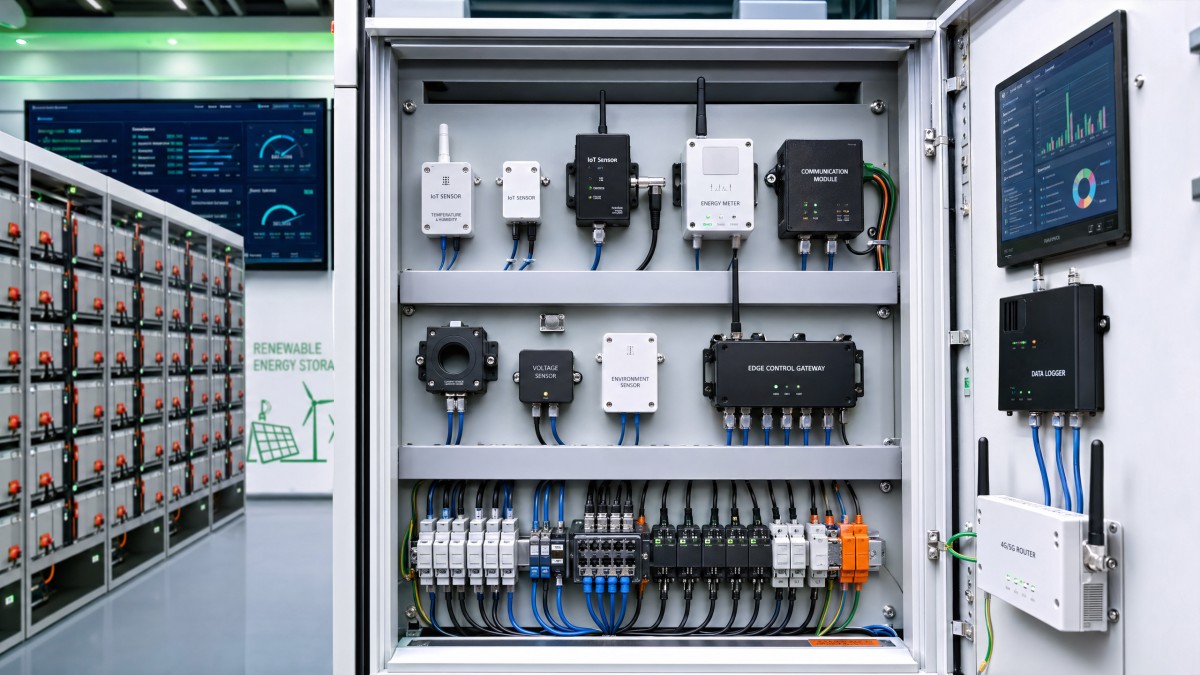
Most IoT supply chain audits are built around visible, easy-to-verify items: certifications, declarations of conformity, production capacity, quality manuals, and sample approvals. These items matter, but they rarely reveal how a device or component behaves when deployed into renewable energy systems, commercial buildings, or mixed-protocol environments.
In practice, the most expensive failures often come from issues that sit outside a standard audit framework:
- Protocol instability under real network conditions rather than under lab-perfect conditions
- Performance variation between manufacturing lots even when specifications remain unchanged
- Firmware immaturity hidden behind “compatible with Matter” or “supports Zigbee” claims
- Power consumption drift that shortens battery life and increases service calls
- Subcomponent substitutions that technically pass procurement review but change field behavior
- Weak test coverage for interoperability in multi-vendor ecosystems
- Security gaps in implementation even when a supplier claims compliance
For renewable energy applications, these blind spots are especially serious. IoT devices tied to energy monitoring, HVAC automation, load balancing, battery systems, occupancy response, and grid-aware controls must operate reliably over time, often in noisy RF environments and under variable temperature conditions. A vendor may pass a commercial audit and still deliver devices that create hidden operational risk.
Where the real hidden risk tends to sit in the IoT supply chain
If your team wants to improve sourcing decisions, it helps to focus on the areas where audit documents often look strong while real engineering risk remains unresolved.
1. “Protocol support” is often accepted without performance proof
Many buyers still treat protocol labels as sufficient evidence. If a device says it supports Matter, Thread, Zigbee, BLE, or Wi-Fi, it is often assumed to be integration-ready. But protocol support is not the same as protocol quality.
What matters more is:
- Latency across multi-node environments
- Packet loss under interference
- Mesh behavior at scale
- Commissioning reliability
- Recovery behavior after power loss or network disruption
In smart energy and building automation, these details directly affect responsiveness and system trust. An occupancy sensor that delays action, a relay that drops commands, or a gateway that performs poorly in dense environments can undermine the value of the entire deployment.
2. Component-level quality is often assumed from brand reputation
Standard audits may verify the supplier, but not deeply enough at the PCB and component level. Yet real-world failures often come from issues such as MEMS sensor drift, inconsistent SMT quality, low-end battery chemistry, or poor thermal design.
This matters in renewable energy systems because energy optimization depends on measurement accuracy and stable control loops. If sensors drift, relays consume more standby power than expected, or battery-backed nodes degrade early, the total cost of ownership rises fast.
3. Sample units can hide production inconsistency
A supplier’s pre-sales sample may perform well while later batches show different behavior. Conventional audits often review process capability in broad terms, but do not tie it to repeatable performance metrics across production runs.
Teams should ask:
- Does performance remain stable between pilot and mass production?
- Are there approved substitute components?
- How are firmware revisions controlled across lots?
- What traceability exists at board, module, and device levels?
Without those answers, procurement may think risk is controlled while operations inherit variability.
4. Security claims are accepted at policy level, not implementation level
It is common to see claims such as encrypted communication, secure access, or edge processing. But security in IoT hardware depends on implementation details, not only declarations. Weak onboarding workflows, poor key management, delayed patching, or insecure local interfaces can create risk that documents will not reveal.
For enterprise buyers and infrastructure operators, this is not just an IT issue. It is a business continuity issue that can affect service reliability, compliance exposure, and brand trust.
5. Energy performance is rarely audited with enough precision
In the renewable energy sector, this may be the most underexamined gap. A device marketed as low power may still create unacceptable standby load or poor battery life in actual field conditions. That matters for sensors in remote locations, smart relays in high-volume deployments, and devices expected to support carbon reduction goals.
Microwatt-level standby differences can become material when deployed at scale. Battery discharge curves also matter more than headline capacity numbers. If your audit does not include measured energy behavior, the sourcing decision may be based on assumptions rather than operating reality.
What target readers should evaluate before trusting an IoT supplier
Different stakeholders look at risk differently, but their concerns converge around one question: will this supplier create hidden cost, hidden instability, or hidden delay after deployment?
For procurement teams
The main concern is whether supplier claims are verifiable enough to reduce commercial and operational risk. Procurement needs more than a pass/fail audit result. It needs comparative evidence.
Useful evaluation points include:
- Verified protocol benchmark data
- Measured power consumption under realistic scenarios
- Manufacturing consistency indicators
- Traceability for firmware and component changes
- Evidence of multi-vendor interoperability
For operators and technical users
The main concern is whether the hardware will behave reliably in the field. Operators care less about marketing labels and more about maintenance burden, troubleshooting difficulty, and long-term stability.
They need answers such as:
- How does the device perform in congested RF environments?
- What happens after outages or network interruptions?
- How stable are readings over time?
- How often will batteries need replacement?
- How difficult is root-cause analysis when issues appear?
For enterprise decision-makers
The main concern is strategic risk: project delay, service failure, reputational damage, and poor ROI. Decision-makers need a way to distinguish between suppliers that are commercially polished and suppliers that are technically dependable.
They should focus on whether the sourcing process can identify:
- Hidden lifecycle cost
- Integration risk
- Scale-up risk
- Support and remediation risk
- Long-term fit for energy efficiency and infrastructure resilience goals
How to make an IoT supply chain audit more useful in renewable energy projects
If a standard audit is mostly document-based, the next step is not to discard it. The goal is to add technical layers that connect supplier review with deployment reality.
Add protocol benchmarking to the audit process
Do not accept “works with Matter” or “supports Zigbee” as final proof. Ask for measured data on latency, throughput, mesh capacity, interference tolerance, and recovery behavior. In mixed ecosystems, this is often where hidden risk appears first.
Validate energy and standby performance with measured data
Especially in renewable energy and smart infrastructure, power claims should be tested rather than accepted. This includes standby load, peak draw, battery discharge behavior, and stability under environmental variation.
Check component and production integrity below the surface level
Go beyond approved vendor lists. Review PCB assembly quality, component drift risk, substitution controls, and lot-to-lot consistency. A high-level quality system is not enough if engineering variability remains uncontrolled.
Review firmware maturity and update discipline
Firmware is part of the supply chain risk profile. Teams should ask how versions are managed, how regressions are tested, how vulnerabilities are patched, and whether protocol updates affect behavior in the field.
Use comparative data, not isolated vendor narratives
A supplier may look strong in isolation. The better question is how it performs relative to alternatives under the same test conditions. Comparative benchmarking reveals where one manufacturer is truly more stable, efficient, or interoperable than another.
Why independent IoT hardware benchmarking changes sourcing quality
The weakness of many sourcing processes is not a lack of effort. It is a lack of neutral engineering evidence. Vendor materials are designed to sell. Standard audits are designed to verify process. But neither automatically reveals how hardware will perform in demanding, real-world renewable energy environments.
This is where independent benchmarking adds value. By testing connectivity behavior, protocol compliance, security implementation, power consumption, hardware integrity, and manufacturing consistency, organizations can make decisions based on evidence rather than assumption.
For buyers and decision-makers, this improves sourcing in three ways:
- It reduces false confidence created by polished certifications and claims
- It improves vendor comparison using measurable technical criteria
- It aligns procurement with operational reality so engineering risk is visible before rollout
This is particularly relevant to companies navigating fragmented IoT ecosystems. As protocol silos, interoperability demands, and energy efficiency expectations all increase, the supply chain must be judged by engineering truth, not by brochure language.
How NHI helps reveal the risks that traditional audits miss
NexusHome Intelligence approaches IoT supply chain evaluation from a different angle: not as a directory, not as a marketing platform, but as an independent technical benchmarking and verification layer between manufacturers and global buyers.
For renewable energy, smart building, and IoT infrastructure stakeholders, this matters because the biggest sourcing mistakes usually happen when commercial review is not matched by hard engineering validation.
NHI’s methodology is built around measurable performance across critical areas such as:
- Connectivity and protocol behavior in realistic deployment conditions
- Smart security implementation and access control integrity
- Energy and climate control performance, including standby efficiency
- PCB, sensor, battery, and hardware component reliability
- Comparative analysis that helps identify verified IoT manufacturers
Instead of repeating generic claims, NHI focuses on benchmark data that procurement leaders, system architects, operators, and enterprise decision-makers can actually use. That makes it easier to spot hidden supply chain weaknesses before they become field failures.
Conclusion: the biggest supply chain risks are often the least visible in standard audits
When teams search for where IoT supply chain audits often miss risk, the answer is usually not in missing paperwork. It is in missing technical proof. Conventional audits can confirm that a supplier looks compliant. They do not always confirm that the hardware will perform reliably, efficiently, securely, and consistently in the environments that matter.
For renewable energy and connected infrastructure projects, better decisions come from combining supplier review with IoT hardware benchmarking, protocol validation, energy performance measurement, and independent assessment of verified IoT manufacturers. That is how organizations move from checklist confidence to real sourcing confidence.
In a market crowded with promises, the most valuable audit question is no longer “Is the supplier approved?” It is “What does the data prove?”
Protocol_Architect
Dr. Thorne is a leading architect in IoT mesh protocols with 15+ years at NexusHome Intelligence. His research specializes in high-availability systems and sub-GHz propagation modeling.
Related Recommendations
- NHI Data Lab (Official Account)How Trusted Are Trusted Smart Home Factories?
- NHI Data Lab (Official Account)What Makes a Smart Home Supplier Directory Useful?
- NHI Data Lab (Official Account)How to Verify Claims From IoT Manufacturers
- NHI Data Lab (Official Account)Where IoT Supply Chain Audits Often Miss Risk
- NHI Data Lab (Official Account)What Smart Home OEM Data Can Reveal Before Sourcing
- NHI Data Lab (Official Account)Why Smart Home PCB Assembly Compliance Gets Overlooked
- NHI Data Lab (Official Account)Canton Fair Phase II 2026: Zigbee 3.0 + Matter Dual-Mode PCBA Orders Surge
- NHI Data Lab (Official Account)Canton Fair Phase II 2026: Zigbee 3.0 + Matter Dual-Mode PCBA Orders Surge
- NHI Data Lab (Official Account)Canton Fair Phase II 2026: Zigbee 3.0 + Matter Dual-Mode PCBA Orders Surge
- NHI Data Lab (Official Account)Canton Fair 2026 Day 1: Zigbee 3.0 + Matter Dual-Mode PCBA Orders Surge
Analyst