
What Smart Home OEM Data Can Reveal Before Sourcing
author
Before choosing a supplier, smart home OEM data can expose what brochures hide. For teams navigating the renewable-energy-linked IoT supply chain, NHI connects smart home hardware testing, Matter protocol data, and IoT hardware benchmarking to reveal verified IoT manufacturers, protocol latency risks, and real compliance signals—so sourcing decisions are built on engineering truth, not marketing claims.
Why smart home OEM data matters before sourcing in renewable energy projects
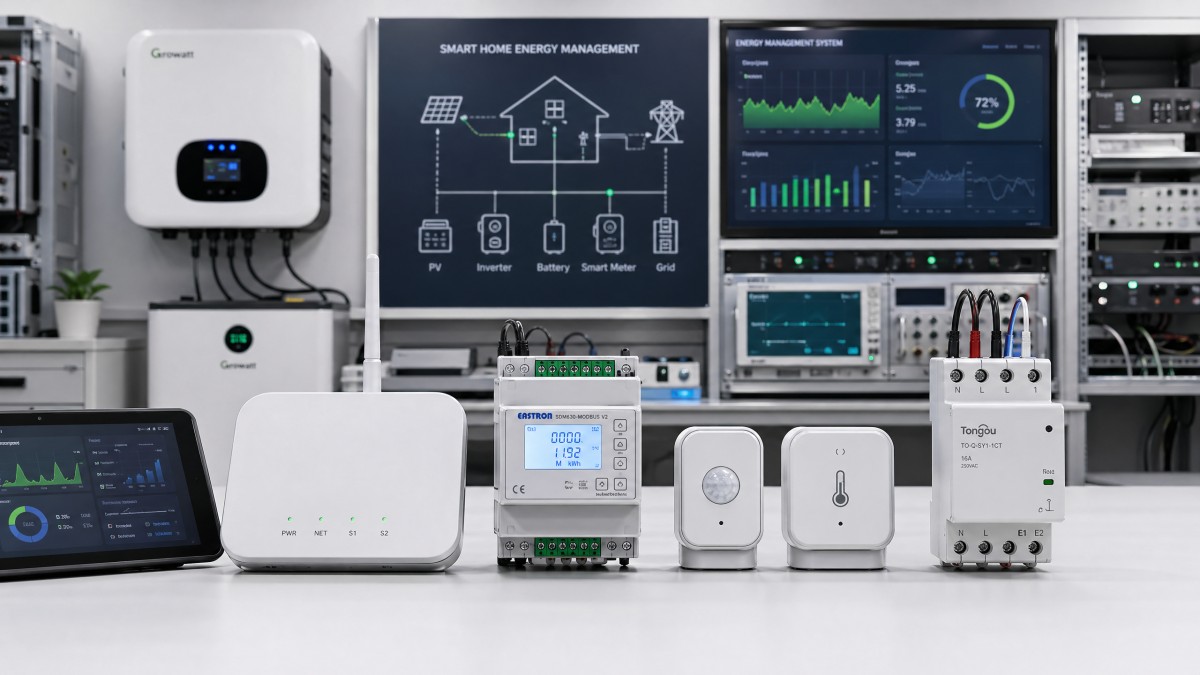
In renewable energy environments, smart home OEM sourcing is no longer limited to convenience devices. The same hardware families now support solar-linked energy monitoring, distributed HVAC control, battery room access, demand response interfaces, and edge-based load management inside homes, apartment blocks, microgrids, and commercial buildings. That means a weak sensor, unstable radio module, or poorly validated gateway can affect both user comfort and energy performance.
For procurement teams, the main problem is that supplier brochures often compress complex engineering realities into a few marketing phrases. Claims like low power, fast pairing, and Matter-ready sound useful, but they do not explain how a device behaves after 6–12 months of field use, how it performs in dense mesh traffic, or whether standby draw remains acceptable when deployed across 500–5,000 endpoints in energy-sensitive buildings.
This is where NexusHome Intelligence acts as an engineering filter. NHI evaluates connectivity, security, energy behavior, hardware integrity, and device-side operating stability so that buyers can compare vendors beyond price sheets. In the renewable energy sector, this matters because efficiency targets are often measured over quarterly and annual cycles, while communication faults can appear within the first 2–4 weeks of deployment.
Information researchers want clarity. Operators want fewer failures in the field. Purchasing managers want repeatable evaluation criteria. Decision-makers want lower lifecycle risk. Smart home OEM data helps all four groups by turning vague sourcing promises into measurable factors such as latency range, battery discharge behavior, relay standby consumption, interoperability depth, and documentation maturity.
What data usually reveals before a purchase order is issued
- Whether a supplier’s “works with Matter” statement reflects basic pairing only, or stable multi-node operation under real network load.
- Whether low-power claims are based on true standby measurements in microwatt or milliwatt ranges, which is critical for solar-backed or battery-supported installations.
- Whether the OEM can maintain PCB assembly consistency, sensor calibration stability, and firmware traceability across pilot, medium-batch, and mass production stages.
- Whether compliance preparation, test reports, and protocol logs are organized enough to support enterprise procurement and cross-border deployment.
Which smart home OEM indicators should buyers check first?
Not every metric deserves equal weight. In renewable-energy-linked sourcing, buyers should begin with 5 core checks: protocol reliability, standby consumption, edge response consistency, hardware manufacturing discipline, and compliance readiness. These five dimensions align with NHI’s verification logic and help teams avoid the common mistake of selecting by unit price while ignoring operating cost and integration friction.
Protocol reliability is the first gate. A smart relay or sensor used in a solar self-consumption system may need to report state changes within milliseconds to seconds, depending on the control layer. If Matter-over-Thread or Zigbee devices show unstable hop behavior under interference, the issue will not stay isolated at device level; it can distort automation routines, occupancy logic, and energy optimization schedules.
Standby consumption is the second gate. In energy and climate control scenarios, even small differences matter. A relay, occupancy sensor, or gateway deployed at scale can turn “acceptable” standby power into a recurring energy burden. When a site includes 200, 1,000, or 3,000 nodes, procurement must compare idle draw, wake behavior, and battery discharge curves rather than assuming all low-power products perform similarly.
The table below summarizes practical evaluation indicators that are more useful than generic product claims when sourcing smart home OEM hardware for renewable energy and building automation environments.
These indicators help buyers compare suppliers on engineering evidence rather than presentation quality. A vendor with moderate pricing but strong protocol logs, stable power behavior, and disciplined hardware records may be a safer choice than a cheaper factory with incomplete validation data.
Three questions to ask before shortlisting a supplier
First, can the OEM show test data from realistic deployment density rather than single-device demonstrations? Second, does the supplier separate prototype behavior from mass-production behavior? Third, can engineering and procurement teams review the same documentation without translation gaps? If any of these answers are weak, sourcing risk increases immediately.
A useful screening rule
If a supplier cannot explain its validation process across 3 stages—sample, pilot batch, and production batch—you are not evaluating a verified IoT manufacturer. You are evaluating a promise. For renewable energy projects with 12–36 month performance expectations, that difference is decisive.
How protocol and hardware data affect real deployment outcomes
In smart home OEM sourcing, protocol selection is never only a software question. It directly shapes power use, commissioning time, maintenance workload, and compatibility with renewable energy control logic. Matter, Thread, Zigbee, BLE, and Wi-Fi can all fit valid use cases, but their behavior changes with topology, node density, interference, and gateway design. This is why protocol latency and hardware benchmarking must be reviewed together.
Consider a building using rooftop solar, battery storage, smart thermostats, metering nodes, and occupancy-linked lighting control. If edge devices respond slowly or inconsistently, self-consumption routines may lag, occupancy scenes may misfire, and comfort settings may drift. In practice, the problem often starts below the application layer: radio congestion, unstable firmware, poor antenna layout, or battery sag during transmission bursts.
NHI’s verification model is valuable because it does not stop at a compatibility label. It looks at measurable behavior such as millisecond-level hop latency, mesh capacity under interference, sensor drift over time, and standby power down to the microwatt. For energy and climate control use cases, these details often matter more than glossy app interfaces.
The comparison below shows how buyers can interpret different protocol and hardware combinations when planning sourcing for renewable-energy-aware buildings and distributed control environments.
A practical reading of this table is simple: there is no universal best protocol, but there are weak and strong validation methods. When sourcing for renewable energy projects, the best supplier is usually the one whose protocol behavior remains predictable across installation density, runtime duration, and mixed-device conditions.
Where hidden failures usually appear
- During commissioning, when devices pair in the lab but fail in larger on-site batches of 50–200 units.
- After seasonal changes, when temperature swings affect battery behavior, sensing accuracy, or lock access performance.
- Under sustained traffic, when latency spikes or dropped packets disrupt automation rules and energy control routines.
- Across firmware updates, when version control and rollback planning are weak.
What does a safer procurement process look like?
A safer procurement process starts by aligning technical and commercial review into one workflow. Too often, engineering checks happen first, then purchasing negotiates separately, and operations only join after deployment. In smart home OEM sourcing for renewable energy scenarios, that sequence creates blind spots. A better model uses 4 steps: requirement framing, data screening, pilot validation, and batch release review.
Requirement framing should define more than device category. It should specify protocol preferences, acceptable response windows, expected operating cycle, power constraints, update path, and deployment scale. For example, a 20-unit demo apartment and a 2,000-node mixed-use property do not share the same sourcing logic. The first proves concept fit; the second tests long-run operational resilience.
Data screening is where NHI-style benchmarking adds value. Teams should review protocol logs, standby consumption records, PCBA quality indicators, battery behavior, and compliance documentation before sample approval. This reduces the chance of sending weak candidates into expensive pilot installations. In many projects, removing just 2 or 3 unqualified suppliers early can save weeks of review time.
Pilot validation should run long enough to expose issues that simple demos miss. For many smart energy and building control applications, a 2–6 week pilot is more informative than a 2-day test. It allows teams to observe pairing stability, response consistency, battery behavior, event logging quality, and operator usability under routine building activity.
Recommended procurement checklist for cross-functional teams
- Confirm the target deployment scale: sample batch, pilot batch, or production batch. This avoids confusing prototype capability with production capability.
- Request measurable protocol data, not just certification language or compatibility logos.
- Review standby and active power behavior for devices expected to remain installed for 12 months or more.
- Check whether the OEM can provide traceable firmware, change logs, and batch-level hardware consistency records.
- Verify that compliance documentation fits the destination market and installation category.
- Include operators in the pilot review, because installation friction often appears before long-term failures do.
Common sourcing mistakes that increase lifecycle cost
One common mistake is selecting a supplier on price while ignoring power overhead and maintenance burden. Another is treating all Matter or Zigbee implementations as equal. A third is assuming that documents prepared for a domestic market will transfer cleanly into international procurement. These errors often do not appear in the purchase order, but they appear later in technician time, callback frequency, and delayed project acceptance.
Compliance, risk signals, and frequently asked sourcing questions
In renewable energy and smart building procurement, compliance should be read as an operating requirement, not an administrative afterthought. Depending on the device type and market, teams may need to review electrical safety, EMC behavior, radio compliance, cybersecurity expectations, local data handling, and installation documentation. Even when a project does not demand a long certification list, documentation discipline remains a strong signal of supplier maturity.
Risk signals are often visible early. If an OEM cannot explain test boundaries, cannot separate estimated battery life from measured discharge behavior, or cannot map firmware versions to hardware batches, buyers should slow down. These are not minor paperwork gaps. They usually point to process weakness that later affects quality consistency, troubleshooting speed, and accountability.
For global procurement teams, one practical target is to align sourcing review across 3 tracks: engineering evidence, market compliance fit, and service responsiveness. If one track is strong but the other two are weak, the supplier may still create project drag. NHI’s data-driven perspective helps organizations compare those tracks in a more standardized way.
Below are common questions that often appear during smart home OEM sourcing for energy-aware deployments.
How do I evaluate a verified IoT manufacturer if I cannot visit the factory immediately?
Start with evidence that can be reviewed remotely: protocol test logs, power measurement records, firmware traceability, pilot batch documentation, and basic process mapping for PCBA and final inspection. A factory visit is valuable, but it should confirm a strong data trail, not replace one. If remote documentation is vague, an on-site audit rarely solves the underlying issue.
What lead time should buyers expect for samples, pilot runs, and production discussions?
Actual timing varies by device complexity and customization depth, but many teams plan in 3 windows: sample review in roughly 1–3 weeks, pilot preparation in 2–6 weeks, and production alignment after pilot acceptance. Custom firmware, regional compliance changes, and enclosure modifications can extend timelines, so procurement should always ask which steps are standard and which are project-specific.
Which devices deserve the most scrutiny in renewable-energy-linked smart home sourcing?
Prioritize smart relays, energy meters, gateways, occupancy sensors, HVAC controllers, and access devices that influence runtime behavior or site security. These devices sit close to control logic, energy visibility, or operational continuity. A decorative endpoint can annoy users; a weak control endpoint can distort energy performance and maintenance planning.
Is low unit price a reliable shortcut for initial supplier selection?
Only as a very early filter, and even then with caution. In most B2B deployments, the true cost includes installation effort, firmware support, device replacement frequency, and troubleshooting time over 12–24 months. An apparently lower-cost supplier can become the higher-cost option once network instability, battery replacement cycles, or integration delays are included.
Why choose NHI when comparing smart home OEM suppliers?
NexusHome Intelligence is built for organizations that need more than catalog browsing. NHI bridges ecosystems through data by translating smart home hardware testing, protocol benchmarking, and supply-chain transparency into sourcing insight that engineering, procurement, operations, and leadership can all use. That is especially valuable in renewable energy projects, where device behavior affects efficiency outcomes, not just product experience.
Our advantage is not louder marketing. It is structured technical verification across connectivity and protocols, smart security and access, energy and climate control, IoT hardware components, and adjacent device intelligence. This gives buyers a practical way to compare hidden champions in the OEM and ODM landscape, including suppliers whose engineering discipline is stronger than their promotional visibility.
If your team is reviewing smart relays, sensors, gateways, access devices, metering nodes, or climate-control hardware for renewable-energy-linked deployments, you can contact NHI for support around parameter confirmation, product selection logic, protocol risk screening, pilot evaluation priorities, documentation review, typical lead-time discussion, and sample strategy planning.
Bring your target application, preferred protocol, estimated batch size, compliance requirements, and delivery expectations. NHI can help you narrow supplier options, identify questions worth asking before quotation comparison, and build a sourcing path based on engineering truth instead of brochure language.
Protocol_Architect
Dr. Thorne is a leading architect in IoT mesh protocols with 15+ years at NexusHome Intelligence. His research specializes in high-availability systems and sub-GHz propagation modeling.
Related Recommendations
- NHI Data Lab (Official Account)How Trusted Are Trusted Smart Home Factories?
- NHI Data Lab (Official Account)What Makes a Smart Home Supplier Directory Useful?
- NHI Data Lab (Official Account)How to Verify Claims From IoT Manufacturers
- NHI Data Lab (Official Account)Where IoT Supply Chain Audits Often Miss Risk
- NHI Data Lab (Official Account)What Smart Home OEM Data Can Reveal Before Sourcing
- NHI Data Lab (Official Account)Why Smart Home PCB Assembly Compliance Gets Overlooked
- NHI Data Lab (Official Account)Canton Fair Phase II 2026: Zigbee 3.0 + Matter Dual-Mode PCBA Orders Surge
- NHI Data Lab (Official Account)Canton Fair Phase II 2026: Zigbee 3.0 + Matter Dual-Mode PCBA Orders Surge
- NHI Data Lab (Official Account)Canton Fair Phase II 2026: Zigbee 3.0 + Matter Dual-Mode PCBA Orders Surge
- NHI Data Lab (Official Account)Canton Fair 2026 Day 1: Zigbee 3.0 + Matter Dual-Mode PCBA Orders Surge
Analyst