
Smart Lighting Energy Metrics That Actually Help
author
In smart buildings, smart lighting energy metrics should do more than decorate dashboards—they should guide sourcing, deployment, and efficiency decisions with measurable proof. For engineers, buyers, and operators navigating the IoT supply chain, NHI connects smart home hardware testing, IoT hardware benchmarking, and climate control hardware benchmarking to reveal what actually performs under real-world conditions, from Zigbee smart plug test results to Matter protocol data and verified compliance insights.
That shift matters especially in renewable energy environments, where lighting is no longer an isolated load. In solar-powered campuses, battery-backed microgrids, EV-ready commercial sites, and energy-conscious residential developments, lighting behavior influences peak demand, storage cycling, and HVAC interactions. A dashboard showing only monthly kWh is not enough for procurement teams comparing devices, nor for operators trying to reduce waste without creating occupant complaints.
For B2B buyers and technical evaluators, the real question is simple: which smart lighting energy metrics actually help with sourcing, integration, and long-term efficiency? The answer lies in measurable indicators such as standby power, dimming efficacy, occupancy-triggered savings, protocol latency, metering accuracy, and maintenance impact. These metrics create a common language between OEM claims, facility performance, and renewable energy objectives.
Why Smart Lighting Metrics Matter in Renewable Energy Buildings
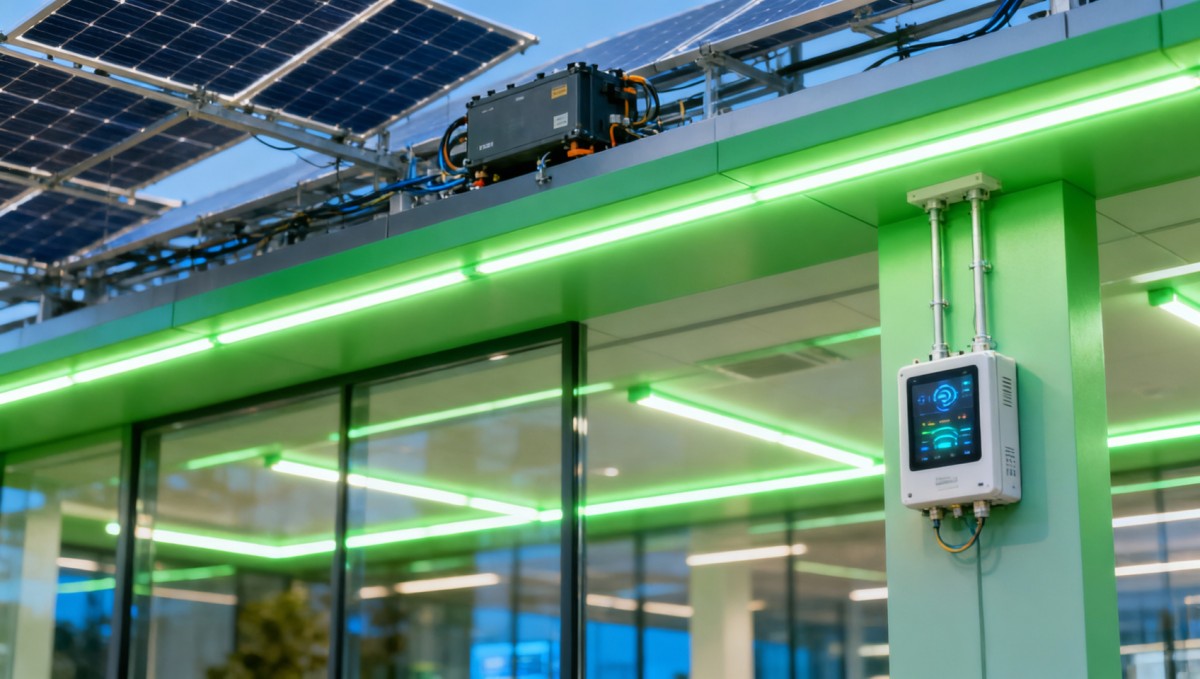
In renewable energy projects, every controllable load affects the balance between generation, storage, and consumption. Lighting may account for 10%–25% of electricity use in efficient commercial buildings, and a higher share in corridors, warehouses, and public areas with long operating hours. When lighting controls underperform, the cost is not limited to wasted power. It can increase battery discharge cycles, reduce solar self-consumption efficiency, and amplify peak grid imports during evening hours.
This is where NHI’s data-first approach becomes relevant. Claims such as “low power,” “works with Matter,” or “smart energy saving” are weak procurement criteria unless they are tied to testable metrics. In mixed-protocol buildings using Zigbee, Thread, BLE, or Wi-Fi, command latency of 150–400 ms may be acceptable for some scenes, while delays above 800 ms can trigger user overrides that eliminate the intended energy savings.
Another issue is false efficiency. Some smart drivers save energy at 100% output but perform poorly in partial dimming ranges, where many renewable energy buildings spend most of their operating time. If dimming efficacy falls sharply below 40% brightness, operators may see only 8%–12% savings instead of the expected 20%–35% from adaptive controls.
For procurement teams, useful metrics also reduce supply chain risk. A lighting controller with excellent app features but a standby draw of 1.2 W across 2,000 nodes creates a constant 2.4 kW background load. Over 24 hours, that becomes 57.6 kWh per day, which is highly relevant in buildings designed around rooftop PV, battery capacity planning, or off-peak energy strategies.
What separates decorative metrics from decision-grade metrics
- Decorative metrics focus on app visualizations, generic energy scores, or monthly summaries without device-level granularity.
- Decision-grade metrics connect lighting behavior to commissioning quality, protocol reliability, occupancy response, and renewable energy utilization.
- Useful metrics support at least 3 workflows: product selection, deployment tuning, and post-installation verification.
Common pain points for operators and buyers
Operators often inherit systems where energy reports look polished but fail to explain why one zone consumes 18% more than another. Buyers face a different challenge: vendor datasheets rarely specify whether measurements were taken at driver level, fixture level, or circuit level. Without consistency, comparing two suppliers becomes misleading. In renewable energy-led developments, those gaps directly affect ROI calculations and operating assumptions.
The Energy Metrics That Actually Help with Sourcing and Operations
The most useful smart lighting energy metrics are the ones that remain meaningful from factory testing to field operation. For renewable energy projects, six metrics deserve priority: standby power, active power under dimming, control response latency, occupancy-trigger conversion rate, metering accuracy, and maintenance-adjusted energy impact. Each one speaks to a different stage of the asset lifecycle.
Standby power is often overlooked because it appears small at device level. Yet in distributed smart buildings, the accumulation is significant. A relay, sensor, or smart driver consuming 0.3 W in idle mode is very different from one consuming 1.0 W, especially across portfolios of 500 to 5,000 endpoints. In renewable energy systems with battery storage, lower standby loads preserve usable overnight capacity.
Metering accuracy is equally important. If a node reports energy use with an error range wider than ±5%, the operator may misjudge savings from daylight harvesting or occupancy control. For practical building decisions, many teams target ±1% to ±2% measurement accuracy for circuit-level validation and accept looser ranges for room-level trend analysis. The acceptable threshold depends on whether the data is used for billing, optimization, or general monitoring.
Latency also matters more than many specifications suggest. In high-traffic environments, occupancy-triggered lighting should typically respond within 300 ms to 700 ms to feel immediate. Delays beyond 1 second may prompt manual switching or rule bypasses. Once users distrust automation, energy savings can drop sharply, even if the theoretical control logic remains sound.
Core metrics and why they matter
The table below summarizes the most practical smart lighting energy metrics for renewable energy buildings. These metrics are useful not only for engineering review but also for procurement scoring, commissioning acceptance, and post-deployment tuning.
The key takeaway is that no single metric tells the whole story. A product with very low standby power but poor latency may fail operationally. A fixture with accurate metering but unstable low-level dimming may distort demand response strategies. The best sourcing decisions evaluate these metrics together rather than in isolation.
Two metrics buyers often miss
- Occupancy-trigger conversion rate: how often detected presence leads to the correct lighting state within the expected time window.
- Maintenance-adjusted energy impact: the savings lost when failed sensors, miscalibrated daylight controls, or dead batteries remain unresolved for 30–90 days.
How Protocols, Hardware Quality, and Benchmarking Affect Lighting Performance
Smart lighting energy results are strongly shaped by protocol behavior and hardware quality. In fragmented ecosystems, a lighting node may perform well in a lab but degrade in a building with concrete cores, dense Wi-Fi traffic, or mixed-vendor integrations. For renewable energy use cases, this matters because unstable control leads to unnecessary burn hours, poor demand shifting, and unreliable load scheduling.
Zigbee, Thread, BLE mesh, and Wi-Fi each present trade-offs. Zigbee remains widely used for lighting because it supports low-power mesh behavior at scale, but performance depends on network density and routing quality. Thread with Matter can improve interoperability, yet real-world multi-hop latency still needs testing, especially in facilities where 50 to 200 nodes share constrained paths. Wi-Fi-based lighting can deliver richer data, but it may increase standby draw and congestion if poorly designed.
Hardware design also changes the energy picture. Driver efficiency, thermal behavior, PCB quality, and sensor drift all affect accuracy and long-term savings. A daylight sensor that drifts over 12 to 18 months can cause fixtures to remain 10%–15% brighter than required. That may sound minor, but in long-hour public buildings it can erase a substantial portion of the projected renewable energy optimization benefit.
This is why NHI’s benchmarking lens matters for buyers and evaluators. Instead of accepting “compatible,” “ultra-low power,” or “smart ready” at face value, benchmarking should test packet reliability under interference, verify energy reporting against reference meters, and examine standby behavior over extended idle periods. In practical procurement, engineering truth is more valuable than brochure language.
Protocol and hardware comparison factors
The table below highlights evaluation factors that directly affect smart lighting outcomes in renewable energy buildings. It is not a ranking table, but a checklist for comparing options during technical review.
For procurement teams, the practical lesson is clear: protocol support alone does not guarantee renewable energy performance. Buyers should ask for test conditions, not just claimed features. If possible, compare devices using the same interference scenario, the same idle duration, and the same measurement method. That creates a fairer technical baseline for vendor selection.
Minimum benchmarking checklist before purchase
- Test standby power over at least 24 hours, not only a short idle snapshot.
- Verify latency in the intended protocol topology, such as 3-hop or 5-hop mesh conditions.
- Check energy reporting against a trusted meter across low, medium, and high load states.
- Review how the device behaves after firmware updates, power recovery, and network rejoin events.
A Practical Selection Framework for Buyers, Operators, and Business Evaluators
A useful smart lighting procurement framework should connect technical metrics to business outcomes. Buyers are not choosing devices in abstract conditions; they are choosing assets that must perform for 3 to 7 years in renewable energy-aligned buildings. That means selection should balance energy savings, interoperability, maintenance burden, and supply chain clarity.
For information researchers and business evaluators, one of the best starting points is to define the operating context. A solar-powered office with strong daylight exposure needs different metrics than a battery-backed logistics site running overnight shifts. In the first case, daylight harvesting accuracy and dimming stability may dominate. In the second, occupancy response, standby power, and fault recovery become more critical.
Operators should also evaluate serviceability. A system that promises 25% savings but requires frequent sensor recalibration, manual scene reconfiguration, or battery replacement every 12 months can lose commercial value quickly. In many portfolios, hidden maintenance erodes expected ROI more than the original hardware price difference. That is why procurement should include maintenance-adjusted assessment, not only energy claims.
A structured decision model helps teams compare suppliers consistently. Instead of relying on sales narratives, score each option across measured criteria. Many B2B teams use 4 to 6 weighted categories, with interoperability, energy performance, reliability, and lifecycle support carrying the highest weight. This approach is especially useful when sourcing from multiple ODM or OEM channels.
Suggested procurement scorecard
The scorecard below is a practical template for evaluating smart lighting platforms in renewable energy projects. The weights can be adjusted, but the structure helps keep decisions grounded in measurable factors.
This framework helps different stakeholders align. Engineers can focus on measurable performance, procurement can compare lifecycle cost, operators can plan maintenance effort, and business reviewers can evaluate whether the system supports renewable energy goals beyond marketing claims.
Implementation steps after vendor shortlist
- Run a pilot in 1–3 representative zones rather than approving a full-site rollout immediately.
- Measure baseline energy use for at least 2 weeks before changing scenes or schedules.
- Validate savings after commissioning for 30–60 days to capture occupancy and daylight variation.
- Document fault events, user overrides, and response latency alongside kWh results.
Common Mistakes, Field FAQ, and the Next Step for Data-Driven Decisions
One common mistake is treating smart lighting as a software decision instead of a hardware-plus-protocol decision. In renewable energy projects, control intelligence is valuable only when the underlying nodes remain stable, measurable, and serviceable over time. Another mistake is accepting aggregate savings numbers without checking how much comes from scheduling alone versus occupancy sensing, daylight harvesting, or demand response integration.
A second error is ignoring low-load behavior. Many buildings operate for long periods at 20%–60% output, especially when paired with daylight or carbon reduction strategies. If the system is tested only at full brightness, buyers may miss flicker issues, poor efficacy retention, or inaccurate metering in the actual operating range. These weaknesses are not always visible in showroom demonstrations.
A third mistake is separating lighting data from broader energy strategy. In solar, storage, and smart grid environments, lighting should be reviewed as a flexible load. That means metrics should support peak-load shifting, after-hours trimming, and verification of whether automation is actually reducing grid import during the most expensive periods. When lighting data is isolated, the renewable energy value is underused.
The most reliable path forward is a benchmark-led selection process: test, compare, validate, then scale. That method aligns with NHI’s broader mission to bring transparency to fragmented IoT ecosystems and to replace vague supplier language with engineering-grade evidence. For stakeholders evaluating hardware across the smart building supply chain, this is how trust becomes operational, not promotional.
How do I choose metrics for a solar-powered or battery-backed building?
Start with standby power, dimming efficacy, and scheduling flexibility. Then add metering accuracy and latency. In storage-backed sites, even a 0.5 W difference per node can matter across hundreds of endpoints. If the building relies heavily on self-consumption, prioritize metrics that show how lighting can reduce evening demand and avoid unnecessary discharge cycles.
How long should a smart lighting pilot run before procurement approval?
A practical pilot usually runs 30–60 days after commissioning. This period is long enough to observe occupancy patterns, daylight variation, response stability, and maintenance issues. Shorter pilots can still reveal latency or interoperability problems, but they may not capture the true energy behavior across changing conditions.
Which procurement indicators matter most when comparing suppliers?
Focus on 4 indicators first: validated standby draw, metering accuracy, protocol performance under interference, and lifecycle support. Price remains important, but in renewable energy buildings the hidden cost of unstable automation often exceeds the upfront saving from cheaper hardware. Measured reliability usually produces better total value than low initial cost alone.
Can Matter or Zigbee labels replace field testing?
No. Protocol labels indicate compatibility direction, not guaranteed field performance. Buyers should still verify latency, rejoin behavior, packet stability, and measurement integrity in realistic environments. A node may technically support a protocol yet still underperform in dense commercial deployments or mixed-vendor systems.
Smart lighting energy metrics become useful when they help people make better decisions across sourcing, commissioning, and operations. In renewable energy buildings, that means going beyond visual dashboards and looking at measurable performance: standby power, dimming behavior, latency, metering accuracy, and long-term hardware stability. These are the indicators that protect both efficiency targets and procurement outcomes.
NexusHome Intelligence exists for teams that need verifiable data instead of vague claims. If you are evaluating smart lighting hardware, climate control devices, or connected building components across fragmented IoT ecosystems, now is the time to benchmark before you buy. Contact us to discuss your technical requirements, request a tailored evaluation framework, or learn more about data-driven smart building solutions.
Protocol_Architect
Dr. Thorne is a leading architect in IoT mesh protocols with 15+ years at NexusHome Intelligence. His research specializes in high-availability systems and sub-GHz propagation modeling.
Related Recommendations
- Kenji Sato (Infrastructure Arch)Smart Lighting Energy Metrics That Actually Help
- Kenji Sato (Infrastructure Arch)How to Read Smart Lighting Energy Reports
- Kenji Sato (Infrastructure Arch)Which Smart Lighting Metrics Cut Energy Waste
- Kenji Sato (Infrastructure Arch)SASO Smart Lighting Rule Effective Apr 22, 2026: Offline Control & Arabic Voice Required
- Kenji Sato (Infrastructure Arch)What Makes Smart Lighting Energy Metrics Trustworthy
- Kenji Sato (Infrastructure Arch)Why Smart Lighting Specs Often Hide Energy Loss
- Kenji Sato (Infrastructure Arch)How to Compare Smart Lighting Hardware by Real Efficiency
- Kenji Sato (Infrastructure Arch)Smart Lighting Energy Metrics: What Should You Track
- Kenji Sato (Infrastructure Arch)SASO Smart Lighting Rules: Arabic Voice & Local Control Required in KSA
- Kenji Sato (Infrastructure Arch)Why smart lighting benchmarks often hide standby loss
Analyst