
What Makes Smart Lighting Energy Metrics Trustworthy
author
In a fragmented IoT market, trustworthy smart lighting energy metrics depend on transparent testing, protocol-level validation, and real-world benchmarking. NexusHome Intelligence examines smart home hardware testing data across Matter protocol data, Zigbee mesh capacity, and IoT power monitoring to help researchers, operators, buyers, and decision-makers identify verified IoT manufacturers and separate engineering truth from marketing claims.
Why do smart lighting energy metrics fail in real renewable energy projects?
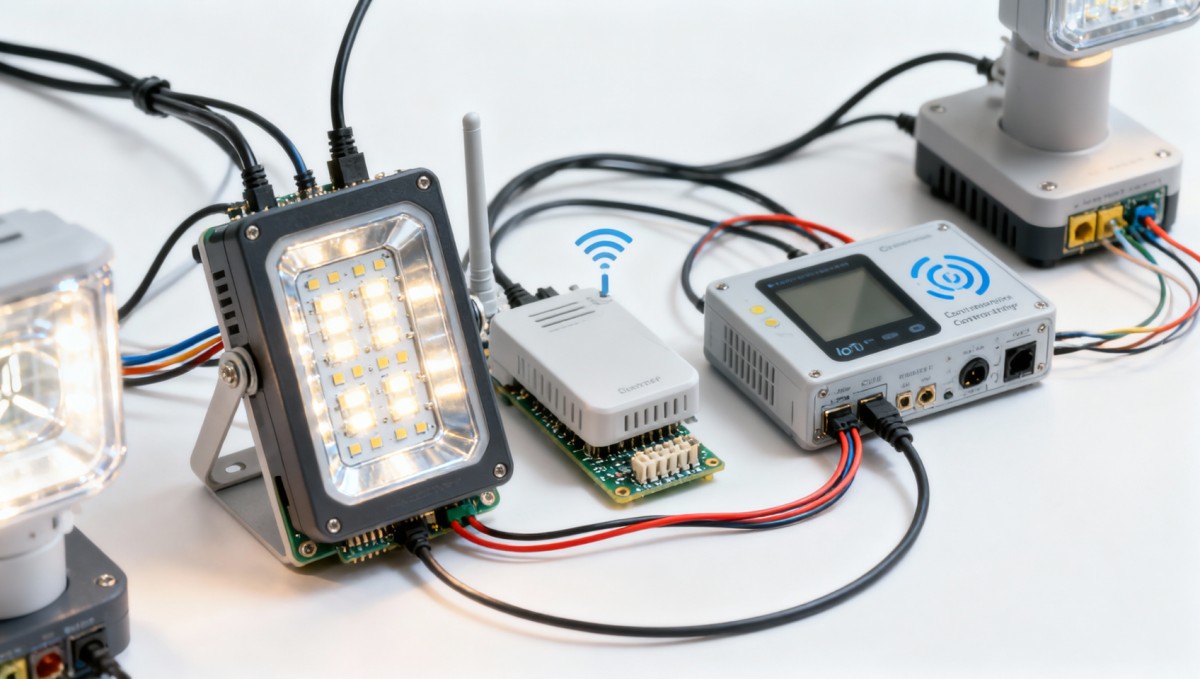
In renewable energy environments, smart lighting is no longer a simple comfort feature. It is often tied to solar generation profiles, battery-backed microgrids, demand response logic, and building efficiency targets. That is why energy metrics must be trustworthy at device level, network level, and system level. A lamp that looks efficient in a brochure may still distort reporting if standby draw, dimming behavior, or protocol latency are not measured under field conditions.
Many failures start with vague claims such as low power, compatible with Matter, or optimized for smart buildings. These phrases do not tell buyers whether the device maintains measurement stability across 3 core states: standby, transition, and sustained dimming. They also do not show what happens after 6–12 months of real use in commercial corridors, solar-powered campuses, or mixed-protocol retrofits where Zigbee, BLE, Thread, and gateway logic interact.
For operators, the risk is practical. A 1 W to 3 W error in standby reporting may appear minor on one node, but multiplied across 500–5,000 lighting points it can distort energy dashboards, peak-load strategies, and maintenance planning. For procurement teams, the danger is selecting suppliers based on declared wattage rather than verified measurement methodology. For executives, unreliable metrics weaken carbon reporting and return-on-investment analysis.
NexusHome Intelligence approaches this problem as an engineering verification issue, not a marketing interpretation issue. Trustworthy smart lighting energy metrics come from repeatable test procedures, protocol-aware benchmarking, and comparison across common deployment conditions such as interference, mesh density, load switching frequency, and voltage variation within the normal operating range.
What usually goes wrong first?
- Declared power consumption is measured only at full output, while real projects spend long periods at 10%–60% dimming.
- Standby power is ignored even though renewable energy projects often prioritize overnight efficiency and battery preservation.
- Mesh communication overhead is excluded, so network retries and delayed status updates are missing from energy calculations.
- Metering data is accepted from firmware outputs without cross-checking against calibrated instruments during repeated cycles.
This is why trustworthy metrics are essential in renewable energy use cases. When solar production fluctuates by hour and storage margins can tighten quickly, inaccurate lighting data is not just a reporting problem. It becomes an operational risk.
Which technical indicators make smart lighting energy data credible?
A credible smart lighting energy assessment should never rely on a single headline number. Buyers need a multi-layer view that includes electrical behavior, communication performance, and measurement integrity. In practice, 5 key indicators usually matter most: active power accuracy, standby consumption, dimming curve consistency, telemetry latency, and network resilience under interference.
For renewable energy applications, active power accuracy should be checked across several operating points rather than one nominal state. Typical checkpoints may include 0%, 25%, 50%, 75%, and 100% brightness. This matters because some drivers perform efficiently at full load but drift significantly at low dimming levels, which are common in daylight harvesting and battery-saving modes.
Standby consumption is equally important. In distributed energy systems, lighting nodes may remain idle for 8–14 hours per day. A small standby overhead can accumulate into a meaningful parasitic load, especially in off-grid cabins, solar street-side assets, or hybrid commercial sites that rely on storage during evening hours. Buyers should request separate figures for radio-on standby, deep sleep if available, and gateway-linked idle operation.
Telemetry and protocol behavior also shape data trust. If a device reports energy events slowly or loses packets in dense mesh environments, the dashboard may show clean numbers that do not match reality. NHI’s data-driven philosophy is valuable here because protocol validation and stress testing reveal whether reported energy values remain stable during multi-node communication, interference, and repeated switching cycles.
Core indicators procurement teams should compare
The table below summarizes practical indicators that help information researchers, facility operators, and enterprise buyers judge whether smart lighting energy metrics are likely to hold up in renewable energy deployments.
A supplier does not need to promise perfection to be credible. What matters is whether these indicators are disclosed clearly, tested repeatedly, and presented in a way that lets buyers compare one platform against another without guessing how the numbers were produced.
A practical rule for decision-makers
If a vendor shows only rated wattage and annual savings claims, the metric set is incomplete. If the vendor can explain test intervals, network conditions, dimming checkpoints, and calibration references, the data is more likely to support procurement and long-term renewable energy planning.
How should smart lighting be tested for real-world renewable energy use?
Real-world benchmarking should simulate the operating conditions that matter in renewable energy projects, not just laboratory best cases. That means combining electrical tests with communication tests and deployment context. A good evaluation typically covers 3 layers: device-level power behavior, network-level reporting integrity, and site-level performance under realistic schedules such as occupancy control, daylight harvesting, and evening battery reliance.
For example, a commercial building using rooftop solar may see lighting operate differently between 10:00 and 16:00 than during evening storage discharge. A smart lighting device that reports accurately under stable mains power can still become problematic if telemetry delays appear when the mesh is busy or when gateways handle multiple automation events. Testing should therefore include repeated on-off cycles, variable dimming, and communication load over at least several operating windows rather than a single short session.
NHI’s emphasis on protocol-level truth is especially relevant here. Matter-over-Thread, Zigbee 3.0, BLE bridges, and Wi-Fi connected lighting do not behave identically in mixed ecosystems. A trustworthy benchmark should document the communication path, node count, interference profile, and whether the metering values are device-native or aggregated by a gateway. Without that context, reported energy numbers may look precise but remain hard to trust.
Testing also needs a time dimension. Some errors emerge only after thermal stabilization, firmware retries, or battery-backed transition events. That is why buyers should prefer test plans that cover short-cycle switching, hourly reporting, and longer observation periods such as 24-hour or 7-day profiles when feasible for evaluation.
Recommended verification workflow
- Establish a baseline with calibrated metering equipment and document voltage, load type, and ambient conditions.
- Run 5-step dimming and switching tests, including standby, ramp-up, sustained output, and repeated transitions.
- Verify protocol behavior under single-node and mesh conditions, ideally with at least 10–30 active nodes in a representative test set.
- Compare device-reported energy values with external measurements over defined windows such as 1 hour, 8 hours, and 24 hours.
- Review firmware versioning, update history, and whether metric consistency changes after OTA updates.
This workflow helps transform energy metrics from sales content into procurement evidence. It also creates a shared language for engineers, operators, and decision-makers who need clear approval criteria before deployment.
What should buyers compare when selecting smart lighting suppliers?
Procurement teams often compare unit price first, yet smart lighting for renewable energy projects should be evaluated through total performance risk. A lower-cost node may become more expensive if its power reporting is unreliable, if protocol compatibility is weak, or if commissioning takes longer because the supplier cannot explain real behavior under Zigbee, Thread, or gateway-managed environments.
A stronger evaluation model includes 4 decision lenses: metric transparency, integration reliability, lifecycle efficiency, and supply-chain credibility. Metric transparency tells you whether the energy figures are verifiable. Integration reliability tells you whether those figures survive in a mixed ecosystem. Lifecycle efficiency covers standby performance, update management, and maintenance burden across 2–5 years. Supply-chain credibility indicates whether the manufacturer can support repeatable quality rather than just one successful sample batch.
This is where NHI creates value for research teams and enterprise buyers. By acting as an engineering filter, NHI helps separate components that merely advertise smart energy features from those that demonstrate measurable behavior under stress, interference, and deployment complexity. In a renewable energy context, that distinction directly affects load control, carbon accounting, and operational confidence.
The comparison below is designed for B2B procurement discussions, especially where lighting data may feed energy management systems, smart building analytics, or distributed energy optimization.
Supplier comparison points that matter more than brochure claims
Use this table to structure internal reviews when comparing smart lighting platforms or OEM/ODM options for renewable energy and smart building projects.
The most useful comparison outcome is not the cheapest quote. It is the clearest understanding of which supplier can support stable energy metrics in the exact environment where your renewable energy savings must be measured and defended.
Common procurement mistake
One frequent mistake is assuming protocol certification alone guarantees accurate energy data. Certification can confirm interoperability scope, but it does not automatically prove how well power monitoring behaves across dimming states, dense networks, or long operating windows.
Which standards, risks, and misconceptions should decision-makers watch?
Decision-makers in renewable energy and smart building projects should treat standards as an important baseline, not the final proof of trustworthiness. Interoperability frameworks, electrical safety requirements, and energy-related compliance expectations all matter, but none of them replace field-relevant performance evidence. A compliant device can still produce weak analytics if reporting intervals are unstable or if firmware introduces drift after updates.
Another misconception is that a dashboard with many decimal places signals precision. In reality, trust depends on measurement method, synchronization, and repeatability. If a smart lighting platform reports detailed numbers every minute but loses packets during congestion or aggregates data unclearly at gateway level, the apparent precision may exceed the actual reliability of the metric.
A third risk concerns retrofit projects. Mixed estates often include legacy drivers, new wireless controllers, and multiple communication stacks introduced over 3–8 years. In these environments, buyers should ask whether testing covered coexistence rather than only greenfield deployment. Renewable energy retrofits are especially sensitive because efficiency gains are often measured against existing baselines, making data consistency essential.
Finally, buyers should not confuse low declared power with low system impact. If commissioning takes longer, if packet retries increase, or if inaccurate readings force manual correction, the operational cost can offset part of the energy benefit. Trustworthy smart lighting energy metrics therefore need to be viewed through technical, financial, and implementation lenses at the same time.
FAQ for researchers, operators, and buyers
How do I know whether smart lighting energy monitoring is measured or estimated?
Ask for the metering method, reporting interval, and validation process. A trustworthy supplier should explain whether the value comes from onboard sensing, driver estimation, or gateway calculation, and how it was cross-checked against external instruments over defined windows such as 1-hour and 24-hour runs.
Which protocol is better for reliable smart lighting energy data?
There is no universal winner. Matter, Zigbee, Thread, BLE, and Wi-Fi each have different trade-offs. The right choice depends on node density, retrofit complexity, latency tolerance, and how the energy data will be consumed by building or renewable energy systems. What matters most is verified performance in the target environment.
What delivery and evaluation timeline is realistic for procurement?
For many B2B projects, a practical early-stage flow is 2–4 weeks for sample review and technical clarification, followed by 2–6 weeks for integration checks and comparative evaluation. Complex retrofits or multi-protocol pilots may require longer, especially when field benchmarking is included.
What are the top checks before approving a supplier?
Focus on 5 checks: standby draw disclosure, multi-point dimming verification, protocol stress testing, firmware traceability, and sample-to-batch consistency. These checks provide stronger procurement confidence than generic promises about efficiency or compatibility.
Why choose NHI when evaluating smart lighting energy metrics?
NexusHome Intelligence is built for organizations that need engineering truth before they commit budget, integration time, or supply-chain trust. In a market divided by protocol silos and inflated claims, NHI focuses on transparent benchmarking, rigorous technical interpretation, and supplier visibility grounded in measurable performance rather than slogans.
For information researchers, NHI helps narrow the search from broad market noise to verified technical signals. For operators, it clarifies how devices behave under real deployment stress. For procurement teams, it supports vendor comparison using practical metrics. For enterprise decision-makers, it improves confidence in project assumptions tied to energy efficiency, renewable energy integration, and long-term system reliability.
If you are assessing smart lighting hardware, connected relays, or broader IoT power monitoring for renewable energy and smart building projects, NHI can help you review parameters, compare protocol behavior, assess sample readiness, and identify where claimed energy metrics may not hold up in real deployments.
Contact NHI to discuss specific evaluation needs such as standby power verification, dimming behavior analysis, Matter or Zigbee deployment comparison, sample support, delivery expectations, supplier screening, reporting methodology, certification alignment, or quotation-stage technical clarification. That conversation can save weeks of procurement uncertainty and reduce the risk of buying metrics that look clean on paper but fail in the field.
Protocol_Architect
Dr. Thorne is a leading architect in IoT mesh protocols with 15+ years at NexusHome Intelligence. His research specializes in high-availability systems and sub-GHz propagation modeling.
Related Recommendations
- Kenji Sato (Infrastructure Arch)What Makes Smart Lighting Energy Metrics Trustworthy
- Kenji Sato (Infrastructure Arch)Why Smart Lighting Specs Often Hide Energy Loss
- Kenji Sato (Infrastructure Arch)How to Compare Smart Lighting Hardware by Real Efficiency
- Kenji Sato (Infrastructure Arch)Smart Lighting Energy Metrics: What Should You Track
- Kenji Sato (Infrastructure Arch)SASO Smart Lighting Rules: Arabic Voice & Local Control Required in KSA
- Kenji Sato (Infrastructure Arch)Why smart lighting benchmarks often hide standby loss
- Kenji Sato (Infrastructure Arch)How to read smart lighting test data without guesswork
- Kenji Sato (Infrastructure Arch)Smart lighting energy metrics: which ones matter most?
- Kenji Sato (Infrastructure Arch)How to Pick CRI and CCT for Smart Lighting
- Kenji Sato (Infrastructure Arch)Triac Dimmer Minimum Load Problems Explained
Analyst