
Smart Lighting Energy Metrics: What Should You Track
author
Smart lighting energy metrics are not just about cutting the electricity bill. For operators, buyers, and enterprise decision-makers, the right metrics reveal whether a lighting system is efficient, stable, scalable, and genuinely fit for smart buildings or renewable energy optimization strategies. In practice, the most useful numbers to track are standby power, active power under real loads, dimming efficiency, energy measurement accuracy, protocol-related response performance, and maintenance-related trends over time. If you want to separate verified performance from marketing language, these are the metrics that matter most.
Which smart lighting energy metrics actually matter most?
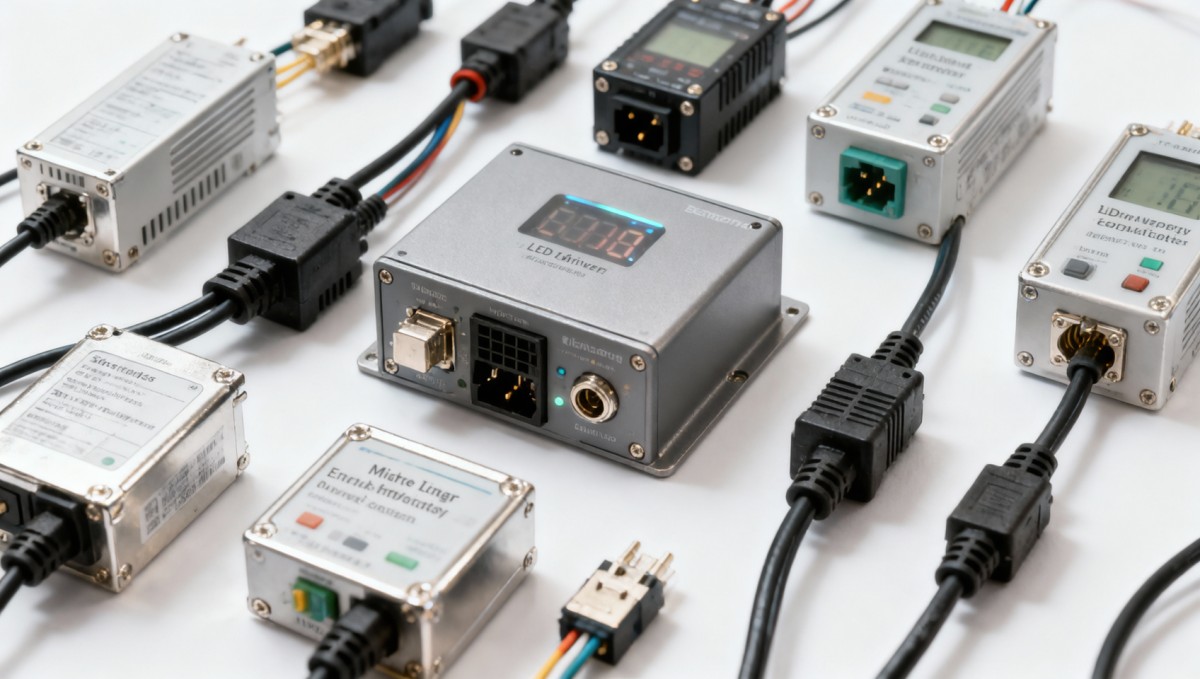
If you only track total kilowatt-hours, you miss the bigger picture. A smart lighting system can look efficient on paper while wasting energy in standby mode, reporting inaccurate measurements, or creating hidden operational costs through poor protocol performance and unstable control behavior.
For most commercial, residential, and mixed-use smart environments, the most important smart lighting energy metrics fall into six practical categories:
- Standby power consumption: how much energy devices use when lights are off but still connected
- Active power consumption: actual energy use during normal operation at different brightness levels and load types
- Dimming efficiency: whether lower brightness truly reduces power proportionally
- Energy measurement accuracy: whether built-in monitoring reflects real consumption reliably
- Protocol and response efficiency: how communication latency and retransmissions affect power use and user experience
- Lifecycle and degradation trends: whether performance changes over time due to heat, component drift, or firmware issues
These metrics matter because they connect energy performance with device quality, installation outcomes, and procurement risk. For anyone evaluating smart lighting for renewable energy aligned buildings, peak-load management, or large-scale smart property deployment, tracking these numbers gives a much clearer basis for decision-making.
Why standby power is often the first metric to audit
In smart lighting, standby draw is one of the most overlooked but most revealing indicators. Every smart relay, sensor-enabled switch, gateway-linked controller, or connected luminaire consumes some amount of power even when lights appear off. Across a single room, this may seem minor. Across a hotel, office tower, or residential portfolio, it becomes a meaningful operational load.
Standby power helps answer several critical questions:
- Is the device architecture actually optimized for low-power operation?
- Does the wireless protocol implementation create unnecessary background consumption?
- Will large-scale deployment undermine energy-saving goals?
- Are vendor low-power claims supported by measurable data?
For procurement teams and technical evaluators, unusually high standby power often signals broader engineering weaknesses. It may reflect inefficient radio design, poor firmware scheduling, weak sleep-state control, or low-quality power management components. In a data-driven sourcing environment, standby consumption is not just an energy figure; it is a proxy for product maturity.
It is also especially relevant in renewable energy scenarios where every watt matters. Buildings designed around solar generation, storage optimization, or demand response programs benefit when connected devices maintain extremely low baseline consumption.
How should you measure real operating energy instead of relying on lab claims?
Vendor specifications usually report ideal conditions. Real buildings do not operate under ideal conditions. To understand actual smart lighting performance, active power consumption should be measured under realistic usage patterns.
This includes testing under:
- Different brightness levels: 100%, 75%, 50%, and low dimming states
- Different load types: LED drivers, tunable white fixtures, color-changing luminaires, and mixed circuits
- Different network conditions: strong signal, congested mesh, and multi-node routing environments
- Different schedules: occupancy-triggered switching, daylight harvesting, manual overrides, and automation scenes
One key issue is that not all dimming is equally efficient. Some systems reduce visible brightness without delivering proportional energy savings. Others perform well at full output but become electrically inefficient at partial loads. If your goal is energy optimization, especially in commercial buildings, it is important to compare actual wattage against expected dimming curves.
Operators should also watch for power spikes during switching, scene transitions, or wireless reconnection events. These may not dominate monthly energy use, but they can reveal instability, poor driver coordination, or hidden stress on the system.
How important is energy monitoring accuracy in smart lighting systems?
It is extremely important. Many smart lighting products now include energy dashboards or power monitoring functions, but not all data is equally trustworthy. If the system reports inaccurate usage, every downstream decision becomes weaker, including ROI calculations, carbon reporting, fault detection, and load management planning.
Energy measurement accuracy matters in several business-critical areas:
- Procurement validation: confirming whether expected savings are real
- Operational benchmarking: comparing buildings, floors, or device groups fairly
- Maintenance diagnostics: spotting abnormal consumption patterns before failure
- Compliance and sustainability reporting: supporting internal ESG and external regulatory requirements
Ideally, reported smart lighting energy data should be checked against calibrated reference instruments. Even small percentage errors can become significant at scale. For example, a 5% reporting gap across a large building portfolio may distort budgeting, performance benchmarking, and vendor evaluation.
For technical buyers, this is where independent IoT power monitoring results are far more useful than brochure language. The real question is not whether a device “supports energy monitoring,” but how close its readings are to verified measurements across different loads and operating states.
What do protocol latency and network behavior have to do with energy performance?
A lot more than many buyers expect. Smart lighting is not only an electrical system; it is also a connected system. Protocol behavior affects both user experience and energy efficiency.
If a lighting command is delayed, retried, or lost, the impact goes beyond annoyance. It can lead to longer active periods, failed automation routines, unnecessary retransmissions, and higher background communication overhead. Over time, poor protocol efficiency can reduce the practical energy benefit of smart controls.
This is particularly relevant in environments using Zigbee, Thread, BLE, Wi-Fi, or Matter-based architectures. Important protocol-related indicators include:
- Command latency: time between instruction and lighting response
- Packet reliability: whether control messages succeed without repeated transmission
- Mesh stability: how well the network performs under scale and interference
- Reconnect behavior: power and time cost after outages or signal drops
For decision-makers, protocol efficiency should be seen as part of the energy equation. A system that saves power at the fixture level but performs poorly at the network level may create operational friction and hidden inefficiency. In large buildings, protocol latency benchmark data can help identify which products are genuinely deployment-ready.
Which long-term metrics help identify product quality and sourcing risk?
Short-term testing is not enough. Smart lighting products often perform well during early deployment and then show drift, instability, or elevated consumption months later. That is why long-term energy metrics are valuable not only for operators but also for procurement leaders comparing OEM and ODM suppliers.
The most useful longer-term indicators include:
- Standby drift over time: whether baseline consumption rises as firmware, capacitors, or radio modules age
- Thermal impact on power draw: whether heat changes efficiency or causes unstable operation
- Driver degradation: whether luminaires require more power to deliver the same output
- Battery-related decline: for wireless controls and sensors, whether power usage shortens maintenance cycles
- Firmware update effects: whether new software improves or worsens power behavior
These metrics are especially useful when sourcing from multiple manufacturers. Two products may appear similar in datasheets but behave very differently over six to twelve months. A supplier with consistently low standby drift, stable reporting accuracy, and predictable network performance is usually a safer long-term partner than one with attractive pricing but weak validation data.
For enterprises, this approach supports a more mature procurement process: evaluate engineering integrity, not just unit cost.
How should buyers, operators, and managers use these metrics in practice?
The right use of smart lighting energy metrics depends on the role of the reader, but the decision framework is similar: use verified data to connect technical performance with business outcomes.
For information researchers and technical evaluators:
- Compare published specs against independent measurement data
- Check whether testing includes standby, dimming, and network-condition variation
- Look for protocol benchmark evidence, not just compatibility claims
For operators and installers:
- Track baseline standby load after deployment
- Review active consumption by zone, schedule, and automation logic
- Investigate any mismatch between expected and reported savings
For procurement teams:
- Request measurement methodology, not just headline efficiency numbers
- Ask for tolerance ranges on energy monitoring accuracy
- Evaluate products under realistic protocol and interference conditions
For enterprise decision-makers:
- Prioritize metrics that affect total cost of ownership, reliability, and sustainability reporting
- Model long-term savings against device count, standby load, and maintenance frequency
- Use benchmark data to reduce sourcing risk across global supply chains
In other words, the best metric set is not the one with the most numbers. It is the one that helps you make a confident operational or investment decision.
What is the best overall framework for tracking smart lighting energy metrics?
A practical framework starts with four layers:
- Baseline efficiency: standby power and active consumption
- Control efficiency: dimming performance, scheduling outcomes, occupancy response
- Data reliability: energy monitoring accuracy and reporting consistency
- System resilience: protocol latency, network stability, and long-term drift
This approach is stronger than focusing on a single KPI because smart lighting performance is multi-dimensional. A product can score well in one area and still fail in practical deployment. The most valuable assessments combine electrical behavior, communication performance, and long-term reliability.
For renewable energy aligned projects, this is even more important. Lighting systems increasingly interact with occupancy analytics, peak-load control, solar generation strategies, and broader building automation platforms. That means energy metrics should help answer not only “How much power does this use?” but also “How trustworthy, controllable, and scalable is this system over time?”
In summary, the smart lighting energy metrics you should track are the ones that expose real performance: standby draw, active power under realistic loads, dimming efficiency, monitoring accuracy, protocol latency effects, and long-term consumption drift. These metrics give operators clearer optimization paths, help buyers compare suppliers more intelligently, and allow decision-makers to judge ROI and risk with more confidence. In a fragmented IoT market, hard measurement data is still the most reliable way to distinguish engineering truth from marketing claims.
Protocol_Architect
Dr. Thorne is a leading architect in IoT mesh protocols with 15+ years at NexusHome Intelligence. His research specializes in high-availability systems and sub-GHz propagation modeling.
Related Recommendations
- Kenji Sato (Infrastructure Arch)What Makes Smart Lighting Energy Metrics Trustworthy
- Kenji Sato (Infrastructure Arch)Why Smart Lighting Specs Often Hide Energy Loss
- Kenji Sato (Infrastructure Arch)How to Compare Smart Lighting Hardware by Real Efficiency
- Kenji Sato (Infrastructure Arch)Smart Lighting Energy Metrics: What Should You Track
- Kenji Sato (Infrastructure Arch)SASO Smart Lighting Rules: Arabic Voice & Local Control Required in KSA
- Kenji Sato (Infrastructure Arch)Why smart lighting benchmarks often hide standby loss
- Kenji Sato (Infrastructure Arch)How to read smart lighting test data without guesswork
- Kenji Sato (Infrastructure Arch)Smart lighting energy metrics: which ones matter most?
- Kenji Sato (Infrastructure Arch)How to Pick CRI and CCT for Smart Lighting
- Kenji Sato (Infrastructure Arch)Triac Dimmer Minimum Load Problems Explained
Analyst