
How to Read Smart Lighting Energy Reports
author
Smart lighting energy reports are not just usage summaries. For researchers, operators, procurement teams, and business evaluators, they are decision tools that reveal where energy is wasted, whether automation is actually working, and whether connected lighting hardware is performing as claimed. A good report helps you answer practical questions fast: which zones consume too much power, whether standby load is abnormal, whether occupancy schedules reduce demand, and whether protocol or device issues are undermining efficiency. At NexusHome Intelligence, we read these reports as engineering evidence—linking energy data with device behavior, protocol reliability, and hardware quality so teams can make better operational and sourcing decisions.
What should you look for first in a smart lighting energy report?
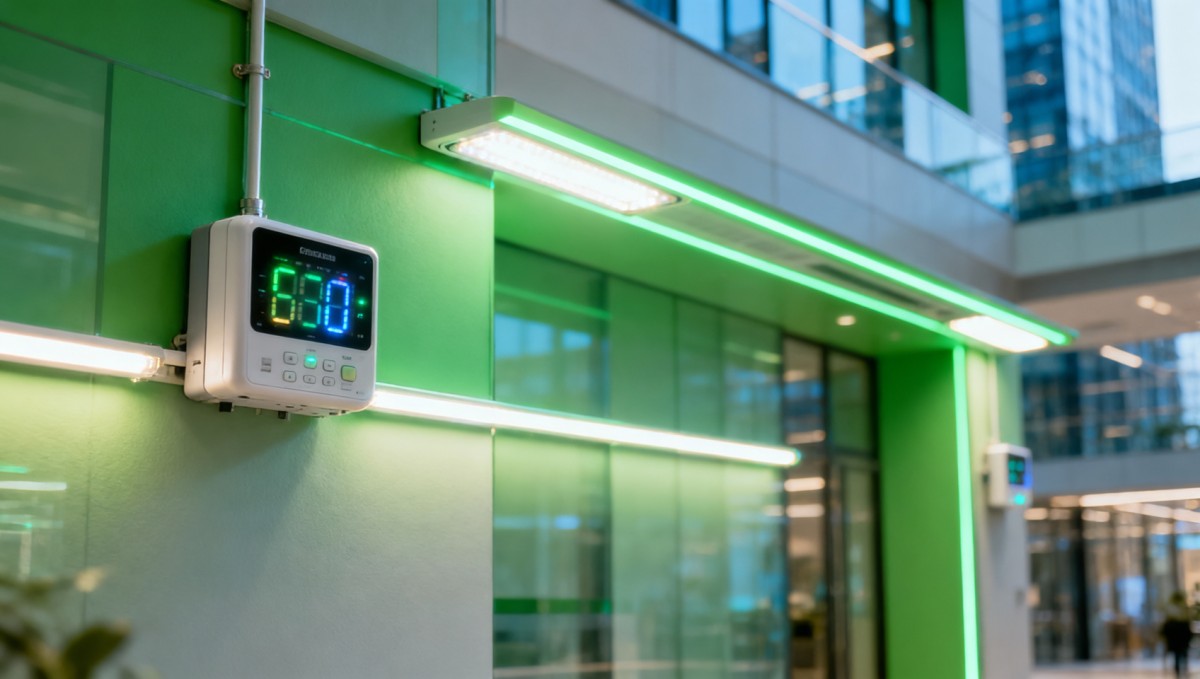
The fastest way to read a smart lighting energy report is to ignore the dashboard aesthetics and focus on four signals first:
- Total energy consumption over time: daily, weekly, and monthly trends.
- Consumption by zone, fixture group, or circuit: where the load is concentrated.
- Peak demand periods: when lighting draws the most power and whether that aligns with actual occupancy.
- Standby or off-hours consumption: hidden waste when lighting should be dimmed or inactive.
If these four areas are unclear, the report is not yet useful for serious decision-making. Before diving into advanced analytics, ask one simple question: Does the report help distinguish normal lighting demand from avoidable waste? If the answer is no, you need better segmentation, better metering, or both.
For operational teams, this first pass quickly shows whether a building is suffering from obvious inefficiencies such as over-lighting, poor scheduling, or fixtures that remain energized after business hours. For procurement and business evaluation teams, these same numbers help verify whether “energy-efficient” smart lighting products are delivering measurable performance in real environments.
How to tell whether high energy use is normal or a sign of inefficiency
High energy consumption is not automatically a problem. A warehouse, retail floor, hospital corridor, or manufacturing site may have valid reasons for elevated lighting load. The key is context.
To separate normal use from inefficiency, compare the report against:
- Operating hours: Is energy use rising outside scheduled occupancy?
- Space function: Does the lighting profile match the needs of the environment?
- Dimming strategy: Are fixtures actually reducing load when daylight or low occupancy should allow it?
- Baseline expectations: How does current performance compare to prior periods or similar sites?
One of the most common mistakes is evaluating total consumption without checking utilization patterns. A site may appear efficient on a monthly total basis while hiding serious waste in overnight idle periods or in specific zones that never dim correctly.
Another warning sign is when reductions claimed by automation rules do not appear in the energy report. If occupancy-based controls, daylight harvesting, or scheduled dimming are installed, the report should show visible drops at expected times. If not, either the control logic is weak, sensors are unreliable, or communication delays are interfering with execution.
Which metrics in a smart lighting energy report matter most?
The most useful smart lighting energy reports go beyond a single kWh number. These are the metrics that usually matter most:
- kWh consumption: the basic measure of energy used over time.
- Peak load: useful for understanding demand spikes and load management opportunities.
- Load by device type or zone: identifies poor-performing fixtures, drivers, or building sections.
- Standby power draw: critical in smart systems with relays, gateways, sensors, and always-on connectivity.
- Dimming response effectiveness: whether reduced brightness translates into real energy savings.
- Runtime hours: helps explain wear, maintenance cycles, and replacement planning.
- Event correlation: links lighting behavior with occupancy, schedules, daylight, or control commands.
For technical readers, one especially important metric is energy monitoring accuracy. If the measurement system itself is inaccurate, every downstream conclusion becomes weaker. In connected buildings, poor measurement can distort ROI calculations, sustainability reporting, and vendor evaluation.
At NHI, we advise readers to treat any report with limited device-level visibility cautiously. Aggregate building-level numbers may be useful for executive summaries, but they are often too coarse for diagnosing faults or comparing hardware quality.
How protocol behavior and device communication can affect energy results
This is where many teams miss the bigger picture. Smart lighting energy reports are often treated as purely electrical documents, but in connected environments they are also indirect performance reports for the underlying IoT system.
If lighting controls depend on Zigbee, Thread, BLE, Wi-Fi, Z-Wave, or Matter-based communication, then protocol quality directly affects energy outcomes. Delayed commands, unstable mesh performance, packet loss, or poor interoperability can all reduce the effectiveness of automation.
For example:
- If occupancy signals arrive late, lights may stay on longer than necessary.
- If dimming commands fail intermittently, actual savings may be lower than modeled savings.
- If gateways or nodes reconnect frequently, standby energy and system overhead may rise.
- If multi-vendor Matter deployments have latency issues, scene execution may become inconsistent across zones.
This is why smart lighting energy analysis should not stop at utility-style reporting. In modern connected buildings, energy efficiency is partly a function of communication reliability. When energy numbers do not match control logic expectations, protocol benchmarking becomes relevant.
For procurement teams, this matters because two products may advertise the same features, yet deliver very different energy outcomes once deployed in a dense, interference-heavy environment.
What hidden hardware issues can an energy report reveal?
A smart lighting energy report can expose hardware weaknesses that marketing brochures will never mention. These include:
- Abnormal standby draw from relays, controllers, or poorly optimized drivers.
- Drift in sensor-triggered behavior that causes lights to activate too often or remain on too long.
- Uneven zone performance suggesting inconsistent driver quality or firmware behavior.
- Battery degradation in wireless sensors that weakens automation accuracy over time.
- Thermal inefficiency in fixtures or control components, increasing energy use under extended load.
If one zone consumes more power than an equivalent neighboring zone with similar occupancy and schedule, do not assume it is just usage variation. It may indicate calibration drift, hardware aging, poor driver efficiency, or connectivity-related execution problems.
For sourcing and evaluation teams, this is where real value emerges. Energy reports help move vendor conversations away from broad claims and toward measurable performance. Instead of asking whether a lighting system is “smart” or “efficient,” ask whether its actual operating profile proves those claims under real conditions.
How operators and procurement teams should read the same report differently
Different readers should extract different decisions from the same smart lighting energy report.
Operators and facility teams should focus on:
- Zones with unexpected after-hours consumption
- Schedules that do not align with occupancy reality
- Dimming failures or underperforming control routines
- Maintenance clues from excessive runtime or anomalous load
Procurement and business evaluation teams should focus on:
- Whether claimed savings are measurable in practice
- Whether energy performance is stable across comparable deployments
- Whether standby power is low enough to support lifecycle efficiency goals
- Whether protocol and hardware behavior create hidden operating costs
This distinction matters because an operator may use the report to fix today’s waste, while a procurement team may use it to avoid buying tomorrow’s problem at scale.
A practical checklist for reading smart lighting energy reports with confidence
If you need a repeatable approach, use this checklist:
- Confirm the reporting period and whether seasonal or occupancy changes affect comparison.
- Check total kWh, then break it down by zone, fixture type, and time period.
- Identify off-hours usage and compare it with scheduling logic.
- Look for expected savings patterns from dimming, daylight harvesting, and occupancy controls.
- Review peak demand periods and ask whether they are operationally justified.
- Check standby load from connected devices, relays, gateways, and sensors.
- Compare similar zones for unexpected variation.
- Investigate whether communication reliability or protocol latency may explain anomalies.
- Validate that metering accuracy is good enough for procurement or ROI decisions.
- Translate findings into action: reconfigure, maintain, benchmark, or respecify hardware.
This approach keeps the report tied to action instead of turning it into a passive dashboard review.
Conclusion: read the report as operational evidence, not just an electricity summary
To read smart lighting energy reports well, start with consumption patterns, then move quickly into efficiency signals, control effectiveness, standby load, and zone-level anomalies. The most valuable insight is rarely the headline number. It is the gap between what the smart lighting system was supposed to do and what the data proves it actually does.
For information researchers, users, procurement teams, and commercial evaluators, the best reports support better decisions across operations, sourcing, and risk management. In connected environments, energy data is not separate from device quality, protocol performance, and automation design. It is evidence of all three.
At NexusHome Intelligence, we view smart lighting energy reports as a bridge between raw consumption data and engineering truth. Read them carefully, and they can help you reduce waste, validate supplier claims, and build smarter, more reliable lighting systems.
Protocol_Architect
Dr. Thorne is a leading architect in IoT mesh protocols with 15+ years at NexusHome Intelligence. His research specializes in high-availability systems and sub-GHz propagation modeling.
Related Recommendations
- Kenji Sato (Infrastructure Arch)Smart Lighting Energy Metrics That Actually Help
- Kenji Sato (Infrastructure Arch)How to Read Smart Lighting Energy Reports
- Kenji Sato (Infrastructure Arch)Which Smart Lighting Metrics Cut Energy Waste
- Kenji Sato (Infrastructure Arch)SASO Smart Lighting Rule Effective Apr 22, 2026: Offline Control & Arabic Voice Required
- Kenji Sato (Infrastructure Arch)What Makes Smart Lighting Energy Metrics Trustworthy
- Kenji Sato (Infrastructure Arch)Why Smart Lighting Specs Often Hide Energy Loss
- Kenji Sato (Infrastructure Arch)How to Compare Smart Lighting Hardware by Real Efficiency
- Kenji Sato (Infrastructure Arch)Smart Lighting Energy Metrics: What Should You Track
- Kenji Sato (Infrastructure Arch)SASO Smart Lighting Rules: Arabic Voice & Local Control Required in KSA
- Kenji Sato (Infrastructure Arch)Why smart lighting benchmarks often hide standby loss
Analyst