
Why smart lighting benchmarks often hide standby loss
author
Smart lighting benchmarks can look impressive on paper, yet many ignore the hidden cost of standby loss that shapes real energy performance. For buyers, operators, and evaluators navigating the IoT supply chain index, this matters far beyond marketing claims. At NexusHome Intelligence, we use smart home hardware testing and IoT hardware benchmarking to reveal how smart lighting energy metrics, protocol behavior, and hardware design affect true efficiency in renewable energy ecosystems.
In renewable energy projects, every watt matters twice: once at the device level and again at the system level, where aggregated idle consumption can erode storage efficiency, distort load forecasts, and reduce the value of peak-shifting strategies. A smart relay, dimmer, gateway, or occupancy-linked luminaire may appear efficient during active switching, but if its standby draw remains high for 20 to 23 hours per day, the annual energy profile changes materially.
This issue is especially relevant for procurement teams comparing OEM/ODM smart lighting products, facility operators managing commercial buildings with solar-plus-storage, and business evaluators assessing lifecycle cost rather than brochure claims. In fragmented IoT environments shaped by Zigbee, Thread, BLE, Wi-Fi, and Matter, standby loss is not only a power design problem. It is also a protocol, firmware, and integration problem.
Why standby loss changes the true energy story
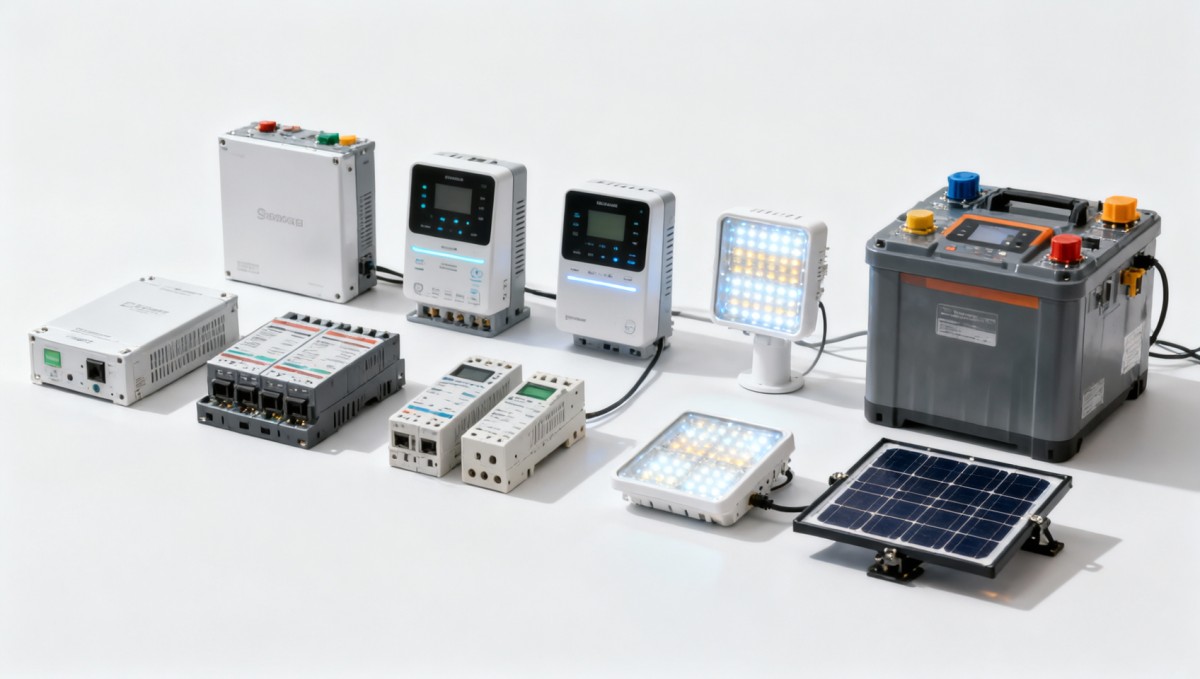
Many smart lighting benchmarks focus on switching speed, dimming smoothness, app response time, or nominal load capacity such as 5A, 10A, or 16A. Those metrics matter, but they do not tell the whole story in renewable energy deployments. A node that draws only 0.8W in standby may sound acceptable in isolation, yet 500 nodes running continuously can consume around 400W at idle. Over 24 hours, that becomes 9.6 kWh per day, and over 365 days it can exceed 3,500 kWh.
In solar-powered homes, microgrids, and energy-aware commercial buildings, that hidden consumption often occurs during nighttime or low-generation periods, when the system depends on battery storage or grid import. The result is a mismatch between advertised energy savings and actual net performance. Operators may find that smart controls reduce lighting runtime by 18% to 35%, but standby overhead quietly gives back part of that gain.
At NHI, we treat standby power as a core benchmark rather than a footnote. We examine not only the lowest idle reading under ideal lab conditions, but also the sustained draw after network joining, scene synchronization, cloud heartbeat activity, and firmware polling. In practice, a device may show one standby figure in a datasheet and a different figure after 7 days of real network activity in a dense building environment.
The benchmarking gap in smart lighting energy metrics
A common testing gap appears when active load efficiency is measured, but no distinction is made between four operational states: switched on, switched off but connected, commissioning mode, and degraded network recovery mode. These states can differ significantly. Some smart lighting controllers consume 0.2W to 0.5W when linked locally, but jump to 0.7W to 1.2W when repeated reconnection attempts occur under protocol interference.
For procurement and business evaluation, this means that “low power” claims should be read as conditional. The relevant question is not simply whether a device is efficient. The better question is: efficient under which state, protocol stack, firmware version, and control architecture?
Where hidden loss usually comes from
- Always-on radios that maintain mesh presence or cloud heartbeat every 15 to 60 seconds.
- AC-DC power stages designed for broad compatibility but not optimized below 1W.
- Poor firmware sleep scheduling, especially after OTA updates or failed commissioning cycles.
- Energy metering chips or status LEDs left active even when the lighting load is off.
For renewable energy-linked projects, each of these factors affects battery reserve planning, carbon accounting, and return-on-efficiency calculations. That is why hard data beats generic marketing language.
How protocol behavior and hardware design amplify idle consumption
Standby loss is often framed as a pure hardware issue, but protocol behavior can be equally decisive. In a fragmented smart ecosystem, the same lighting endpoint may behave differently under Zigbee 3.0, Thread border routing, Wi-Fi direct cloud polling, or Matter abstraction layers. Latency, retry frequency, network keepalive intervals, and routing role assignments all shape the energy baseline.
For example, a mains-powered smart dimmer acting as a mesh router may consume more than a sleepy end device, even if both control the same 12W LED circuit. In large commercial floors with 100 to 300 endpoints, route instability or interference from dense 2.4 GHz traffic can increase packet retries by 2x to 5x. This translates into additional radio-on time and a higher idle draw than brochure numbers suggest.
Hardware design adds another layer. PCB layout, AC isolation strategy, relay coil or triac design, metering chip selection, and the quality of the standby power supply all affect quiescent consumption. A product with strong app features but weak low-load power architecture may pass basic functionality tests while underperforming in energy-sensitive renewable deployments.
Typical standby influencers in smart lighting systems
The table below shows common design and network factors that distort smart lighting energy metrics in real projects. The values represent typical evaluation ranges rather than universal device specifications.
The key takeaway is that low standby design requires coordination across hardware, firmware, and network topology. A component cannot be judged fairly by one isolated test point. For renewable energy use cases, especially those linked to storage and load optimization, system behavior matters more than a single lab number.
Why this matters in solar-plus-storage environments
In a building that uses rooftop solar, a 20 kWh battery, and occupancy-based smart lighting, the control layer should support lower evening demand. However, if 200 lighting nodes each waste 0.6W in standby, the site carries 120W of permanent background load. Over a 10-hour overnight window, that is 1.2 kWh of avoidable battery drain. Across a month, this can influence reserve planning and generator fallback cycles.
For operators, standby loss therefore belongs in the same conversation as inverter efficiency, HVAC scheduling, and demand response. It is not a secondary electrical detail. It is part of total energy intelligence.
What buyers and evaluators should ask before selecting smart lighting hardware
Procurement teams often compare price per node, protocol compatibility, certifications, lead time, and control features. Those are valid criteria, but they should be expanded to include standby measurement conditions and renewable energy fit. A device that costs 8% less upfront may create a higher 3-year operating cost if its standby draw remains 0.4W above a competing design across hundreds of installed nodes.
For business evaluators, the goal is not to demand unrealistic perfection. The goal is to identify suppliers that can document how their products behave across multiple operating states. Independent test data, protocol stress results, and firmware transparency are often stronger indicators of long-term value than polished brochures.
At NHI, we recommend treating smart lighting as an energy-control asset, not just a comfort accessory. That shift changes the procurement checklist, especially in renewable energy projects where every persistent load affects the performance of solar generation, ESS dispatch, or peak-load shifting.
A practical procurement checklist
- Request standby figures for at least 3 states: network joined, light off; commissioning mode; and degraded connection recovery.
- Ask whether the device acts as an end node or router under Zigbee, Thread, or Matter deployments.
- Verify whether the published idle value was measured at 110V, 220V, or both, because input voltage can shift low-load behavior.
- Check if OTA updates, telemetry, and cloud heartbeat intervals are configurable.
- Request a 7-day or 14-day logged power profile instead of a single snapshot measurement.
Decision factors by stakeholder role
Different stakeholders prioritize different risks. The table below helps align technical and commercial review criteria for renewable energy-linked smart lighting projects.
This stakeholder-based view reduces the risk of choosing products that look strong in feature comparison but weaken long-term energy outcomes. In renewable energy systems, procurement discipline should include idle consumption the same way it includes safety and compatibility.
How to benchmark smart lighting for renewable energy applications
A meaningful benchmark should simulate real use conditions rather than idealized short tests. For smart lighting used in solar homes, energy-managed apartments, EV-linked residences, or commercial buildings with storage, the test protocol should cover multiple voltage conditions, wireless interference patterns, and device states over time. A 10-minute reading is rarely enough. A 72-hour to 168-hour profile is usually more informative.
NHI’s data-driven approach begins by separating power consumption into active switching, connected standby, deep idle if supported, and fault recovery. We then map this against protocol traffic, because communication overhead often explains why two similar lighting products show different standby behavior. In some deployments, firmware scheduling can reduce idle energy by 15% to 30% without changing the core hardware.
For renewable energy alignment, it is also useful to compare device behavior during low-generation periods. If a controller performs cloud sync every night at fixed intervals, it may create unnecessary battery stress. Local-first automation or configurable heartbeat timing can make a measurable difference.
Suggested test workflow
- Measure baseline standby at two common voltage conditions, such as 110V and 220V.
- Log power over at least 72 hours in a stable network and another 72 hours under controlled interference.
- Record protocol events including retries, rejoin attempts, and cloud heartbeat intervals.
- Test both isolated devices and scaled groups of 25, 50, or 100 nodes to expose mesh overhead.
- Calculate annual idle energy cost and battery impact under the site’s actual operating hours.
Field signals that a benchmark is incomplete
- Only one standby number is shown, with no test state defined.
- No mention of protocol role, firmware version, or cloud dependency.
- No long-duration measurement beyond 1 hour.
- No explanation of how interference or failed joins affect idle draw.
When these omissions appear, buyers should assume the published number is incomplete rather than fraudulent. The safer approach is to request more granular benchmark evidence before committing to volume procurement.
Common mistakes, operational risks, and next-step questions
One frequent mistake is to calculate energy savings only from reduced lighting runtime. In reality, the control layer itself consumes energy. If occupancy logic cuts lighting demand by 25%, but the smart control network adds a persistent parasitic load, the net gain may be lower than expected. This does not make smart lighting ineffective. It means the benchmark must be honest about both sides of the equation.
Another mistake is to treat interoperability labels as proof of efficiency. A device may join a Matter or Zigbee ecosystem successfully and still perform poorly in standby. Connectivity certification and low idle power are related only indirectly. Renewable energy projects should evaluate both dimensions independently.
There is also an operational risk in underestimating maintenance implications. Devices with unstable idle behavior may trigger more reconnection events, support tickets, or troubleshooting visits. In distributed sites with 5 buildings or 50 apartment units, small standby issues can scale into costly service overhead.
FAQ: what decision-makers usually ask
How low should standby power be for smart lighting in renewable energy projects?
There is no universal number, because form factor, protocol role, and mains design vary. As a practical screening point, buyers often look more carefully once connected standby rises above about 0.5W per node for basic switching devices. For larger installations, even a difference of 0.2W per node can become significant over 100 to 500 units.
Is standby loss still important if the lighting load is LED and already efficient?
Yes. LED efficiency reduces active load, which can make parasitic control losses more visible as a share of total energy. In ultra-efficient spaces, the control layer may represent a larger percentage of overnight demand than expected.
What documents should procurement request from suppliers?
Ask for standby power by state, protocol deployment notes, firmware version used in testing, voltage conditions, and at least one long-duration power log. If the supplier cannot provide all of these, request a sample for independent validation before issuing a large PO.
How long does a serious evaluation usually take?
For a small shortlist of 2 to 4 products, a basic lab and integration review may take 7 to 15 days. A more complete evaluation with protocol stress, multi-node mesh behavior, and renewable energy scenario modeling can take 2 to 4 weeks depending on sample availability and test depth.
Standby loss is one of the most overlooked variables in smart lighting benchmarks, yet it directly affects energy savings credibility, battery reserve planning, and procurement value in renewable energy ecosystems. The right benchmark does not stop at dimming quality or app features. It measures idle behavior across hardware states, protocol conditions, and real operating time.
NexusHome Intelligence helps operators, procurement teams, and business evaluators move beyond marketing claims through data-driven IoT hardware benchmarking, protocol analysis, and practical energy performance review. If you need a clearer basis for supplier selection, product comparison, or smart lighting validation in renewable energy environments, contact us to discuss a tailored benchmarking framework, request deeper product analysis, or explore more data-backed solutions.
Protocol_Architect
Dr. Thorne is a leading architect in IoT mesh protocols with 15+ years at NexusHome Intelligence. His research specializes in high-availability systems and sub-GHz propagation modeling.
Related Recommendations
- Kenji Sato (Infrastructure Arch)Why smart lighting benchmarks often hide standby loss
- Kenji Sato (Infrastructure Arch)How to read smart lighting test data without guesswork
- Kenji Sato (Infrastructure Arch)Smart lighting energy metrics: which ones matter most?
- Kenji Sato (Infrastructure Arch)How to Pick CRI and CCT for Smart Lighting
- Kenji Sato (Infrastructure Arch)Triac Dimmer Minimum Load Problems Explained
- Kenji Sato (Infrastructure Arch)Smart Dimmer Switch China: What to Compare
- Kenji Sato (Infrastructure Arch)Xiaohongshu's Cross-Border E-Commerce Platform Redshop Launches in June 2026
- Kenji Sato (Infrastructure Arch)Smart home compliance laboratory: Do they test under real load—or just idle conditions?
- Kenji Sato (Infrastructure Arch)Smart lighting energy metrics: How dimming algorithms impact total lifecycle kWh—not just lumens per watt
- Kenji Sato (Infrastructure Arch)Contact NHI Analysts — But First: Are You Asking the Right Questions About Firmware Integrity?
Analyst