
Why Smart Lighting Specs Often Hide Energy Loss
author
Smart lighting promises efficiency, yet many specs obscure standby drain, protocol overhead, and poor power monitoring. For researchers, operators, buyers, and decision-makers, NexusHome Intelligence examines smart lighting energy metrics through IoT hardware benchmarking, Matter protocol data, and climate control hardware benchmarking—turning marketing claims into measurable engineering truth across the IoT supply chain.
In renewable energy projects, lighting is no longer an isolated load. It affects solar self-consumption, battery sizing, peak-load management, and building decarbonization targets. A luminaire that looks efficient on a brochure may still waste energy through idle electronics, unstable wireless communication, or inaccurate metering that hides real operating costs over 3 to 7 years.
That gap matters to four different audiences at once: researchers need measurable benchmarks, operators need stable performance, procurement teams need comparable specifications, and enterprise leaders need defensible investment decisions. The issue is not whether smart lighting can save energy. The real question is which specifications reveal truth and which ones conceal loss.
Where Smart Lighting Energy Loss Actually Hides
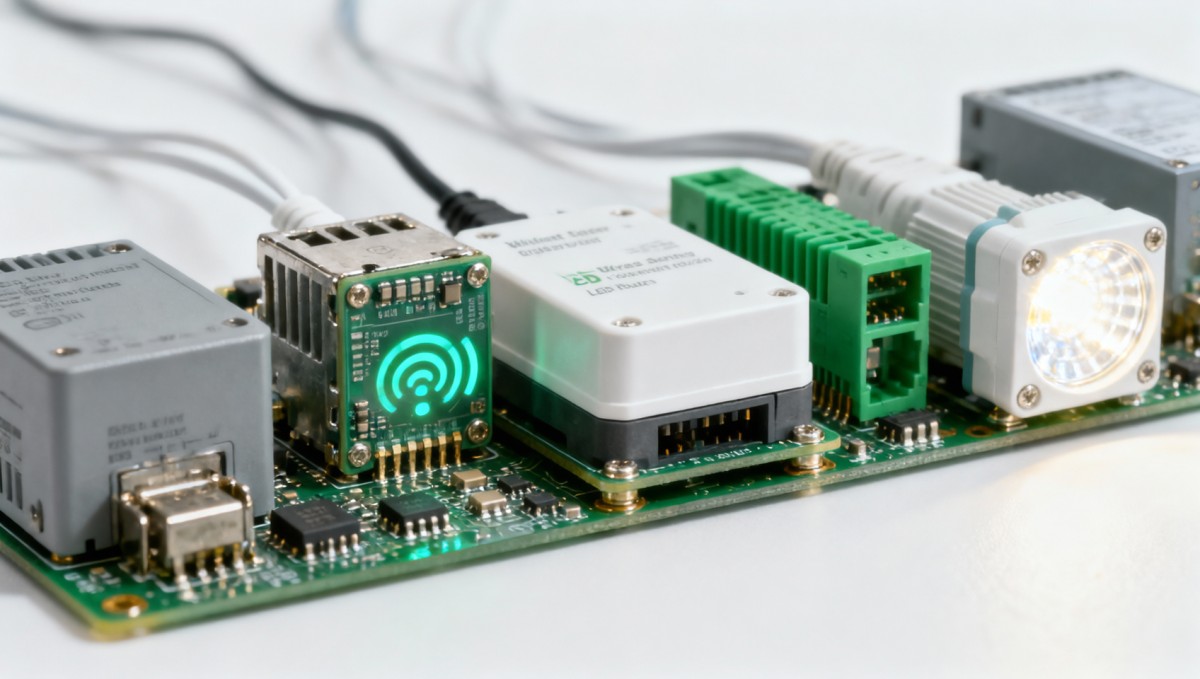
Most smart lighting datasheets emphasize watts at full brightness, color temperature range, or protocol support. Those figures matter, but they rarely capture total energy behavior across a 24-hour cycle. In commercial renewable energy environments, hidden loss often comes from standby consumption, power supply inefficiency, wireless polling intervals, and poor dimming curves at 10% to 40% load.
For example, a smart driver rated at 12 W may appear efficient during active use, yet consume 0.5 W to 1.8 W in standby. Across 1,000 fixtures, that translates into 500 W to 1.8 kW of continuous background load. Over 8,760 hours per year, the annual waste can exceed the expected savings promised by occupancy control in poorly configured systems.
Protocol overhead is another blind spot. A Matter-over-Thread or Zigbee node does not consume energy only when the LED is on. It consumes power when maintaining network presence, repeating packets, waking radios, rejoining after interference, and processing commands. In dense buildings with metal partitions, elevators, and Wi-Fi congestion, communication overhead can rise sharply during peak daytime traffic.
The problem becomes more serious in buildings paired with rooftop PV, energy storage, or demand response programs. If lighting loads are assumed to be lower than they really are, planners may understate nighttime battery draw, misjudge inverter load balancing, or overestimate carbon reductions. In other words, an inaccurate smart lighting specification can distort the economics of the entire renewable energy control stack.
Four common loss categories
- Standby drain from drivers, sensors, and wireless modules, often ranging from 0.2 W to 2.0 W per node.
- Conversion losses in low-quality power supplies, especially at partial dimming below 30% output.
- Network-related overhead from retries, mesh routing, firmware wake cycles, and poor signal conditions.
- Metering errors of ±5% to ±10%, which can hide inefficient operation in dashboards and audits.
Why brochure efficiency is not enough
Brochures usually show luminous efficacy in lumens per watt under controlled laboratory conditions. However, renewable energy operators care about system-level consumption: how much the fixture draws when dimmed, idle, disconnected, updating firmware, or integrated with a building management system. Those conditions represent a large share of real operating hours in schools, offices, retail chains, and mixed-use properties.
NHI’s benchmarking approach treats smart lighting as part of a connected energy ecosystem rather than a standalone fixture. That means testing not only illumination output, but also protocol behavior, electrical stability, and reporting accuracy under fluctuating load, voltage variation, and interference. This is where marketing language gives way to engineering truth.
The Specs Procurement Teams Should Request Before Buying
For procurement teams, the biggest risk is comparing incomplete specifications. Two smart lighting products can list the same 10 W rating, the same wireless standard, and similar dimming features, yet produce very different annual energy profiles. A better purchasing method is to request performance data across at least 6 operational states, not just one nominal state.
These states typically include: full output, 50% dimming, low-end dimming at 10% to 20%, connected standby, disconnected standby, and sensor-triggered wake cycles. In renewable energy projects, this multi-state view is essential because actual energy use depends on control logic and occupancy patterns, not on the nameplate wattage alone.
Buyers should also request protocol-specific behavior. “Supports Matter” or “works with Zigbee” does not reveal packet retry rates, node stability after power interruptions, or latency in a 20-node to 100-node deployment. Those factors influence how often radios wake, how long devices stay active, and how much extra energy the network consumes over time.
Key specification fields worth demanding
The table below summarizes the minimum fields that make smart lighting comparisons more useful for renewable energy planning, especially when lighting is linked to PV generation, battery storage, or carbon reporting.
The practical conclusion is simple: procurement should evaluate lighting loads as dynamic energy assets, not static fixtures. A supplier unable to provide connected standby figures, low-dimming efficiency, or metering tolerance is forcing the buyer to accept hidden operational risk.
A 5-point procurement checklist
- Request test data for at least 6 operating states over a full duty cycle.
- Confirm protocol performance in dense mesh conditions, not just single-node demos.
- Ask for standby measurements with sensors, radio, and gateway links all enabled.
- Verify whether energy dashboards use true measurement or calculated estimates.
- Check firmware update behavior, since repeated wake cycles can affect annual energy use.
For enterprise decision-makers, this level of detail improves total cost of ownership modeling over 24, 36, and 60 months. For operators, it reduces the mismatch between expected and actual savings after commissioning. For researchers, it creates comparable datasets across product categories and protocol stacks.
Protocol Choice, Mesh Design, and Their Impact on Renewable Energy Performance
In smart lighting, connectivity is often marketed as a convenience feature. In renewable energy environments, it is an energy variable. Zigbee, Thread, BLE mesh, Wi-Fi, and Matter-based implementations differ in sleep behavior, routing overhead, firmware complexity, and gateway dependence. Those differences affect not only responsiveness but also the net energy saved by the control strategy.
A protocol that performs well in a 10-device showroom may struggle in a 300-fixture office floor or a 3-building campus. When packet loss rises, devices retry transmissions, routers stay active longer, and command execution becomes less predictable. Occupancy-based lighting then operates with delay, reducing user satisfaction and undermining energy-saving logic during peak tariffs.
This matters in solar-linked buildings because load flexibility depends on precise control. If lights cannot dim or schedule reliably in response to PV surplus, battery discharge windows, or demand-response signals, then the building loses one of its easiest controllable loads. A few hundred milliseconds of additional latency may not sound serious, but at scale it can expose deeper network inefficiency and poor node behavior.
Protocol comparison from an energy management view
The table below does not rank one protocol as universally best. Instead, it shows the trade-offs that researchers, operators, and buyers should examine before standardizing smart lighting in renewable energy projects.
The key takeaway is that protocol selection should align with building topology, occupancy profile, and renewable energy control objectives. A warehouse with long aisles, a hotel with high room count, and a campus microgrid each impose different node-density and latency requirements. One architecture rarely fits all three.
What to test before rollout
- Measure command latency across 20, 50, and 100 nodes under occupied-hour interference.
- Track retry rates during HVAC, elevator, and Wi-Fi peak periods.
- Test power restoration after short outages of 5 to 30 seconds.
- Compare annualized energy draw of the network layer, not just the LED load.
For NHI, protocol compliance claims are only the starting point. What matters to the supply chain is whether the hardware maintains low overhead and stable control in the real conditions where renewable energy savings are actually won or lost.
How to Benchmark Smart Lighting for Solar, Storage, and Carbon Goals
A strong benchmark methodology should connect lighting behavior to renewable energy outcomes. That means testing power quality, dimming efficiency, standby load, sensor logic, and metering reliability under scenarios that reflect actual building operation. In many projects, the most useful benchmark window is not 5 minutes in a lab, but 7 to 14 days of staged operation with realistic schedules.
For example, a site integrating rooftop solar may prioritize daytime adaptive dimming to absorb PV peaks, while a battery-backed commercial building may care more about night standby reduction and load shedding accuracy. Both use smart lighting, but their engineering priorities differ. Benchmarking should therefore reflect energy strategy, not just product category.
Operators should pay attention to metering architecture. Some systems report “energy saved” through estimated models based on dimming percentage. Others measure actual power at the fixture, relay, or circuit level. The difference is substantial. Estimated savings may be directionally useful, but they cannot replace measured data when verifying return on investment or sustainability reporting.
Recommended benchmark dimensions
- Standby power in both connected and disconnected states, measured over at least 12 hours.
- Dimming curve efficiency at 100%, 50%, 20%, and 10% output.
- Metering deviation versus reference instruments, ideally within ±2% to ±3%.
- Latency and retry behavior during interference and power recovery events.
- Sensor-trigger reliability over repeated cycles, such as 500 to 2,000 activation events.
Benchmark priorities by project type
The matrix below helps teams decide which smart lighting energy metrics deserve the most attention based on renewable energy use case and decision role.
This framework is especially useful for supply chain evaluation. Instead of asking which vendor has the most attractive brochure, teams can ask which hardware profile best supports a 5-year energy strategy. That shift is central to NHI’s role as an engineering filter between manufacturers and global buyers.
Common Mistakes, Operational Risks, and Better Decision Paths
One of the most common mistakes is assuming that every connected lighting system automatically supports renewable energy optimization. In practice, many projects install smart fixtures without validating how they interact with demand response, HVAC scheduling, or battery dispatch logic. The result is a technically connected system that still underperforms as an energy asset.
Another mistake is treating software dashboards as proof of efficiency. A dashboard may look sophisticated while relying on estimated values, delayed synchronization, or incomplete device sampling. If only 60% to 80% of endpoints report consistently, energy decisions based on that dataset may be misleading, especially in large portfolios where small percentage errors compound into meaningful cost gaps.
There is also a procurement trap around lowest-cost sourcing. The cheaper device may save 8% to 15% upfront, yet cost more over 36 months if it has higher standby draw, shorter component life, or unstable protocol behavior requiring extra gateway hardware and service visits. In B2B renewable energy projects, operating friction often costs more than the initial unit discount.
Risk signals to watch early
- No disclosure of standby power with sensors and radio enabled.
- No metering tolerance stated, or only modeled savings shown.
- Protocol claims without node-scale latency or recovery testing.
- Dimming figures shown only at 100% and 50%, with no low-end data.
- Firmware behavior after outages or updates left unspecified.
FAQ for buyers and decision-makers
How should buyers compare two smart lighting offers with similar wattage?
Compare total operating profiles, not nameplate load. Ask for connected standby, low-end dimming draw, metering error range, and outage recovery time. If one supplier gives values for 6 operating states and another gives only nominal watts, the first proposal is usually more decision-ready even before price comparison.
Is smart lighting always a good fit for solar-powered or battery-backed buildings?
Usually yes, but only when controls are stable and measurable. In smaller sites under 50 fixtures, the gains may be straightforward. In larger sites above 200 fixtures, network design, standby load, and reporting quality become critical. The value comes from controllability plus verified performance, not connectivity alone.
What implementation timeline is realistic for evaluation?
A practical path is 3 stages: desk review in 1 to 2 weeks, pilot testing in 2 to 4 weeks, and decision modeling in another 1 to 2 weeks. For multi-building programs, extending pilot observation through one billing cycle can provide more reliable energy comparisons.
Which teams should be involved before final procurement?
At minimum, involve facility operations, procurement, electrical engineering, and the team responsible for renewable energy or sustainability targets. If a project includes solar, storage, or a building management platform, the controls integrator should also review protocol and reporting assumptions before the contract is signed.
Smart lighting can be a powerful contributor to renewable energy strategy, but only when hidden losses are exposed early. NexusHome Intelligence helps organizations move beyond generic claims by translating protocol behavior, standby drain, and hardware-level performance into measurable benchmarks that support better sourcing, deployment, and long-term energy outcomes.
If your team is evaluating smart lighting for solar-linked buildings, low-carbon retrofits, or connected commercial portfolios, now is the time to request deeper data. Contact NHI to discuss benchmarking priorities, compare hardware options, and obtain a more defensible path from product specification to verified energy performance.
Protocol_Architect
Dr. Thorne is a leading architect in IoT mesh protocols with 15+ years at NexusHome Intelligence. His research specializes in high-availability systems and sub-GHz propagation modeling.
Related Recommendations
- Kenji Sato (Infrastructure Arch)What Makes Smart Lighting Energy Metrics Trustworthy
- Kenji Sato (Infrastructure Arch)Why Smart Lighting Specs Often Hide Energy Loss
- Kenji Sato (Infrastructure Arch)How to Compare Smart Lighting Hardware by Real Efficiency
- Kenji Sato (Infrastructure Arch)Smart Lighting Energy Metrics: What Should You Track
- Kenji Sato (Infrastructure Arch)SASO Smart Lighting Rules: Arabic Voice & Local Control Required in KSA
- Kenji Sato (Infrastructure Arch)Why smart lighting benchmarks often hide standby loss
- Kenji Sato (Infrastructure Arch)How to read smart lighting test data without guesswork
- Kenji Sato (Infrastructure Arch)Smart lighting energy metrics: which ones matter most?
- Kenji Sato (Infrastructure Arch)How to Pick CRI and CCT for Smart Lighting
- Kenji Sato (Infrastructure Arch)Triac Dimmer Minimum Load Problems Explained
Analyst