
Why Smart Home PCB Assembly Compliance Gets Overlooked
author
In the race to launch connected products, smart home PCB assembly compliance is often treated as a box to check rather than a foundation for performance, safety, and scale. For buyers comparing verified IoT manufacturers, trusted smart home factories, or any IoT PCBA manufacturer, overlooked compliance can distort Matter standard compatibility, reliability, and long-term energy results across the IoT supply chain.
The core reason smart home PCB assembly compliance gets overlooked is simple: many teams still evaluate hardware on unit price, lead time, and feature claims before they evaluate whether the board can consistently meet regulatory, protocol, safety, and power-performance requirements in the real world. That shortcut may speed up sourcing, but it often creates larger downstream costs—failed certification, unstable wireless performance, battery drain, warranty returns, project delays, and procurement risk.
For researchers, operators, buyers, and business decision-makers, the practical takeaway is this: compliance in smart home PCBA is not just about passing an audit. It directly affects interoperability, safety, energy efficiency, deployment reliability, and whether a product can scale across markets.
Why compliance is still underestimated in smart home PCB assembly
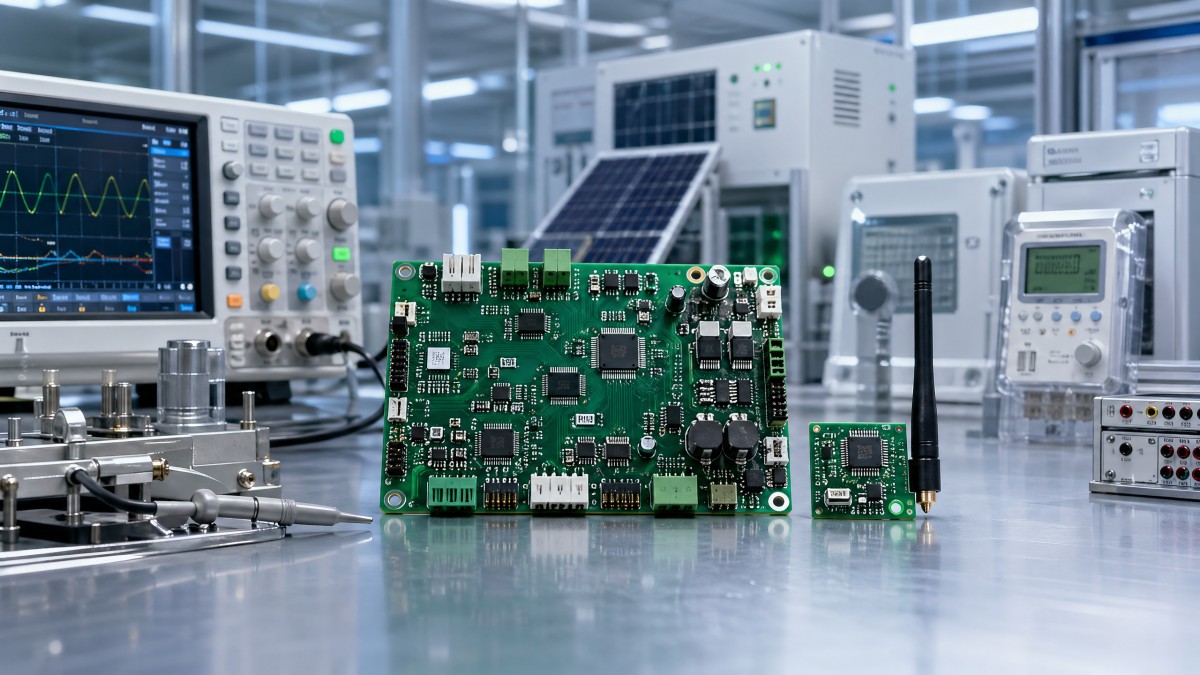
In many smart home and renewable energy related IoT projects, compliance is misunderstood as a final-stage paperwork exercise. In reality, it begins much earlier—at component selection, PCB layout, RF design, assembly quality, firmware integration, traceability, and test validation.
There are several reasons it gets underestimated:
- Procurement pressure favors visible metrics. Unit cost, turnaround time, and quoted capability are easier to compare than hidden engineering quality.
- Marketing language masks technical gaps. Claims like “Matter-ready,” “low power,” or “industrial quality” are often accepted without enough lab-grade evidence.
- Teams separate compliance from performance. In practice, protocol compliance, EMC behavior, power stability, and safety margins are tightly linked.
- Global supply chains add complexity. Different markets require different standards, and not every IoT PCBA manufacturer manages that complexity equally well.
- Early prototypes can create false confidence. A board may function in a pilot batch but fail once deployed at scale in dense RF or energy-sensitive environments.
This is especially important in connected energy and climate-control systems, where smart relays, HVAC controllers, sensors, gateways, and load-monitoring devices must operate reliably for long periods under variable environmental and electrical conditions.
What buyers and decision-makers are actually trying to avoid
When people search for topics like smart home PCB assembly compliance, they are usually not looking for a textbook definition. They are trying to avoid expensive mistakes.
The biggest concerns usually include:
- Certification delays that postpone product launch or market entry
- Field failures caused by solder quality, thermal issues, RF instability, or component drift
- Protocol incompatibility that weakens Matter, Zigbee, Thread, BLE, or Wi-Fi interoperability
- Battery or standby power underperformance that damages long-term energy claims
- Supplier inconsistency between prototype, pilot, and mass production batches
- Liability and brand risk when safety or traceability documentation is incomplete
For enterprise buyers and procurement teams, overlooked compliance is rarely a minor technical issue. It becomes a commercial problem when returns rise, installation teams lose confidence, or a smart building deployment no longer meets efficiency expectations.
Which parts of compliance have the biggest real-world impact
Not all compliance factors carry equal weight. The most important areas are the ones that directly influence deployment outcomes.
1. Electrical safety and component integrity
A compliant assembly process helps confirm correct creepage and clearance design, stable power regulation, proper insulation strategy, and suitable component ratings. In smart home devices connected to HVAC, relays, metering, or renewable energy subsystems, these basics matter far more than brochure claims.
2. EMC and RF performance
Many connected products appear stable in controlled demos but fail in real buildings with interference, metal obstacles, multiple protocols, and crowded channels. Poor PCB layout, grounding, shielding, or antenna integration can undermine compliance and performance at the same time.
3. Protocol-level interoperability
If a supplier claims Matter standard compatibility, buyers should ask whether that means formal conformance, stable multi-device behavior, firmware support maturity, and repeatable performance in mixed-network environments. A label alone is not proof.
4. Low-power and energy behavior
In renewable energy and smart climate ecosystems, standby power, wake cycles, battery discharge curves, and power-management design are essential. Weak assembly discipline or poor component control can create leakage, inconsistent consumption, or shortened service life.
5. Manufacturing traceability and process control
Even a good design can fail in production if solder paste control, reflow profiling, AOI coverage, ICT strategy, or lot traceability are weak. Compliance is only meaningful if the factory can maintain it consistently across scale.
How overlooked compliance affects smart home performance and energy outcomes
Compliance failures are not limited to legal or certification problems. They often show up as operational inefficiencies that users and installers experience directly.
Examples include:
- Smart thermostats or HVAC controllers that lose network stability under interference
- Energy monitoring devices that drift outside expected measurement accuracy
- Battery-powered sensors that require replacement much earlier than expected
- Smart relays that generate excess standby consumption across large deployments
- Gateways that technically connect but create high latency in multi-protocol environments
For organizations focused on renewable energy, building automation, or carbon reduction, this matters because unreliable hardware can distort the entire efficiency model. If the edge device is unstable, the analytics layer above it becomes less trustworthy. That weakens decision-making at the system level.
How to evaluate an IoT PCBA manufacturer beyond surface-level claims
If you are comparing verified IoT manufacturers or trusted smart home factories, the best approach is to evaluate evidence, not slogans.
Ask these questions:
- What certifications and test records are available? Ask for real documentation, not just sales claims.
- How is protocol compliance validated? Request details on Matter, Zigbee, Thread, BLE, or Wi-Fi testing methods.
- How is low-power performance measured? Look for standby current, sleep mode behavior, and long-duration discharge data.
- What manufacturing controls are in place? Review SMT precision, AOI, X-ray, ICT, functional test coverage, and process traceability.
- Can the supplier prove consistency from EVT to MP? Prototype success is not enough without scale validation.
- How are failures analyzed and corrected? A strong supplier should show root-cause and CAPA discipline.
- What environmental and stress tests are performed? Thermal cycling, humidity, vibration, and long-run reliability data are highly valuable.
For procurement leaders, these questions help separate marketing-driven vendors from engineering-driven manufacturers. For technical teams, they create a stronger basis for supplier qualification and total cost assessment.
Why compliance should be treated as a business metric, not just an engineering task
Companies that treat compliance as a strategic input usually make better sourcing decisions. They reduce launch risk, lower warranty costs, improve end-user trust, and gain more predictable scaling across regions.
This matters even more when products sit inside broader ecosystems such as smart buildings, distributed energy management, or connected climate control. In those settings, a non-compliant or weakly validated PCB assembly can damage not only one device, but overall network reliability and energy performance.
From a business perspective, stronger compliance review supports:
- More reliable time-to-market planning
- Lower total cost of ownership
- Higher confidence in multi-market expansion
- Better installation and service outcomes
- Stronger brand protection in technical buying cycles
What a smarter sourcing mindset looks like
The most effective sourcing teams no longer ask only, “Can this factory build the board?” They ask, “Can this supplier prove repeatable compliance, interoperability, and energy performance under real deployment conditions?”
That shift is important because the smart home market is no longer defined by isolated devices. It is defined by ecosystems. In ecosystem-driven hardware, PCB assembly compliance is one of the clearest indicators of whether a product can perform beyond the lab, across standards, and at commercial scale.
So when compliance gets overlooked, it is usually not because it lacks importance. It is because its consequences appear later—during certification, rollout, maintenance, or system optimization. By then, the cost is much higher.
Conclusion
Smart home PCB assembly compliance gets overlooked because many teams still treat it as a formal requirement instead of a performance driver. But for anyone evaluating an IoT PCBA manufacturer, trusted smart home factory, or hardware partner for connected energy applications, compliance is central to reliability, safety, interoperability, and long-term value.
The strongest decision framework is practical: verify the factory’s process controls, protocol validation, low-power data, certification evidence, and production consistency before committing. In a fragmented IoT landscape, compliance is not a side issue—it is one of the most useful signals of engineering truth.
Protocol_Architect
Dr. Thorne is a leading architect in IoT mesh protocols with 15+ years at NexusHome Intelligence. His research specializes in high-availability systems and sub-GHz propagation modeling.
Related Recommendations
- NHI Data Lab (Official Account)How Trusted Are Trusted Smart Home Factories?
- NHI Data Lab (Official Account)What Makes a Smart Home Supplier Directory Useful?
- NHI Data Lab (Official Account)How to Verify Claims From IoT Manufacturers
- NHI Data Lab (Official Account)Where IoT Supply Chain Audits Often Miss Risk
- NHI Data Lab (Official Account)What Smart Home OEM Data Can Reveal Before Sourcing
- NHI Data Lab (Official Account)Why Smart Home PCB Assembly Compliance Gets Overlooked
- NHI Data Lab (Official Account)Canton Fair Phase II 2026: Zigbee 3.0 + Matter Dual-Mode PCBA Orders Surge
- NHI Data Lab (Official Account)Canton Fair Phase II 2026: Zigbee 3.0 + Matter Dual-Mode PCBA Orders Surge
- NHI Data Lab (Official Account)Canton Fair Phase II 2026: Zigbee 3.0 + Matter Dual-Mode PCBA Orders Surge
- NHI Data Lab (Official Account)Canton Fair 2026 Day 1: Zigbee 3.0 + Matter Dual-Mode PCBA Orders Surge
Analyst