
What a hardware compliance inquiry should uncover
author
A rigorous hardware compliance inquiry should reveal far more than marketing claims—it must expose protocol stability, energy performance, and supplier accountability across the IoT supply chain. For buyers, operators, and evaluators in renewable energy and smart infrastructure, NexusHome Intelligence brings IoT hardware benchmarking, Matter protocol data, and smart home hardware testing into one evidence-based view, helping identify verified IoT manufacturers and trusted smart home factories before costly deployment risks emerge.
In renewable energy environments, that standard is not optional. Solar plants, battery storage systems, heat pump networks, EV charging infrastructure, and energy management platforms increasingly depend on connected hardware that must operate across mixed protocols, unstable field conditions, and long asset lifecycles. A compliance inquiry that stops at certificates or brochure claims misses the operational risks that appear after deployment.
For procurement teams, site operators, and commercial evaluators, the key question is simple: what should a hardware compliance inquiry actually uncover before a purchase order is approved? The answer spans protocol behavior, standby power draw, component consistency, environmental resilience, firmware governance, and supplier transparency. In renewable energy projects, even a 2% measurement drift or a 300-millisecond command delay can affect load balancing, service response, or maintenance costs across hundreds of endpoints.
Why compliance inquiries matter more in renewable energy deployments
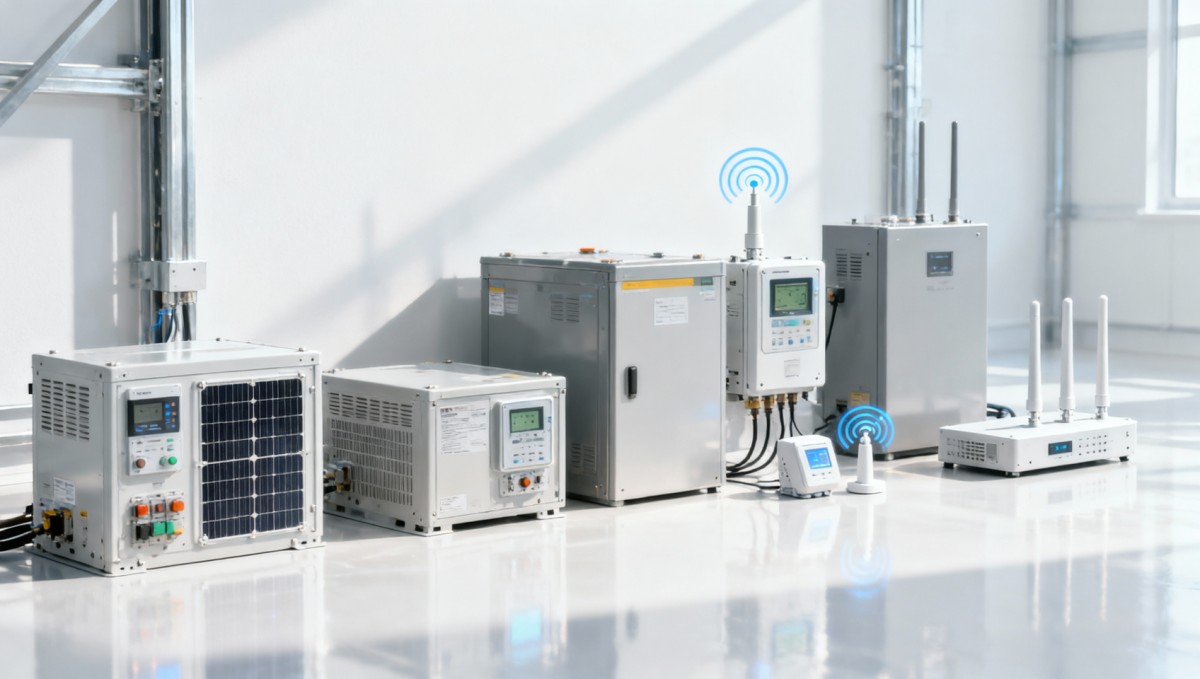
Renewable energy systems are no longer isolated electrical assets. A modern installation may connect inverters, smart relays, sub-meters, environmental sensors, HVAC controllers, battery cabinets, and gateway devices into one operational layer. When those devices rely on Zigbee, Thread, BLE, Wi-Fi, Modbus bridges, or Matter-enabled control paths, interoperability becomes a measurable engineering requirement rather than a sales promise.
A weak hardware compliance inquiry often focuses on whether a device “supports” a protocol. A strong inquiry tests how that protocol behaves under real site conditions: interference from metal enclosures, packet loss in utility rooms, latency during peak loads, and firmware behavior after power cycling. In solar-plus-storage and microgrid projects, devices may need to recover within 30–90 seconds after a network interruption, not merely reconnect “eventually.”
The renewable energy sector also magnifies energy inefficiency. A sensor drawing an extra 200–500 microwatts in standby may seem minor at unit level, but across 5,000 battery-powered endpoints over a 3–5 year maintenance cycle, the replacement burden becomes expensive. Compliance must therefore uncover not only electrical safety or radio declarations, but also lifecycle energy performance and serviceability.
For commercial evaluators, the inquiry should also reveal supplier accountability. If a gateway fails to maintain stable Matter-over-Thread routing in a congested plant room, who owns the root cause analysis? If a smart relay reports energy values with an error outside ±1%, can the manufacturer provide calibration data, test methods, and batch-level consistency records? Hardware compliance is a business risk filter as much as a technical one.
Core risks hidden behind basic declarations
- Protocol claims without stress-test evidence, especially in mixed Zigbee, Thread, and Wi-Fi environments.
- Energy monitoring components with poor long-term drift control, leading to billing or dispatch inaccuracies over 12–24 months.
- Battery-powered field devices that achieve lab performance only at 20–25°C, but degrade rapidly at 0°C or 45°C.
- Suppliers that offer certificates yet cannot explain firmware revision control, traceability, or corrective action workflows.
What decision-makers should ask first
Before comparing unit price, ask whether the hardware has been evaluated in a use case that resembles your deployment: rooftop solar control, commercial building demand response, distributed heat pump coordination, or EV load scheduling. A relevant compliance inquiry should define at least 4 dimensions: connectivity stability, energy consumption, environmental resilience, and supplier support responsiveness.
What protocol and performance testing should uncover
In renewable energy operations, protocol compliance is not just about joining a network. It should reveal whether a device maintains predictable behavior under interference, density, and traffic bursts. For example, a wireless controller used in distributed HVAC optimization should be tested for command latency across multi-node hops. If average command response remains under 150 milliseconds in a clean lab but rises above 600 milliseconds in a dense mechanical room, procurement teams need that evidence before rollout.
Matter and Thread are especially relevant where cross-brand interoperability is expected in smart buildings and energy management systems. A serious inquiry should examine commissioning success rate, route stability, rejoin behavior after power loss, and throughput degradation when 30–50 nodes share the same environment. If the device only performs well with a single reference hub, the compliance review should flag that limitation clearly.
Energy hardware also depends on accurate sensing. Smart meters, current transformers, relays, and climate controllers should be checked for measurement error, signal drift, and control precision. In practical procurement terms, many buyers will accept ±1% to ±2% accuracy for non-billing monitoring, while dispatch-sensitive or incentive-linked applications may need tighter performance and documented recalibration cycles every 12 or 24 months.
NexusHome Intelligence positions this part of the inquiry as evidence gathering, not checkbox compliance. Benchmarking should show whether protocol claims survive high-interference conditions, whether energy data remains stable through firmware updates, and whether network recovery remains usable after gateway resets, brownouts, or repeated edge reconnections.
Protocol tests that matter in smart energy projects
The table below outlines the kinds of findings that should emerge from a hardware compliance inquiry when devices are intended for renewable energy and smart infrastructure use.
The practical takeaway is that compliance documentation should not merely confirm compatibility. It should convert performance into operational risk language that procurement and operations teams can act on. When latency thresholds, error bands, and recovery times are documented, buyers can compare vendors on engineering reality rather than vague claims.
Useful acceptance thresholds
- Define an acceptable command latency window, such as under 200 milliseconds for routine control and under 1 second for non-critical telemetry events.
- Set measurement error targets by use case, for example ±1% for advanced monitoring and wider ranges only where operational impact is low.
- Require recovery testing after at least 10 repeated power interruptions to verify stable reconnection behavior.
Energy performance, environmental durability, and lifecycle evidence
Renewable energy hardware often works in conditions that expose the gap between brochure language and field behavior. Rooftop assets face summer heat, battery rooms introduce thermal stress, and distributed building systems may run in dusty utility spaces for 24 hours a day. A meaningful compliance inquiry should therefore uncover how hardware performs across temperature ranges, humidity variation, and long-term electrical duty cycles.
For low-power sensors and controllers, ask for discharge curves rather than a single battery-life estimate. A vendor may claim “5-year battery life,” but the inquiry should identify under what assumptions: transmission interval every 15 minutes or every 60 seconds, ambient temperature at 23°C or variable outdoor conditions, and whether network retries were included. In renewable energy monitoring, reporting intervals often tighten during faults or balancing events, reducing real battery life significantly.
For smart relays, climate controllers, and gateway nodes, standby consumption matters as much as peak draw. In large-scale installations, a difference between 0.3 W and 1.2 W per device can become material across 1,000 or more units. This is particularly important for commercial sites measuring energy optimization gains closely, where auxiliary load can erode part of the efficiency benefit delivered by the control system.
Environmental durability should also include component-level scrutiny. PCBA quality, soldering consistency, connector robustness, and sensor drift behavior can affect service intervals over a 3–7 year project horizon. NHI’s data-driven approach is relevant here because it translates technical manufacturing quality into buyer-facing evidence: what failure modes are likely, how quickly they emerge, and whether the supplier can control them across batches.
Lifecycle checks that should not be skipped
- Standby power verification at normal and elevated temperatures, not just a single room-temperature reading.
- Battery discharge behavior under frequent reporting, event-triggered alerts, and unstable mesh conditions.
- Sensor drift testing over defined intervals such as 3, 6, and 12 months for energy and climate applications.
- Connector, enclosure, and PCB inspection for environments with vibration, heat buildup, or repeated maintenance access.
Example review criteria for field durability
The next table shows how procurement and operations teams can structure environmental and lifecycle review criteria before approving a supplier for smart energy deployments.
These criteria help transform compliance into a lifecycle model. Instead of asking whether hardware is “industrial grade,” buyers can ask how that claim is supported, under what conditions, and with what service consequences. That is especially valuable in renewable energy projects where hardware may be expected to perform reliably for years while operating inside integrated control stacks.
Supplier accountability: what the inquiry should reveal beyond the device
A hardware compliance inquiry should not end with the product sample. In renewable energy and smart infrastructure, supplier accountability is often the deciding factor between a manageable issue and a costly rollout failure. Buyers should examine whether the manufacturer can provide traceability at component, batch, and firmware level, and whether it has a documented process for non-conformance handling within 48–72 hours of issue escalation.
This matters because protocol instability and energy data anomalies are rarely solved by swapping a device in isolation. Procurement teams need to know whether the supplier can reproduce the problem, isolate the root cause, and issue a firmware correction or process improvement within a realistic timeline such as 2–4 weeks for urgent defects. If the vendor cannot explain its debugging workflow, field support model, or test environment, the risk remains with the buyer.
Commercial evaluators should also check whether the supplier’s claims can be translated into repeatable manufacturing controls. Does the factory maintain incoming material inspection records? Can it identify which PCB revision was used in a shipment? Are radio modules and sensors sourced consistently, or are substitutions made between batches without customer notice? In energy projects, silent substitutions can create uneven device behavior across buildings or sites.
NHI’s mission to uncover hidden champions in the supply chain is especially relevant here. Many technically strong manufacturers are not weak because of engineering, but because their capabilities are buried under generic marketing. Conversely, some suppliers market broad compatibility yet provide little measurable evidence. A robust inquiry separates disciplined engineering organizations from brochure-first vendors.
Questions that expose real supplier maturity
- Can the supplier provide firmware version history, bug-fix notes, and rollback procedures for at least the last 12 months?
- Is there a defined response path for field failures, including triage, sample return analysis, and corrective action timing?
- Can the factory document material consistency, test coverage, and change notification rules for key components?
- Are benchmark results available for conditions similar to smart buildings, microgrids, HVAC plants, or energy storage rooms?
Commercial impact of weak accountability
When supplier accountability is poor, hidden costs appear fast: longer commissioning time, repeat site visits, inventory buffers, delayed acceptance milestones, and disputes over whether failures are caused by protocol behavior or installation conditions. For projects with 100–500 endpoints, even one unresolved compatibility issue can delay the business case. That is why accountability should be assessed as carefully as protocol support and power consumption.
How to structure a practical compliance inquiry before procurement approval
A practical compliance inquiry should be built as a staged process rather than a single questionnaire. This helps procurement teams compare suppliers fairly while allowing operators and evaluators to test the points that matter most in the target environment. In most renewable energy and smart building projects, a 3-stage review model works well: document screening, sample benchmarking, and pilot validation.
In stage 1, confirm baseline documentation: interface specifications, environmental ratings, firmware governance, power characteristics, and available test reports. In stage 2, benchmark samples under relevant conditions, including interference, repeated restart cycles, reporting intervals, and control latency. In stage 3, run a limited pilot of perhaps 10–30 devices in a live or simulated site segment before scaling to hundreds of units.
This structure gives each stakeholder a clear role. Operators can verify installation practicality and maintenance behavior. Procurement can compare lifecycle cost, not just purchase price. Commercial evaluators can model deployment risk against timelines and service obligations. The result is a more defensible sourcing decision, especially where energy assets are integrated into broader digital infrastructure.
The compliance inquiry should also produce a decision record. If a device is accepted despite a known limitation, such as a slower recovery time or narrower operating temperature range, that condition should be documented together with the mitigation plan. Clear records reduce conflict later during warranty claims, acceptance testing, or rollout expansion.
Suggested 5-step inquiry workflow
- Define the deployment scenario: solar monitoring, storage coordination, HVAC optimization, or EV charging control.
- Set measurable thresholds for latency, accuracy, standby power, recovery time, and environmental operation.
- Request evidence from suppliers, including test methods, firmware records, and batch-level manufacturing controls.
- Run side-by-side benchmarking on representative samples in a relevant RF and thermal environment.
- Approve only after pilot validation confirms field behavior aligns with documented claims.
Common mistakes to avoid
- Accepting protocol logos as proof of real-world interoperability.
- Ignoring standby power because the device is “low load” on paper.
- Reviewing only one engineering sample instead of checking batch consistency.
- Skipping pilot deployment to save 2–3 weeks, then losing months in remediation later.
FAQ for buyers and evaluators
How long should a serious compliance inquiry take?
For standard connected hardware, 2–4 weeks is a reasonable range for document review and sample benchmarking. If the project includes multi-protocol integration, energy accuracy validation, or pilot deployment, 4–8 weeks may be more realistic. Rushing this stage often shifts cost into post-installation troubleshooting.
Which metric matters most for renewable energy hardware?
There is rarely one metric. For control devices, latency and recovery time are critical. For monitoring devices, measurement accuracy and drift usually matter more. For battery-powered sensors, standby consumption and discharge behavior are essential. A balanced inquiry should evaluate at least 4–6 indicators rather than rely on one headline specification.
Is a pilot still necessary if lab data looks strong?
Yes. Lab data shows controlled performance, but a pilot reveals installation realities such as RF shadowing, enclosure effects, power quality issues, and service workflow friction. Even a small pilot of 10 devices can uncover problems that are invisible in certificate packages and bench tests.
A hardware compliance inquiry should uncover the factors that determine whether connected energy hardware will perform reliably after installation: protocol stability, measurement integrity, standby efficiency, environmental resilience, manufacturing consistency, and supplier accountability. For renewable energy buyers, operators, and commercial evaluators, that level of evidence is the difference between scalable infrastructure and expensive operational drift.
NexusHome Intelligence helps turn fragmented hardware claims into measurable decision criteria through IoT hardware benchmarking, Matter protocol analysis, and evidence-based supplier evaluation. If you are assessing smart energy devices, connected building controls, or renewable infrastructure hardware, now is the right time to request a more rigorous inquiry framework. Contact us to explore a tailored evaluation approach, compare suppliers with greater confidence, and identify trusted manufacturing partners before deployment risk becomes project cost.
Protocol_Architect
Dr. Thorne is a leading architect in IoT mesh protocols with 15+ years at NexusHome Intelligence. His research specializes in high-availability systems and sub-GHz propagation modeling.
Related Recommendations
- NHI Data Lab (Official Account)IoT supply chain metrics that expose hidden risk
- NHI Data Lab (Official Account)How to use an IoT supply chain audit before switching
- NHI Data Lab (Official Account)IoT OEM compliance roster: useful list or false comfort?
- NHI Data Lab (Official Account)Verified IoT manufacturers: what proof should you ask for?
- NHI Data Lab (Official Account)Trusted smart home factories: how to verify them
- NHI Data Lab (Official Account)What a hardware compliance inquiry should uncover
- NHI Data Lab (Official Account)Smart home PCB assembly compliance: where issues start
- NHI Data Lab (Official Account)How to compare IoT PCBA manufacturers with less risk
- NHI Data Lab (Official Account)Is SMT Assembly Right for Smart Home Devices
- NHI Data Lab (Official Account)ESP32 Custom Board Maker: What to Check
Analyst