
ESP32 Custom Board Maker: What to Check
author
Choosing an ESP32 custom board manufacturer is no longer just about price—it is about verifiable engineering for resilient renewable-energy and smart-building deployments. From SMT assembly for smart home devices to power design, RF stability, and long-term reliability, buyers need hard data, not promises. This guide explains what to check when evaluating an esp32 custom board manufacturer, especially where energy monitoring accuracy class 1.0, smart home peak load shifting, and protocol-ready integration matter most.
For renewable-energy projects, the board is rarely an isolated component. It often sits inside a solar gateway, a battery energy storage controller, a sub-metering node, or a load-management device that must work 24/7 under heat, electrical noise, and mixed protocol environments. A weak design choice at PCB level can cascade into inaccurate metering, unstable wireless links, or shortened field life.
That is why engineering-led sourcing matters. For information researchers, operators, procurement teams, and enterprise decision-makers, the real question is not only who can build an ESP32 board, but who can build one that survives real building energy workloads, supports future protocol migration, and delivers measurable reliability over 3 to 5 years of deployment.
Why Renewable-Energy Buyers Need More Than a Generic ESP32 Board
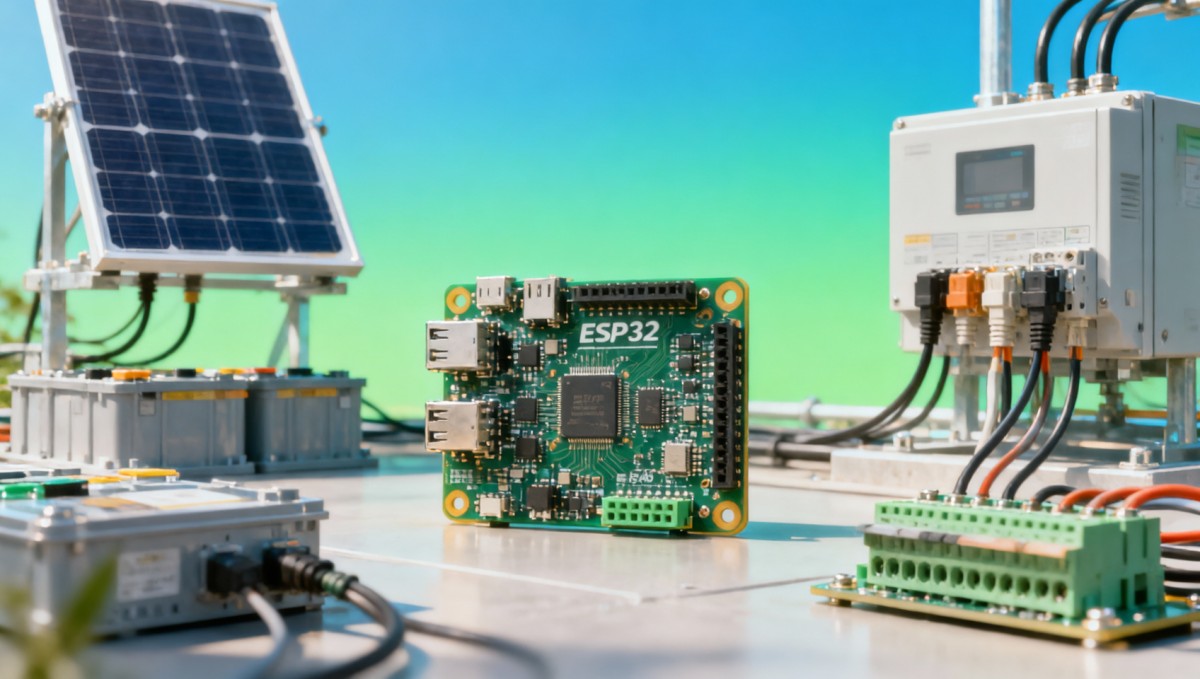
In renewable-energy and smart-building applications, an ESP32 custom board manufacturer must understand more than wireless connectivity. The board may need to process meter pulses, Modbus data, relay control, sensor fusion, and cloud-edge communication at the same time. In a peak-load shifting scenario, even a delay of 200–500 ms in control response can affect switching accuracy, comfort settings, or battery discharge timing.
Board-level quality also directly affects energy data integrity. If analog front-end design is weak, power supply filtering is poor, or grounding is not optimized, energy monitoring accuracy can drift beyond class 1.0 targets. That may be unacceptable for energy dashboards, tenant billing support, demand response programs, or rooftop solar self-consumption analysis.
NexusHome Intelligence promotes a data-first view of supply chain evaluation. In this market, claims such as “low power,” “stable RF,” or “industrial quality” are not enough. Buyers should ask for measurable parameters: standby current ranges, packet loss under interference, temperature test windows, and SMT defect control methods. This is especially important when boards are expected to operate in electrical cabinets at 45°C to 60°C ambient conditions.
A generic development-board mindset usually fails in real energy infrastructure. Renewable-energy hardware needs controlled BOM selection, traceable production, and design-for-maintenance decisions from the beginning. If the manufacturer cannot explain how the board handles brownout events, surge exposure, or antenna detuning inside a metal enclosure, it is not yet ready for serious deployment.
Typical renewable-energy use cases for ESP32 custom boards
- Solar inverter companion modules for local monitoring, relay logic, and Wi-Fi or BLE commissioning.
- Battery storage gateways that collect temperature, current, and status data every 1–5 seconds.
- Smart building energy nodes for HVAC scheduling, sub-metering, and peak load control across 10–100 zones.
- Microgrid edge devices bridging Modbus RTU, BLE sensors, and cloud dashboards in commercial facilities.
What changes when the deployment is energy-critical
In an office tower, logistics park, or community solar project, downtime is expensive. A board reboot once per week may be tolerable in a hobby product, but not in a controller managing load shedding or thermal optimization. Buyers should target manufacturers that can discuss watchdog behavior, flash wear considerations, and power-stage separation with practical engineering detail.
Protocol flexibility also matters. Today’s device may use Wi-Fi and BLE for setup, but tomorrow’s deployment may require Thread border router support, gateway integration, or external RS485 connectivity. An experienced ESP32 custom board manufacturer should design expandability into the board, rather than locking the product into a narrow first-release use case.
Board Design Checks: Power, RF, Thermal, and Metering Integrity
The first technical review should focus on four design pillars: power architecture, RF layout, thermal behavior, and measurement integrity. In renewable-energy environments, these interact closely. A noisy buck converter can reduce RF sensitivity; poor thermal spreading can shift analog readings; unstable grounding can generate relay misfires or serial communication errors.
Start with the power tree. Ask whether the design uses a linear regulator, buck converter, or staged architecture, and what the input range is. For building-energy products, common input design windows include 5V, 12V, or 24V rails, with transient handling requirements higher than consumer devices. A practical board should tolerate supply fluctuation, cold start behavior, and short dips without frequent resets.
Next, check RF fundamentals. ESP32 performance can drop sharply if the antenna area is crowded, the ground clearance is wrong, or the enclosure is metal-heavy. For smart energy equipment mounted near contactors, power supplies, or switchboards, the manufacturer should provide conducted or field test results showing stable connectivity at realistic distances such as 10–30 meters indoors, not only open-bench tests.
Thermal design is equally important. Inverters, distribution panels, and HVAC control boxes often create sustained heat. If the board runs near 70°C component temperature, crystal stability, regulator efficiency, and flash reliability become meaningful concerns. Buyers should ask how the design was validated across at least 0°C to 50°C operational conditions, and ideally wider if outdoor or semi-outdoor installation is expected.
Core engineering checks before approving a prototype
The table below summarizes what procurement and engineering teams should verify before moving from concept to pilot. It is especially relevant for boards used in solar monitoring, energy metering interfaces, and smart load controllers.
The key takeaway is that a strong board is a systems design, not just a functioning PCB. If a manufacturer cannot discuss calibration drift, cabinet heat buildup, or RF behavior next to high-current wiring, the board may still be too immature for renewable-energy scale-up.
Practical warning signs during design review
- Only lab-bench test data is available, with no enclosure or interference validation.
- No documented current consumption profile for active, idle, and deep-sleep states.
- Metering accuracy is described vaguely without calibration steps or drift limits.
- PCB revisions are frequent, but design change records are unclear or not traceable.
Manufacturing Capability: SMT Assembly, DFM, and Supply Chain Discipline
Even an excellent design can fail if manufacturing execution is inconsistent. For renewable-energy deployments, where devices may be installed in batches of 500, 2,000, or 10,000 units, SMT discipline and process control become procurement priorities. The right ESP32 custom board manufacturer should be able to explain design-for-manufacturing review, stencil optimization, soldering profiles, inspection methods, and lot traceability.
Ask how they handle PCBA for mixed-signal boards. An energy node may include RF sections, relays, current transformers, RS485 transceivers, and protection components on the same assembly. That mix creates a higher risk of solder defects, EMI coupling, and field failure if process windows are not well controlled. In practical terms, good manufacturers define inspection gates from incoming material to final functional test.
Lead-time transparency is another critical factor. Many teams focus on quoted unit price but overlook whether the supplier can support a 2–4 week prototype cycle, a 4–8 week pilot run, and stable replenishment after approval. For projects tied to building retrofits or energy program deadlines, delays in one controller board can hold up commissioning across an entire floor or site.
Supply chain resilience matters as much as assembly quality. ESP32-based products depend on wireless modules, passives, connectors, memory devices, and power components that may face periodic shortages. A qualified manufacturer should present at least 2 options for critical parts or explain their approved alternative strategy without compromising board behavior.
What to ask during factory and sourcing evaluation
The table below can help procurement teams compare manufacturers beyond price. It focuses on production realities that affect renewable-energy deployment speed, quality consistency, and serviceability.
A reliable factory partner is rarely the cheapest on the first quote. However, lower defect rates, fewer engineering change loops, and clearer traceability often produce a better total cost over 12–36 months, especially when site visits, installer time, and warranty handling are considered.
A practical 5-step procurement sequence
- Define the use case in energy terms: sensing interval, load control timing, enclosure type, power source, and protocol requirements.
- Request design evidence: schematics highlights, stack-up notes, current profile, and test coverage.
- Build a pilot batch of 20–100 units and test in real electrical and RF conditions.
- Review failure modes, yield, firmware update process, and component substitution policy.
- Approve scale-up only after functional, environmental, and maintainability checks are complete.
Protocol Readiness, Firmware Maintenance, and Field Reliability
An ESP32 custom board is valuable only if it remains manageable after installation. In renewable-energy estates and commercial buildings, operators need firmware resilience, remote diagnostics, and protocol compatibility that will still make sense 2 or 3 years later. A board that works today but cannot be updated safely can become an operational liability faster than expected.
Protocol readiness should be assessed in context. Some projects need Wi-Fi for direct cloud connection, others use BLE for commissioning, and many energy applications rely on RS485 or UART links to meters, inverters, and HVAC controllers. The best manufacturers design hardware interfaces and memory headroom so the product can support protocol bridges, local rules, and OTA updates without immediate redesign.
Field reliability also depends on how failures are detected and recovered. Ask whether the board supports watchdog timers, rollback-safe firmware update logic, and status telemetry for voltage, temperature, connectivity, and restart events. In distributed energy systems, knowing that 3% of nodes experienced repeated brownout recovery over 14 days is more useful than hearing that the board is “stable.”
For smart home peak load shifting and small commercial demand management, local autonomy matters. If cloud connectivity drops, the board should still execute the last valid control profile, maintain safe relay behavior, and buffer key measurements until the link returns. These are firmware architecture issues, but they should influence manufacturer selection because hardware and software validation must be aligned from the prototype stage.
Questions that reveal long-term service readiness
- How large is the reserved flash and RAM headroom after the current firmware build?
- What is the rollback method if an OTA update fails at 40% or 70% completion?
- Can the board log uptime, reset cause, RSSI trends, and sensor anomalies for at least 7–30 days?
- How are protocol changes handled when a project expands from one building to multiple sites?
Common mistake: treating firmware as an afterthought
Many buyers compare PCB quotes before defining firmware maintenance expectations. That creates downstream risk. In a renewable-energy deployment, boards may need seasonal logic changes, utility integration adjustments, or security patches. A manufacturer who cannot support structured firmware release management may increase lifecycle cost even if the hardware price looks competitive at the start.
This is where a data-driven sourcing approach becomes valuable. NHI’s broader vision of bridging ecosystems through data is relevant here: protocol claims should be verified in measured environments, not accepted as brochure language. In practice, buyers should request test scenarios that reflect dense wireless traffic, inverter noise, and mixed protocol coexistence inside real buildings.
FAQ for Buyers Comparing an ESP32 Custom Board Manufacturer
How long does a typical custom board project take?
For a realistic B2B workflow, early design review and schematic alignment may take 1–2 weeks, prototype fabrication and assembly another 2–4 weeks, and pilot validation 3–6 weeks depending on enclosure, firmware, and field testing. If renewable-energy interfaces such as metering, RS485, or relay isolation are involved, schedule extra time for calibration and stress validation.
What indicators matter most during supplier comparison?
Focus on six factors: power stability, RF test evidence, metering support, manufacturing traceability, firmware update strategy, and component sourcing resilience. Unit price matters, but for projects running 24/7, a lower return rate and cleaner field diagnostics often deliver stronger business value over 12 months than a small upfront savings.
Is a standard ESP32 module enough for energy applications?
Sometimes yes for simple gateways, but often no for production deployment. Renewable-energy products usually need custom protection, better power design, industrial connectors, analog signal handling, or tighter enclosure integration. A custom board becomes more attractive when the product must survive noise, heat, and continuous operation rather than occasional consumer use.
What is a common sourcing mistake in this category?
The most common mistake is selecting by BOM cost before defining operating conditions. If the board will run in a switch cabinet, near solar equipment, or in a high-density building network, then thermal margin, EMI resilience, and protocol behavior under load should be specified first. Otherwise, savings on the first batch can turn into repeat engineering cost later.
Choosing the right ESP32 custom board manufacturer for renewable-energy and smart-building use is ultimately a risk-control decision. Buyers should evaluate measurable design quality, SMT execution, protocol readiness, and field-maintenance capability rather than relying on generic claims. The strongest partners are those who can show how their board performs under real electrical, thermal, and wireless conditions.
For teams developing energy monitoring nodes, smart load controllers, or solar and storage gateways, a disciplined technical review can reduce failure rates, improve deployment speed, and protect long-term platform flexibility. If you need a more structured evaluation framework or want to compare suppliers using engineering-focused criteria, contact us to discuss your project, request a custom checklist, or explore more data-driven hardware sourcing solutions.
Protocol_Architect
Dr. Thorne is a leading architect in IoT mesh protocols with 15+ years at NexusHome Intelligence. His research specializes in high-availability systems and sub-GHz propagation modeling.
Related Recommendations
- NHI Data Lab (Official Account)Is SMT Assembly Right for Smart Home Devices
- NHI Data Lab (Official Account)ESP32 Custom Board Maker: What to Check
- NHI Data Lab (Official Account)Industrial 3D printing service in China for low-volume metal parts
- NHI Data Lab (Official Account)EDM surface integrity analysis — hidden microcracks that survive post-process inspection
- NHI Data Lab (Official Account)Heavy duty CNC machining supplier — how to verify claimed capacity beyond brochure specs
- NHI Data Lab (Official Account)Where 5 axis CNC wins when machining aerospace impellers
- NHI Data Lab (Official Account)What EDM surface integrity analysis reveals after fine cutting
- NHI Data Lab (Official Account)What a 5 axis CNC surface finish Ra target really depends on
- NHI Data Lab (Official Account)When EDM wire cutting service in China makes sense for tight profiles
- NHI Data Lab (Official Account)Industrial 3D printing service in China for short runs or bridge production?
Analyst