
Trusted smart home factories: how to verify them
author
Finding trusted smart home factories requires more than brochures or price lists. In a fragmented IoT ecosystem, buyers need verifiable IoT hardware benchmarking, Matter protocol data, and clear IoT supply chain audit evidence. This guide shows procurement and evaluation teams how to verify verified IoT manufacturers through compliance checks, smart home hardware testing, and data-backed sourcing standards.
What buyers really need to verify before trusting a smart home factory
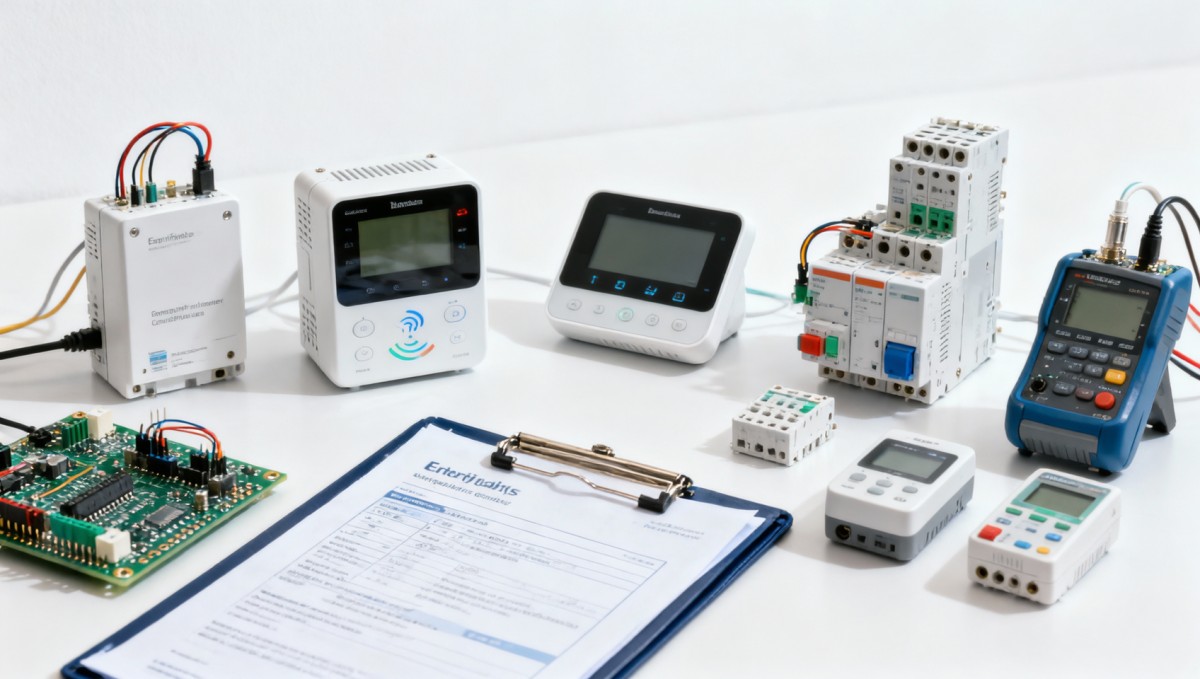
If you are sourcing smart home hardware, the core question is not whether a factory looks professional. It is whether the factory can consistently deliver devices that perform reliably in real deployment conditions, meet compliance requirements, and support your long-term business goals. For procurement teams, operators, and commercial evaluators, a trusted smart home factory is one that can prove capability with data, process control, and verifiable references.
In practice, the strongest manufacturers are not always the ones with the most polished marketing. The better signal is whether they can provide measurable evidence on protocol compatibility, product quality stability, energy performance, security controls, and supply chain transparency. In the renewable energy and connected building space, this matters even more, because poor device quality can affect automation efficiency, battery life, climate control accuracy, and overall system reliability.
A useful rule is simple: if a supplier cannot prove claims with test reports, audit trails, and repeatable manufacturing controls, they should not be treated as a low-risk partner.
Why brochures and certifications alone are not enough
Many buyers begin with product catalogs, compliance marks, and sales presentations. These are useful, but they should only be the starting point. A factory can show certifications and still fail in field performance, firmware consistency, or component sourcing discipline.
Common issues include:
- Protocol claims that do not hold up in mixed-device environments
- Battery or standby power figures measured under unrealistic lab conditions
- Security features that exist on paper but are not properly implemented
- Inconsistent PCB assembly quality across production batches
- Weak change control when key components are replaced
For smart home and IoT hardware, trust comes from verification at three levels: the product, the factory process, and the supplier’s ability to support deployment after shipment. Buyers who skip any of these layers often discover hidden risk too late.
How to verify a smart home factory step by step
A practical supplier verification process should combine commercial review with technical validation. The following framework helps teams reduce sourcing risk and compare suppliers more objectively.
1. Check manufacturing capability, not just company profile
Ask the factory to show evidence of actual production capacity for the product category you need. This includes SMT lines, testing stations, aging tests, traceability systems, firmware flashing control, and quality checkpoints. If the factory claims OEM or ODM capability, verify whether design, prototyping, certification support, and mass production are handled in-house or outsourced.
Key questions include:
- What percentage of production is for smart home or IoT products?
- What are the main wireless protocols supported in mass production?
- How are PCB assembly defects detected and recorded?
- What is the process for engineering change notices and BOM revisions?
- Can they provide batch traceability down to component level?
2. Validate protocol and interoperability claims with test data
In a fragmented ecosystem, “compatible” is too vague. Buyers should request actual test data for Zigbee, Thread, BLE, Wi-Fi, Z-Wave, or Matter performance. A trusted smart home factory should be able to explain not just whether a device connects, but how it behaves under load, interference, and multi-device conditions.
Useful verification evidence includes:
- Matter certification status and version details
- Latency benchmarks in realistic network environments
- Packet loss or reconnection behavior under interference
- Mesh capacity test results for Zigbee or Thread devices
- Firmware upgrade reliability and rollback procedures
This is especially important for energy and climate control systems, where unstable connectivity can directly reduce automation value and user trust.
3. Review quality control and reliability testing
Smart home hardware testing should go beyond functional checks. Reliable factories run environmental, electrical, and long-duration tests to catch failure modes before shipment. Ask what tests are performed during EVT, DVT, PVT, and mass production.
Look for evidence such as:
- Burn-in and aging test procedures
- Temperature and humidity stress testing
- Drop, vibration, and enclosure durability testing
- Power consumption measurements in active and standby modes
- Sensor calibration and long-term drift validation
If a product supports renewable energy use cases, such as smart relays, HVAC controls, or energy monitoring devices, insist on power accuracy and standby consumption data. These metrics affect both operating cost and sustainability performance.
4. Audit compliance, security, and data governance
Verified IoT manufacturers should be able to demonstrate structured compliance management. Depending on market and product type, this may include CE, FCC, RoHS, REACH, RED, UL, or regional smart device requirements. But compliance alone is not enough. Security and data handling should also be reviewed.
Ask for:
- Certification files and test lab references
- Secure boot, encryption, and key management documentation
- Vulnerability disclosure or patch management process
- Cloud versus edge data processing architecture
- Privacy handling practices relevant to target markets
For cameras, locks, gateways, and occupancy sensors, security is a purchasing issue, not just an engineering issue. Weak controls increase legal, brand, and operational risk.
5. Confirm supply chain resilience and component transparency
A factory may build a strong sample unit and still become a weak partner if component sourcing is unstable. Ask how key chips, modules, batteries, sensors, and wireless parts are sourced. Review approved vendor lists, lead time management, and replacement approval procedures.
Areas to verify include:
- Single-source component dependence
- Buffer inventory strategy for critical parts
- Substitution control and customer approval process
- End-of-life component planning
- Supplier qualification standards for upstream vendors
This matters in smart home projects with long deployment cycles, where continuity of supply can determine maintenance cost and lifecycle performance.
What documents and proof a reliable factory should provide
Procurement teams often save time by creating a standard verification checklist. A trusted smart home factory should be willing and able to provide structured evidence, not fragmented promises.
At minimum, ask for the following:
- Factory profile with ownership, site details, and production scope
- Quality certifications such as ISO 9001 and relevant process standards
- Protocol certification records and interoperability test summaries
- Reliability test reports and quality control flowcharts
- Main equipment list for SMT, testing, calibration, and assembly
- Sample product BOM control and traceability records
- Customer case studies in similar product categories
- CAPA examples for defects or field failures
- After-sales support and RMA handling policy
If a supplier avoids documentation, delays basic evidence, or only shares generic brochures, that is usually a warning sign.
Red flags that suggest a factory may not be trustworthy
Even experienced buyers can be misled if they focus too heavily on unit price or sample appearance. The following signs often indicate elevated risk:
- Sales teams make technical claims they cannot explain in detail
- Test reports are outdated, incomplete, or unrelated to the exact product
- No clear distinction between factory, trading company, and subcontractor
- Protocol support is described in broad marketing language only
- Firmware ownership and update responsibility are unclear
- Production line videos are shared, but no live audit or detailed walkthrough is possible
- Component substitutions happen without formal notification
- Quality metrics such as first-pass yield or defect rate are not tracked
A low quote may seem attractive, but unstable quality, poor interoperability, and weak traceability usually cost more later through returns, delayed deployment, and reputational damage.
How procurement and evaluation teams should compare factories objectively
The most effective approach is to score factories against weighted criteria rather than rely on general impressions. This helps procurement, technical evaluators, and business reviewers align around the same decision logic.
A practical scorecard may include:
- Technical performance: protocol reliability, power consumption, device stability
- Manufacturing maturity: process control, yield discipline, traceability, testing depth
- Compliance and security: certifications, data protection, update capability
- Commercial fit: MOQ, lead time, engineering support, customization flexibility
- Supply chain resilience: component continuity, sourcing transparency, risk control
- Service capability: communication quality, issue response, after-sales support
For smart home buyers connected to renewable energy or smart building projects, add energy-specific factors such as standby power, metering accuracy, relay endurance, and climate control efficiency. These directly affect project ROI and long-term operating performance.
Why data-backed verification creates better long-term sourcing results
When buyers verify smart home factories through measurable evidence, they make better decisions beyond the first order. Data-backed sourcing improves forecasting, reduces warranty risk, strengthens compliance confidence, and creates a more stable product roadmap.
This is also where independent benchmarking becomes valuable. In markets crowded with similar claims, technical verification helps identify hidden high-performance manufacturers that may be overlooked by buyers relying only on platform rankings or sales messaging. That is especially useful in the current IoT landscape, where interoperability, energy efficiency, and supply chain consistency matter as much as unit cost.
The factories worth trusting are usually the ones prepared to be examined closely. They welcome audits, explain limitations honestly, and support decisions with evidence.
Conclusion: trust smart home factories only when performance is verifiable
To verify trusted smart home factories, buyers should move beyond brochures and price negotiations and focus on proof. The best suppliers can demonstrate protocol compliance, manufacturing discipline, quality stability, security controls, and supply chain transparency with real data. For procurement teams, operators, and business evaluators, this is the safest path to selecting verified IoT manufacturers that can support reliable deployment and long-term value.
In short, trust should be earned through testing, documentation, and auditability. If a factory cannot show how its products perform in real conditions, it has not yet earned that trust.
Protocol_Architect
Dr. Thorne is a leading architect in IoT mesh protocols with 15+ years at NexusHome Intelligence. His research specializes in high-availability systems and sub-GHz propagation modeling.
Related Recommendations
- NHI Data Lab (Official Account)IoT supply chain metrics that expose hidden risk
- NHI Data Lab (Official Account)How to use an IoT supply chain audit before switching
- NHI Data Lab (Official Account)IoT OEM compliance roster: useful list or false comfort?
- NHI Data Lab (Official Account)Verified IoT manufacturers: what proof should you ask for?
- NHI Data Lab (Official Account)Trusted smart home factories: how to verify them
- NHI Data Lab (Official Account)What a hardware compliance inquiry should uncover
- NHI Data Lab (Official Account)Smart home PCB assembly compliance: where issues start
- NHI Data Lab (Official Account)How to compare IoT PCBA manufacturers with less risk
- NHI Data Lab (Official Account)Is SMT Assembly Right for Smart Home Devices
- NHI Data Lab (Official Account)ESP32 Custom Board Maker: What to Check
Analyst